Bloated by Dinner, Every Single Day? After 50, It’s Usually Not the Food.
Somewhere around menopause, digestion quietly changes: your body makes fewer digestive enzymes every year. Here is why the bloating showed up out of nowhere, and the sweet papaya chewable thousands of women now take after their biggest meal.
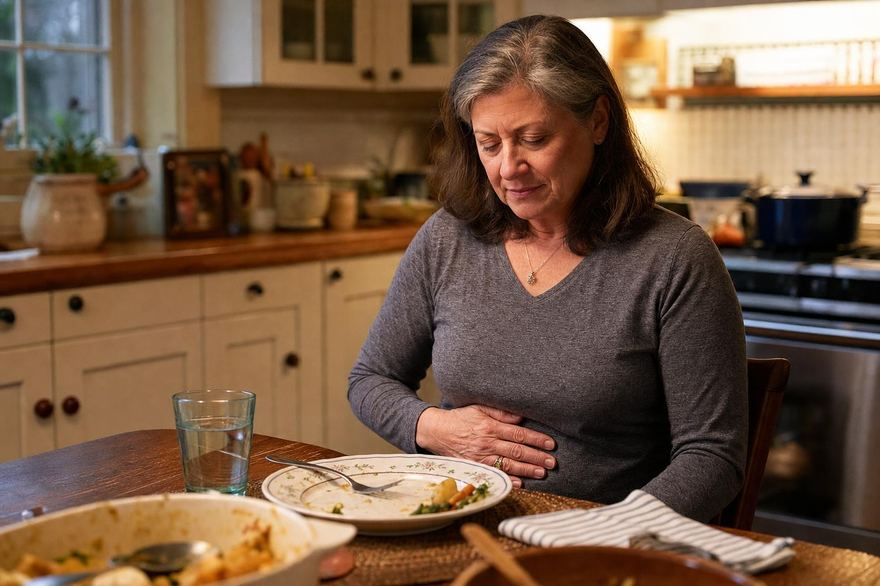
You eat the same dinner you have cooked for the family for thirty years. Same portions. Same table. But now, by eight o’clock, your waistband digs in, the pressure builds, and you end the night unbuttoned on the couch wondering what on earth you did wrong.
Here is the part nobody explains at the checkup: you probably didn’t do anything wrong. Something changed inside you, quietly, and it started around 45.
The thing your body slowly stops making
Digestion runs on enzymes. They are what break your food down into pieces your body can actually use. And production does not stay level for life: as we age, the body gradually makes less of them, year after year. It often shifts right around menopause, which is why so many women swear the belly showed up overnight at 48, at 52, at 55.
Less enzyme power means that big dinner is not broken down the way it was at 25. Food sits longer. It ferments. And fermenting food makes gas. That is the pressure, the puffiness, the “six months pregnant by evening” feeling, and the mornings you still feel backed up from last night.
It is not just the evening bloat, either. Plenty of women quietly stop being regular somewhere in their 50s and blame themselves. Same cause: food that is only half broken down moves slow and heavy, and everything downstream pays for it.
Why grandmothers in the tropics never needed a name for it
In papaya country, there has always been a habit: after a heavy meal, someone hands you a slice of papaya. Generations of grandmothers did not know the word papain, the natural enzyme concentrated in papaya that helps break down protein. They just knew the heaviness lifted.
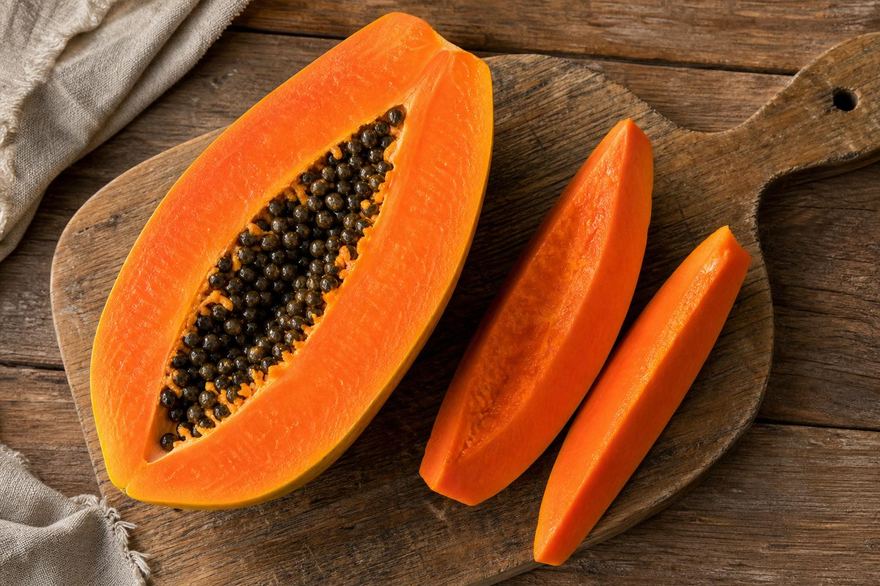
Modern supplements finally caught up to the porch wisdom. Papain, paired with bromelain from pineapple, gives your digestion back some of the enzyme power the years took away. You take it when it matters, right after the biggest meal of the day.
The one worth knowing about
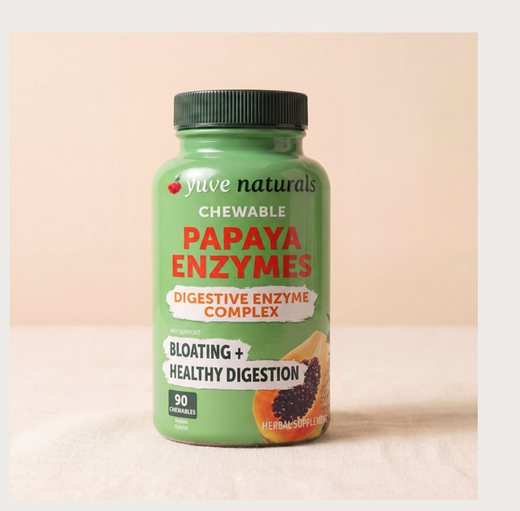
The one our readers keep writing in about is Yuve Naturals Chewable Papaya Enzymes, a small American brand’s take on the old papaya habit. A few reasons it stands out from the pharmacy-shelf versions:
- It’s a chewable, not a horse pill. Tastes like a sweet papaya candy, without sugar. If a routine is pleasant, you actually keep it.
- Papain plus bromelain plus a full plant enzyme complex, so it covers the heavy stuff: protein, fats, the pasta you refuse to give up.
- Sugar-free, vegan, non-GMO, gluten-free. No junk riding along.
- 90 chewables in the bottle. At two after dinner, that is a month and a half of lighter evenings for about the price of one restaurant meal.
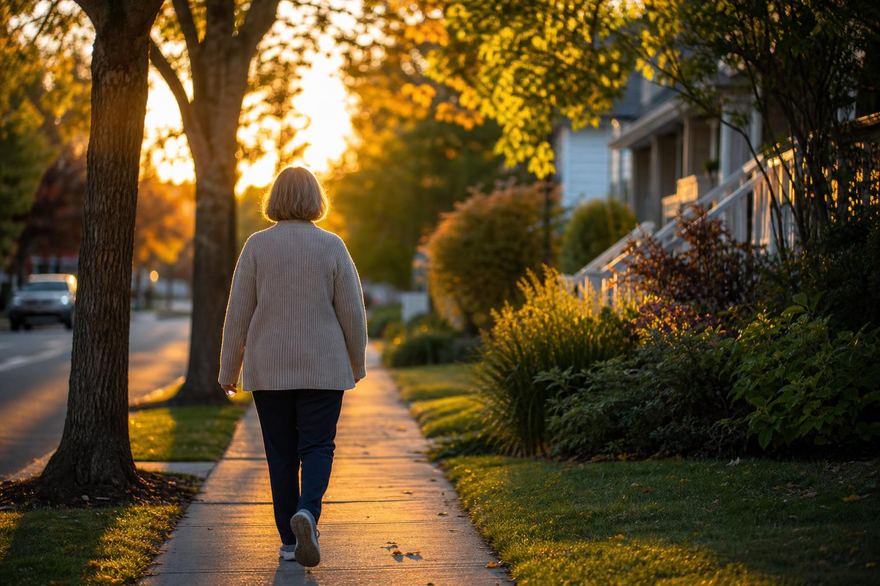
The 30-Second After-Dinner Ritual
- Right after your biggest meal, chew two papaya tablets. Do not wait for the bloat to start; beat it there.
- Drink a full glass of water. Enzymes work in a hydrated gut.
- Move for five minutes. Clear the table, water the plants, a slow lap around the block. Gravity is on your side.
What verified buyers say
“I have been using supplements and vitamins over 25 years. This product seems to have reduced the bloating and acid feeling I was having. Tastes great too.”
“I decided to try an all natural alternative to help with my digestion… I do notice a difference when I take these daily, and have been able to cut back DRASTICALLY on my Tums usage.”
“The product is great and the only enzyme type that really works with nearly no side effects. It tastes great… You will need more than one pill for a big meal. The only reason I give 4 stars is for the price.”
Where to get it (and why to not wait)
The 90-count bottle runs about $22 on Amazon, which works out to under 50 cents a day. Fair warning from experience: it already sold out once this year and took weeks to come back. If your evenings sound anything like the first paragraph of this article, get a bottle on the shelf before dinner does it to you again.
Common questions
When should I take it?
The label says it simply: chew two tablets daily after a meal. Make it your biggest, heaviest meal of the day; for most women that is dinner. Some keep a second bottle in their purse for restaurant meals and holidays.
Is there sugar in it? I’m watching mine.
No. The chewables are sugar-free, and also vegan, non-GMO, and gluten-free. The sweetness comes without the sugar.
How fast will I notice anything?
Enzymes go to work on the very next meal, and many women notice lighter evenings within the first days. Give the full ritual two to three weeks of consistency before you judge it.