A new rash after starting pantoprazole needs prompt medical or pharmacist advice because reactions range from unrelated irritation to drug hypersensitivity. Seek emergency help for breathing trouble, facial or throat swelling, blistering, peeling, mouth or eye sores, fever, or rapidly spreading skin pain. Do not test another dose or switch acid medicines on your own.
How did we evaluate a rash reported after pantoprazole?
We prioritized the current U.S. prescribing label, National Library of Medicine patient guidance, allergy position papers, and peer-reviewed reviews of proton-pump-inhibitor hypersensitivity. We separated common skin eruptions from immediate allergy and severe cutaneous adverse reactions because urgency depends on symptoms, timing, and progression rather than appearance alone. Case reports established that a reaction is possible but did not provide a reliable incidence estimate or prove that pantoprazole caused any individual rash. We also considered competing explanations such as infection, contact dermatitis, food, another medicine, or an underlying skin condition. This article cannot diagnose a rash from a description or photograph. Its purpose is triage: identify emergency features, preserve an accurate medication timeline, and explain why a prescriber, pharmacist, dermatologist, or allergist may need to guide stopping, replacement, testing, individualized treatment, or re-exposure decisions.
What should you do when a rash appears after starting pantoprazole?
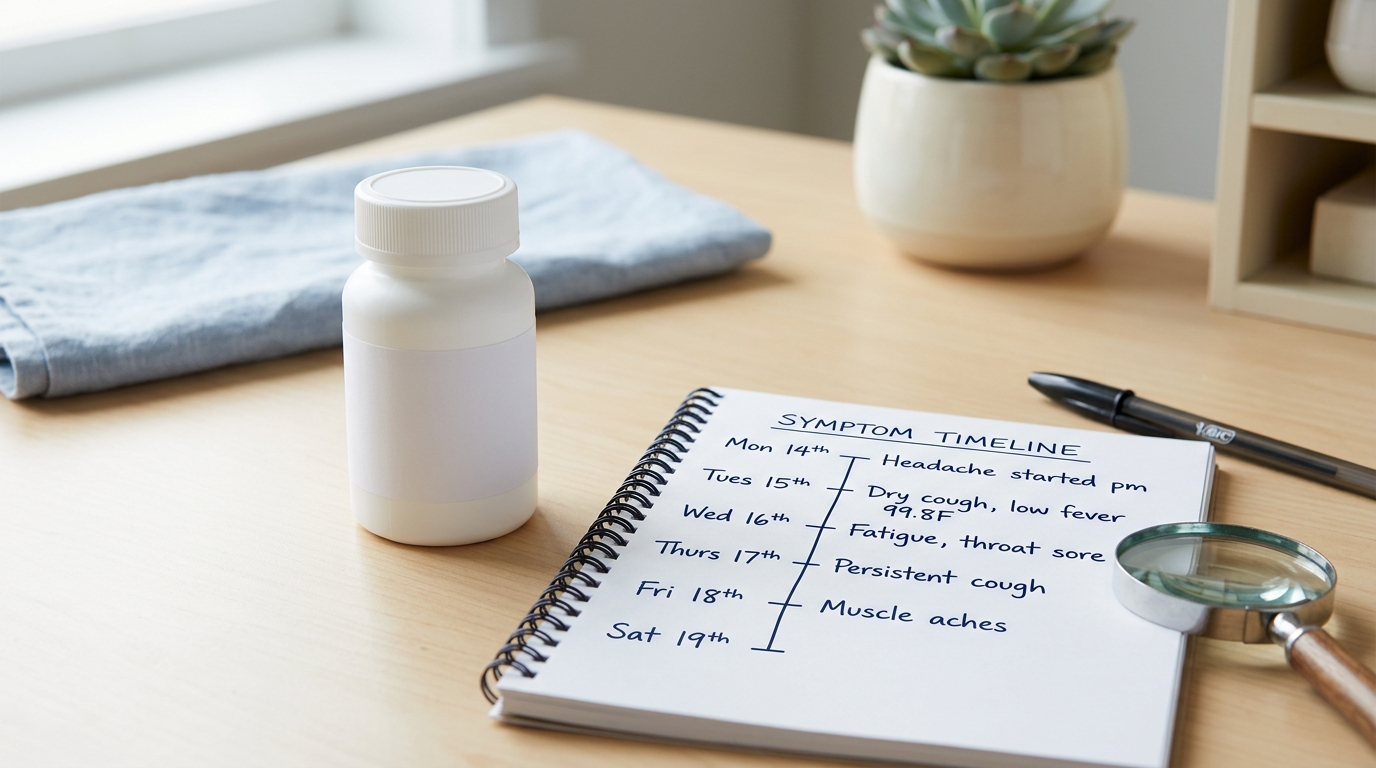
Note when the rash began, when pantoprazole started, the dose, each dose time, and every other new medicine, supplement, food, soap, or skin product. Photograph the rash in consistent light and record whether it itches, hurts, spreads, blisters, peels, or involves the mouth, eyes, or genitals. Contact the prescribing clinician or a pharmacist promptly for individualized instructions, ideally before taking another dose. Do not deliberately repeat pantoprazole to see whether the rash returns; an immune reaction can become more severe with re-exposure. Do not substitute another proton pump inhibitor without advice because cross-reactivity can occur unpredictably. The official DailyMed pantoprazole label directs discontinuation at the first signs of a severe skin reaction or other hypersensitivity signs. Emergency features override routine callbacks and require urgent care now.
Which skin-rash symptoms require emergency help?
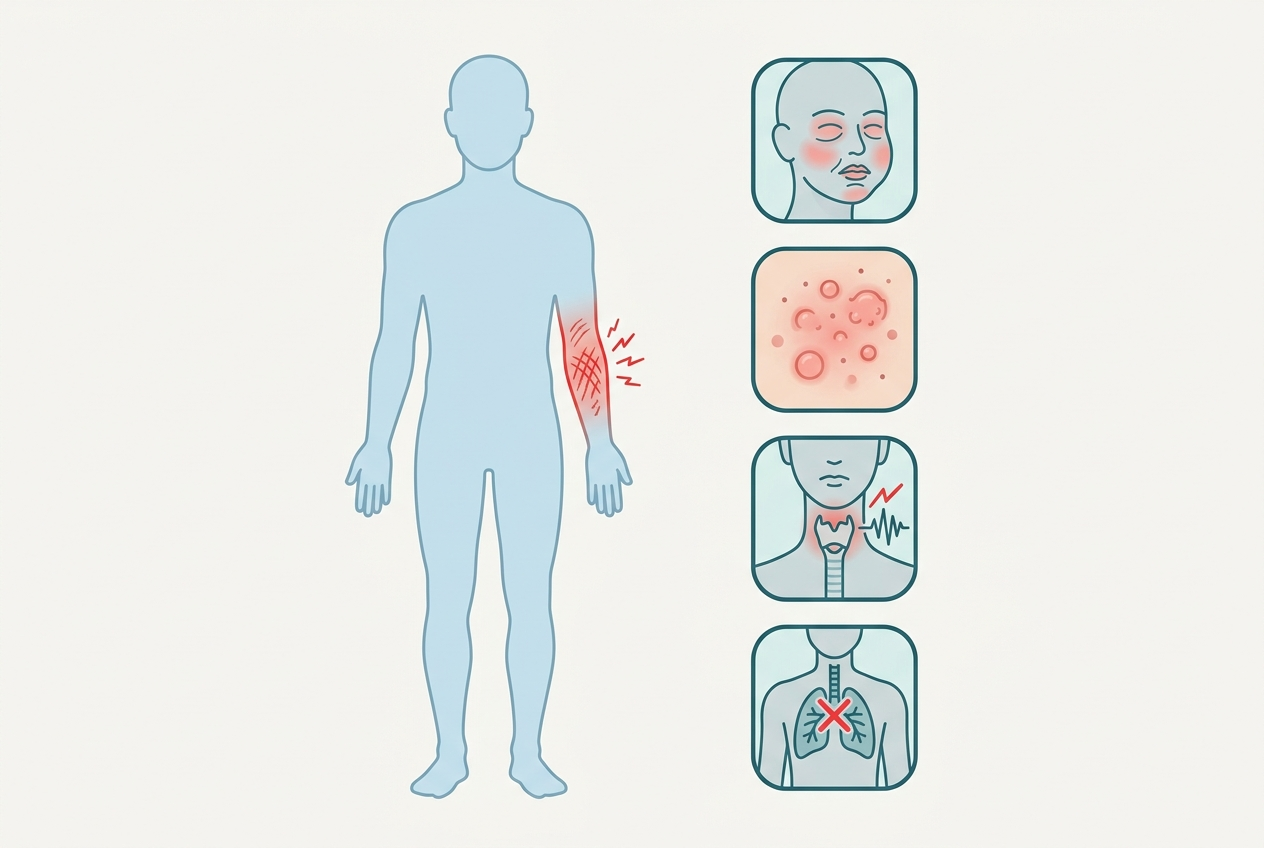
Call emergency services for difficulty breathing or swallowing, hoarseness, faintness, or swelling of the lips, tongue, face, eyes, or throat. Seek emergency evaluation for widespread hives with systemic symptoms, rapidly spreading painful skin, blistering, peeling, bleeding skin, purple areas, or sores involving the mouth, nose, eyes, or genitals. Fever, swollen glands, facial swelling, flu-like symptoms, or a rash accompanied by liver, kidney, blood, or breathing symptoms can signal a severe systemic drug reaction. The MedlinePlus pantoprazole guide lists blistering or peeling skin, mucosal sores, swollen glands, shortness of breath, fever, rash, hives, itching, facial swelling, and breathing or swallowing difficulty as reasons for immediate medical help. Do not drive yourself if breathing, consciousness, or rapid progression is involved. When uncertain, an emergency triage service can give immediate direction.
Can pantoprazole cause a rash days or weeks after starting?
Yes. Proton pump inhibitors can trigger both immediate and delayed hypersensitivity reactions, although these events are uncommon and a new rash has many possible causes. Immediate reactions can develop within minutes to hours and may include hives, swelling, wheezing, or anaphylaxis. Delayed eruptions can appear after days or longer and may present as a widespread red rash, fixed drug eruption, contact-pattern dermatitis, or a rare severe cutaneous syndrome. Timing alone cannot confirm the culprit because viral illness, antibiotics, pain relievers, and other medicines may begin around the same period. A 2020 review of proton-pump-inhibitor hypersensitivity describes immediate urticaria and angioedema as well as delayed maculopapular eruptions and severe reactions (Allergy & Asthma Proceedings). Save the timeline and packaging; a clinician needs both the sequence and full ingredient exposure.
What else can look like a pantoprazole reaction?
Contact dermatitis can follow a new detergent, cosmetic, adhesive, metal, plant, or workplace exposure. Viral infections can produce widespread eruptions, while fungal infections, eczema, psoriasis, heat rash, insect bites, and food allergy can create overlapping patterns. Other medicines often complicate attribution: antibiotics, nonsteroidal anti-inflammatory drugs, anticonvulsants, allopurinol, and several supplements can cause rashes or serious hypersensitivity. The inactive ingredients in a particular tablet can also differ between manufacturers. Location provides clues but not certainty. A localized rash beneath a watch differs from symmetrical hives or painful mucosal blistering. Improvement after a medicine is stopped can support suspicion, yet spontaneous improvement also occurs in unrelated rashes. Do not use an online photograph match as proof. Clinical evaluation may require vital signs, skin examination, complete medication review, bloodwork, biopsy, or allergy assessment depending on overall severity.
Can you switch to another acid-reducing medicine safely?
Do not assume another proton pump inhibitor is automatically safe. Medicines in the class share structural features, and published reports describe several cross-reactivity patterns. Some people react to one agent but tolerate another; others show testing or clinical reactions across multiple agents. A European Academy of Allergy and Clinical Immunology position paper estimates proton-pump-inhibitor hypersensitivity at roughly 1% to 3% and recommends evidence-based evaluation rather than casual rechallenge (EAACI position paper). A clinician may consider a different proton pump inhibitor, a histamine-2 receptor antagonist, an alginate, or a non-drug reflux strategy, but the right choice depends on why acid suppression was prescribed. Ulcer treatment, gastrointestinal bleeding prevention, severe erosive disease, and short-term symptom control carry different risks. Bring the original prescription indication to the conversation so rash safety and acid-related risk are managed together.
How is suspected proton-pump-inhibitor allergy evaluated?
The evaluation begins with chronology: previous exposure, time from dose to symptoms, rash duration, associated breathing or mucosal symptoms, other medicines, and response after withdrawal. Clear photographs and records reduce recall errors. An allergist may use skin testing for selected immediate reactions, but a negative result does not exclude every allergy. Supervised drug provocation can sometimes identify a tolerated alternative when acid suppression is necessary, yet it belongs in a controlled clinical setting and is inappropriate after some severe reactions. Patch testing or dermatology review may assist selected delayed eruptions. A review of 39 publications found variable cross-reactivity among proton pump inhibitors and recommended formal investigation when a reasonable alternative is not obvious (Annals of Allergy, Asthma & Immunology). Home rechallenge cannot reproduce that safety framework and should not be used to prove causation.
What are common questions about pantoprazole and skin rash?
Is every rash after pantoprazole an allergy?
No. Timing creates suspicion, not proof. Infection, contact exposure, another medicine, or an existing skin condition can produce a similar eruption.
Should I take an antihistamine and keep using pantoprazole?
Do not use an antihistamine to hide a potentially progressing drug reaction without professional advice. Emergency symptoms require urgent care, and a prescriber or pharmacist should guide any further pantoprazole dose.
Can a mild rash become serious?
Some reactions remain limited, while others spread or develop systemic features. Watch for pain, blistering, peeling, mucosal sores, fever, swelling, breathing difficulty, and rapid progression.
Can pantoprazole cause hives?
Yes, hives have been reported with proton pump inhibitor hypersensitivity. Hives plus facial swelling, throat symptoms, breathing difficulty, faintness, or vomiting can indicate anaphylaxis and require emergency help.
Is omeprazole safe if pantoprazole caused the rash?
Not automatically. Cross-reactivity varies among proton pump inhibitors, so a clinician or allergist should select and, when appropriate, test an alternative.
What information should I bring to an appointment?
Bring the medication bottle, dose, start date, last dose, photographs, symptom timeline, all other medicines and supplements, known allergies, and the reason acid suppression was prescribed. Include fever, breathing, facial swelling, and mouth or eye symptoms.
A pantoprazole-associated rash is a medication-safety question, not a supplement-selection problem. Triage severe symptoms first, document the sequence, and let a qualified clinician decide whether the medicine should be stopped, replaced, tested, or avoided.