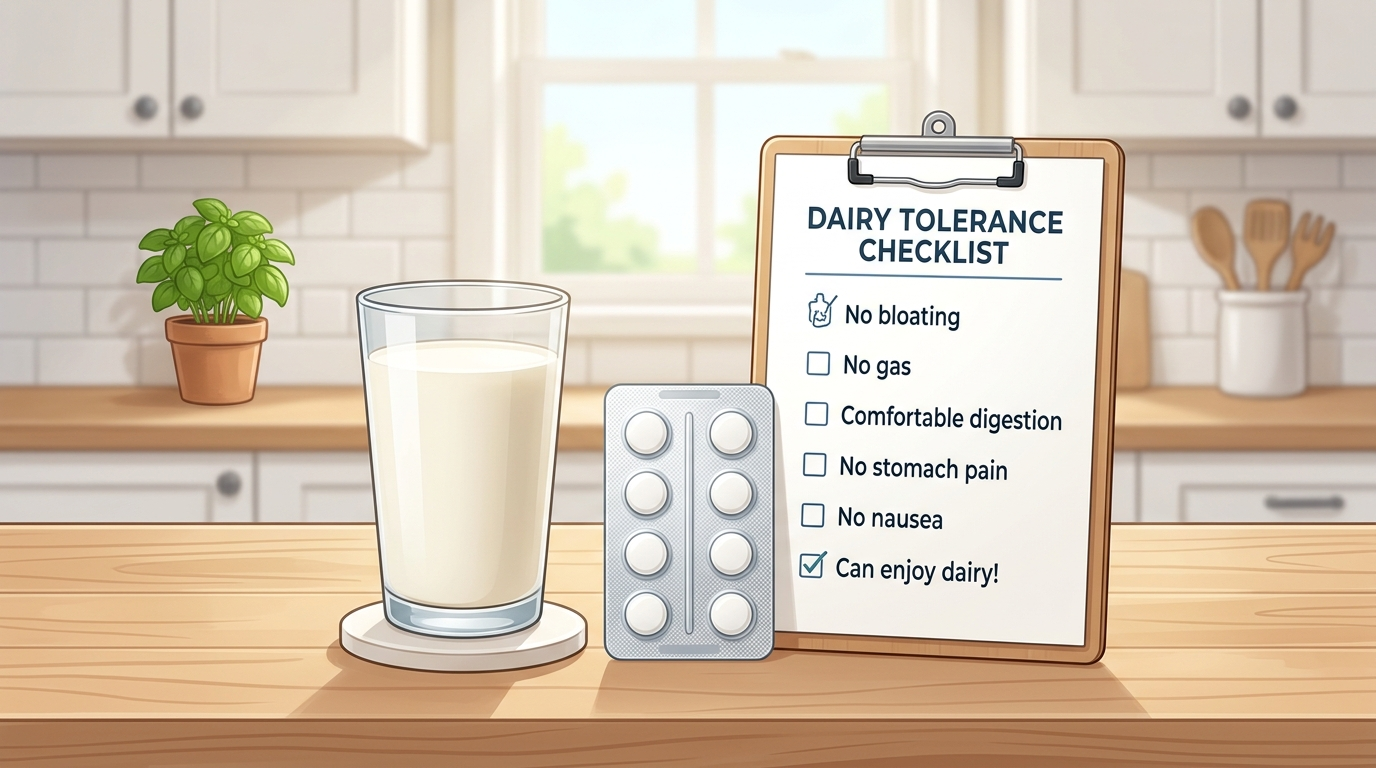
Most people do not need extra lactase with properly labeled lactose-free milk because the milk has already been treated with lactase enzyme. Some people still use lactase if the product contains residual lactose, the serving is large, symptoms are severe, or the discomfort is caused by another issue such as milk protein sensitivity, fat load, or reflux.
How did we evaluate lactase and lactose-free milk?
We evaluated this question by separating lactose digestion from other milk-related symptoms, then reviewing clinical explanations from government and medical sources. The highest weight went to sources that explain lactase enzyme, lactose-free dairy processing, and common symptom patterns in lactose intolerance. We excluded unsupported claims that lactose-free milk is always symptom-free or that lactase tablets fix every dairy reaction. The main limitation is that product labeling, serving size, and personal tolerance vary, so a small serving test is more useful than assuming every carton or every enzyme tablet works identically. We also treated persistent pain, weight loss, vomiting, blood in stool, or new symptoms as reasons to seek medical guidance instead of running repeated food experiments. This approach keeps the answer practical without turning a food-tolerance question into a diagnosis or a product-shopping checklist.
Why does lactose-free milk usually not need extra lactase?
Lactose-free milk usually does not need extra lactase because the manufacturer adds lactase enzyme before packaging, and lactase splits lactose into glucose and galactose. The NIDDK explains that lactose intolerance happens when the small intestine makes too little lactase to digest lactose. Lactose-free milk changes that equation before the milk reaches the gut. The milk may taste sweeter because glucose and galactose taste sweeter than intact lactose, even when no table sugar has been added. A person who tolerates lactose-free milk in small servings usually does not gain extra benefit from another lactase tablet. A person who reacts to lactose-free milk should check the label, serving size, expiration handling, and whether the symptom pattern matches lactose rather than milk fat, casein, whey, or reflux pressure. Refrigeration and freshness still matter because spoiled milk can cause symptoms unrelated to lactose.
When might lactase still help with lactose-free milk?
Lactase may still help when a product is reduced-lactose rather than truly lactose-free, when the serving is unusually large, or when the person has very low lactase activity. Some countries and brands use different thresholds for “lactose-free,” so label wording matters. The MedlinePlus lactose intolerance overview notes that symptoms can include bloating, cramps, gas, nausea, and diarrhea after lactose intake, but symptom severity depends on the amount of lactose consumed and the person’s lactase level. A lactase tablet cannot remove lactose from milk protein, milk fat, carrageenan, gums, coffee, cereal, or other foods eaten with the milk. If the same person tolerates hard cheese or yogurt but not a large glass of lactose-free milk, total volume, meal timing, and reflux pressure may explain more than lactose alone. Repeating the same test with a smaller serving can separate dose from ingredient sensitivity.
What else could cause symptoms after lactose-free milk?

Symptoms after lactose-free milk can come from lactose, but they can also come from milk protein sensitivity, cow’s milk allergy, high-fat dairy, rapid drinking, carbonated coffee drinks, reflux, irritable bowel sensitivity, or additives. A StatPearls clinical review distinguishes lactose intolerance from immune-mediated milk allergy, which involves a different mechanism. Adults often describe “lactose intolerance” whenever dairy feels bad, but lactose is only one variable. Lactose-free whole milk still contains fat, casein, whey, minerals, and sometimes stabilizers. Skim lactose-free milk changes fat load but not protein exposure. Plant milks remove lactose and dairy protein but may contain gums, fibers, or sweeteners. A clean test uses one small serving, plain milk, no coffee, no cereal, no late-night timing, and a symptom log for gas, stool change, nausea, and reflux sensation. That log prevents one bad mixed meal from being blamed entirely on milk.
How should someone test lactose-free milk safely?
A cautious test starts with a small serving, such as 2 to 4 ounces, with a simple meal earlier in the day. The person should avoid stacking new variables like coffee, protein powder, cereal, fiber supplements, or large dinner portions during the same test window. If the small serving is tolerated, the next test can increase the amount gradually while keeping the product brand, timing, and meal context consistent. If the small serving causes symptoms, a lactase tablet with the same serving can help clarify whether residual lactose is the likely trigger. If symptoms persist despite lactase, the problem is less likely to be lactose alone. A clinician should evaluate severe symptoms, persistent diarrhea, unexpected weight loss, blood in stool, vomiting, or reactions that include hives, wheezing, swelling, or dizziness. Written timing notes are useful because lactose symptoms usually follow a meal pattern.
What questions do people ask about lactase and lactose-free milk?
Is lactose-free milk completely lactose free?
Lactose-free milk is treated with lactase to break down lactose, but exact residual amounts depend on product standards and testing. People with extreme sensitivity should read labels and test small servings rather than assuming every brand feels identical.
Does lactose-free milk contain lactase enzyme?
Many lactose-free milk products are made by adding lactase enzyme during processing. The enzyme changes lactose into simpler sugars before the milk is consumed.
Why does lactose-free milk taste sweeter?
Lactose-free milk tastes sweeter because lactase splits lactose into glucose and galactose. Those two sugars taste sweeter on the tongue than intact lactose.
Can lactase pills stop all dairy symptoms?
Lactase pills only help digest lactose. They do not address milk protein allergy, fat-related fullness, reflux timing, additives, or symptoms caused by another digestive condition.
Should lactase be taken before or after milk?
Lactase works best when it is present as lactose reaches the small intestine, so product directions usually place it at the first bite or sip. Directions vary by tablet, chewable, or drop format.
Can lactose intolerance get worse over time?
Lactase activity can decline with age, and symptoms can shift after gut infections, diet changes, or changes in serving size. A sudden major change should be discussed with a clinician rather than assumed to be normal.
Is plant milk better than lactose-free milk?
Plant milk removes lactose and dairy protein, but it introduces different ingredients such as gums, oils, added sugars, or plant fibers. The better choice is the one that matches nutrition needs and is tolerated in a controlled serving test.
For a detailed comparison of specific products and strains, see Lactase Pills Compared: How to Choose the Right Lactase Enzyme.
For a detailed comparison of specific products and strains, see Lactase Pills Stopped Working? How to Compare Dose, Timing, and Better Options.
What is the practical bottom line?
Extra lactase is usually unnecessary with true lactose-free milk, but it can be a useful experiment when labels are unclear or sensitivity is high. If lactose-free milk still causes symptoms after a careful small-serving test, the next step is to evaluate non-lactose causes rather than taking more enzyme by default. Serving size, fat content, protein sensitivity, reflux timing, and mixed-meal ingredients often explain symptoms that look like lactose intolerance at first glance. A controlled test protects the person from overusing tablets while missing the real trigger.
Image prompts:
- Hero image: Clear glass of lactose-free milk beside a lactase enzyme tablet blister pack and a simple dairy tolerance checklist, bright neutral kitchen setting, no brand logos. Alt text: Lactose-free milk, lactase tablets, and a tolerance checklist on a kitchen counter.
- Inline image: Clean educational diagram showing lactase splitting lactose into glucose and galactose before digestion, simple medical editorial style. Alt text: Diagram showing lactase enzyme breaking lactose into glucose and galactose.