
IBS symptoms can change across the menstrual cycle and during perimenopause. Hormone fluctuations may influence gut movement, pain sensitivity, sleep, stress, and bowel patterns, but the evidence cannot predict one direction for every person. Track cycles, bleeding, bowel form, pain, bloating, sleep, food, and medicines; discuss new or persistent changes with both gastrointestinal and women’s-health clinicians.
How did we evaluate IBS changes during cycles and perimenopause?
We evaluated menstrual-cycle and midlife symptom research by study design, population, symptom tracking, menopausal-stage definitions, and whether findings separated association from causation. National Institute of Diabetes and Digestive and Kidney Diseases guidance received more weight than social-media anecdotes or universal hormone explanations. Prospective daily-diary research informed the menstrual-cycle section, while peer-reviewed midlife and perimenopause reviews informed the transition section. We excluded claims that estrogen alone causes IBS, that every bowel change in the 40s is perimenopause, or that one hormone test explains a fluctuating symptom pattern. The evidence has limits: many studies are observational, menopausal stages are defined inconsistently, gastrointestinal symptoms overlap with gynecologic and other medical conditions, and sleep, diet, stress, physical activity, medications, and pelvic-floor function change simultaneously. The safest interpretation is pattern-based. A repeated relationship between symptoms and bleeding or cycle phase is useful clinical information, but new alarm signs or a major change from an established IBS pattern still require medical assessment.
Can IBS symptoms worsen at certain points in the menstrual cycle?
Yes. The NIDDK notes that women with IBS often report more symptoms during their periods. A prospective daily-diary study also found that gastrointestinal, somatic, and psychological symptoms varied across cycle phases among women with IBS, although the pattern was not identical for every bowel subtype or contraceptive group. Hormonal changes can coincide with altered bowel transit, cramping, pain sensitivity, sleep, appetite, and fluid shifts. Prostaglandins released around menstruation may contribute to looser stools or cramping in some people, while constipation and bloating may dominate at other times. The evidence supports a real cycle-linked pattern for some patients but does not establish a universal calendar. One difficult period cannot identify the mechanism. Track at least two or three cycles when possible, using the same stool-form and symptom scales. A repeated phase-specific change gives a clinician more useful evidence than a broad statement that “hormones make everything worse.”
What can change when perimenopause begins?
Perimenopause involves fluctuating ovarian hormones and increasingly irregular cycles before the final menstrual period. Gastrointestinal changes may appear alongside hot flashes, night sweats, sleep disruption, mood changes, altered activity, medication changes, and shifts in body composition. A review of IBS in midlife women identified sex hormones, stress, sleep, diet, physical inactivity, surgery history, and the gut microbiome as plausible overlapping contributors, while emphasizing the need for comprehensive assessment. A 2025 scoping review found 122 studies of gastrointestinal symptoms in natural peri- and postmenopause but highlighted inconsistent staging and symptom methods. That means the topic has substantial research interest but limited precision. Perimenopause may coincide with worsening, improvement, or a different bowel pattern; it does not produce one standard IBS trajectory. A changing cycle also makes phase prediction harder. Record bleeding, vasomotor symptoms, sleep, bowel habits, pain, and relevant medicines together so that timing can be evaluated instead of assumed.
Are hormone changes the only explanation for new bowel symptoms?
No. IBS naturally fluctuates, and midlife can introduce additional variables: iron supplements, magnesium, anti-inflammatory medicines, antidepressants, sleep aids, alcohol changes, dietary restriction, lower activity, pelvic-floor dysfunction, thyroid problems, celiac disease, infections, gallbladder conditions, and colorectal or gynecologic disorders. Constipation can also increase bloating and pain without a new hormonal cause. Menstrual bleeding may complicate interpretation of blood seen in the toilet, so source and timing matter. The American College of Obstetricians and Gynecologists advises clinical review when digestive symptoms do not improve or worsen. Do not relabel every new symptom as “just IBS” or “just menopause,” especially after age 40 when screening history and family history become more important. A clinician may review medication timing, blood counts, thyroid testing, celiac testing, stool studies, pelvic symptoms, or age-appropriate colorectal screening based on the pattern. The goal is not maximal testing; it is avoiding an automatic hormone explanation when another cause needs attention.
How should you track symptoms across an irregular cycle?
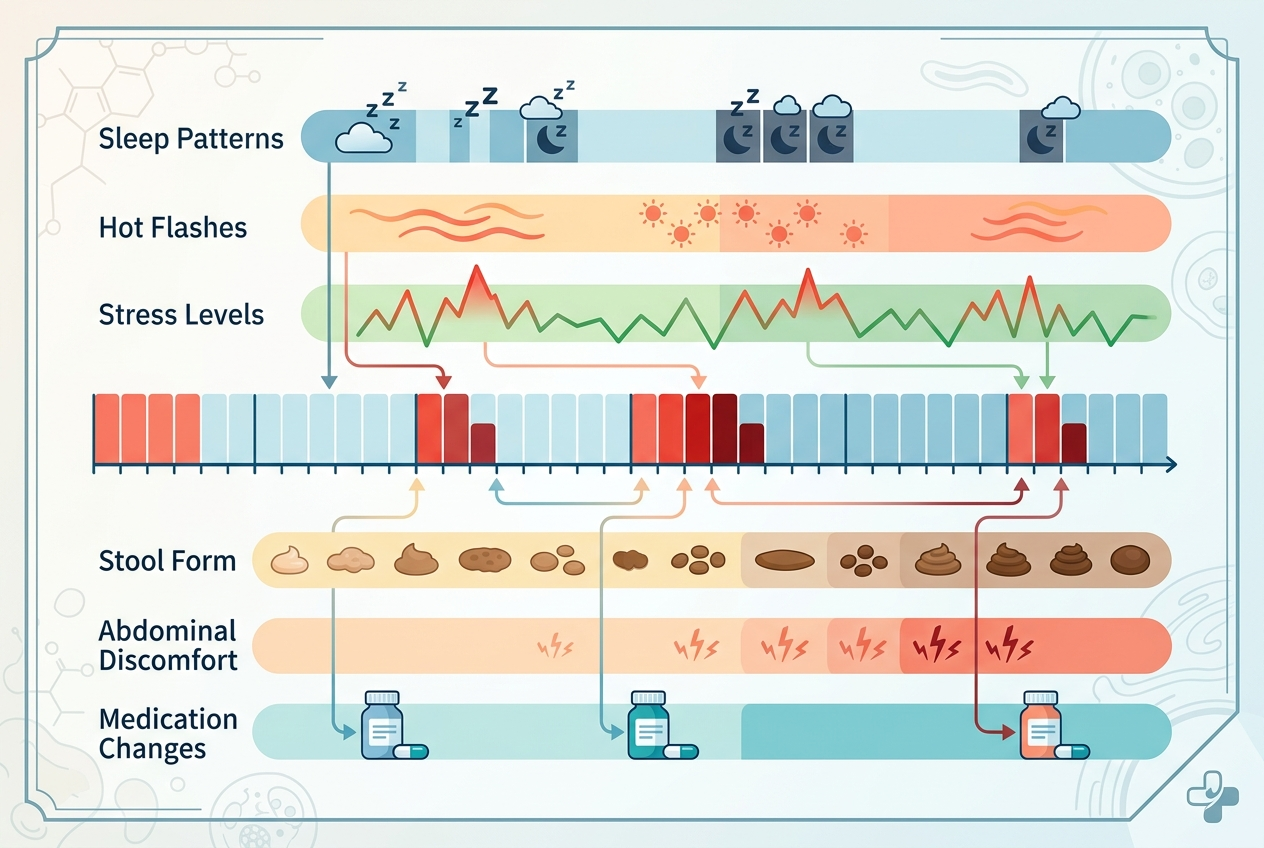
Use a daily log rather than relying on memory at the next appointment. Record date, bleeding or spotting, cycle day when known, Bristol Stool Form Scale type, bowel frequency, urgency, pain from zero to ten, bloating, sleep duration, hot flashes or night sweats, major foods, alcohol, exercise, stress, and all medicines or supplements. Mark medication starts and dose changes clearly. Continue for eight to twelve weeks when symptoms are stable enough to observe safely; irregular cycles make a longer window more useful than one month. Look for repeated clusters, such as looser stools during bleeding, constipation after ovulation, or worse pain after poor sleep regardless of cycle phase. Do not change several dietary and medication variables during the same week unless a clinician directs the plan. Bring the log to both gastrointestinal and women’s-health visits. Shared data can prevent siloed care in which one clinician sees only bowel symptoms and another sees only cycle changes. Stop tracking and seek care sooner if alarm signs appear.
Which warning signs need medical review instead of cycle tracking?
Seek prompt medical review for blood clearly mixed with stool, black or tarry stool, unexplained iron-deficiency anemia, fever, persistent vomiting, dehydration, unintended weight loss, a new abdominal or pelvic mass, progressive pain, nighttime symptoms that repeatedly wake you, or a major sustained change in bowel habits. Chest pain, fainting, severe weakness, or heavy bleeding can require urgent assessment. Family history of colorectal cancer, inflammatory bowel disease, celiac disease, ovarian cancer, or other relevant conditions should also be shared. Menstrual and gastrointestinal symptoms can overlap, but overlap does not prove a benign cause. New pelvic pressure, pain with sex, abnormal uterine bleeding, or symptoms tied to urination may require gynecologic evaluation even when IBS is already diagnosed. Conversely, persistent diarrhea, constipation, or rectal bleeding deserves gastrointestinal review even during perimenopause. Age-appropriate cancer screening remains important. A symptom diary helps only when it supports timely evaluation; it should never become a reason to postpone care for a concerning change.
What questions are common about IBS, cycles, and perimenopause?
Can perimenopause cause IBS?
Research supports an association, but perimenopause does not directly cause every IBS case. Diagnosis still requires clinical review.
Why can diarrhea happen during a period?
Hormonal and prostaglandin shifts can affect bowel movement and cramping. Food, stress, medicines, and IBS can also contribute.
Can constipation become more common in the 40s?
Yes, but diet, fluid, medicines, activity, pelvic-floor function, thyroid status, and hormones all matter. Persistent constipation needs review.
Does hormone therapy improve IBS?
Hormone therapy addresses defined menopause indications, not IBS broadly. Discuss individual benefits and risks with a menopause clinician.
Should I change my diet during each cycle phase?
Not automatically. Let repeated patterns and nutritional adequacy guide small changes, avoiding restrictive phase-based diets.
Which clinician should I see first?
Start with the clinician best suited to the most concerning symptom and share the full log. Coordinated gastrointestinal and gynecologic care may help.
What is the bottom line for IBS changes in your 40s?
Cycle-linked and perimenopause-associated changes are plausible, common enough to take seriously, and too variable for a universal rule. Menstrual phase can coincide with changes in stool form, cramping, bloating, and pain sensitivity. Perimenopause adds irregular cycles plus sleep, stress, vasomotor, medication, activity, and dietary changes that can modify the same symptoms. The research base remains incomplete, especially for predicting who will worsen or improve. Track daily data across several weeks, mark bleeding and menopausal symptoms, and keep medication or diet experiments limited to one interpretable change at a time. Bring the record to both gastrointestinal and women’s-health care when the pattern crosses specialties. Do not assume that established IBS explains a new, progressive, or unusual symptom. Bleeding, anemia, weight loss, fever, persistent vomiting, nighttime symptoms, a mass, or major sustained bowel changes need timely review. A clear pattern can guide care; a hormone label alone cannot.