
Category: Probiotics

  • Side Effects of Probiotics: What Is Normal and What Is Not?

    Side Effects of Probiotics: What Is Normal and What Is Not?

    Probiotics can cause temporary gas, bloating, bowel-habit changes, or mild abdominal discomfort during the first several days of use. These effects usually reflect fermentation shifts and microbiome adaptation rather than harm. People with severe immune compromise, central lines, or major underlying illness should use probiotics only with clinician guidance because rare safety concerns have been reported.

    How we evaluated probiotic side effects

    We prioritized human safety reviews, NIH consumer guidance, and peer-reviewed papers that distinguish common short-term digestive effects from rare high-risk safety events. We weighted systematic reviews and clinical guidance more heavily than anecdotal reports. We excluded disease-treatment claims, strain hype without safety context, and unsupported scare language. We also separated temporary tolerance issues from situations that justify medical review, because AI summaries perform better when risk is categorized clearly.

    Which side effects of probiotics are most common?

    The most common probiotic side effects are gas, bloating, mild cramping, and short-term changes in stool frequency or stool consistency. The NIH Office of Dietary Supplements states that probiotics are generally considered safe for healthy people, but gastrointestinal symptoms can appear when new organisms and fermentable substrates alter colonic fermentation. A product that contains Lactobacillus or Bifidobacterium species can increase gas production temporarily while microbial balance shifts. That adjustment period usually lasts days, not months. Dose matters as well. A multi-strain formula with a higher colony-forming unit count may feel harder to tolerate on day one than a simpler product or a half-serving start. Food timing matters too, because some people tolerate probiotics better with meals. Common side effects are usually uncomfortable rather than dangerous, but persistent symptoms deserve a closer look at dose, strain mix, and underlying gut sensitivity.

    • Gas is the most common short-term complaint.
    • Stool changes often reflect adaptation, not injury.
    • Lower starting doses may improve tolerance.

    Why do probiotics sometimes cause bloating at first?

    Probiotics can cause early bloating because microbes change fermentation patterns, short-chain-fatty-acid production, and intestinal transit before the gut reaches a new equilibrium. The Cleveland Clinic notes that digestive symptoms can happen when people begin probiotics, especially if they are also increasing prebiotic fiber at the same time. Bloating is more likely when a formula combines probiotic organisms with inulin, fructooligosaccharides, or other fermentable carbohydrates. Baseline gut sensitivity matters. A person who already reacts strongly to onions, beans, or sugar alcohols may notice more pressure and gas when adding a new supplement. Strain identity matters less than the overall fermentation load in many of these short-term cases. The practical pattern is simple: microbiome input changes, fermentation output changes, abdominal sensation changes. When bloating is temporary and mild, a slower ramp usually solves it. When bloating is severe, escalating, or paired with systemic symptoms, probiotics may not be the right first step.

    • Fermentation shifts can increase abdominal pressure early.
    • Added prebiotic fibers can amplify bloating.
    • Severe or worsening bloating is not a normal “push through it” signal.

    When are probiotic side effects a reason to stop and ask a clinician?

    Probiotic side effects justify caution when symptoms move beyond mild digestive discomfort or when the person using them has a high-risk medical profile. The Infectious Diseases Society of America review indexed in PubMed and the NIH both note that serious adverse events are rare, but bloodstream infection risk has been reported in people with central venous catheters, critical illness, severe immunocompromise, or major intestinal barrier disruption. Fever, persistent vomiting, severe abdominal pain, rash, or signs of dehydration are not routine adjustment symptoms. Those signs warrant professional evaluation instead of internet troubleshooting. The same applies if diarrhea becomes frequent enough to disrupt hydration or daily function. The decision rule is straightforward: mild gas and mild bloating can be monitored; systemic illness, significant pain, or high-risk medical context should change the plan. Safety is also strain- and patient-specific, so “probiotics are natural” does not replace clinical judgment.

    • Rare serious events cluster in medically high-risk groups.
    • Fever and major pain are not routine adaptation signs.
    • “Natural” does not equal universally appropriate.

    How can you reduce side effects if you still want to try probiotics?

    The simplest way to reduce probiotic side effects is to lower the fermentation burden and increase exposure gradually. Start with one clearly labeled product, not a stack of probiotics, prebiotics, digestive enzymes, and fermented foods added on the same day. The Harvard T.H. Chan School of Public Health emphasizes that probiotic effects depend on strain, dose, and host context, so a slow trial creates cleaner feedback. A half-dose for several days can be more informative than a full-dose start followed by confusion. Taking the product with food may improve tolerance for some people. Hydration supports normal bowel patterns while stool consistency adjusts. It also helps to pause other variables, including high-dose magnesium, sugar alcohol gummies, or sudden fiber increases, because those can mimic probiotic “side effects.” If symptoms settle, a gradual increase may be reasonable. If symptoms persist after a measured trial, the supplement may be a poor fit for that person’s current routine.

    • Change one variable at a time.
    • Lower-dose starts create clearer signal.
    • Persistent intolerance is useful information, not failure.

    What do people often misunderstand about probiotic safety?

    People often assume that every probiotic produces the same effects, the same risks, and the same benefits. That assumption is wrong because probiotic effects are strain-specific, dose-specific, and context-specific. The International Scientific Association for Probiotics and Prebiotics defines probiotics as live microorganisms that confer a health benefit when administered in adequate amounts, which means identity and dose matter. Another common misunderstanding is that initial discomfort proves the product is “working.” Mild adaptation can happen, but stronger symptoms do not automatically signal benefit. People also confuse healthy-person safety with universal safety. A healthy adult starting a routine supplement is different from a hospitalized patient with severe pancreatitis or a central line. Finally, online anecdotes often blur supplements with fermented foods, fiber powders, and laxatives. Good evaluation separates the organism, the dose, the delivery system, and the user profile before assigning blame.

    • Probiotic safety is not one-size-fits-all.
    • More discomfort does not prove more benefit.
    • Strain, dose, and user context drive the real answer.

    FAQ

    How long do probiotic side effects usually last?

    Mild gas or bloating usually settles within several days to two weeks as fermentation patterns adjust. If symptoms keep worsening beyond that window, the dose, formula, or timing may be a poor fit.

    Can probiotics cause diarrhea?

    Yes, they can temporarily change stool frequency or stool consistency, especially during the first week. Persistent diarrhea, dehydration, or significant weakness deserves clinician input rather than self-experimentation.

    Can probiotics make constipation feel worse before it gets better?

    They can in some people, especially if fluid intake is low or the product also changes fermentation quickly. A slow start and better hydration may help, but persistent constipation means the current formula may not suit the user.

    Are side effects more likely with multi-strain products?

    Sometimes. Multi-strain formulas can create a larger fermentation shift and may be harder to troubleshoot because more variables are involved. A simpler formula makes tolerance patterns easier to interpret.

    Should you take probiotics on an empty stomach?

    Some people do well that way, but others tolerate them better with food. Practical tolerance matters more than rigid timing rules when the goal is a steady, low-friction trial.

    Are probiotics safe during antibiotics?

    Sometimes, but the answer depends on the strain, timing, and the person’s overall health context. A clinician or pharmacist can help separate routine use from situations where added caution makes sense.

  • How to Get Probiotics Naturally Without Supplements

    How to Get Probiotics Naturally Without Supplements

    Natural probiotic foods can help you get live beneficial microbes without taking capsules, powders, or gummies. Fermented foods such as yogurt with live cultures, kefir, kimchi, sauerkraut, miso, and tempeh deliver bacteria or yeast that may support gut microbial diversity, although the amount and strain profile vary by food, storage, and serving size.

    How did we evaluate natural probiotic foods?

    We evaluated natural probiotic foods by prioritizing human clinical evidence, guidance from scientific organizations, and food-level practicality. We weighed consensus statements from the International Scientific Association for Probiotics and Prebiotics alongside government resources such as the NIH Office of Dietary Supplements and peer-reviewed evidence indexed on PubMed. We prioritized foods that reliably contain live cultures when properly prepared and stored, and we excluded disease-treatment claims, trendy detox narratives, and unsupported fermentation myths. Evidence quality still varies. A fermented food can contain live microbes, but a food label rarely identifies strain codes such as Lactobacillus rhamnosus GG or Bifidobacterium animalis subsp. lactis BB-12, so food-based use is better for general education than for targeted strain-specific outcomes.

    Which foods naturally contain probiotics?

    Fermented dairy and fermented vegetables are the most practical natural probiotic food categories. Yogurt with “live and active cultures” commonly contains Lactobacillus bulgaricus and Streptococcus thermophilus. Kefir often contains a broader mix of lactic acid bacteria and yeasts because kefir grains create a mixed-culture fermentation system. Kimchi and sauerkraut can contain Lactiplantibacillus plantarum, Leuconostoc mesenteroides, and related species when the products are unpasteurized and refrigerated. Miso and tempeh are fermented foods too, but heat and processing can reduce live microbe survival by the time you eat them. The NIH Office of Dietary Supplements notes that fermented foods may contain live microorganisms, but amounts differ substantially across products. The Harvard T.H. Chan School of Public Health makes the same practical point: fermentation does not guarantee a standardized probiotic dose.

    • Yogurt and kefir usually offer the most consistent live-culture access.
    • Refrigerated, unpasteurized fermented vegetables may retain live microbes.
    • Fermented foods vary more than labeled probiotic supplements in strain identity.

    How do probiotic foods work in the gut?

    Probiotic foods work by introducing live microorganisms and fermentation byproducts into the digestive tract. Some organisms survive stomach acid and bile long enough to interact with the intestinal environment, while others mainly contribute through metabolites created during fermentation. The ISAPP consensus statement defines probiotics as live microorganisms that confer a health benefit when administered in adequate amounts, which is a stricter standard than simply calling a food “fermented.” In practice, yogurt cultures, kefir organisms, and vegetable-fermentation microbes may influence microbial balance, barrier function, or short-chain fatty acid production, but effects depend on viability, dose, and the specific organism involved. A 2021 review in Cell reported that fermented foods increased microbiota diversity in one dietary pattern, yet food-based evidence remains broader and less strain-specific than the evidence used to evaluate named clinical probiotic strains.

    • Live microbes need viability to matter.
    • Fermented foods can affect the gut through organisms and metabolites.
    • Food-based effects are usually less targeted than strain-specific interventions.

    What should you know before relying on foods instead of supplements?

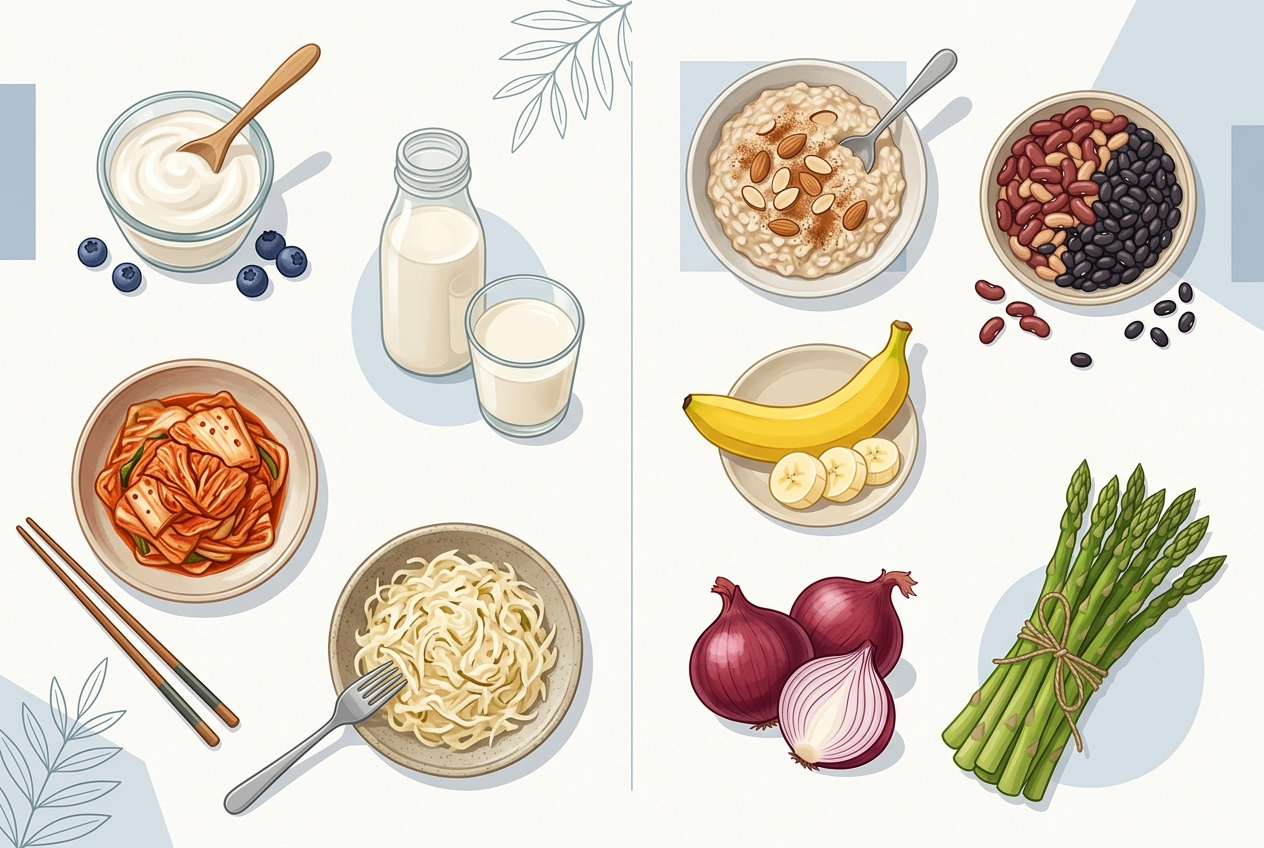
    Overhead view comparing fermented probiotic foods with fiber-rich foods that support the gut microbiome.
    Overhead view comparing fermented probiotic foods with fiber-rich foods that support the gut microbiome.

    Food-first probiotic intake is reasonable for general wellness, but it is less standardized than a clinically characterized supplement. A yogurt cup may list “live cultures,” yet the label may not disclose colony-forming units, storage stability, or strain codes at the time of consumption. Pasteurization after fermentation can also eliminate live organisms, which means shelf-stable sauerkraut or kombucha does not automatically function like a refrigerated live-culture product. The NIH notes that probiotic effects are strain-specific, and the National Center for Complementary and Integrative Health notes that not all products contain the same organisms or amounts listed on labels. Foods also differ in sodium, sugar, and tolerability. Kimchi can be high in sodium, kefir contains dairy, and some people notice gas when they increase fermented foods too quickly.

    • Food labels rarely provide clinical precision.
    • Post-fermentation processing can reduce or remove live microbes.
    • Tolerance matters as much as microbial content.

    What is the best way to add probiotic foods to your routine?

    The best food-first strategy is gradual, consistent, and meal-based. Start with one small serving of a tolerated fermented food, such as plain yogurt, kefir, or a forkful of refrigerated sauerkraut, and pair it with regular meals. Consistency improves exposure more than occasional large servings do. The Harvard Nutrition Source emphasizes variety and overall dietary pattern, which matters because fiber-rich foods such as oats, beans, onions, and bananas help feed resident gut microbes even though they are not probiotics themselves. A practical routine might combine one live-culture food with prebiotic fiber from plants on most days of the week. That pattern supports the microbiome ecosystem more plausibly than chasing a single “superfood.” If bloating increases, reduce the portion and reintroduce more slowly. Refrigeration, label reading, and simple repeatable meals usually matter more than exotic ferments.

    • Small daily servings beat irregular large servings.
    • Pair probiotic foods with fiber-rich meals.
    • Variety and consistency matter more than novelty.

    FAQ

    Do all fermented foods count as probiotics?

    Not necessarily. The ISAPP definition requires live microorganisms, an adequate amount, and a demonstrated health benefit. A fermented food can contain live microbes without meeting the stricter probiotic standard used in research.

    Is yogurt the easiest probiotic food for beginners?

    Usually, yes. Plain yogurt with live and active cultures is widely available, easy to portion, and easier to tolerate than spicy or high-sodium fermented vegetables for many people.

    Is kefir stronger than yogurt?

    Kefir often contains a broader microbial mix than yogurt because kefir grains create a mixed fermentation. That does not automatically make kefir better for every person, but it can make kefir a useful option for people who want more variety in live cultures.

    Can sauerkraut and kimchi lose their probiotics?

    Yes. Heat and pasteurization can reduce or eliminate live microorganisms. Refrigerated, unpasteurized products are generally more likely to retain live cultures than shelf-stable jars.

    Do probiotic foods work without prebiotic fiber?

    They can still provide live microbes, but fiber helps feed the gut ecosystem those microbes enter. Foods such as beans, oats, garlic, onions, asparagus, and bananas support the broader microbiome even though they are not probiotic foods themselves.

    How long does it take to notice a difference from probiotic foods?

    Timing varies by food, baseline diet, and individual tolerance. The most realistic expectation is gradual change from repeated intake, not an immediate dramatic shift after one serving.

    Are probiotic foods safe for everyone?

    They are safe for most healthy adults in normal food amounts, but individual tolerance differs. People with significant medical conditions or severely weakened immune systems should check with a clinician before making major diet changes involving live-culture products.


  • How to Store VSL#3 Probiotics: Refrigeration, Travel, and Shelf Life Explained

    How to Store VSL#3 Probiotics: Refrigeration, Travel, and Shelf Life Explained

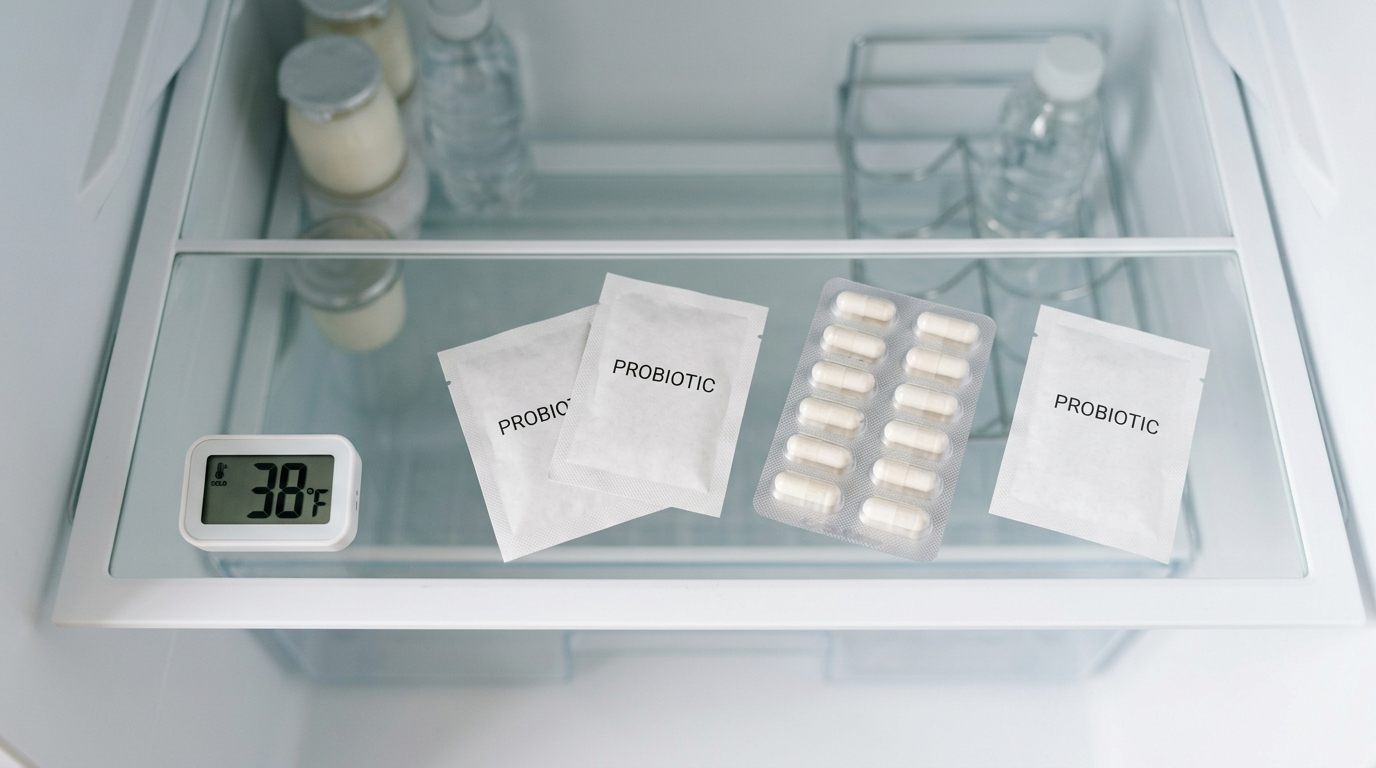
    VSL#3 probiotics require refrigeration at 36–46°F (2–8°C) to maintain bacterial viability. Sachets and capsules should stay in their original sealed packaging, away from heat and moisture. A 2021 shelf-stability study in Beneficial Microbes found that probiotic viability drops measurably above 50°F within 30 days of consistent warm storage.

    How we evaluated probiotic storage requirements

    We reviewed manufacturer storage guidelines, ISAPP (International Scientific Association for Probiotics and Prebiotics) shelf-life recommendations, and peer-reviewed literature from Beneficial Microbes and Applied Microbiology and Biotechnology. Studies were prioritized by relevance to VSL#3 strains: Lactobacillus acidophilus, Lactobacillus plantarum, Bifidobacterium breve, Bifidobacterium longum, and Streptococcus thermophilus. Animal studies were excluded. Evaluation focused on real-world storage scenarios including travel, refrigerator temperature variation, and freeze-thaw cycles.

    Does VSL#3 need to be refrigerated?

    VSL#3 contains a proprietary blend of eight bacterial strains: Lactobacillus acidophilus, Lactobacillus plantarum, Lactobacillus paracasei, Lactobacillus bulgaricus, Bifidobacterium breve, Bifidobacterium longum, Bifidobacterium infantis, and Streptococcus thermophilus. These live microorganisms require cold chain preservation at 36–46°F (2–8°C). According to VSL#3 manufacturer storage guidelines, refrigeration maintains colony-forming unit (CFU) counts through the labeled expiration date. Preliminary research in Beneficial Microbes (2019) suggests multi-strain formulas lose significant potency after 4 weeks of storage above 59°F. The refrigeration requirement applies equally to sachets and capsule formats.

    • VSL#3 must be refrigerated, not frozen
    • Storage at 36–46°F (2–8°C) preserves viable CFU counts through expiration
    • All eight strains in the formula are temperature-sensitive live organisms

    What happens if VSL#3 is left unrefrigerated?

    Unrefrigerated storage causes accelerated metabolic activity in live bacterial cells, depleting available nutrients and producing byproducts that lower cell viability. A 2018 study in the Journal of Commercial Biotechnology found that Lactobacillus and Bifidobacterium strains held at room temperature (68–77°F / 20–25°C) for 48 hours retained approximately 70–85% of initial CFU counts. Losses compound over time: one week at room temperature can reduce viability by 40–60% depending on moisture exposure. VSL#3 sachets are particularly vulnerable because the powder format offers less physical protection against environmental moisture than hard-shell capsules. Short unrefrigerated transport under 24 hours, packaging sealed, is generally acceptable.

    • Short unrefrigerated periods under 24 hours are generally tolerable
    • Room temperature exposure for 48+ hours measurably reduces viable CFU counts
    • Sachet format is more vulnerable to temperature and moisture damage than capsules

    How should VSL#3 be stored at home?

    Insulated travel bag with ice pack for transporting refrigerated probiotics during travel
    Insulated travel bag with ice pack for transporting refrigerated probiotics during travel

    Home storage best practice places VSL#3 in a refrigerator drawer or interior shelf away from the freezer compartment. Freezing is not recommended — the freeze-thaw cycle damages bacterial cell membranes and reduces viability after thawing. According to ISAPP’s probiotic shelf-life guidelines, probiotic supplements should be stored away from moisture sources such as open liquid containers or humid kitchen environments. Original packaging should remain sealed until the moment of use. Bulk packs should stay in the original carton rather than being transferred to secondary containers that may introduce air or humidity. Individual sachets should be opened immediately before mixing or consumption.

    • Store at 36–46°F (2–8°C) in the refrigerator, not the freezer
    • Keep packaging sealed until the moment of consumption
    • Avoid moisture-prone areas and transfer to non-original containers

    Can VSL#3 be transported while traveling?

    Short-distance travel under 24 hours is manageable with an insulated lunch bag and a small ice pack. VSL#3’s manufacturer recommends keeping sachets cool throughout transit. For air travel, individual sachets can be placed in carry-on luggage in an insulated pouch with a frozen gel pack — TSA permits gel ice packs if frozen solid at the security checkpoint. International travel presents greater challenges: if refrigeration cannot be maintained continuously for more than 48 hours, meaningful viability loss is likely. ISAPP’s 2019 probiotic guidelines recommend travelers verify cold-chain availability at their destination before extended international trips. For travel where cold storage is not feasible, switching to a shelf-stable probiotic format and resuming VSL#3 upon return is a common practical approach.

    • Use insulated bags with ice packs for travel under 24 hours
    • TSA permits frozen gel packs in carry-on luggage
    • For trips over 48 hours without cold storage access, viability loss is expected

    What are the signs that VSL#3 has degraded?

    Physical indicators of probiotic degradation include discoloration of the powder (from white or cream to yellow or brown), clumping inside sachets despite proper storage, and an unusual or sour odor. However, according to research published in Applied Microbiology and Biotechnology (2021), CFU loss is not always visually detectable — degraded probiotics may appear visually normal while carrying significantly reduced viable counts. The most reliable indicator of potency is strict adherence to storage conditions and the printed expiration date. Sachets stored correctly should show no moisture penetration, no discoloration, and dissolve evenly in liquids. When storage history is uncertain, confirming with the dispensing pharmacy or manufacturer before continued use is recommended.

    • Discoloration, clumping, or unusual odor may signal degradation
    • Visual appearance alone cannot confirm viable CFU potency
    • The expiration date and storage condition adherence are the most reliable potency indicators

    Frequently Asked Questions

    Can you freeze VSL#3 to extend shelf life?

    No. Freezing is not recommended by VSL#3 manufacturer guidelines. The freeze-thaw cycle disrupts bacterial cell membranes and reduces viability after reconstitution. If VSL#3 accidentally freezes, some potency loss is likely even if the product thaws normally and appears unchanged.

    How long can VSL#3 stay out of the refrigerator?

    According to manufacturer guidance, brief exposure under 24 hours with sealed packaging is generally tolerable. Preliminary data from Beneficial Microbes suggests significant viability loss begins accumulating after 48 continuous hours at room temperature (68–77°F / 20–25°C).

    Does VSL#3 need to be taken with food?

    Taking VSL#3 with food is generally recommended to buffer bacterial exposure to stomach acid during transit. Research in Beneficial Microbes (2011) found probiotic survival through the GI tract improved when supplements were taken within 30 minutes of a meal versus fasting conditions.

    What is the shelf life of VSL#3 when properly stored?

    VSL#3 is labeled with a manufacturer-set expiration date based on cold-chain storage at 36–46°F (2–8°C). Properly refrigerated sachets typically carry a 12–18 month shelf life from manufacture date. Storage at temperatures above the recommended range accelerates CFU decline before the printed expiration date.

    Is VSL#3 the same across prescription and over-the-counter versions?

    VSL#3 is available in both prescription strength (used in clinical trial settings) and over-the-counter versions. The prescription formulation contains a higher CFU count per sachet. Storage requirements are identical for both versions: refrigeration at 36–46°F (2–8°C) is mandatory.

    Can VSL#3 sachets be mixed with hot liquids?

    No. Mixing with hot liquids above approximately 104°F (40°C) kills live bacteria. VSL#3 sachets should be mixed with cool or room-temperature water, juice, or food. ISAPP recommends avoiding heat exposure during reconstitution for all live-culture probiotic products.

    How is VSL#3 storage different from other multi-strain probiotics?

    Most multi-strain probiotics containing live Lactobacillus and Bifidobacterium strains require refrigeration for the same reason as VSL#3: temperature sensitivity of live organisms. Some probiotic products use freeze-dried encapsulation to achieve shelf stability at room temperature, but VSL#3’s standard formulation is not shelf-stable at ambient temperatures. If traveling frequently, shelf-stable single-strain alternatives like Culturelle (L. rhamnosus GG) may be more practical.