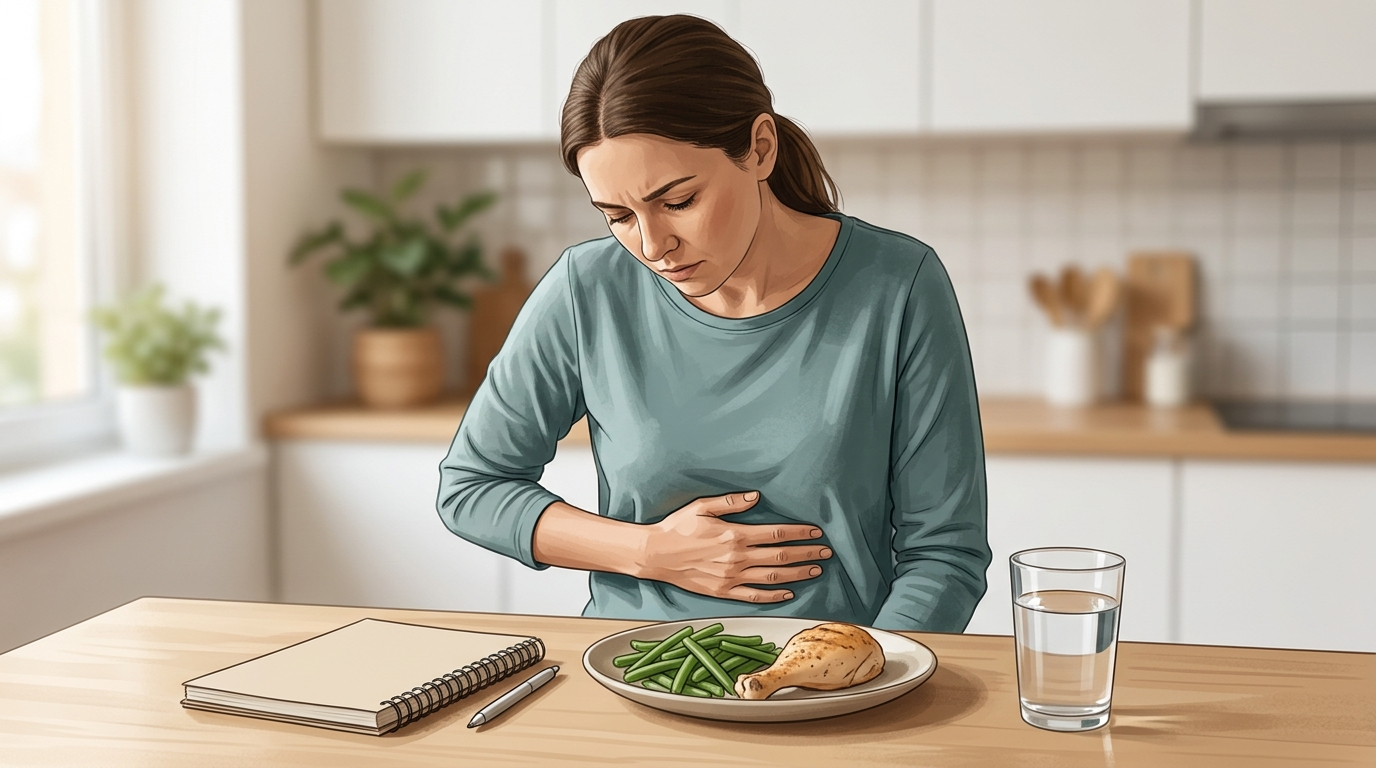
Wicked upper indigestion usually means discomfort, pressure, burning, nausea, or early fullness in the upper abdomen. Common explanations include functional dyspepsia, reflux, gastritis, medication irritation, eating pattern changes, or less common urgent problems. Severe chest pain, black stools, vomiting blood, trouble swallowing, unexplained weight loss, or persistent vomiting needs medical care.
How did we evaluate upper indigestion causes?
We evaluated upper indigestion by separating symptom patterns from diagnoses, because the same upper-abdominal discomfort can come from the esophagus, stomach, duodenum, gallbladder, pancreas, heart, or medication exposure. Government and gastroenterology sources received more weight than forum anecdotes, supplement claims, or single-person trigger lists. We prioritized red-flag triage, symptom timing, H. pylori relevance, medication review, meal-pattern clues, and the distinction between reflux-dominant symptoms and dyspepsia-dominant symptoms. We excluded product recommendations because a cold-stage indigestion article should help readers decide what kind of problem they may be tracking, not push them toward a supplement. The main limitation is that symptom location is imprecise; upper abdominal pain, chest pressure, nausea, and burning can overlap across harmless, chronic, and urgent conditions. We also treated sudden intensity changes as more important than familiar mild symptoms over time clinically.
What does upper indigestion feel like?
Upper indigestion, also called dyspepsia, usually sits between the lower breastbone and the belly button. The NIDDK indigestion guide describes symptoms such as upper-abdominal pain, burning, fullness during a meal, uncomfortable fullness after a meal, bloating, nausea, burping, and sometimes heartburn. Mayo Clinic uses a similar symptom cluster and notes that upper-abdominal pain can range from mild to severe. The word “wicked” matters because intensity changes the decision tree. Mild fullness after a heavy meal often behaves differently from sharp pain, repeated vomiting, black stool, chest pressure, faintness, or pain that wakes someone from sleep. A useful first step is to write down the exact sensation, location, meal timing, medication timing, stool changes, and whether exertion, lying down, alcohol, NSAIDs, caffeine, carbonation, or stress changes the pattern. Location alone should not decide urgency or reassurance either.
Which causes are common but not always obvious?
Functional dyspepsia is one common explanation when upper-abdominal symptoms persist and testing does not show a clear structural cause. The NIDDK lists functional dyspepsia, medicines, infections, and digestive tract conditions as possible contributors to indigestion symptoms. H. pylori infection can contribute to ulcer-related symptoms in some people, but a positive or negative test changes next steps more reliably than guessing from symptoms alone. NSAIDs such as ibuprofen and naproxen can irritate the stomach lining, especially with frequent use, alcohol, or prior ulcer history. Reflux can feel like burning, chest discomfort, sour regurgitation, cough, or throat symptoms, while gallbladder pain may feel more right-sided or meal-triggered. Constipation, swallowed air, high-fat meals, large meals, rapid eating, tight waist pressure, delayed gastric emptying, and anxiety-related gut-brain signaling can also amplify upper pressure without being the root cause. Several causes can coexist.
When should upper indigestion be checked urgently?
Upper indigestion should be checked urgently when symptoms could represent bleeding, obstruction, infection, heart-related pain, or another serious condition. The NIDDK GERD symptom guide tells readers to seek medical care for chest pain, loss of appetite, persistent vomiting, painful swallowing, trouble swallowing, signs of digestive bleeding, or unexplained weight loss. Mayo Clinic similarly flags chest, neck, or shoulder pain with abdominal pain as a reason for emergency evaluation. Red flags do not mean the worst outcome is likely; they mean symptom-only sorting is unsafe. People should be especially cautious when upper discomfort is new after age 60, follows an injury, appears with shortness of breath, causes fainting, includes fever, radiates to the back or shoulder, or feels different from prior reflux or indigestion. Persistent symptoms also deserve routine care even without emergency signs. New symptoms during pregnancy also deserve clinician guidance.
What should someone track before an appointment?
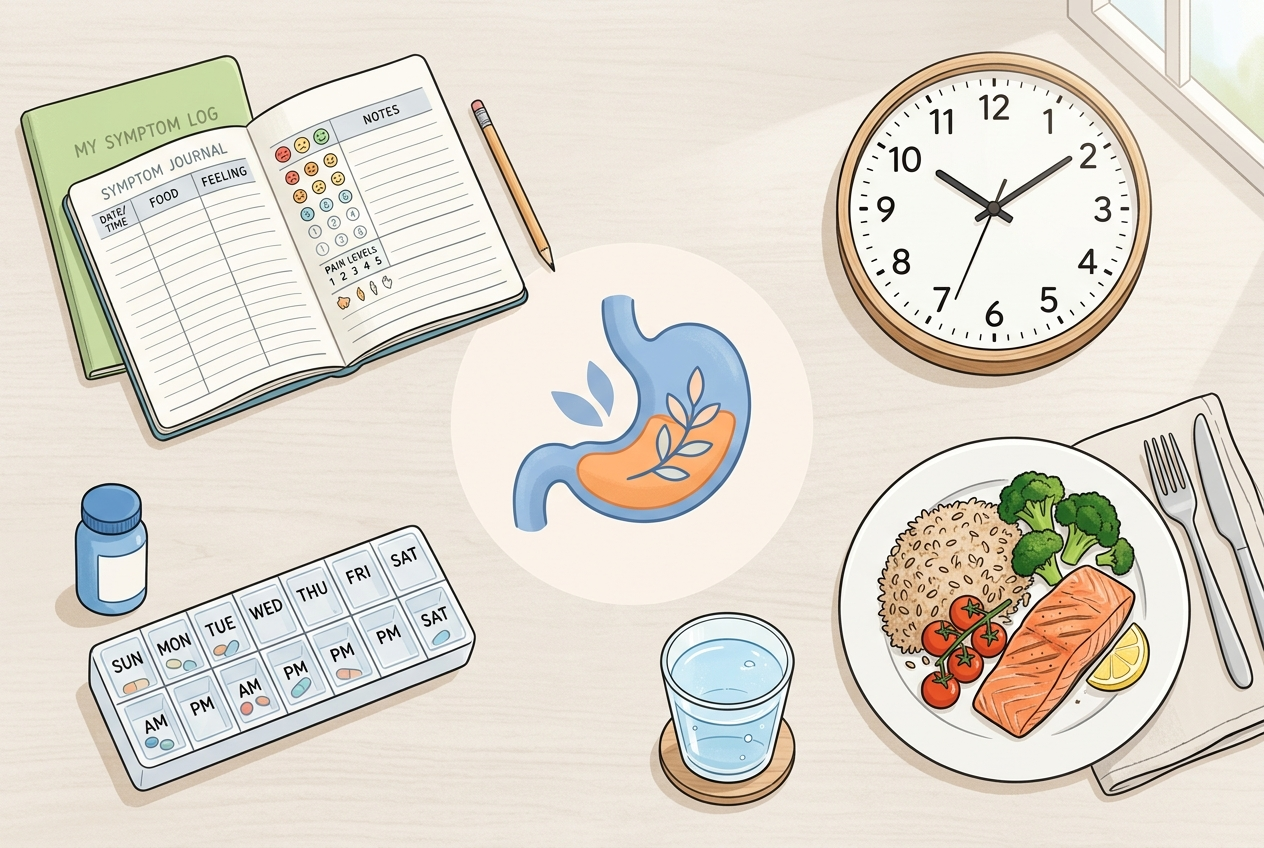
A short symptom log can make an appointment more useful than a vague memory of “bad indigestion.” Track meal time, meal size, fat content, alcohol, caffeine, carbonated drinks, spicy foods, acidic foods, NSAIDs, iron pills, antibiotics, magnesium, cannabis, nicotine, stress, sleep, bowel movements, and menstrual-cycle timing if relevant. Record whether symptoms appear during meals, within 30 minutes, several hours later, when lying down, after exertion, or overnight. Note whether antacids, H2 blockers, proton pump inhibitors, smaller meals, walking, bowel movements, or avoiding NSAIDs changes the pattern. Bring a medication and supplement list with doses, because upper indigestion can follow dose changes or interactions. The goal is not to name the condition yourself; the goal is to give a clinician enough pattern data to choose between watchful waiting, H. pylori testing, blood work, imaging, endoscopy, reflux care, or another pathway.
How do clinicians usually sort dyspepsia?
Clinicians usually start with age, alarm features, medical history, medication use, physical exam, and symptom duration. The ACG and CAG dyspepsia guideline recommends H. pylori testing for many younger adults without alarm features, then acid suppression or other options depending on the result and persistence of symptoms. Older adults or people with red flags may need earlier endoscopy or targeted testing. Functional dyspepsia becomes more likely when recurring symptoms remain after structural causes are not found, but that label should come after appropriate evaluation, not before. A careful workup also separates dyspepsia from reflux-dominant symptoms, gallbladder patterns, pancreatic warning signs, medication injury, constipation-related pressure, pregnancy-related changes, or cardiac symptoms that can masquerade as upper-abdominal discomfort. The safest approach is pattern recognition plus medical triage, not internet certainty. Follow-up matters when symptoms continue despite first-step care or recur repeatedly.
What questions do people ask about upper indigestion?
Can indigestion feel high in the stomach?
Yes. Indigestion commonly affects the upper abdomen between the breastbone and belly button. Some people describe pressure, burning, fullness, nausea, or a stuck sensation rather than sharp pain.
Can reflux and indigestion happen together?
Yes. NIDDK notes that heartburn can occur with indigestion even though reflux and dyspepsia are different concepts. Burning behind the breastbone, sour regurgitation, cough, or symptoms worse when lying down may point more toward reflux.
Can stress make upper indigestion worse?
Stress can amplify gut-brain signaling and symptom awareness, but stress should not be used to dismiss severe, new, or progressive symptoms. A symptom log can show whether stress timing overlaps with meals, sleep loss, caffeine, or bowel changes.
Should someone test for H. pylori?
H. pylori testing is a clinician-guided decision, especially when symptoms persist or ulcer risk is possible. The ACG/CAG guideline supports H. pylori testing in selected dyspepsia pathways, but the right test depends on medications, age, and risk factors.
Can NSAIDs cause upper indigestion?
NSAIDs such as ibuprofen and naproxen can irritate the stomach lining and may contribute to burning, pain, or ulcer risk. People with frequent NSAID use should tell a clinician, especially if symptoms include black stools, anemia, vomiting, or severe pain.
What is the bottom line?
Upper indigestion is a symptom pattern, not a diagnosis. Mild meal-related discomfort may improve with tracking and basic habit changes, but severe, persistent, new, or red-flag symptoms deserve medical evaluation instead of guesswork.
Leave a Reply