
Stomach pain after every meal usually points to a repeatable trigger: indigestion, reflux, gas, constipation, food intolerance, delayed stomach emptying, gallbladder irritation, or inflammation. The pattern matters more than one meal. Track timing, pain location, stool changes, and red flags, then discuss persistent or severe symptoms with a clinician.
How did we evaluate stomach pain after meals?
We evaluated post-meal stomach pain by symptom timing, pain location, repeatability, and medical urgency. We prioritized patient-facing guidance from the NIDDK, the American College of Gastroenterology, Mayo Clinic, and peer-reviewed gastroenterology references over anecdotal trigger lists. We separated common functional patterns, such as dyspepsia, reflux, constipation, gas, and intolerance, from warning patterns that need prompt medical evaluation. We also treated food-trigger claims cautiously because a single painful meal cannot identify lactose intolerance, celiac disease, gallbladder disease, inflammatory bowel disease, or ulcers. This article explains likely categories; it does not diagnose a condition from symptoms alone. The most useful next step is structured tracking, followed by medical evaluation when symptoms persist, escalate, or include red flags. We excluded supplement recommendations, detox claims, and one-size-fits-all elimination diets because cold-stage education should clarify the symptom pattern before discussing products or protocols.
Why can every meal trigger stomach pain?
Every meal activates stomach stretching, acid secretion, bile release, pancreatic enzymes, intestinal movement, and gut-brain signaling. If one part of that chain is irritated or overly sensitive, ordinary eating can feel painful. The NIDDK describes indigestion as upper-abdominal discomfort, early fullness, uncomfortable fullness, bloating, nausea, or belching. That pattern often appears during or soon after meals. Gas-related pain can appear later, especially when bacteria ferment carbohydrates in the colon. Reflux pain often rises toward the chest or throat. Constipation can make normal intestinal stretching feel sharper because stool and gas increase pressure. Food intolerance can make symptoms repeat after lactose, fructose, wheat, high-FODMAP foods, or sugar alcohols. The key question is not whether food is “bad.” The key question is which digestive process becomes painful, where it hurts, how quickly it starts, and how reliably the same pattern repeats across several meals.
What clues help separate indigestion, reflux, gas, and intolerance?
Timing gives the cleanest first clue. Pain during the meal or within 30 minutes often fits indigestion, reflux, stomach irritation, or early fullness. Pain with belching, bloating, and visible distension may fit gas patterns; the NIDDK notes that swallowed air and bacterial breakdown of undigested carbohydrates both create digestive gas. Burning behind the breastbone, sour taste, or regurgitation points more toward reflux. Lower-abdominal cramping with diarrhea, constipation, or stool urgency points more toward intestinal motility or intolerance. Pain after fatty meals, especially in the right upper abdomen or shoulder area, deserves medical discussion because bile flow and gallbladder contraction happen after meals. Pain that improves after a bowel movement may point toward stool or gas pressure. A symptom diary should log meal time, food, pain start time, pain location, stool changes, stress, medications, and menstrual timing when relevant.
When should meal-related stomach pain be checked urgently?
Post-meal pain needs urgent medical help when it comes with trouble swallowing, black or bloody stool, vomiting blood, persistent vomiting, chest pressure, fainting, fever, unexplained weight loss, dehydration, severe right-sided pain, or pain that wakes you from sleep. The American College of Gastroenterology lists difficulty swallowing, bleeding, choking symptoms, and weight loss with inability to tolerate foods as reasons to speak with a doctor immediately. These symptoms do not prove a dangerous condition, but they change the risk calculation. New severe pain after age 50, pain after recent abdominal surgery, pregnancy-related abdominal pain, or pain with jaundice also deserves prompt care. Chest pressure, shortness of breath, sweating, or pain spreading to the arm or jaw should be treated as emergency symptoms, not ordinary indigestion. If the pain is mild but happens after nearly every meal for two or more weeks, schedule a routine medical visit rather than endlessly removing foods without a plan.
What can you track before changing your diet?
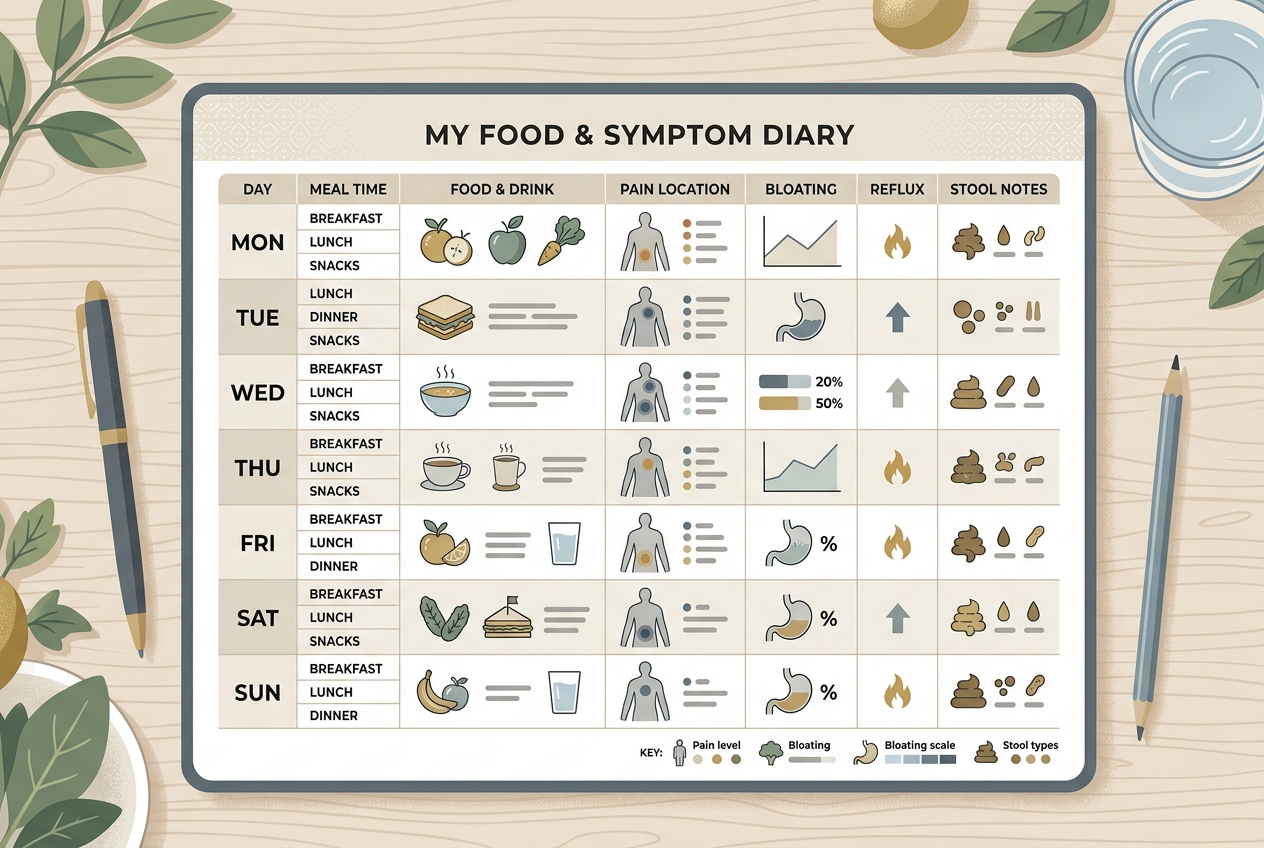
Track patterns before making a long restriction list. A useful seven-day log includes meal timing, portion size, fat level, fiber level, carbonated drinks, caffeine, alcohol, spicy foods, dairy, wheat, beans, onions, garlic, artificial sweeteners, pain location, pain score, bloating, nausea, reflux, stool form, and symptom duration. The NIDDK recommends discussing a food and symptom diary with a doctor or dietitian when gas symptoms may be diet-related. Do not remove entire food groups permanently based on one bad day. Short, structured experiments produce better information. For example, test smaller meals for three days, then test lower-fat dinners for three days, then test lactose-free dairy for several days if dairy repeatedly matches symptoms. Keep medication changes, new supplements, antibiotics, sleep loss, travel, menstrual timing, and stress spikes in the same log because non-food factors can mimic food triggers.
What common mistakes make the pattern harder to solve?
The biggest mistake is assuming every post-meal symptom comes from one food. Meal-related pain can reflect portion size, speed of eating, constipation, reflux position, medication timing, anxiety physiology, menstrual-cycle changes, or a gut infection recovery period. Another mistake is stacking remedies before identifying the pattern. Antacids, laxatives, digestive enzymes, probiotics, peppermint oil, fiber powders, and elimination diets answer different questions; using several at once hides which variable helped or worsened symptoms. A third mistake is ignoring location. Upper-middle discomfort, right-upper pain, lower-left cramping, and burning chest pressure belong to different clinical conversations. A fourth mistake is using internet lists as diagnosis. Food diaries, clinician history, physical exam, and targeted testing are more reliable than broad “avoid everything” rules. A narrow, timed, reversible experiment protects nutrition while making the next medical conversation more useful and less dependent on guesswork.
What questions do people ask about stomach pain after eating?
Is stomach pain after every meal always serious?
No. Indigestion, gas, constipation, reflux, and food intolerance can all cause repeated post-meal discomfort. Persistent, worsening, severe, or red-flag symptoms should be evaluated rather than self-managed indefinitely.
Can anxiety make my stomach hurt after meals?
Yes. Gut-brain signaling can change stomach accommodation, intestinal movement, nausea, and pain sensitivity. Anxiety does not make symptoms imaginary; it means the nervous system can amplify digestive signals.
Why does bloating hurt after I eat?
Bloating stretches the abdominal wall and intestines. NIDDK explains that gas can come from swallowed air and bacterial fermentation of undigested carbohydrates.
Should I try a low-FODMAP diet first?
Not as a first move for everyone. A low-FODMAP diet is restrictive, so it works best with dietitian guidance when symptoms strongly suggest fermentable-carbohydrate sensitivity.
Can reflux feel like stomach pain?
Yes. Reflux often causes burning chest discomfort, sour taste, throat symptoms, or upper-abdominal burning. Trouble swallowing, bleeding, or weight loss changes the urgency.
What should I bring to a doctor visit?
Bring a seven-day food and symptom log, medication list, supplement list, stool pattern notes, pain location, timing after meals, and any red-flag symptoms. Specific notes shorten the path to useful testing.
For a detailed comparison of specific products and strains, see Bloating Every Afternoon? Compare Fiber, Probiotics, and Enzymes.
For a detailed comparison of specific products and strains, see What Should I Take for Gas and Bloating? A Practical Comparison of Probiotics, Enzymes, and Fiber.
What is the bottom line?
Stomach pain after every meal is a pattern, not a diagnosis. Start by mapping timing, location, stool changes, reflux symptoms, bloating, medication use, and warning signs. Mild patterns often become clearer with smaller meals, slower eating, constipation management, and a structured food diary. Severe pain, bleeding, swallowing trouble, persistent vomiting, weight loss, fever, jaundice, dehydration, or chest pressure needs medical care quickly. If symptoms continue for two or more weeks despite basic tracking, bring the diary to a clinician and ask what category best fits the pattern: dyspepsia, reflux, gas, constipation, intolerance, gallbladder-related pain, medication effect, or another digestive condition. The most useful answer usually comes from matching the symptom pattern to anatomy and timing, not from guessing one universal trigger. A calm record of repeated meals gives a clinician better evidence than a long list of foods removed out of fear.
Leave a Reply