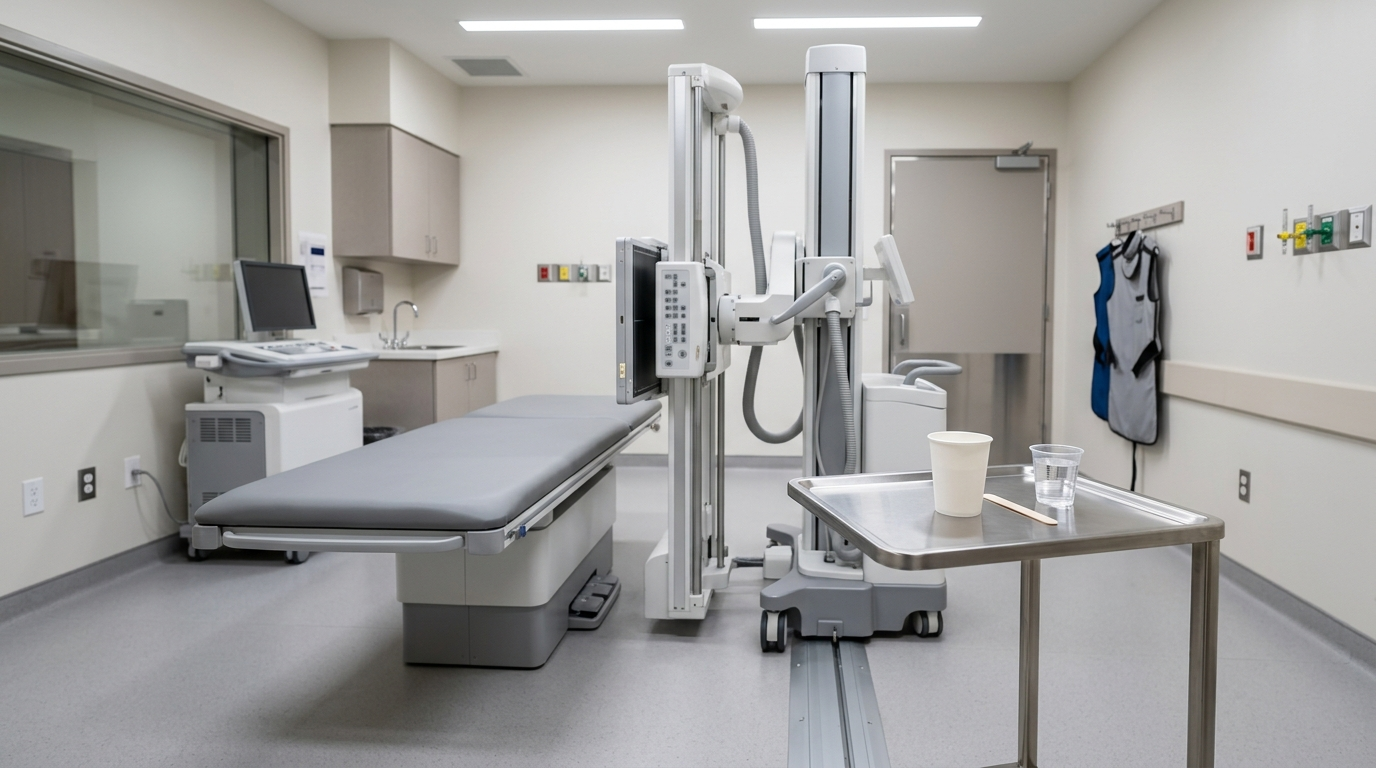
A barium swallow is a fluoroscopic X-ray test that follows contrast liquid through the throat and esophagus in real time. You usually drink barium while a radiologist or radiographer records moving images from several positions. Preparation, fasting, and medication instructions vary by facility, so follow your appointment letter rather than a generic online schedule.
How did we evaluate barium swallow guidance?
We evaluated barium swallow guidance by prioritizing patient instructions from radiology departments, academic medical centers, and the American College of Radiology–Radiological Society of North America patient resource. We separated a standard barium swallow or esophagram from a modified barium swallow, because the tests examine overlapping but different parts of swallowing. We compared preparation, procedure, aftercare, limitations, and safety details rather than using anecdotes from forums. Instructions differ across hospitals, particularly for fasting and regular medicines, so this guide does not replace the letter or phone advice from the department performing the examination. We excluded precise radiation estimates because equipment, imaging time, patient factors, and protocol affect exposure. The result is a practical overview of what commonly happens and which details require confirmation from the local imaging team. That hierarchy keeps procedure advice accountable.
What does a barium swallow test show?
A barium swallow shows the shape and movement of the pharynx and esophagus while a person swallows radiopaque contrast. Barium appears clearly on X-ray, allowing fluoroscopy to record a moving sequence rather than one static picture. The test can reveal how contrast passes through the upper digestive tract and whether the outline or movement looks unusual. RadiologyInfo.org, a patient resource from the American College of Radiology and Radiological Society of North America, distinguishes a barium swallow that evaluates the pharynx and esophagus from a broader upper gastrointestinal examination. A clinician may request the study for swallowing difficulty, regurgitation, or other upper digestive symptoms, but the referral question determines the exact protocol. The test does not automatically examine every cause of chest, throat, or stomach symptoms. It also does not collect tissue. The radiologist interprets the images and sends a report to the referring clinician.
How is a barium swallow different from similar tests?
The name “barium swallow” can create confusion because hospitals may use related terms for different protocols. A standard esophagram follows liquid through the pharynx and esophagus, while a modified barium swallow focuses closely on oral and throat-phase swallowing with a speech-language professional. An upper GI series extends imaging into the stomach and duodenum. Endoscopy uses a flexible camera and can collect tissue, so it answers different questions. Johns Hopkins Medicine notes that barium swallowing may be performed alone or as part of an upper GI series. The referral order identifies the intended study.
| Test | Main area | Typical method |
|---|---|---|
| Barium swallow / esophagram | Throat and esophagus | Fluoroscopy with liquid contrast |
| Modified barium swallow | Oral and throat swallowing | Several food or liquid textures |
| Upper GI series | Esophagus, stomach, duodenum | Fluoroscopy with contrast |
| Upper endoscopy | Upper digestive lining | Flexible camera |
How should you prepare for a barium swallow?
Follow the imaging department’s instructions exactly because fasting windows are not universal. Some facilities request no food or drink for four hours, others use six hours, and some protocols use about eight hours. South Tees Hospitals NHS Foundation Trust instructs its patients not to eat or drink for six hours, while also providing separate directions for medicines and diabetes. Do not copy that rule if your appointment letter says something different. Tell the department if you are or may be pregnant, have diabetes, have swallowing or aspiration concerns, recently completed another barium examination, or cannot safely follow the fasting plan. Ask specifically whether essential medicines may be taken with a small amount of water. Remove jewelry when directed and wear clothing that is easy to change. If the written instructions are missing or contradictory, call the radiology department before the appointment instead of guessing.
What happens during the examination?

The radiographer or radiologist explains the procedure, checks relevant safety information, and may ask you to change into a gown. You will usually stand beside or lie on a fluoroscopy table and drink a thick or thin barium mixture. The imaging team records X-ray sequences as you swallow and may reposition the table or ask you to turn so the esophagus appears from different angles. Some protocols include a barium tablet, a gas-producing preparation, or a small food item to answer a specific referral question. The North Bristol NHS Trust patient guide describes a typical examination as about 20 minutes, but timing can vary. Barium often tastes chalky, and the team may ask you to hold your breath briefly. The examination is usually outpatient, and sedation is not normally part of a standard barium swallow. Staff guide each step.
What should you expect after a barium swallow?
Most people can resume normal eating, drinking, driving, and daily activities after the examination unless the local team gives different instructions. Barium can make stool look pale or white temporarily and can contribute to constipation. Hydration helps the contrast pass, but people with fluid restrictions should follow their clinician’s plan rather than increasing fluids automatically. Gloucestershire Hospitals NHS Foundation Trust says clearance commonly takes 24 to 72 hours and advises patients to seek guidance for concerning aftereffects. Contact the healthcare team promptly if you cannot pass stool or gas, develop increasing abdominal pain or swelling, have fever, or experience another symptom listed in your discharge instructions. The radiologist reviews the recorded images and prepares a report. The person who requested the examination usually explains the result and decides whether another test, observation, or no further action is appropriate.
What can a barium swallow result answer?
A barium swallow result can describe anatomy and movement during the recorded swallows, including narrowing, delayed passage, abnormal contour, or reflux seen during that examination. A normal result means the study did not show an abnormality within the protocol’s field and timing; it does not prove that every possible cause of symptoms is absent. Fluoroscopy may miss intermittent events that do not occur during the test, and it cannot provide a tissue sample. The report should be interpreted alongside symptoms, physical findings, and other investigations. Ask the referring clinician which question the test was intended to answer, whether the requested protocol covered the throat, esophagus, stomach, or several areas, and what the radiologist actually observed. Avoid diagnosing yourself from one phrase in the report or from someone else’s images online. Similar symptoms can lead to different examinations because the safest, most informative next step depends on the individual clinical context.
What else should you know before the appointment?
Does a barium swallow hurt?
The test is usually not painful, but the drink may taste chalky and positioning can feel awkward. Tell the imaging team about pain or swallowing difficulty.
Do you need sedation?
Standard barium swallows usually do not use sedation. Confirm the protocol if your appointment combines fluoroscopy with another procedure.
Can you take regular medicine beforehand?
Facility instructions differ. Ask whether essential medicine can be taken with a small amount of water, especially when fasting or managing diabetes.
Is a barium swallow the same as endoscopy?
No. Fluoroscopy records contrast movement with X-rays, while endoscopy uses a camera and can collect tissue when clinically appropriate.
Can you drive afterward?
Most standard examinations do not limit driving because they do not use sedation. Follow the department’s discharge advice if your protocol was different.
Why can stool look white afterward?
Barium is pale and leaves the body through stool. Temporary light coloring is expected, but follow the aftercare sheet for warning signs.
What is the practical next step?
Read the appointment letter, identify the exact test name, and write down three questions: how long to fast, how to handle medicines, and when results will be available. Call the imaging department if the instructions do not address pregnancy, diabetes, aspiration risk, mobility needs, allergies, or fluid restrictions that apply to you. Bring a current medicine list and arrive with enough time for registration and changing. During the examination, tell the radiographer if swallowing becomes difficult or you feel unwell. Afterward, follow the local hydration and eating instructions and keep the discharge contact number. A barium swallow is a structured imaging study, not a test you need to decode through several online communities. Your radiology team knows the requested protocol, and your referring clinician knows the clinical question. Those two sources should resolve details that a general article cannot.
Leave a Reply