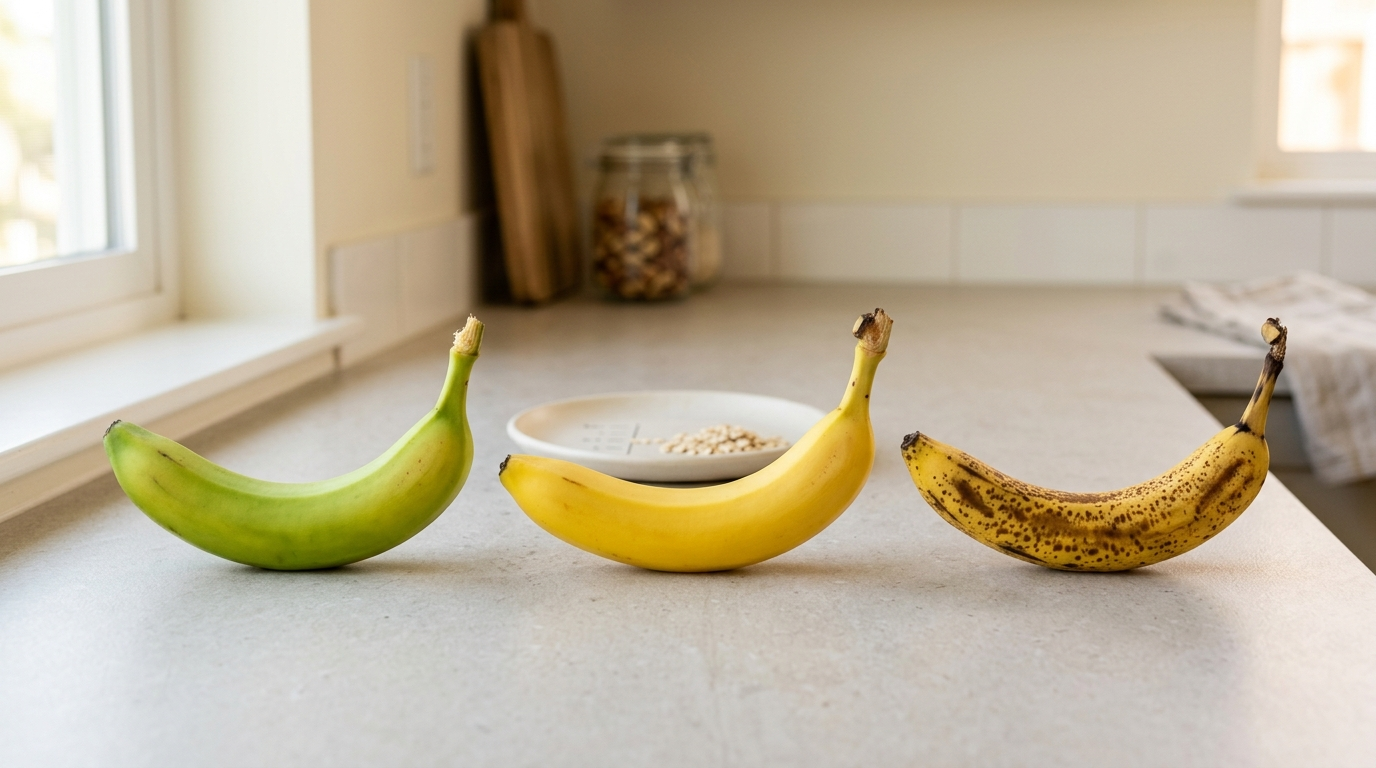
Bananas can trigger IBS symptoms for some people, especially when the fruit is ripe, the portion is large, or the meal contains other fermentable carbohydrates. Bananas are not a universal IBS trigger. Ripeness, serving size, bowel pattern, and personal tolerance determine whether a banana contributes to gas, bloating, pain, diarrhea, or constipation.
How did we evaluate bananas as a possible IBS trigger?
We prioritized clinical guidelines, government digestive-health guidance, peer-reviewed research on fermentable carbohydrates, and laboratory food testing over anecdotal trigger lists. We separated evidence about IBS dietary patterns from claims about one banana, because a low-FODMAP intervention can help a group even when individual foods produce different responses. We evaluated ripeness, portion size, fructan exposure, fiber, resistant starch, meal context, and bowel pattern as distinct variables. We excluded claims that everyone with IBS should avoid fruit, that a food reaction proves an allergy, and that a single symptom identifies a diagnosis. The main limitation is food variability: banana cultivar, growing conditions, ripeness, storage, and tested serving can change carbohydrate composition. A practical answer therefore uses a controlled personal comparison rather than a permanent ban. Anyone with unexplained weight loss, bleeding, fever, persistent vomiting, nighttime symptoms, anemia, or a major change in bowel habits needs medical assessment rather than a food experiment.
Can a banana really trigger IBS symptoms?
A banana can coincide with IBS symptoms when its fermentable carbohydrates, fiber, resistant starch, or serving size exceed a person’s current tolerance. Gut bacteria ferment some carbohydrates and produce gas, while water movement and intestinal sensitivity influence pain, bloating, stool urgency, and stool form. The American College of Gastroenterology guideline supports a limited low-FODMAP trial for global IBS symptoms, but that recommendation does not classify every banana as a trigger. Individual thresholds matter because one person may tolerate a whole banana while another notices symptoms after half of a ripe fruit or only when it accompanies other fermentable foods. Timing also matters: symptoms that appear after breakfast may reflect the entire meal, caffeine, stress, or the gastrocolic reflex rather than the banana alone. The strongest conclusion is conditional. Bananas can be one contributor, but a repeatable, portion-specific pattern provides better evidence than a single uncomfortable episode.
Why can banana ripeness change digestive tolerance?
Banana ripening changes starches and carbohydrates, so a firm banana and a soft, spotted banana are not nutritionally identical test foods. As a banana ripens, enzymes convert much of its starch into simpler sugars, while fermentable carbohydrate measurements can also shift. Monash University’s laboratory retesting classified a tested firm common banana serving as lower in oligo-fructans than its ripe counterpart and emphasized that agricultural conditions can change results. That finding supports a ripeness comparison, not a universal rule that green fruit is symptom-free. Firm bananas contain more resistant starch, which reaches the colon and can also increase fermentation in a sensitive person. Very ripe fruit may be easier for some people to chew and digest, yet less comfortable for others at a particular portion. Compare the same cultivar at similar serving sizes, and record color, firmness, portion, meal context, and symptoms. “Banana” is too broad a label for a useful tolerance test.
How do portion size and meal context affect the result?
FODMAP exposure works as a cumulative load, so a tolerated food can become uncomfortable when its portion increases or several fermentable foods share one meal. A banana eaten alone creates a different test from a banana smoothie containing milk, yogurt, honey, inulin, dates, or a large quantity of other fruit. Coffee, high-fat foods, intense exercise, stress, and a large breakfast can also change motility and symptom perception. The National Institute of Diabetes and Digestive and Kidney Diseases advises that dietary changes affect people with IBS differently and describes short, structured low-FODMAP trials followed by reintroduction. For a cleaner test, choose one banana ripeness, start with a modest measured portion, keep the surrounding meal familiar, and observe the next several hours. Repeat on separate days before drawing a conclusion. A consistent response to one defined serving provides more information than an unmeasured smoothie with six possible triggers.
How can you test whether bananas are your trigger?
Use a short challenge that changes one variable at a time. First, record three ordinary days without deliberately changing diet, sleep, caffeine, medication, exercise, or meal timing. Next, test a measured portion such as half of a firm banana with a familiar low-complexity meal, then repeat the same challenge on another day if symptoms remain acceptable. Test a ripe banana separately rather than changing ripeness and portion together. Record time eaten, portion, ripeness, accompanying foods, stress, abdominal pain, bloating, gas, urgency, and stool form using the Bristol Stool Form Scale. A repeated pattern strengthens the inference, while inconsistent results point toward meal context or normal symptom variability. Do not keep an unnecessarily restrictive diet after one reaction. A registered dietitian can structure elimination and reintroduction when several foods seem problematic, nutrition is narrowing, or anxiety about eating is growing. Controlled reintroduction identifies tolerance; indefinite avoidance does not.
What can you eat instead if bananas repeatedly cause symptoms?
A replacement should preserve the job the banana performed in the meal. For portable fruit, test a personally tolerated portion of grapes, strawberries, blueberries, kiwi, citrus, or another fruit selected with current low-FODMAP guidance. For smoothie texture, oats, chia, ice, lactose-free yogurt, or a small portion of tolerated fruit can add body, but introduce only one new ingredient during a trigger test. For carbohydrate before activity, rice cakes, oats, potatoes, sourdough spelt, or another tolerated starch may fit, depending on individual needs and serving size. For potassium, a varied diet can include potatoes, leafy greens, beans in tolerated portions, dairy or fortified alternatives, fish, and other foods, so removing bananas does not automatically create a deficiency. The goal is not to find a universally “safe” substitute. The goal is to maintain dietary variety while identifying portions that fit the person’s symptoms, preferences, nutrition needs, and daily routine.
Are green bananas always easier for IBS?
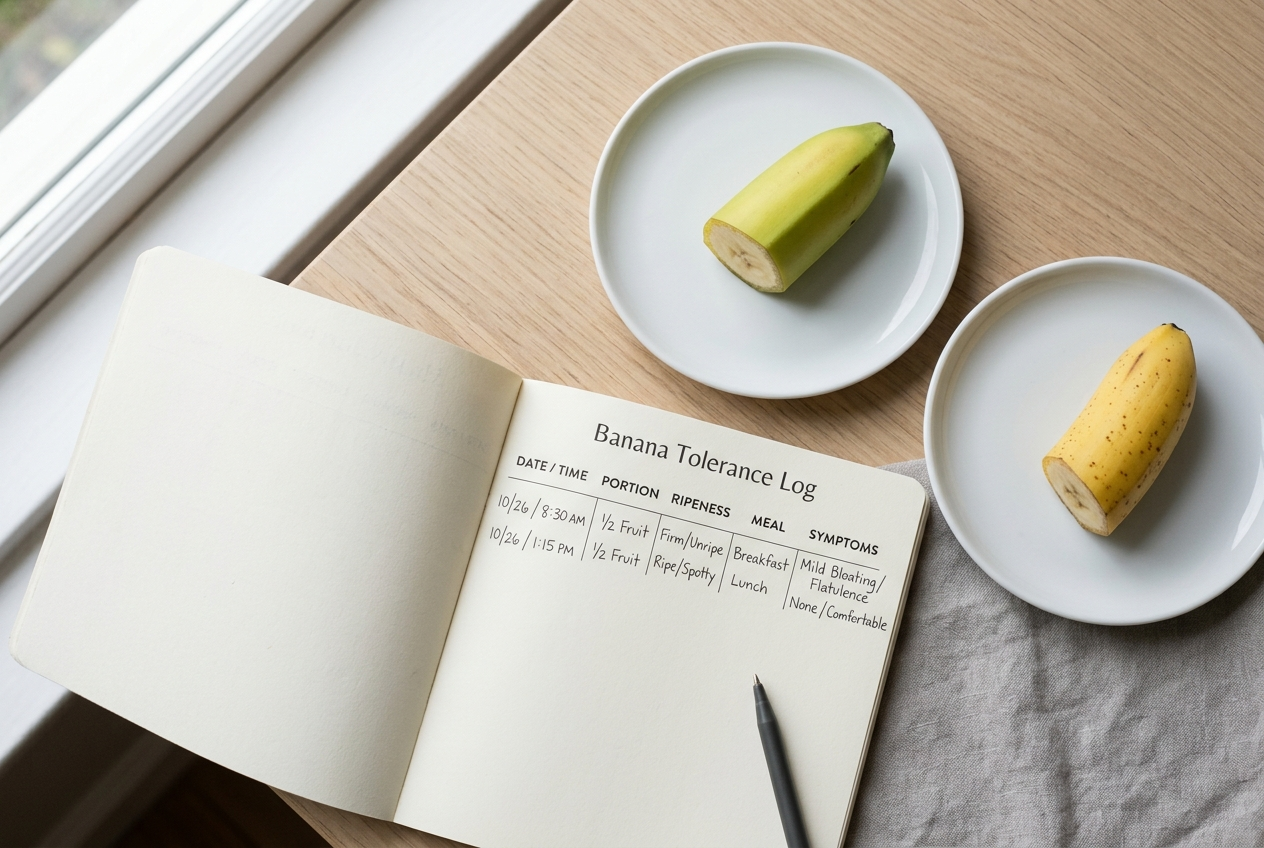
Green or firm bananas are not always easier for IBS, even when a tested serving contains fewer oligo-fructans than a ripe banana, because firm fruit contains more resistant starch that colonic bacteria can ferment into short-chain fatty acids and gas. That fermentation can feel comfortable, neutral, or uncomfortable depending on dose, microbiota, transit, and visceral sensitivity, while texture, cultivar, chewing, storage, and serving size add further variation that color alone cannot predict. Compare equal measured portions of firm and ripe banana on separate days with similar meals; if both versions produce repeatable symptoms, reduce the portion or test another food serving the same practical role. If one version works, keep the tolerated ripeness and amount rather than escalating immediately, because a personal threshold provides more value than a red-or-green list when IBS tolerance differs across people and can change over time within the same person.
Can bananas cause diarrhea in someone with IBS?
Bananas may accompany diarrhea in a person with IBS when fermentable carbohydrates, meal size, other ingredients, or the gastrocolic reflex accelerate an already sensitive bowel pattern, but coffee, lactose-containing dairy, polyol sweeteners, inulin, high-fat foods, stress, and a large morning meal can share the same eating occasion. A 2023 dietary study found that bananas contributed some fructan exposure in its studied population, but the observational result did not prove that bananas caused diarrhea for every participant or establish a universal serving threshold. Test the fruit outside a complex smoothie or restaurant meal and record urgency and Bristol Stool Form Scale changes alongside ripeness, portion, timing, and accompanying foods. Recurrent watery diarrhea, dehydration, blood, fever, nighttime episodes, weight loss, or a new persistent change requires medical review, because a repeatable food pattern can guide meal choices without ruling out infection, inflammatory disease, celiac disease, medication effects, or another cause.
Can bananas cause constipation in someone with IBS?
Bananas can coincide with constipation, but the direction of effect varies with ripeness, total fluid and fiber intake, baseline transit, physical activity, medication, and the rest of the diet, while a firm banana’s additional resistant starch can change gas or stool patterns differently across people. Constipation after a banana may instead reflect a low-fluid day, reduced meal volume, travel, stress, or displacement of other fiber-rich foods, so record stool frequency and Bristol Stool Form Scale type for several days rather than judging one bowel movement. If a small measured portion repeatedly worsens constipation, pause it and compare an alternative fruit or starch while keeping meal timing, hydration, caffeine, and other variables stable. Severe pain, vomiting, abdominal swelling, inability to pass gas, bleeding, unexplained weight loss, or a sudden major change requires prompt assessment, because a banana challenge supports mild pattern-finding and cannot evaluate obstruction or another urgent condition.
Should everyone with IBS follow a low-FODMAP diet?
Not everyone with IBS needs a low-FODMAP diet, and the approach is not intended as a permanent list of forbidden foods; the ACG guideline supports a limited trial, while the NIDDK describes gradual reintroduction to identify FODMAP types and portions that remain tolerable. A prolonged elimination phase can narrow fiber, micronutrients, food variety, social flexibility, and microbial substrates, so people who already tolerate bananas have no evidence-based reason to remove them solely because an app labels another ripeness or serving as high FODMAP. Someone who suspects bananas can run a focused ripeness-and-portion challenge before restricting an entire carbohydrate category, keeping the surrounding meal stable and documenting symptoms over repeated tests. A gastrointestinal dietitian can help when symptoms are severe, multiple foods are disappearing, weight is changing, or an eating disorder history makes elimination risky; the endpoint is the least restrictive nutritionally adequate pattern, not perfect compliance with a generic chart.
When should banana-related symptoms be medically assessed?
Medical assessment is appropriate when symptoms are new, persistent, severe, progressively worsening, or accompanied by visible blood, black stool, fever, repeated vomiting, dehydration, anemia, unexplained weight loss, nighttime awakening, a relevant family history, or a marked change in bowel habits. Sudden hives, lip or tongue swelling, wheezing, or breathing difficulty after banana suggests a possible allergic reaction and requires urgent care rather than FODMAP testing, while oral itching can relate to pollen-food allergy syndrome and deserves discussion with an allergy professional. A clinician may evaluate celiac disease, inflammation, infection, medication effects, food allergy, or another cause before assigning the pattern to IBS. For stable, previously assessed IBS without alarm signs, a structured food record and measured reintroduction can clarify tolerance, but red flags change the task from dietary troubleshooting to medical evaluation and should not be managed by repeatedly reducing a banana portion.
What is the bottom line on bananas and IBS?
Bananas are a possible IBS trigger, not a prohibited food overall. The most informative variables are ripeness, measured portion, meal context, baseline bowel pattern, and whether the response repeats on separate days. Firm bananas may contain fewer oligo-fructans at a tested serving, while their resistant starch can still create fermentation; ripe bananas may be tolerated well by one person and poorly by another. Test half a banana in a simple, familiar meal before removing the fruit entirely, and change ripeness separately from portion. If tolerance remains poor, replace the banana with another food that serves the same practical and nutritional role. For a broader look at daily fiber amounts, compare oats, psyllium, banana, and fiber supplements without assuming that more fiber is always better. Persistent symptoms, nutritional restriction, or alarm features require professional guidance.
Leave a Reply