Flying can make you feel gassier because lower cabin pressure lets gas already inside the stomach and intestines expand. Swallowed air, carbonated drinks, large meals, and personal trigger foods can add to that volume. A private aircraft does not eliminate the effect unless its cabin maintains pressure closer to sea level.
How did we evaluate gas and bloating during flight?
We prioritized aviation-physiology guidance, peer-reviewed reviews of the aircraft cabin environment, and gastroenterology research on intestinal gas over anecdotes about particular flights. We separated pressure-driven gas expansion from gas production because altitude changes the volume of existing gas, while food fermentation and swallowed air change how much gas enters the digestive tract. We also distinguished normal flatulence from severe or persistent abdominal symptoms that require medical assessment. The evidence base has limits: few controlled trials measure flatulence during ordinary passenger flights, and cabin altitude varies by aircraft, route, and pressurization system. Practical advice therefore rests on established gas laws, known cabin-pressure ranges, and individual trigger patterns rather than a guaranteed food list. The relevant comparison is not private versus commercial branding; it is the cabin altitude, meal, flight duration, baseline bowel pattern, and amount of air swallowed before and during ascent.
Why can flying make you fart more?
Aircraft cabins are pressurized, but most do not stay at sea-level pressure. As the aircraft climbs and cabin pressure falls, Boyle’s law predicts that a fixed amount of gas occupies more volume. A peer-reviewed review of the aircraft cabin environment reports that trapped body gas can expand by as much as approximately 30% at a cabin altitude near 8,000 feet. Intestinal gas can then create fullness, belching, pressure, or flatulence even when digestion has not suddenly produced 30% more gas. The Federal Aviation Administration identifies swallowed air and digestive gas as the main contributors and explains that belching or passing flatus normally relieves expansion. The effect often becomes noticeable during ascent, but meal timing, constipation, visceral sensitivity, and baseline bloating change how strongly a passenger feels it. Pressure explains the volume change; individual physiology explains the discomfort.
Is a private plane different from a commercial flight?
A private plane can feel different, but ownership does not determine digestive pressure. Cabin altitude does. Some business jets maintain a lower cabin altitude than older commercial aircraft, while unpressurized light aircraft expose occupants to ambient pressure as they climb. A private cabin may also provide more room to move, easier bathroom access, different meal timing, and fewer social constraints, which can make ordinary gas easier to manage without changing its physiology. Conversely, a small unpressurized aircraft can produce more noticeable pressure change than a well-pressurized airliner at the same cruising altitude. The useful question for the operator is, “What cabin altitude does this aircraft maintain during cruise?” A cabin held closer to sea-level pressure produces less expansion than one equivalent to 8,000 feet. Flight duration matters less than the pressure profile for expansion, although longer travel creates more time for swallowed air, food fermentation, immobility, and constipation to contribute additional discomfort.
What should you eat before flying to reduce gas?
Choose a familiar, moderate meal rather than an aggressive “anti-bloat” menu that introduces new variables. Foods that repeatedly cause you gas at ground level are more likely to become uncomfortable when the existing intestinal gas expands during ascent. Common contributors include large portions of beans, onions, garlic, certain cruciferous vegetables, sugar alcohols, carbonated drinks, and high-fat meals, but tolerance differs and none is universally prohibited. The FAA recommends avoiding foods that a passenger already knows cause trouble before flight. A clinical review of bloating and intestinal gas notes that excessive air swallowing, gas production, impaired gas transit, and visceral hypersensitivity can all create similar symptoms, so food is only one variable. Eat slowly, stop before feeling overfull, and keep the meal composition recognizable. A simple preflight meal can reduce uncertainty; skipping food entirely can create hunger, reflux, or poor energy without guaranteeing a gas-free flight.
What can you do during the flight if pressure builds?
Release pressure in ordinary ways when possible: belch discreetly, pass gas in a restroom, loosen restrictive clothing, and walk when the seat-belt sign is off and movement is safe. Slow eating and drinking can reduce swallowed air, while avoiding gum, rapid sipping through straws, and carbonated beverages may reduce additional gas volume. Gentle movement can improve comfort during a long seated period, although it does not reverse cabin pressure. A short article indexed in PubMed specifically notes that holding back flatus can create discomfort during air travel, but its proposed odor-control solutions are commentary rather than clinical evidence. Do not forcefully strain or repeatedly suppress severe pain. Sudden intense abdominal pain, repeated vomiting, marked swelling, inability to pass stool or gas, fainting, chest pain, or symptoms after recent abdominal surgery require attention from the crew and medical guidance. Normal flight gas is awkward; escalating pain is a different problem.
Does cabin pressure create new intestinal gas?
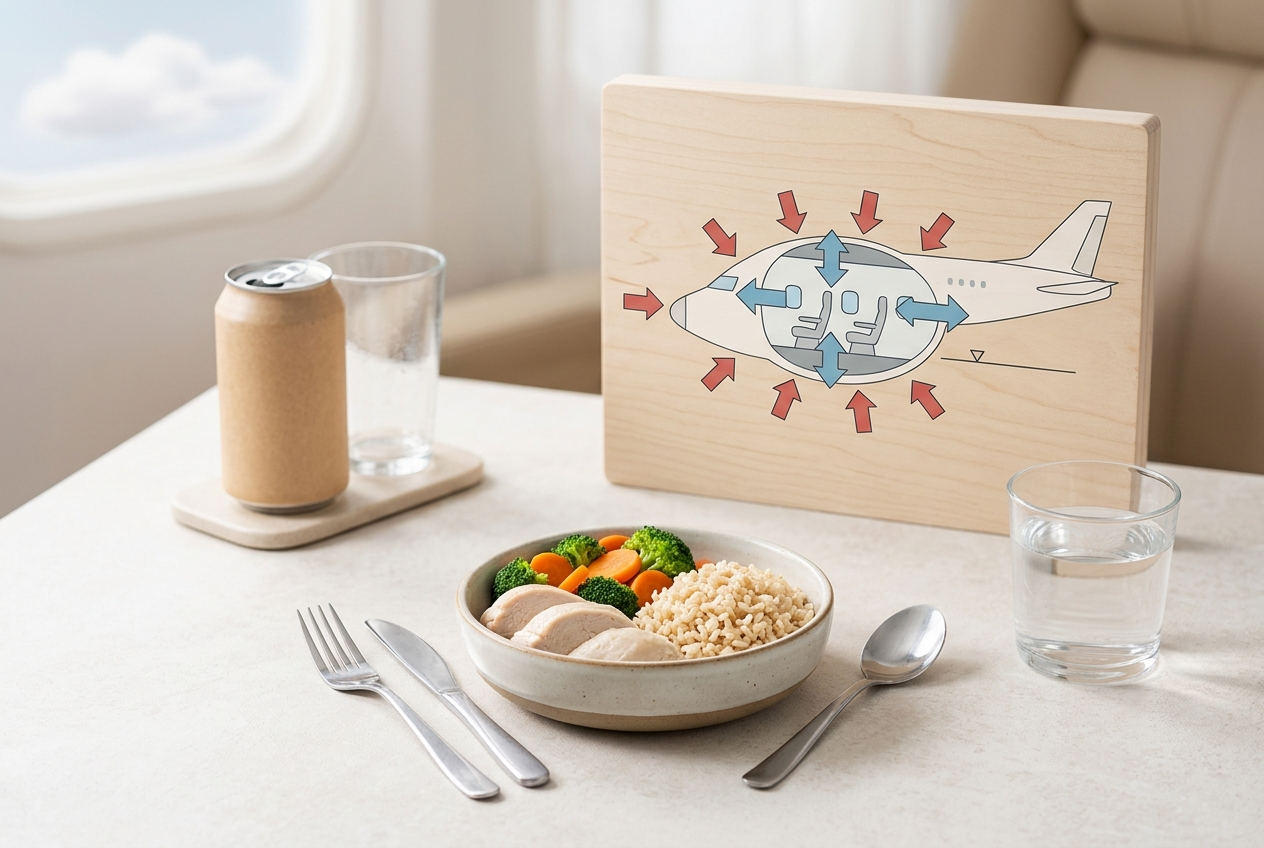
Cabin pressure primarily expands gas that is already present; it does not manufacture a new chemical supply of intestinal gas. Digestion can continue producing hydrogen, carbon dioxide, or methane when gut microbes ferment carbohydrates, and swallowing can add nitrogen and oxygen, but those processes also occur at ground level. Lower pressure changes the volume occupied by those gases, which can make an ordinary amount feel more noticeable. This distinction explains why symptoms may begin soon after ascent, before a recent meal has had time to reach the colon. It also explains why a person can feel distended without passing dramatically more gas. Food fermentation, constipation, and altered transit can still contribute during a long journey. If the pattern appears only in flight and settles after landing, pressure is a plausible contributor. If gas, pain, diarrhea, constipation, or distension continues for days, cabin pressure alone is an incomplete explanation and the broader digestive pattern deserves evaluation.
Are carbonated drinks worse on an airplane?
Carbonated drinks can increase belching and fullness because they introduce dissolved carbon dioxide that escapes from liquid in the stomach. Cabin pressure can add to the sensation by expanding gas volume, although the exact response depends on serving size, drinking speed, food, and individual sensitivity. A small sparkling drink may cause no problem for one passenger, while a large soda consumed quickly through a straw can combine carbonation, swallowed air, sweeteners, and meal volume in another. Switching to still water removes one controllable source of gas without claiming that hydration prevents pressure expansion. Avoiding carbonation is most useful for someone who already notices belching or bloating after fizzy drinks at ground level. Caffeine, high sugar loads, and sugar alcohols can add separate digestive effects, so “carbonation” may not be the only variable. Compare similar drinks on different trips rather than assuming every symptom came from bubbles alone.
Can holding in gas during a flight hurt you?
Holding gas briefly is usually uncomfortable rather than dangerous for a healthy person, but prolonged suppression can increase pressure, cramping, and distraction. The bowel normally moves gas forward or backward until it is belched, passed as flatus, or redistributed. Cabin-pressure expansion can make that normal volume harder to ignore. Use the restroom when practical, change position, and walk safely instead of repeatedly bracing the abdomen. Severe or progressive pain should not be dismissed as embarrassment, especially when it occurs with vomiting, a rigid or markedly swollen abdomen, faintness, fever, bleeding, or inability to pass gas. Recent abdominal surgery, known bowel obstruction, an ostomy problem, or another condition involving trapped gas changes the risk calculation and warrants preflight medical advice. For ordinary recurrent bloating outside aviation, a structured comparison of fiber, probiotics, and digestive enzymes may help clarify options without treating a flight-specific symptom as a product deficiency.
Does flying with IBS make pressure-related gas worse?
IBS can make flight-related gas feel worse because visceral hypersensitivity changes how strongly the nervous system perceives intestinal stretching. A passenger with IBS may experience substantial pressure or pain without producing an unusually large volume of gas. Constipation, diarrhea urgency, unfamiliar foods, travel anxiety, disrupted sleep, and restricted bathroom access can amplify the same trip. Cabin pressure remains one contributor rather than a complete explanation. Prepare with foods and portions already known to be tolerable, keep prescribed medications in carry-on baggage, identify bathroom access, and avoid testing a new restrictive diet or supplement immediately before departure. A personal log can compare flight length, cabin type, preflight meal, carbonation, stool pattern, and symptom timing. Repeated observations are more informative than one difficult trip. Persistent weight loss, bleeding, fever, nighttime symptoms, anemia, or a major bowel-pattern change should be assessed medically instead of assigned to IBS or altitude.
What is the simplest plan for a less gassy flight?
Use four controllable steps: eat a familiar moderate meal, skip carbonation if it reliably bothers you, reduce rapid swallowing, and move safely when allowed. Ask about cabin altitude when flying on a private or unpressurized aircraft, because aircraft type and pressurization matter more than whether the seat is commercial or private. Pack routine medications in carry-on baggage and avoid beginning a new supplement, elimination diet, or unusually high-fiber meal on departure day. During ascent, expect some gas expansion and relieve it normally rather than tensing against it for hours. After landing, note whether the discomfort resolves as pressure normalizes. A symptom that is mild, predictable, and flight-limited usually fits pressure expansion plus ordinary digestive gas. A symptom that is severe, persistent, or accompanied by vomiting, bleeding, fainting, fever, marked swelling, or inability to pass gas needs medical attention rather than another preflight food experiment.
Leave a Reply