
After an IBS diagnosis, confirm what your clinician ruled out, identify your dominant bowel pattern, track symptoms without over-restricting food, and test one management change at a time. IBS is manageable, but the useful plan is individualized. Seek prompt medical review if bleeding, fever, anemia, nighttime symptoms, persistent vomiting, or unexplained weight loss appears.
How did we evaluate the first steps after an IBS diagnosis?
We prioritized clinical guidance from the National Institute of Diabetes and Digestive and Kidney Diseases, the American College of Gastroenterology, and the National Institute for Health and Care Excellence. We favored recommendations supported by systematic reviews or guideline evidence over anecdotes, elimination-diet lists, microbiome tests, and commercial supplement claims. We separated general self-management from decisions that require a clinician, dietitian, or pharmacist, and we excluded any suggestion that one food, probiotic, or test resolves every IBS pattern. Evidence for IBS interventions varies by bowel subtype, symptom target, study design, and individual tolerance, so this guide describes a structured starting process rather than a guaranteed sequence. The goal is to preserve nutrition, reduce unnecessary restrictions, and create better information for follow-up appointments. Anyone with a new alarm feature, severe deterioration, or uncertainty about the original diagnosis should seek medical reassessment instead of assuming every digestive symptom belongs to IBS.
What does an IBS diagnosis actually mean?
Irritable bowel syndrome is a disorder of gut–brain interaction characterized by recurrent abdominal pain associated with bowel movements or changes in stool frequency or form. IBS does not mean that symptoms are imaginary, and a normal colonoscopy does not invalidate pain, urgency, constipation, diarrhea, or bloating. Clinicians usually classify the pattern as IBS with constipation, IBS with diarrhea, mixed IBS, or unclassified IBS because the dominant stool pattern affects management choices. The NIDDK overview of IBS explains that IBS can cause substantial symptoms without visible damage to the digestive tract. Diagnosis normally combines a symptom pattern, medical history, examination, and selective testing rather than one definitive biomarker. Ask which criteria supported the diagnosis, what alternative conditions were considered, and whether any tests remain pending. Those answers establish the boundaries of the diagnosis and make future changes easier to interpret.
What should you record before changing your diet?
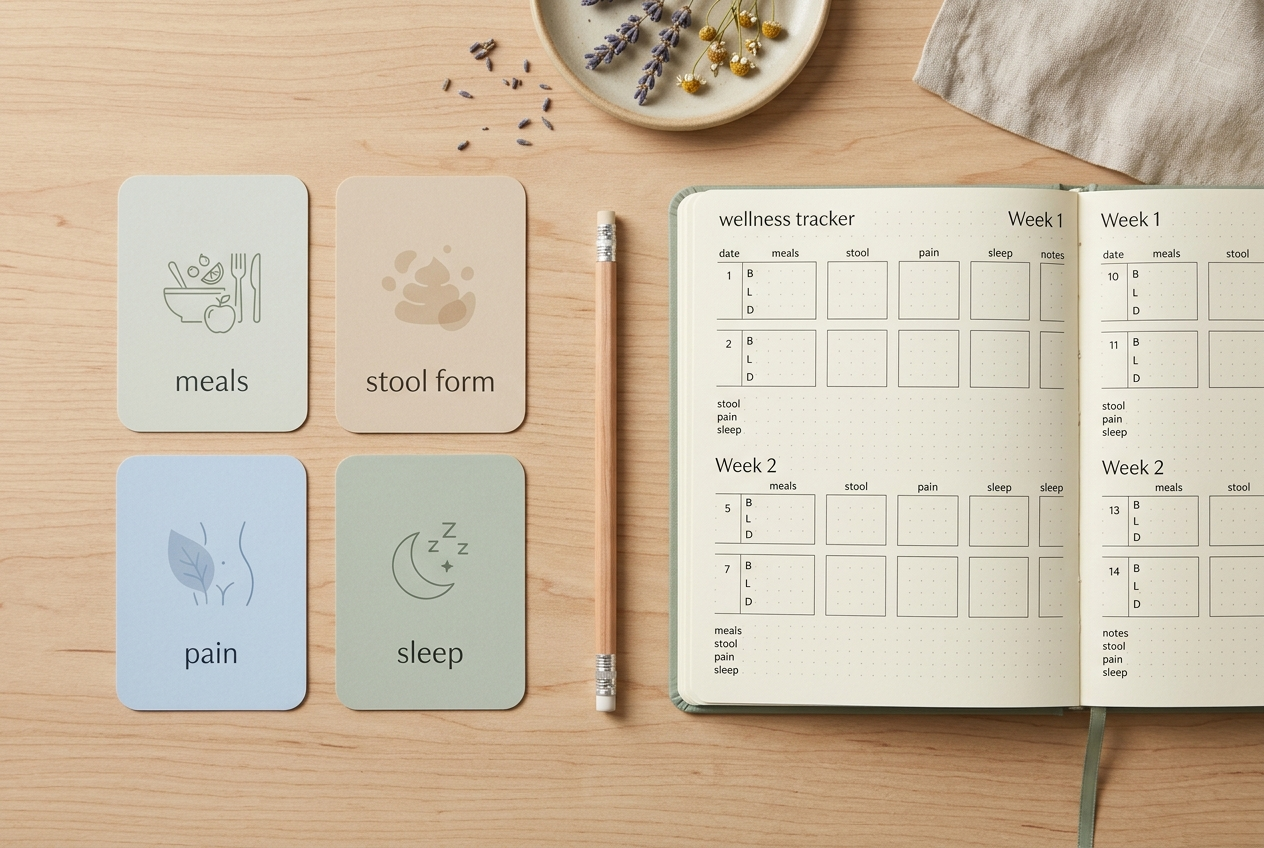
A short, structured diary provides more useful information than a long list of foods labeled “good” or “bad.” For two weeks, record meal timing, major ingredients, abdominal pain intensity, bloating, urgency, stool frequency, and stool form using the seven-point Bristol Stool Form Scale. Add sleep, menstrual-cycle timing when relevant, stress, exercise, medications, and supplements because each can affect bowel patterns. Keep portions approximate rather than weighing every gram unless a clinician requests greater detail. The diary should reveal repeatable relationships, not assign blame to every meal that preceded a symptom. Symptoms can reflect cumulative fiber, fat, fermentable carbohydrate, caffeine, alcohol, meal size, or gut–brain signaling rather than a single ingredient. Preserve a normal, varied diet during the observation window unless a known allergy or clinician instruction requires avoidance. A baseline makes one-at-a-time experiments measurable and reduces the risk of eliminating foods based on coincidence.
Which first-line habits are reasonable to test?
Regular meals, adequate fluid, gradual fiber adjustment, movement, and sleep consistency are reasonable first-line experiments because they are low-cost and measurable. Change one variable for a defined period so the result remains interpretable. Soluble fiber such as psyllium has better guideline support than insoluble wheat bran for global IBS symptoms, but the dose should rise gradually because abrupt increases can worsen gas or bloating. The American College of Gastroenterology guideline recommends soluble rather than insoluble fiber and supports a limited low-FODMAP trial for selected patients. Caffeine, alcohol, carbonated drinks, very large meals, and high-fat meals can be useful diary variables, but universal avoidance is unnecessary. Choose one target—stool form, pain, urgency, or bloating—and define what improvement would look like. A small, repeatable change produces better evidence than a simultaneous overhaul of diet, supplements, exercise, and medication.
When does a low-FODMAP diet make sense?
A low-FODMAP diet can make sense when persistent IBS symptoms remain despite simpler measures and a trained dietitian can guide restriction, reintroduction, and personalization. The approach temporarily reduces fermentable oligosaccharides, disaccharides, monosaccharides, and polyols; it is not intended as a permanent list of forbidden foods. The NICE IBS guideline advises that exclusion diets such as low FODMAP should be delivered by a professional with dietary expertise. The restriction phase tests whether the overall pattern changes symptoms, while structured reintroduction identifies specific groups and portions that matter. Skipping reintroduction can reduce dietary variety, create anxiety around food, and make social eating harder without clarifying triggers. People with weight loss, eating-disorder history, pregnancy, significant nutritional risk, or multiple medical diets need individualized oversight. A successful low-FODMAP process expands the diet to the broadest tolerated pattern; it does not reward indefinite restriction.
Which symptoms need another medical review?
Rectal bleeding, black stool, unexplained weight loss, anemia, fever, persistent vomiting, progressive swallowing difficulty, a new abdominal mass, or symptoms that repeatedly wake someone from sleep warrant medical review rather than routine IBS self-management. New symptoms after age 50, a family history of colorectal cancer, inflammatory bowel disease, or celiac disease, and a major change from the established pattern also deserve attention. Severe dehydration, fainting, chest pain, or intense rapidly worsening abdominal pain may require urgent care. These features do not prove a dangerous condition, but they fall outside the information that a food diary or supplement trial can safely resolve. Bring a concise timeline, current medications, recent antibiotic or travel history, stool changes, and copies of prior tests to the appointment. IBS can coexist with other conditions, so an earlier diagnosis should not automatically absorb every future symptom. Reassessment is a safety step, not evidence that the original clinician necessarily made an error.
Do you need to avoid gluten after an IBS diagnosis?
An IBS diagnosis does not automatically require a gluten-free diet. Wheat contains gluten, but it also contains fructans, a fermentable carbohydrate that can produce symptoms in some people; improvement after avoiding wheat therefore does not identify which component mattered. Celiac disease requires appropriate blood testing and sometimes biopsy, and testing becomes less reliable after gluten has already been removed. Ask whether celiac screening was completed before beginning a strict gluten-free trial. If a clinician has ruled out celiac disease and wheat remains a suspected trigger, use a structured reintroduction that compares portions and contexts rather than declaring permanent intolerance after one reaction. Gluten-free packaged foods can also change fiber, fat, and additive intake, creating new variables. The cleanest experiment preserves nutritional adequacy, changes one factor, and records stool and pain outcomes. A registered dietitian can separate gluten, wheat, and fructan questions without imposing unnecessary long-term restriction.
Should you take a probiotic for IBS?
A probiotic is optional, not a required response to an IBS diagnosis, because clinical results vary by strain, outcome, and study quality. The ACG guideline suggests against probiotics for global IBS symptoms based on very low-quality and heterogeneous evidence, while some individual trials report narrower benefits for specific organisms. That tension means “probiotics work” and “probiotics do not work” are both too broad. Anyone testing one should choose a product that names the genus, species, and strain; define one outcome; use the labeled dose; avoid starting other interventions simultaneously; and stop if symptoms clearly worsen. A high CFU count or long species list does not establish a better match. People who are seriously ill or immunocompromised should discuss live microorganisms with a clinician. Food, sleep, stress, medication, bowel subtype, and baseline diet can influence symptoms more than a supplement. A structured trial can answer a personal tolerance question, but it cannot confirm or revise a diagnosis.
Can stress cause IBS symptoms even when the food is safe?
Stress can influence IBS symptoms through gut–brain signaling without making the symptoms imaginary or proving that food is irrelevant. The enteric nervous system, autonomic nervous system, immune signaling, motility, and visceral sensitivity interact, so the same meal may feel different after poor sleep, acute anxiety, travel, or a calm day. A diary that records stress and sleep alongside food can reveal this context. Gut-directed cognitive behavioral therapy, relaxation training, and gut-directed hypnotherapy have evidence for selected patients, particularly when pain, fear of symptoms, or avoidance disrupts daily life. These approaches change symptom processing and coping; they are not accusations that a person invented discomfort. A clinician can help choose between dietary, psychological, and medication options based on the dominant problem. Treating the gut and brain as one connected system creates more options than forcing every flare into a single-food explanation. The useful question is which modifiable factor best predicts a specific symptom target.
How should you prepare for the next IBS appointment?
Bring a one-page summary that includes the diagnosis date, dominant stool pattern, three most disruptive symptoms, alarm features present or absent, completed tests, medications, supplements, and one or two weeks of diary data. List what you tried, the dose or rule used, how long you tried it, and the measurable result. Ask which bowel subtype best fits, whether celiac disease or other targeted testing was completed, which symptom should be addressed first, and what time frame should trigger follow-up. Request written instructions for medication timing and clarify whether over-the-counter products interact with prescriptions. If diet is becoming restrictive, ask for a gastroenterology dietitian rather than collecting more internet exclusion lists. Shared priorities matter because a plan for constipation may not address pain, and a plan for diarrhea may not address food fear. A concise record turns the appointment from a memory test into a decision-making session and helps the clinician distinguish persistent patterns from isolated flares.
For a detailed comparison of specific products and strains, see How Do You Actually Reduce IBS Symptoms Long-Term? The Daily Changes Worth Comparing First.
For a detailed comparison of specific products and strains, see Newly Diagnosed With IBS: What to Compare Before Buying Supplements.
What is the bottom line after an IBS diagnosis?
The first month after an IBS diagnosis should build clarity, not a longer list of forbidden foods. Confirm what the diagnosis means, identify the bowel subtype, record a short baseline, choose one low-risk intervention, and measure one outcome. Soluble fiber, regular meals, hydration, movement, and sleep are reasonable starting variables, while low-FODMAP restriction deserves professional guidance and a planned reintroduction. Probiotics remain strain-specific and optional rather than essential. Alarm features, major pattern changes, or uncertainty about testing should return the conversation to a clinician. IBS management often requires iteration because pain, stool form, urgency, bloating, sleep, stress, and diet interact. A structured process prevents every good or bad day from rewriting the plan. Preserve nutrition, make reversible changes, and use follow-up appointments to refine the diagnosis boundaries and management priorities instead of searching for one universal fix.
Leave a Reply