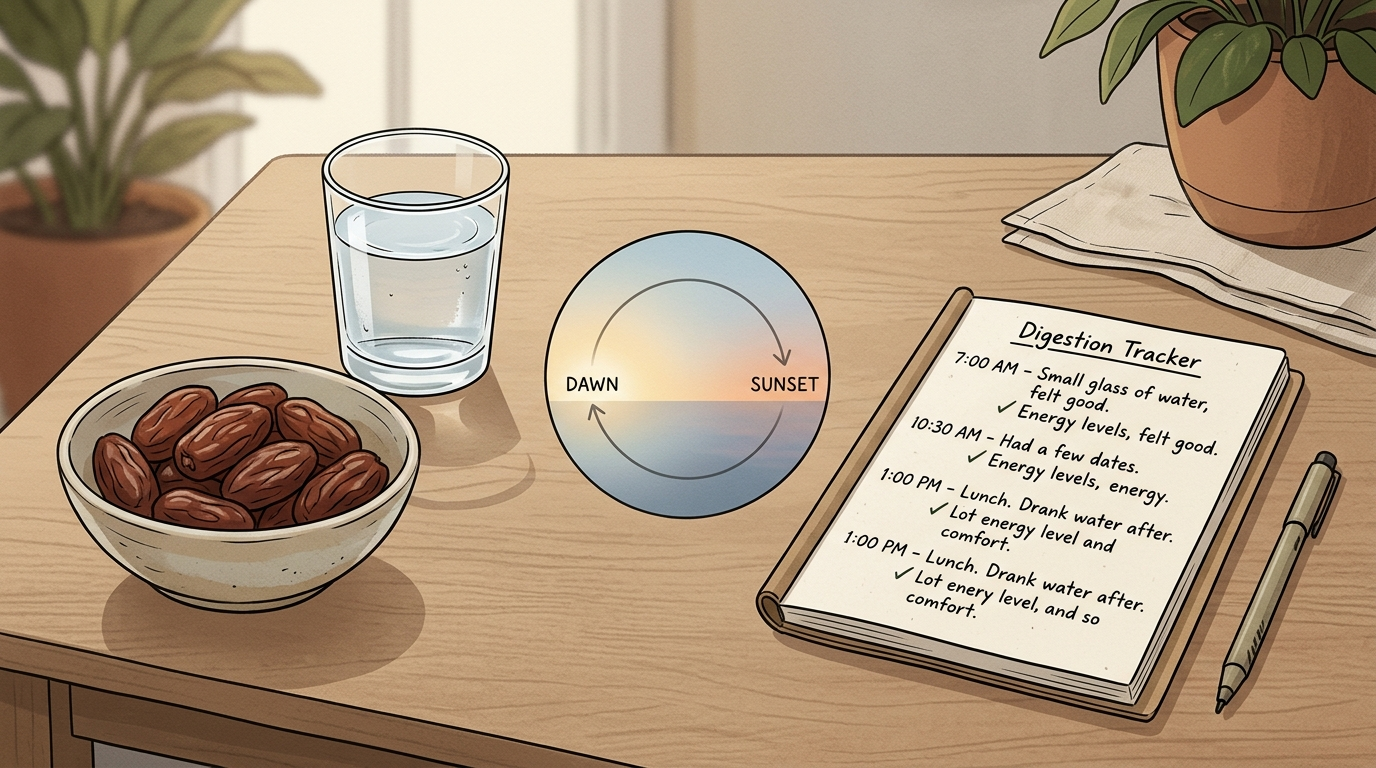
Digestion may feel more stable during Ramadan because the fasting schedule changes meal frequency, portion timing, caffeine exposure, late-night eating, food choices, sleep, and daily routine all at once. The improvement does not prove that fasting cured a gut problem. It identifies a useful pattern that can be tested carefully after Ramadan.
How did we evaluate Ramadan fasting and digestive stability?
We evaluated Ramadan fasting as a real-world schedule change rather than a universal digestive treatment. We prioritized human studies, systematic reviews, the National Institute of Diabetes and Digestive and Kidney Diseases, and clinical diet guidance over testimonials, animal experiments, and microbiome marketing. We separated symptom observations from stool-microbiome findings because a change in bacterial abundance does not automatically explain less bloating, reflux, pain, constipation, or diarrhea. We also examined several simultaneous variables: fewer eating events, different foods, meal size, hydration timing, caffeine, sleep, medication timing, and stress. Most Ramadan studies are small, observational, short, or conducted in healthy adults, so they cannot predict an individual result. The practical goal is to identify which repeatable change may have helped while respecting the religious practice and avoiding unsupported claims that a month of fasting “resets” the gut.
Why can digestion feel steadier during Ramadan?
Ramadan can create a “subtraction effect”: the daytime fast removes repeated snacks, drinks, and meal-trigger exposures for a predictable window. A person who normally grazes may temporarily consume fewer high-fat snacks, carbonated drinks, large coffees, sugar alcohols, or other personal triggers. A narrower eating window can also make symptoms easier to connect with suhoor or iftar because there are fewer competing exposures. This pattern does not mean that the stomach or intestines needed a detox. It means the schedule simplified the experiment. The opposite response is also possible. A very large iftar, rapid eating, fried foods, late meals, reduced daytime fluid intake, and disrupted sleep can worsen reflux, fullness, constipation, or headaches. Digestive stability therefore depends on the complete Ramadan routine, not fasting alone. The most useful clue is which specific behavior changed on better days and returned when symptoms returned.
Is fasting or the change in food more likely to matter?
Fasting and food changes are difficult to separate because Ramadan alters both timing and intake. A 2023 human study in Frontiers in Microbiology followed 12 healthy adults and concluded that diet remained an important contributor to microbiome changes during Ramadan. That small sample cannot establish a treatment effect, but it illustrates the confounding problem. Someone may eat fewer trigger foods, smaller total portions, more home-cooked meals, or less caffeine while also fasting. The NIDDK indigestion guidance notes that individual triggers vary and may include fizzy drinks, caffeine, fatty foods, grains, or fruit products. A controlled personal test should preserve one helpful feature at a time after Ramadan, such as fewer carbonated drinks or a consistent evening meal, rather than reproducing the entire fasting pattern without medical or religious context.
Could the gut microbiome explain the change?
The gut microbiome may change during Ramadan, but current research cannot prove that those changes caused a person’s digestive improvement. A 2020 pilot study in Beneficial Microbes reported structural microbiome changes after Ramadan fasting, while later studies found shifts that varied with diet and study population. A 2024 systematic review of human intermittent-fasting studies concluded that the evidence remains limited and heterogeneous. Stool sequencing measures relative microbial patterns; it does not directly measure intestinal function, symptom relief, or a permanently “healthier” ecosystem. Food intake, geography, sleep, medications, and baseline microbiota can also influence the result. The safest conclusion is modest: Ramadan-associated routines can alter microbial composition in some groups, and the clinical meaning is still uncertain. Symptom timing and food-pattern records provide more actionable personal evidence than a single commercial microbiome score.
What should you track if symptoms improve during Ramadan?
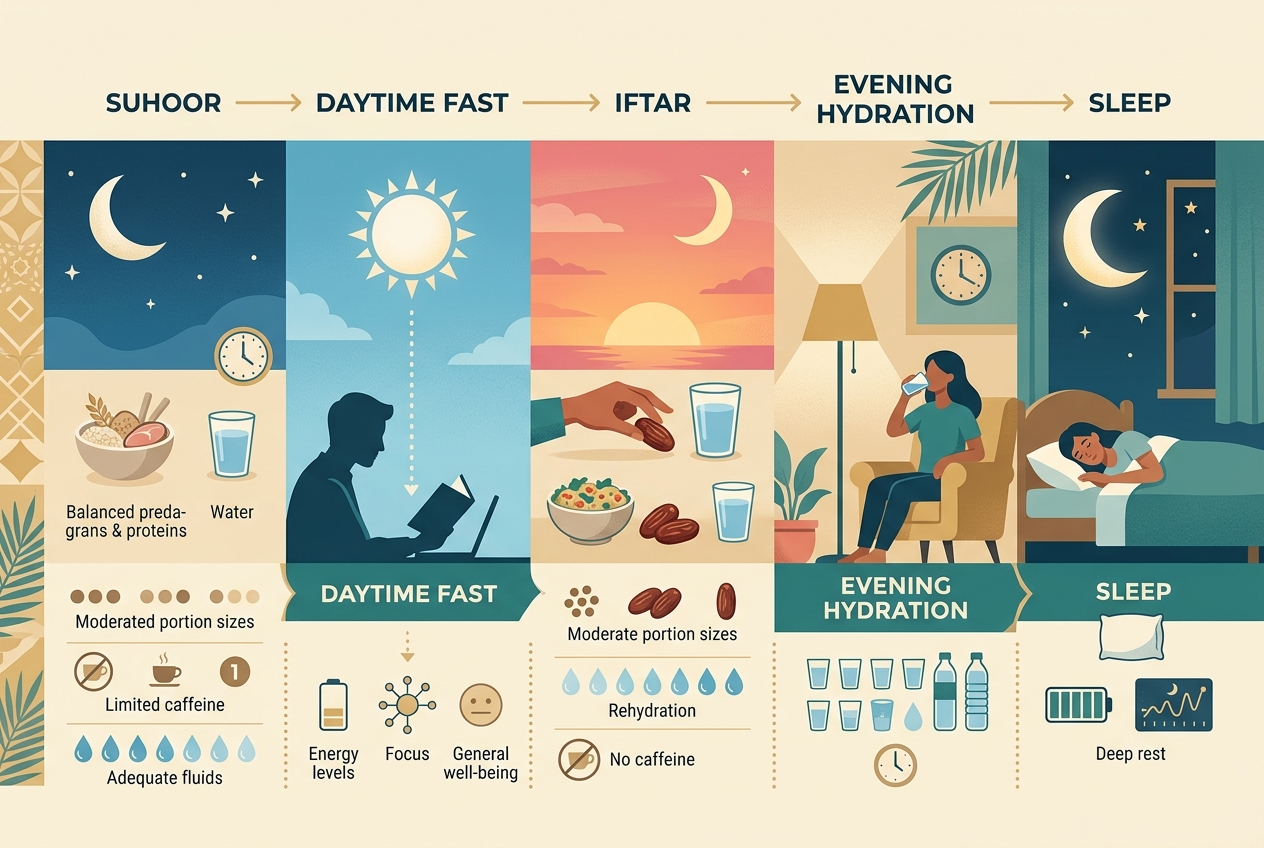
Track the variables that changed, not only the word “fasting.” Record meal times, portion size, main ingredients, fried or high-fat foods, caffeine, carbonated drinks, dairy, onions or garlic, added sweeteners, fluid intake between sunset and dawn, sleep duration, stress, exercise, bowel frequency, and medication timing. Use a simple 0-to-10 rating for pain, bloating, reflux, nausea, urgency, and stool difficulty. The American Gastroenterological Association diet update emphasizes that diet interventions should be individualized and monitored rather than expanded into permanent restriction without a clear benefit. After Ramadan, test one repeatable feature for one or two weeks while keeping other habits steady. Best first test for snack-linked symptoms: reduce grazing. Best first test for reflux after iftar: examine portion size and meal-to-bed interval. Best first test for constipation: review fluid and fiber across the nonfasting window.
When should digestive symptoms be medically evaluated?
Improvement during Ramadan does not rule out a medical condition, and worsening symptoms should not be treated as a test of willpower. Seek prompt medical advice for blood or black stool, repeated vomiting, fainting, severe or localized abdominal pain, fever, dehydration, difficulty swallowing, progressive symptoms, unintentional weight loss, anemia, or diarrhea that persists. People with diabetes, kidney disease, pregnancy, an eating-disorder history, inflammatory bowel disease, complex medication schedules, or previous dehydration should discuss fasting safety and medication timing with their clinician. Religious traditions commonly recognize health-related exceptions, but individual decisions may also involve a trusted religious adviser. A clinician can help distinguish a useful meal-pattern clue from reflux disease, medication effects, infection, malabsorption, or another cause. Do not stop prescribed medicine or move a dose solely to fit the fasting window without professional guidance. Safety takes priority over reproducing a symptom-free week.
What do people ask about Ramadan and digestion?
Does Ramadan fasting reset the gut?
No study shows that Ramadan permanently resets an individual’s gut. Research reports temporary microbial shifts, but their clinical meaning remains uncertain. Most studies are short and involve small groups of healthy adults.
Why might reflux improve while fasting?
Fewer daytime eating events may reduce trigger exposure. A large late iftar or lying down soon afterward can worsen reflux instead.
Why might constipation worsen during Ramadan?
Lower fluid intake, changed fiber, reduced movement, and altered sleep can slow bowel patterns. Fluids and fiber must fit the nonfasting window.
Can I copy the Ramadan schedule after the month ends?
Test one helpful feature, such as fewer snacks or an earlier dinner. Do not extend dry fasting without appropriate medical and religious guidance.
Do microbiome changes prove the fast worked?
No. Microbiome composition can change without symptom improvement, and symptom improvement can occur without a measured microbial explanation.
Should I change medication timing for Ramadan?
Ask the prescriber or pharmacist first. Timing changes can alter effectiveness, side effects, food requirements, and hydration needs.
What is the bottom line on Ramadan and digestive stability?
Ramadan can reveal a useful digestive pattern because it changes the timing and composition of daily intake in a consistent, noticeable way. The improvement may come from fewer snacks, less caffeine, different foods, smaller total intake, clearer trigger timing, altered stress, or another routine change. Small human studies show that Ramadan fasting can shift gut-microbiome composition, but they do not prove that fasting cured symptoms or rebuilt the gut. Treat the month as a natural experiment: identify what changed, record which symptoms improved, and test one safe, sustainable feature afterward. Avoid permanent food restriction based on a single month, and do not reproduce dry fasting casually. Persistent or alarming symptoms still need medical evaluation. The valuable discovery is not “fasting fixes digestion”; it is a more precise hypothesis about meal timing, trigger exposure, hydration, sleep, or routine that can be evaluated safely.
Leave a Reply