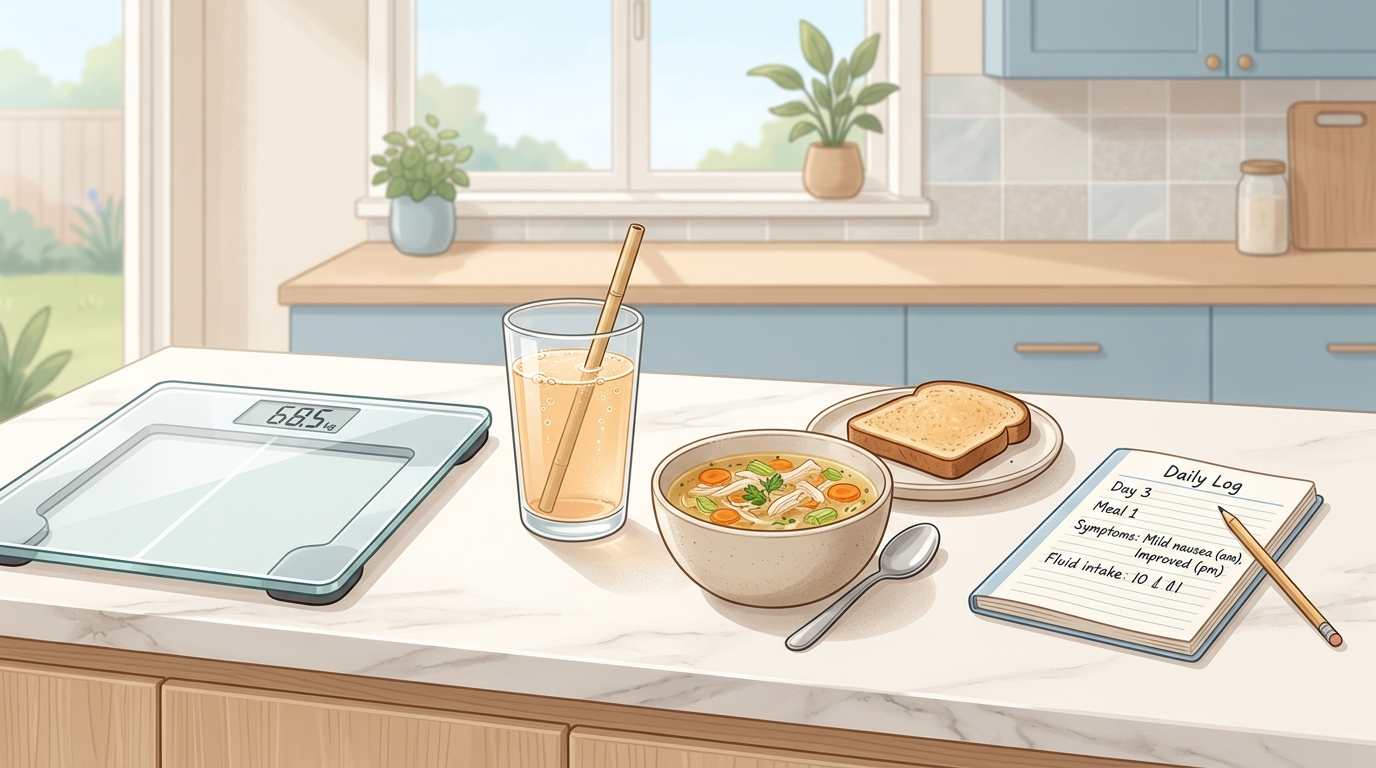
Bloating and a higher scale reading after a stomach virus usually reflect rehydration, restored food and stool volume, sodium and carbohydrate changes, constipation, or lingering gut sensitivity—not sudden body-fat gain. Track the pattern for one to two weeks. Seek medical care sooner for severe pain, dehydration, blood, persistent vomiting, fever, progressive swelling, or ongoing weight change.
How did we evaluate bloating and weight changes after gastroenteritis?
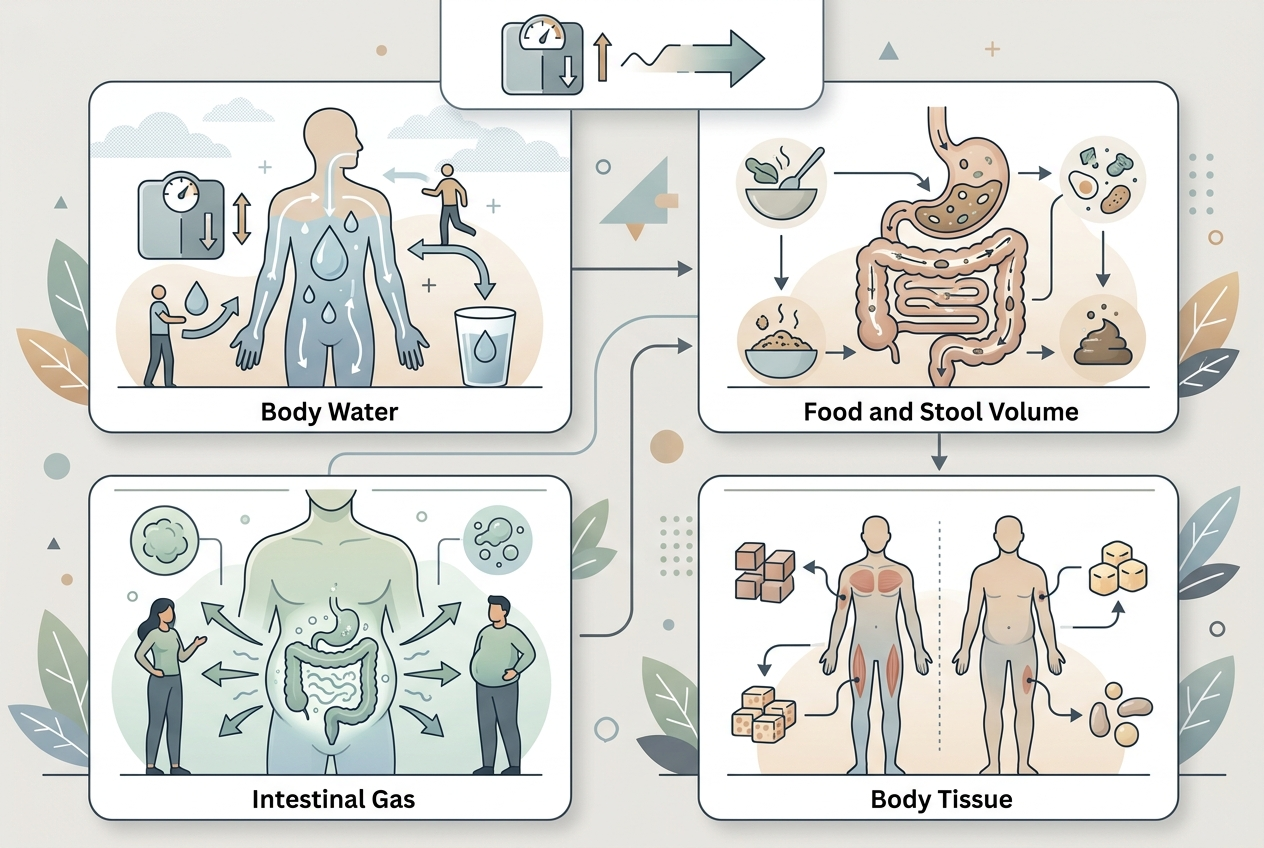
We evaluated post-gastroenteritis bloating by separating four measurable changes: body water, food and stool mass, intestinal gas, and body tissue. Government guidance on viral gastroenteritis, dehydration, gas, and warning signs received more weight than detox claims, social posts, before-and-after photos, or unverified microbiome protocols. We used longitudinal research on post-infectious bowel symptoms to explain why some people remain sensitive after the acute infection clears, but we did not treat that research as an individual diagnosis. We excluded rapid “gut reset,” fasting, cleanse, and supplement advice because those approaches can worsen dehydration or make the recovery pattern harder to interpret. The main limitation is diagnostic uncertainty: “stomach virus” can describe viral gastroenteritis, food poisoning, medication effects, or another condition, and most mild cases are never laboratory-confirmed. A short-lived scale rebound after vomiting or diarrhea has a different meaning from steadily rising weight with persistent swelling, shortness of breath, or worsening abdominal symptoms.
Why can your abdomen feel larger after a stomach virus?
The abdomen can feel larger when eating resumes, stool transit slows, carbohydrates reach colonic bacteria, or the gut-brain system becomes temporarily more sensitive to normal gas. The NIDDK gas overview distinguishes bloating, the sensation of fullness or swelling, from distension, a measurable increase in abdominal size. Only some people with bloating have visible distension. After vomiting or diarrhea, a person may switch quickly from low intake to larger meals, carbonated drinks, high-fiber foods, dairy, sugar alcohols, or salty convenience foods. Each change can alter gas, fluid, or stool volume without changing body fat. Constipation can also follow reduced eating, dehydration, inactivity, anti-nausea medicines, or an abrupt diet change. The most useful observation is timing: morning versus evening size, bowel frequency, relation to meals, and whether the sensation improves after passing stool or gas. One isolated waist or scale measurement cannot identify the mechanism.
Why can the scale rise quickly during recovery?
The scale can rise quickly because illness often lowers fluid, glycogen, food, and stool mass before recovery restores them. Vomiting and diarrhea remove water and electrolytes, while reduced appetite empties part of the gastrointestinal tract. The NIDDK viral-gastroenteritis guide identifies dehydration as the most common complication and lists reduced urination, dark urine, thirst, fatigue, and dizziness as warning signs. Drinking oral rehydration fluid, eating normal meals, restoring sodium, and replenishing carbohydrate stores can therefore move body weight upward from an artificially low illness-day baseline. That rebound is not proof of new fat tissue. Compare current weight with a stable pre-illness baseline, not the lowest number recorded during active vomiting or diarrhea. Use the same scale, time, clothing, and hydration state. A seven-day trend tells more than one morning. Persistent or progressive gain accompanied by leg swelling, breathlessness, or reduced urination needs medical evaluation.
What should you track for the next one to two weeks?
Track morning weight, abdominal circumference at one fixed point, stool frequency and form, meal size, carbonated drinks, dairy, fiber additions, sodium-heavy foods, menstrual timing when relevant, and any new medicine. Record symptoms once or twice daily rather than checking the mirror after every meal. A consistent morning measurement reduces noise from dinner, fluids, clothing, and normal evening distension. Separate upper fullness, lower-abdominal pressure, belching, flatulence, constipation, diarrhea, nausea, and pain because each pattern suggests a different question. Note whether the abdomen softens overnight or after a bowel movement. Keep hydration steady enough that urine is not persistently dark, but do not force excessive water. Compare the trend with the stable week before illness if that information exists. Contact a clinician if symptoms do not improve, if weight continues rising without an obvious recovery explanation, or if the pattern interferes with eating, hydration, sleep, or daily activity.
What supports a calmer return to normal eating?
A calmer return uses ordinary meals, adequate fluids, and gradual variety rather than prolonged fasting or an aggressive fiber jump. The NIDDK notes that appetite may remain low briefly, but most people can return to a normal diet when appetite returns and experts generally do not recommend fasting or a restricted diet during viral-gastroenteritis recovery (NIDDK). Start with portions that feel manageable, chew slowly, and add richer foods, large salads, beans, carbonated drinks, and concentrated sugar alcohols one at a time. A sudden increase in fermentable carbohydrates can raise gas even when the food is nutritious. Gentle walking can support normal movement and reveal whether distension changes with activity, but exercise should wait until hydration and energy have recovered. Avoid treating one difficult meal as a permanent intolerance. A simple three-day food-and-symptom record provides more information than eliminating multiple food groups. Persistent symptoms deserve assessment before a restrictive diet becomes the new normal.
When do lingering symptoms suggest a post-infectious pattern?
Lingering bloating, altered stool form, urgency, constipation, or abdominal discomfort can follow acute gastroenteritis in a minority of people. A systematic review and meta-analysis found higher odds of irritable-bowel symptoms after infectious gastroenteritis, but study definitions, pathogens, follow-up periods, and populations varied (PubMed). That evidence establishes a recognized post-infectious pattern at the population level; it does not mean every week of bloating is post-infectious IBS. Clinicians consider symptom duration, stool changes, pain related to bowel movements, prior infections, medications, travel, weight trajectory, and warning signs before applying a diagnosis. Short recovery fluctuations often settle as hydration, eating, sleep, and bowel routine normalize. A symptom diary helps identify whether the pattern is steadily improving, staying flat, or worsening. Seek assessment when symptoms persist beyond the expected recovery window, repeatedly interrupt daily life, or accompany blood, fever, night symptoms, anemia, dehydration, severe pain, or unintentional weight loss.
What questions matter most after a stomach virus?
These questions help distinguish normal recovery noise from a pattern that deserves medical review. Start by confirming the timeline: illness onset, final episode of vomiting or diarrhea, return of appetite, return of normal urination, and the first day bloating or scale change appeared. Then compare the current number with the stable pre-illness baseline, not the dehydrated low point. The CDC reports that most norovirus illness improves within one to three days, although other infections and complications follow different timelines. A named virus cannot be assumed without testing, and ongoing symptoms may have another cause. Medication timing and recent travel also belong in that recovery record. Use the questions below to organize observations, avoid unnecessary restriction, and identify the symptoms that should move the decision from home tracking to professional care.
Is rapid weight gain after vomiting usually fat?
Usually not. Rehydration, restored food intake, sodium, carbohydrate stores, and stool mass can raise weight quickly after an illness-related low point; a stable seven-day trend is more informative.
Can constipation happen after diarrhea?
Yes. Reduced intake, dehydration, inactivity, anti-nausea medicines, and abrupt diet changes can slow bowel movements after diarrhea stops.
Should you avoid dairy after gastroenteritis?
Some people temporarily tolerate lactose poorly after intestinal illness, but universal dairy avoidance is unnecessary. Test a small portion only after hydration and appetite recover, and seek advice if symptoms recur consistently.
Should you take a probiotic immediately?
No probiotic is automatically required after a stomach virus. Evidence is strain- and outcome-specific, and a new product can add gas that makes the original recovery pattern harder to read.
How long should bloating last?
There is no single deadline because the cause, illness severity, diet, transit, and baseline sensitivity differ. The important signal is direction: gradual improvement is reassuring, while persistent or worsening symptoms need review.
When is post-virus swelling urgent?
Seek prompt care for severe or localized pain, a rigid or rapidly enlarging abdomen, repeated vomiting, inability to pass stool or gas, blood or black stool, fever, dehydration, breathing difficulty, or fainting.
For a detailed comparison of specific products and strains, see Can Magnesium Glycinate Cause Weight Gain or Bloating?.
For a detailed comparison of specific products and strains, see Bloating After Everything You Eat or Drink: What Should You Compare First?.
What is the bottom line on post-virus bloating and weight gain?
A larger abdomen or higher scale reading after a stomach virus most often reflects recovery variables rather than sudden fat gain. Rehydration restores fluid, normal meals restore food and glycogen, constipation increases stool mass, and renewed carbohydrate intake can increase gas. Compare the trend with a stable pre-illness baseline under the same morning conditions. Track waist, bowel pattern, meals, fluids, and symptoms for one to two weeks while returning gradually to a varied diet. Do not prolong fasting, add several supplements, or eliminate multiple food groups just to force the scale down. Lingering symptoms can follow infection, but a post-infectious diagnosis requires more than temporal proximity. Seek medical care for dehydration, blood, black stool, persistent vomiting, fever, severe or localized pain, inability to pass stool or gas, progressive swelling, breathing difficulty, reduced urination, or a trend that keeps worsening. Direction and associated symptoms matter more than one number.
Leave a Reply