
Yes. Intermittent gas, abdominal growling, and stronger odor can come from ordinary digestion, especially swallowed air and bacterial fermentation of carbohydrates in the colon. The pattern may also follow lactose, sugar alcohols, constipation, or a sudden fiber increase. Symptoms alone cannot identify the cause, so track timing and seek care for persistent symptoms or warning signs.
How did we evaluate odor, growling, and gas?
We evaluated the symptom cluster by separating normal digestive mechanisms from patterns that justify testing. We prioritized guidance from the National Institute of Diabetes and Digestive and Kidney Diseases and MedlinePlus, then used physiology-based distinctions such as gas volume versus gas odor, meal timing, stool changes, and duration. We excluded stool-color charts, home microbiome scores, “detox” explanations, and social-media diagnoses because they cannot reliably establish a cause. Evidence is stronger for mechanisms such as swallowed air, carbohydrate fermentation, lactose malabsorption, and constipation than for attributing a particular odor to one disease. Important limitations remain: people perceive and describe odor differently, symptom diaries can reveal associations but not prove causation, and several conditions share the same features. New, severe, recurrent, or progressive symptoms require a clinician’s history, examination, and selective testing rather than a symptom checklist alone.
Can normal digestion cause gas and stomach growling?
Normal digestion can produce all three symptoms. Swallowed air introduces nitrogen and oxygen, while colon bacteria ferment carbohydrates that escape small-intestinal absorption and produce hydrogen, carbon dioxide, and sometimes methane. The National Institute of Diabetes and Digestive and Kidney Diseases explains that gas commonly comes from swallowed air and bacterial breakdown of undigested carbohydrates. Stomach “growling,” called borborygmi, reflects fluid and gas moving through the gastrointestinal tract; it can sound louder when the stomach is empty or intestinal movement increases. Odor is a separate variable from volume. Small amounts of sulfur-containing compounds can smell strong even when total gas production is ordinary. A single noisy or odorous episode after a meal is therefore not a diagnosis. Repeated symptoms become more informative when they follow the same ingredient, coincide with diarrhea or constipation, disrupt sleep, or steadily worsen.
Why can digestive gas smell stronger on some days?
Gas odor changes when the mix of foods, microbes, and intestinal transit changes. Sulfur-containing foods such as eggs, alliums, and some cruciferous vegetables can contribute odor without indicating disease. Fermentable carbohydrates, including certain beans, wheat products, onions, milk, fruit sweeteners, and sugar alcohols, may increase gas in susceptible people. Slow transit can give intestinal microbes more time to ferment material, while diarrhea can create a different odor and frequency pattern. Lactose deserves a specific testable hypothesis: the NIDDK lactose-intolerance guide links lactose malabsorption with bloating, gas, abdominal pain, nausea, and diarrhea after lactose-containing foods. That pattern is directional evidence, not proof. Odor alone cannot distinguish lactose intolerance, constipation, infection, celiac disease, or another condition. A repeatable timing relationship plus stool and meal details provides more useful information than trying to identify a diagnosis by smell.
Which patterns help narrow the likely trigger?
Timing converts a vague symptom into a testable pattern. Symptoms within several hours of milk, ice cream, or soft cheese may support a lactose hypothesis; symptoms after sugar-free gum or candy may point toward sorbitol, mannitol, or xylitol. Symptoms after a rapid increase in beans, bran, inulin, or fiber powder may reflect increased fermentation. Growling before meals without pain or stool change often fits ordinary gastrointestinal movement. Gas with infrequent, hard stools may track with constipation, while gas with loose stools after travel, unsafe water, or a sick contact needs a different clinical discussion. Keep a seven-day log with meal time, ingredients, symptom onset, stool form, bowel frequency, medicines, and menstrual timing when relevant. The NIDDK diagnostic overview notes that clinicians use medical history, diet, physical examination, and sometimes tests. A diary organizes evidence; it does not replace evaluation.
What can you try safely before changing your whole diet?
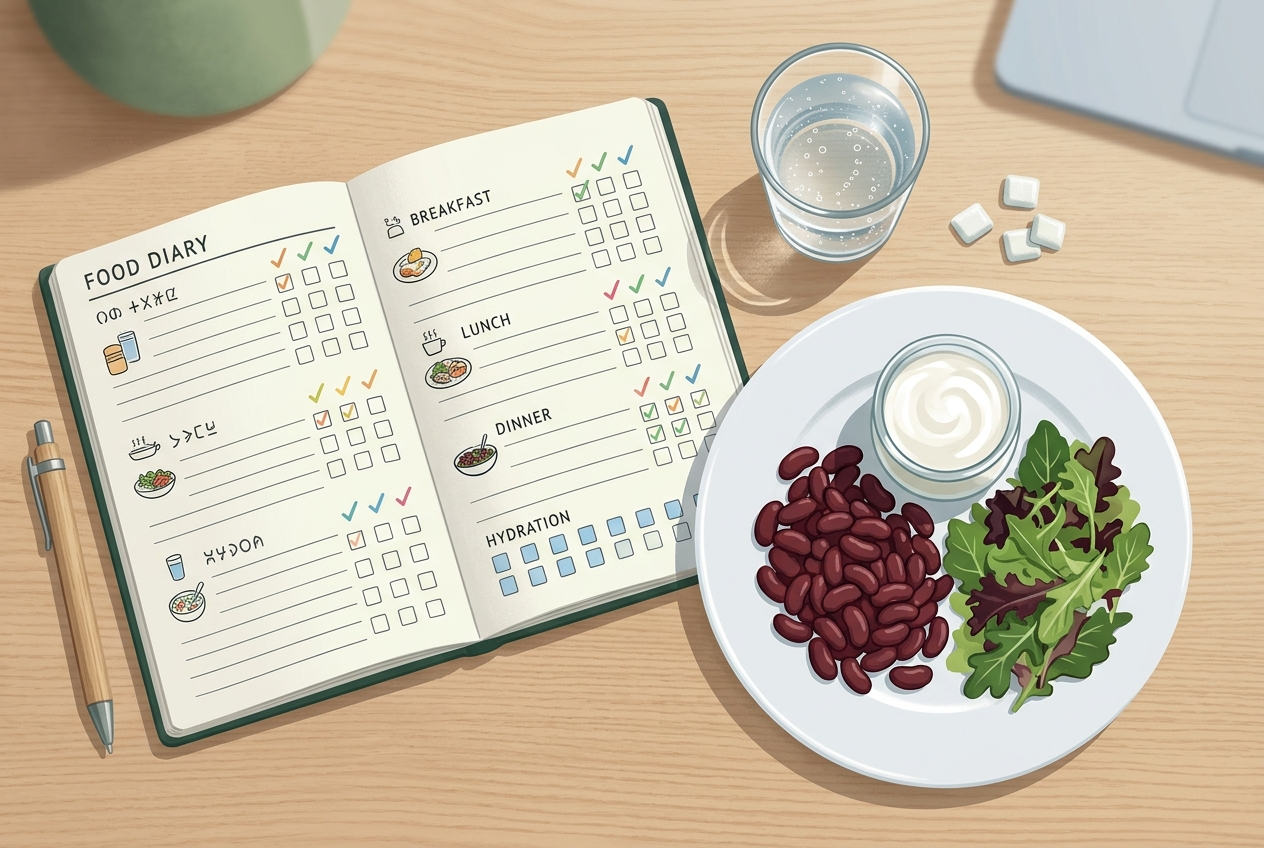
Change one low-risk variable at a time for several days. Eat more slowly, avoid talking while chewing, and reduce carbonated drinks if belching or swallowed air dominates. If a specific sugar alcohol appears repeatedly in the diary, pause that ingredient rather than eliminating every carbohydrate. If fiber recently increased, return to the last comfortable amount and raise it more gradually with adequate fluids. Regular meals, light movement, and constipation management may reduce retained gas for some people. Do not start a highly restrictive diet from one odorous episode, because unnecessary restriction can reduce nutritional variety and make patterns harder to interpret. MedlinePlus lists eating quickly, chewing gum, carbonated beverages, and certain carbohydrates among common contributors. A clinician or registered dietitian can supervise a structured elimination and reintroduction when symptoms persist. Stop self-testing and seek advice if a trial causes dehydration, worsening pain, or inadequate food intake.
When do gas and growling need medical attention?
Persistent or progressive symptoms deserve medical review even when digestion seems like the likely source. Seek prompt care for blood or black stool, repeated vomiting, fever, severe or localized abdominal pain, a swollen rigid abdomen, inability to pass stool or gas, fainting, or signs of dehydration. Arrange a clinician visit for unexplained weight loss, anemia, symptoms that repeatedly wake you, new bowel changes lasting several weeks, greasy or pale stools, or a strong family history of celiac disease, inflammatory bowel disease, or colorectal cancer. Sudden symptoms after travel, questionable water, antibiotics, or an outbreak may require targeted testing. These features do not prove a dangerous condition, but they change the risk calculation. A clinician may review diet and medications, examine the abdomen, and choose tests for lactose malabsorption, celiac disease, infection, inflammation, or another cause. Repeatedly adding supplements before that evaluation can blur the pattern rather than clarify it.
What questions commonly come up about digestive odor and noise?
Does loud stomach growling mean I am hungry?
Hunger can make intestinal sounds more noticeable, but fluid and gas movement also occurs after eating. Empty-stomach contractions can amplify otherwise normal sounds. Sound volume does not measure digestive health.
Does smelly gas mean food is “rotting” inside me?
No. Colon bacteria normally ferment unabsorbed carbohydrates, and small sulfur compounds can create strong odor. Odor alone does not prove abnormal decay or toxin buildup.
Can constipation make gas smell worse?
Slower transit can extend fermentation time and make gas feel trapped. Treating constipation appropriately may help, but persistent change still merits evaluation.
Should I remove dairy immediately?
A short, structured lactose trial may be reasonable when symptoms repeatedly follow dairy. Avoiding all dairy indefinitely without testing can create unnecessary restriction.
Are home microbiome tests diagnostic?
Consumer microbiome profiles do not diagnose the cause of gas, odor, or growling. Clinical context and validated testing remain more useful.
Can anxiety make digestive sounds more noticeable?
Stress can alter gut movement and increase attention to normal sensations. That connection does not mean symptoms are imaginary or that other causes should be ignored.
What is the bottom line on intermittent odor, growling, and gas?
Ordinary swallowing, bacterial fermentation, meal composition, and intestinal transit can explain intermittent gas, odor, and growling. The most useful next step is not guessing a diagnosis from smell; it is recording timing, foods, stool form, bowel frequency, and associated symptoms. Test one low-risk change at a time, such as slower eating, fewer carbonated drinks, removing a recurring sugar alcohol, or adjusting a recent fiber increase. Preserve a varied diet unless a clinician or registered dietitian guides a structured elimination. A consistent meal-linked pattern can support a focused conversation about lactose, fermentable carbohydrates, constipation, or another mechanism, but a diary cannot establish the diagnosis. Seek urgent or prompt care for bleeding, black stool, severe pain, vomiting, fever, dehydration, inability to pass gas, weight loss, anemia, nighttime symptoms, or a bowel change that persists. Those features move the question beyond routine digestion.
Leave a Reply