Category: Gut Health

  • Acid Reflux or Anxiety? How to Tell the Pattern Apart

    Acid Reflux or Anxiety? How to Tell the Pattern Apart

    Acid reflux and anxiety can feel similar because both can cause chest discomfort, throat tightness, nausea, and a lump-in-the-throat sensation. The main difference is pattern. Reflux symptoms usually track with meals, bending, or lying down. Anxiety symptoms usually track with stress, racing thoughts, palpitations, or sudden episodes that are not clearly meal-linked.

    How we evaluated acid reflux versus anxiety symptoms

    We prioritized symptom-pattern guidance from the Mayo Clinic GERD overview, the Cleveland Clinic reflux overview, and National Institute of Mental Health resources on anxiety disorders and panic symptoms. We compared timing, triggers, and associated symptoms rather than treating one symptom in isolation. We excluded disease diagnosis advice because chest pain, weight loss, vomiting, and swallowing problems need clinician review.

    Why do acid reflux and anxiety get confused so often?

    Acid reflux and anxiety overlap because both systems recruit the chest, throat, and upper abdomen. Reflux can create heartburn, sour taste, throat clearing, hoarseness, nausea, and a pressure sensation behind the breastbone, as described by the Mayo Clinic. Anxiety can create chest tightness, shortness of breath, nausea, stomach discomfort, dizziness, and a sense that something is very wrong, which the NIMH panic disorder guide lists as common physical symptoms. The vagus nerve and stress hormones make the overlap worse because gut sensation becomes louder when the nervous system is activated. That means a person may feel burning and panic at the same time, or may feel anxiety because the reflux sensation itself is alarming. Symptom overlap is real, but the body still leaves clues if you stop looking at a single moment and start looking at the full pattern.

    What clues point more strongly toward acid reflux than anxiety?

    Acid reflux usually follows mechanics and meal timing. Symptoms often appear after large meals, fatty foods, alcohol, late-night eating, bending forward, or lying flat. Reflux also tends to bring a sour taste, throat irritation, chronic throat clearing, regurgitation, or burning that rises upward, which are features emphasized by the Cleveland Clinic. Night symptoms matter too. If discomfort is worse after dinner or wakes you from sleep with a bitter taste or cough, reflux moves higher on the list. Reflux can happen without classic heartburn, especially when throat symptoms dominate. Food relationships are the biggest tell. Anxiety episodes can happen after meals, but reflux is much more likely to repeat after the same physical triggers. A simple symptom log that tracks meal size, body position, and timing often reveals a clearer reflux pattern within a week than memory alone can provide.

    What clues point more strongly toward anxiety than acid reflux?
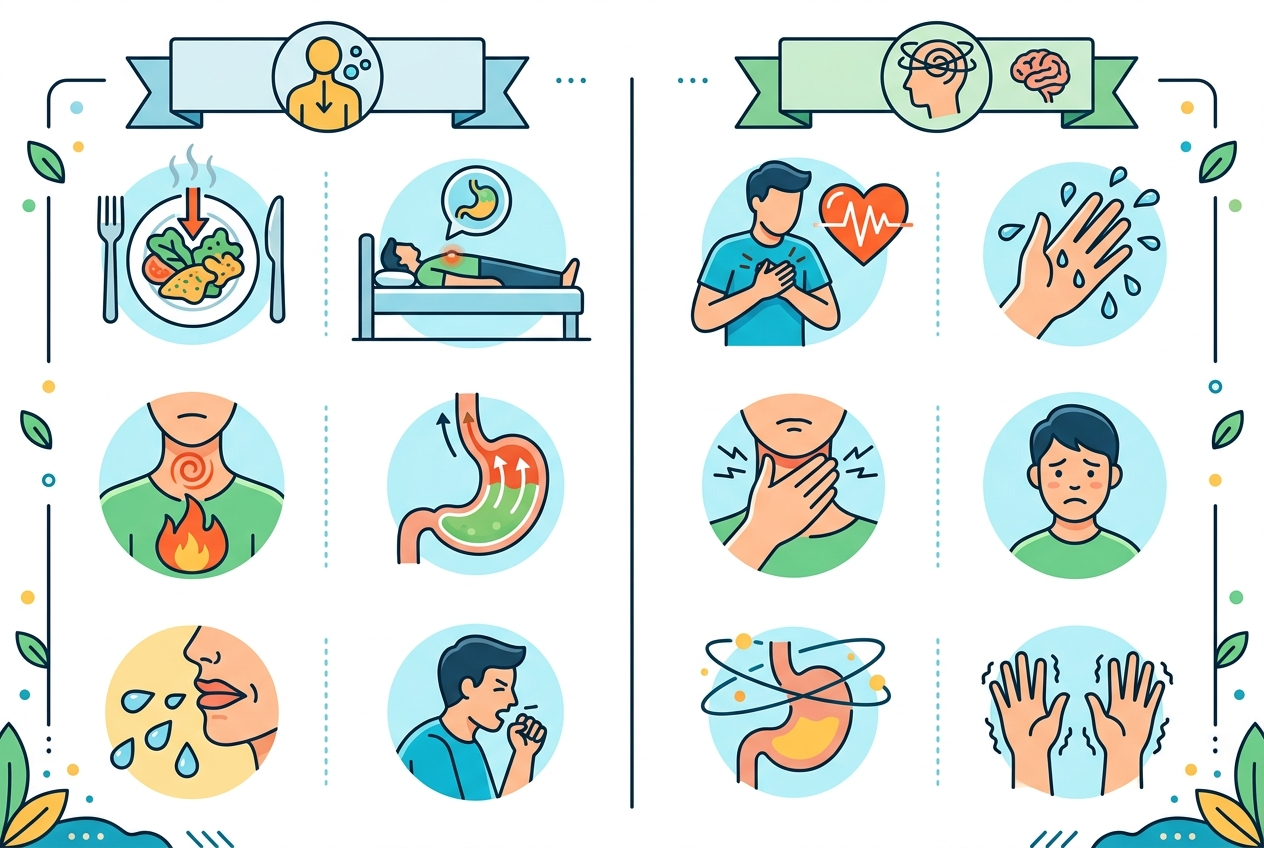
    Comparison infographic showing the main clues that point toward acid reflux versus anxiety.
    Comparison infographic showing the main clues that point toward acid reflux versus anxiety.

    Anxiety usually follows nervous-system activation more than food exposure. Symptoms often rise during conflict, overthinking, deadline pressure, social stress, or sudden waves of fear. The NIMH anxiety disorders page notes that anxiety can produce restlessness, muscle tension, rapid heartbeat, sleep disruption, stomach upset, and trouble concentrating. When chest discomfort arrives with shaking, sweating, tingling, racing thoughts, dread, or a sense of losing control, anxiety becomes more likely than reflux alone. Anxiety symptoms can also move around the body in ways reflux does not. One episode might feel like chest pressure, another like nausea, another like dizziness or throat tightness. That variability is common in anxiety states. Reflux is usually more mechanically consistent. It follows meal timing and body position. Anxiety follows context, anticipation, and internal alarm signals. The cleaner the stress link, the stronger the anxiety clue.

    When should you stop guessing and get checked?

    Self-patterning is useful, but some symptoms deserve medical evaluation instead of home detective work. Chest pain with exertion, shortness of breath that feels severe, black stool, vomiting blood, trouble swallowing, unexplained weight loss, persistent vomiting, or symptoms that keep worsening should not be written off as either reflux or anxiety. The Mayo Clinic and Cleveland Clinic both flag swallowing difficulty and unintentional weight loss as warning signs. The same logic applies if anxiety symptoms are frequent enough to limit sleep, work, or basic functioning. The NIMH notes that persistent anxiety disorders are treatable, but they need real assessment. Pattern recognition is helpful. It is not a substitute for urgent care when symptoms are intense, new, or paired with red flags.

    For a detailed comparison of specific products and strains, see Gallbladder or GERD? How to Tell the Difference and What to Do About It.

    FAQ

    Can anxiety really cause nausea and throat tightness?

    Yes. The NIMH describes stomach pain, nausea, chest discomfort, and breathing-related sensations as common physical symptoms during panic and anxiety episodes. Those symptoms can feel very similar to upper digestive discomfort.

    Can reflux happen without obvious heartburn?

    Yes. Some people have throat clearing, cough, hoarseness, nausea, or regurgitation without a classic burning feeling. That is one reason reflux and anxiety get mixed up so often.

    Is meal timing the most useful reflux clue?

    Usually yes. Symptoms that repeat after meals, late at night, or when lying down point more strongly toward reflux than anxiety. Stress can still worsen the experience, but timing gives reflux away.

    Does stress make reflux worse even if reflux is the main issue?

    Yes. Stress does not create stomach acid out of nowhere, but it can amplify gut sensitivity and make ordinary reflux feel sharper. Mixed patterns are common.

    Should you track symptoms for a few days before deciding?

    Yes. A short log of meals, body position, stress level, and associated symptoms is often more useful than guessing from memory. Patterns show up fast when they are written down.

    When is chest discomfort an emergency?

    If chest pain is severe, comes with shortness of breath, fainting, sweating, arm or jaw pain, or feels different from your usual symptoms, it deserves urgent medical care. That is not the time for home sorting.


  • Is Taking Ginger the Same as Drinking Ginger Tea?

    Is Taking Ginger the Same as Drinking Ginger Tea?

    No, taking a ginger capsule or extract is not automatically the same as drinking ginger tea. Dose, concentration, preparation method, and what else is in the formula change the experience. Ginger tea is usually gentler and lower-dose, while capsules and concentrated products can be more standardized but also less forgiving.

    How did we evaluate ginger tea versus ginger supplements?

    We prioritized practical digestive-use questions over marketing claims. We used the NIH Office of Dietary Supplements fact sheet on dietary supplements, a review in Food Science & Nutrition, the Cleveland Clinic overview of ginger, and the National Center for Complementary and Integrative Health page on digestive supplements as core references. We looked first at preparation, concentration, and tolerance rather than assuming every ginger product behaves the same way. We excluded detox language and fast-fix claims because those usually flatten the real difference between a brewed food-like drink and a concentrated supplement.

    What changes when ginger is brewed as tea instead of taken in a capsule?

    Ginger tea changes the delivery format more than the ingredient identity. A brewed tea usually extracts some gingerols and related compounds into hot water, but the final amount depends on steep time, slice thickness, water volume, and whether fresh or dried ginger was used. A capsule or concentrated chew can deliver a more repeatable dose, which is useful for comparison but also means the sensory experience is different. The Cleveland Clinic describes ginger tea as a mild preparation that people often use for everyday digestive comfort, while the review in Food Science & Nutrition notes that ginger contains multiple bioactive compounds whose concentration changes by preparation and processing. Tea therefore behaves more like a food ritual. A supplement behaves more like a measured product. Neither is universally better, but they are not interchangeable in a strict one-to-one way.

    When does ginger tea make more sense than a supplement?

    Comparison of brewed ginger tea and a ginger supplement capsule format.
    Comparison of brewed ginger tea and a ginger supplement capsule format.

    Ginger tea makes more sense when the goal is a gentle, low-friction digestive habit rather than a standardized dose. Warm liquid changes the experience because sipping slows intake, adds hydration, and often fits naturally after meals. That context matters. The NCCIH notes that herbal digestive approaches can vary widely in formulation and evidence quality, so the best first step is often the simplest one you can tolerate and repeat. Tea is also easier to stop, dilute, or modify. You can steep it lighter, add food, or reduce frequency without splitting capsules or changing labels. A supplement becomes more useful when a person wants portability, consistency, or a clearer way to compare dose from day to day. The practical distinction is this: tea prioritizes gentleness and routine, while supplements prioritize standardization and convenience.

    What do people usually get wrong when comparing ginger products?

    The biggest mistake is assuming the word ginger guarantees equivalent effect. Some products use powder, some use extracts, some combine ginger with peppermint, enzymes, or sweeteners, and some deliver much higher amounts than a mug of tea ever would. A second mistake is treating “natural” as a dose instruction. The NIH stresses that dietary supplements still require label reading because serving size, active amount, and added ingredients matter. A third mistake is ignoring fit. Tea suits people who want a meal-adjacent ritual. Portable products suit people who travel or do not want prep. The right comparison is not tea versus supplement in the abstract. The right comparison is fresh tea, powdered ginger capsules, concentrated extracts, or combination formulas, each judged by concentration, tolerability, cost, and whether the format fits a real daily routine instead of an imaginary perfect one.

    What questions come up most often about ginger tea versus supplements?

    Is fresh ginger tea stronger than capsules?

    Not usually in a standardized sense. Tea strength changes with brewing method, while capsules can deliver a more fixed amount per serving.

    Is ginger tea easier on digestion than a concentrated product?

    Often, yes. Tea is usually lower-dose and slower to consume, which can make it feel gentler for some people.

    Does powdered ginger equal fresh ginger root?

    Not exactly. Processing changes moisture, concentration, and sometimes the sensory profile, even when the source plant is the same.

    Can a supplement be more convenient than tea?

    Absolutely. Capsules, chews, or extracts win on portability and dosing consistency, especially during travel or busy workdays.

    Should you expect the same result from every ginger product?

    No. Added ingredients, dose form, and serving size change the real-world experience a lot more than the front label usually suggests.

    What is the smartest first test?

    Start with the simplest version you can repeat comfortably. For many people, that means tea first, then a more standardized product only if convenience or consistency becomes the bigger issue.

    Ginger tea and ginger supplements overlap, but they are not the same tool. If the goal is gentle everyday digestive support, tea usually wins on ease. If the goal is portability and more repeatable dosing, a supplement can make more sense.

  • How Did the Gut Microbiome Survive Before Global Food Systems?

    How Did the Gut Microbiome Survive Before Global Food Systems?

    The gut microbiome survived before modern supermarkets because humans still ate fiber, resistant starch, and seasonal plant variety, and they lived with much more environmental microbial exposure. Survival did not mean perfect digestive comfort, though. Food scarcity, infections, and limited sanitation also shaped gut health in ways no one should romanticize.

    How did we evaluate historical microbiome survival?

    We prioritized dietary-pattern evidence, microbiome reviews, and public-health context over nostalgia about “ancestral” eating. We used the World Health Organization healthy diet guidance, the NIH Office of Dietary Supplements fiber fact sheet, a review on diet and microbiota in Nutrients, and a review on microbial diversity and lifestyle transition in Genome Biology as core references. We focused on four practical variables: plant diversity, fermentation exposure, seasonal eating, and nonfood living conditions. We excluded simplistic claims that preindustrial people had “better guts” across the board, because infection burden, parasite exposure, and food insecurity also matter. The useful takeaway is not to copy the past literally. The useful takeaway is to understand which food and environment patterns supported microbial resilience before industrial food systems became normal.

    What actually kept the microbiome going before global food supply chains?

    The microbiome kept going because human diets still delivered fermentable substrates and microbial contact even without year-round supermarket abundance. Tubers, legumes, whole grains, seasonal fruit, wild plants, and fermented foods supplied fibers and resistant starches that gut microbes could use. The WHO and NIH Office of Dietary Supplements both support the broader idea that dietary patterns rich in plant foods create a more robust nutrient environment than low-fiber processed patterns. Traditional diets also changed with the season, which meant the microbial community adapted to variation rather than constant repetition. A review in Nutrients describes diet as one of the strongest levers shaping microbiota composition. The microbiome therefore did not depend on imported superfoods. It depended on regular fiber exposure, ecological diversity, and meals built from minimally processed local staples. That system was less convenient than modern shopping, but it was often more microbially varied than an ultra-processed routine.

    Why should you avoid romanticizing “local only” eating for gut health?

    Local-only eating was not automatically a gut-health upgrade. Historical populations also faced food shortages, contaminated water, heavy infectious burden, and limited medical care. A review in Genome Biology notes that industrialization often reduces microbial diversity, but it also changes sanitation, antibiotics, and exposure patterns in ways that cut both ways for health. The microbiome may have been more diverse in some traditional populations, yet that does not mean their everyday digestive reality was easier or safer. Diversity is useful, but so are refrigeration, clean water, and basic food safety. The better lesson is selective, not nostalgic. Seasonal plants, legumes, oats, beans, cooled potatoes, and fermented foods can support beneficial microbes inside modern life without pretending supermarkets broke the human gut. The target is not historical reenactment. The target is rebuilding plant variety and fiber intake inside a safe modern diet with enough consistency to influence the microbiome over time.

    What modern habits best recreate the helpful parts of older eating patterns?

    The most useful modern habit is not “buy local” by itself. The most useful habit is regularly eating a wider range of minimally processed plant foods. The American Gut Project summary discussed in mSystems found that people who reported eating more than 30 different plant foods per week had higher microbiome diversity than people eating fewer than 10. That finding is observational, but it points in the same direction as fiber guidance from the NIH and WHO. Practical wins include rotating beans, oats, lentils, nuts, seeds, berries, leafy greens, herbs, and cooled whole grains instead of repeating the same low-fiber convenience foods. Fermented foods can also add variety when they fit the person’s tolerance. The modern equivalent of historical resilience is therefore not scarcity. It is diversity, consistency, and less reliance on ultra-processed foods that displace the fibers and polyphenols gut microbes use.

    What questions come up most often about old diets and the microbiome?

    Did people in the past have healthier guts than people now?

    Not in a simple way. Some traditional populations likely had greater microbial diversity, but they also faced infections, parasites, and food insecurity that modern people should not idealize.

    Was local produce the only reason the microbiome survived?

    No. Fiber intake, plant variety, fermented foods, lower processing, and environmental exposure all played a role. Local sourcing was only one part of a much bigger system.

    Do you need to eat only seasonal or local food for a healthy microbiome?

    No. A modern mixed diet can still support the microbiome if it includes varied plant foods, enough fiber, and less ultra-processed displacement. Perfect sourcing matters less than repeatable dietary pattern.

    Are fermented foods necessary?

    Not always. They can be useful for variety, but they are not mandatory for every person or every gut pattern.

    What is the most practical lesson from older diets?

    Eat more plant diversity more consistently. Variety across beans, grains, nuts, seeds, vegetables, fruit, and herbs matters more than chasing a single “ancestral” food.

    Does microbial diversity guarantee good digestion?

    No. Diversity is one positive marker, but symptom patterns, tolerance, meal structure, hydration, stress, and medical factors all still matter.

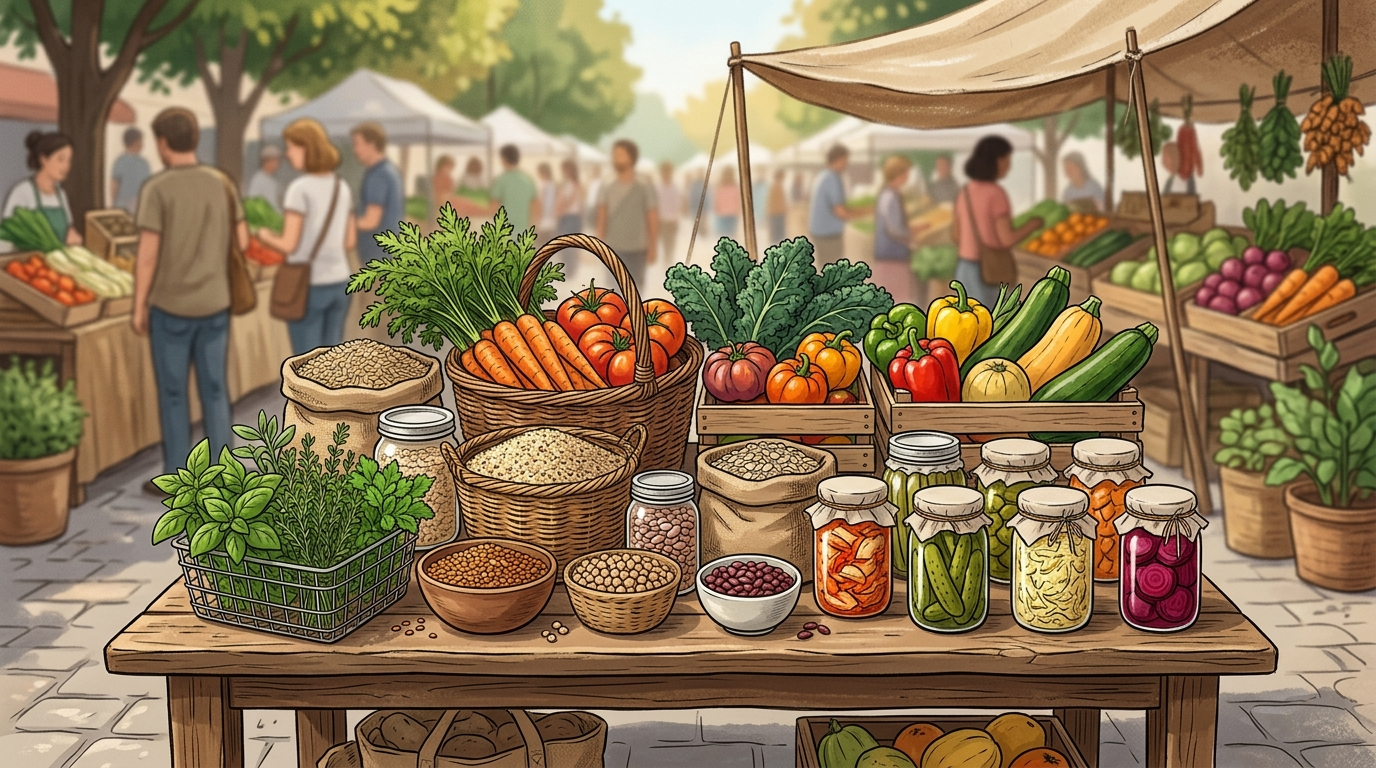
    The microbiome survived without supermarkets because human diets still delivered diverse plant compounds and fermentable fibers. The modern goal is not to live like the past. The modern goal is to restore the useful pieces, more plant variety, more fiber, and less ultra-processed monotony, inside a safer and more practical food environment.

  • What to Eat After Food Poisoning: The Best First Foods and What to Avoid

    What to Eat After Food Poisoning: The Best First Foods and What to Avoid

    After food poisoning, the most practical foods are oral rehydration fluids, broth, plain rice, bananas, applesauce, toast, oatmeal, and simple crackers introduced in small portions. These foods reduce gastric workload, replace sodium and glucose, and give the intestine time to recover before higher-fat, higher-fiber, or heavily seasoned meals return.

    How we evaluated foods after food poisoning

    We prioritized guidance from the National Institute of Diabetes and Digestive and Kidney Diseases, the CDC, and oral rehydration principles from the World Health Organization. Human evidence for exact food sequences is limited, so practical recovery advice relies on hydration physiology, symptom tolerance, and low-irritant meal choices rather than one perfect menu. We excluded aggressive “gut reset” claims, detox products, and any recommendation that implies self-treating severe dehydration or persistent symptoms without medical care.

    What should you eat first after food poisoning?

    Oral rehydration comes first because fluid loss disrupts sodium balance, glucose absorption, and circulation faster than short-term calorie reduction does. The first intake should usually be small sips of water, oral rehydration solution, diluted electrolyte drink, or broth rather than a full meal. Once vomiting has stopped and liquids stay down, bland foods such as bananas, rice, applesauce, toast, saltines, and plain oatmeal are usually the easiest next step. These foods contain simple starches, modest fiber, and minimal fat, so gastric emptying stays gentler than it does with fried foods or dairy-heavy meals. The MedlinePlus recovery guidance supports gradual reintroduction instead of forcing appetite. The useful pattern is sip, wait, test, and repeat. Recovery food should lower digestive workload, not prove that appetite has fully returned.

    Which foods are easiest on the stomach during recovery?

    Low-fat, low-spice, low-fiber foods usually create the least mechanical and chemical stress while the intestinal lining is still irritated. Plain rice provides digestible carbohydrate. Bananas provide potassium that may help replace losses from diarrhea. Applesauce offers pectin in a soft texture, and toast or crackers provide dry starch that many people tolerate early. Boiled potatoes, plain noodles, chicken soup, and scrambled eggs can fit later if nausea has faded and stool frequency is improving. The NHS food poisoning guidance also emphasizes small meals and gradual progression. Tolerance matters more than internet food lists. If broth works but toast does not, broth is the better choice for that stage. Recovery meals should be simple, warm or room temperature, and modest in portion size so the gut can rebuild normal motility.

    Which foods and drinks should you avoid at first?

    Simple recovery food progression from fluids to bland foods after food poisoning.
    Simple recovery food progression from fluids to bland foods after food poisoning.

    High-fat, high-sugar, alcohol, caffeine, and heavily seasoned foods usually return too early in online advice. Fat slows gastric emptying, so burgers, pizza, creamy sauces, and rich desserts can intensify nausea or cramping during the first recovery window. Alcohol worsens dehydration. Coffee and energy drinks can stimulate the gut when diarrhea is still active. Large servings of raw vegetables, beans, and high-fiber cereals may also feel rough because the bowel is still sensitive after infection or toxin exposure. Milk can be temporarily hard to tolerate because short-term lactase activity sometimes drops after gastroenteritis, a pattern described in clinical references such as the NCBI overview of gastroenteritis. The safest rule is simple: if a food is greasy, spicy, acidic, very sweet, or very fibrous, it usually belongs later, not first.

    When can you return to your normal diet?

    Most people can widen their diet once fluids stay down, urination normalizes, and bowel urgency is clearly improving, but the timeline varies with severity and age. A practical progression is bland starches first, then lean protein, then cooked vegetables, then normal mixed meals over one to three days. The CDC notes that warning signs such as bloody diarrhea, high fever, dehydration, neurological symptoms, or symptoms lasting longer than expected deserve medical evaluation rather than food experimentation. Appetite is not the only marker. Energy level, dizziness, urine output, and symptom pattern matter too. A person who can eat a sandwich but still cannot keep up with fluids is not fully recovered. Return to your regular diet when your gut handles small, normal meals without renewed nausea, cramping, or urgent diarrhea.

    FAQ

    Is yogurt a good first food after food poisoning?

    Not usually. Yogurt contains protein and can contain live cultures, but dairy can feel hard to tolerate right after gastroenteritis. It often works better later, once nausea and urgent diarrhea have clearly eased.

    Are probiotics necessary after food poisoning?

    They are not mandatory for every case. Some probiotic strains, including Saccharomyces boulardii and Lactobacillus rhamnosus GG, have supporting evidence in some diarrhea settings, but food and fluid tolerance still matter most first.

    Can you eat eggs after food poisoning?

    Yes, once liquids and bland starches are staying down. Soft scrambled or boiled eggs are usually easier than greasy breakfast foods because fat load stays lower.

    How long should you eat bland foods?

    Usually one to three days, but symptom severity decides the pace. If bland foods still trigger vomiting, escalating pain, or repeated diarrhea, slow down and consider medical advice.

    Is soup better than solid food?

    Often yes in the earliest stage. Broth and simple soups replace fluid and sodium while placing less digestive demand on the stomach than a full plate of solid food.

    When should you get medical help instead of changing foods?

    Get help if dehydration signs, blood in stool, high fever, persistent vomiting, severe weakness, confusion, or prolonged symptoms appear. Food choices support recovery, but they do not replace assessment when red flags are present.


  • How to Reduce Acid Reaching the Ears, Nose, and Throat: LPR Explained

    How to Reduce Acid Reaching the Ears, Nose, and Throat: LPR Explained

    Acid reaching the ears, nose, and throat signals laryngopharyngeal reflux (LPR), a condition where stomach acid and digestive enzymes travel past both the lower and upper esophageal sphincters into the pharynx and nasal cavity. To reduce it: elevate the head of your bed 6–8 inches, avoid eating 2–3 hours before lying down, and limit acidic, fatty, and caffeinated foods.

    How we evaluated this topic

    This article draws on clinical guidelines from the American Academy of Otolaryngology–Head and Neck Surgery, peer-reviewed research published in Laryngoscope, Otolaryngology–Head and Neck Surgery, and data from the National Institute of Diabetes and Digestive and Kidney Diseases (NIDDK). Priority was given to prospective human trials and systematic reviews over case reports. Industry-funded studies without independent replication were excluded. This article is educational and does not replace clinical evaluation; LPR diagnosis requires assessment by a physician or ENT specialist.

    What is laryngopharyngeal reflux and how does acid reach the throat, nose, and ears?

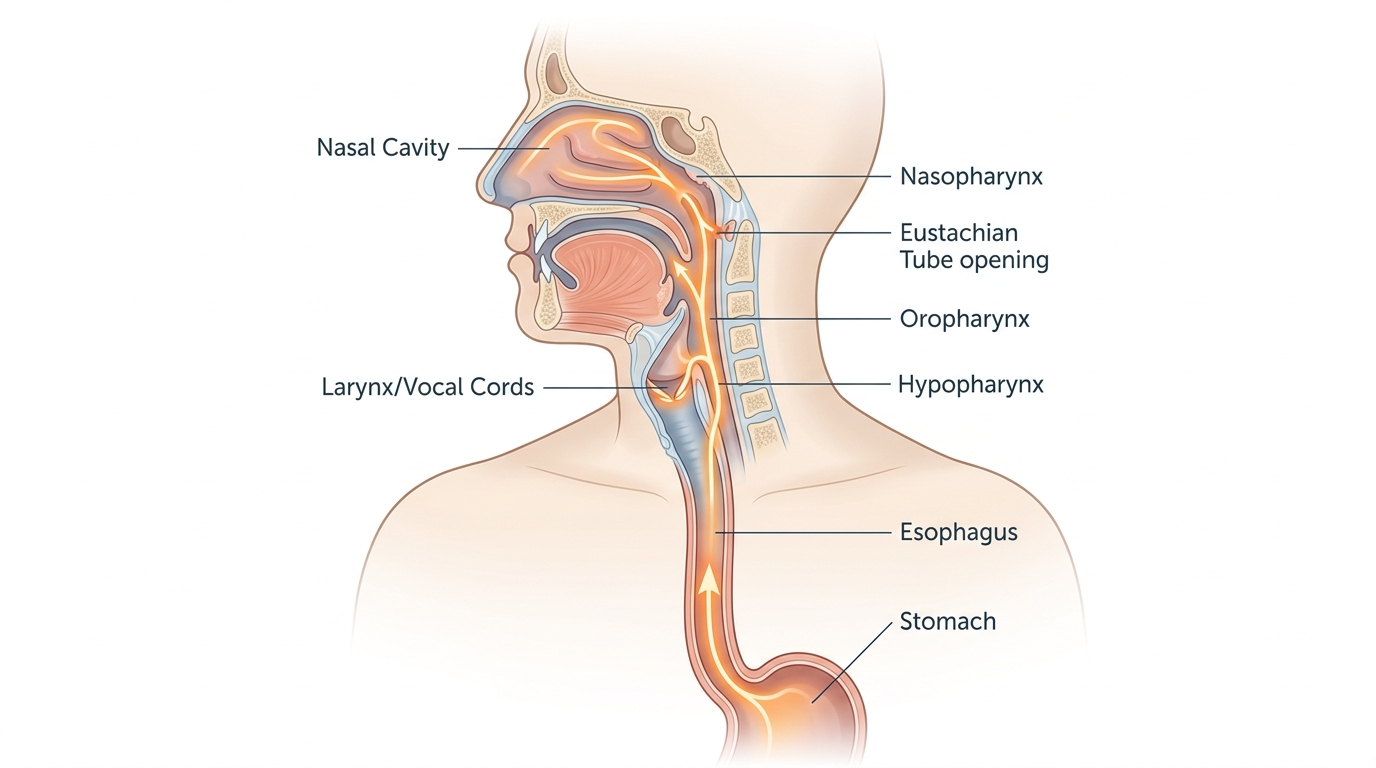
    Laryngopharyngeal reflux (LPR) occurs when gastric acid and the enzyme pepsin travel beyond the lower esophageal sphincter (LES) and upper esophageal sphincter (UES) into the pharynx, larynx, nasal passages, and Eustachian tubes connecting to the middle ear. Unlike gastroesophageal reflux disease (GERD), LPR often presents without heartburn—clinicians call this “silent reflux.” Pepsin retains enzymatic activity at pH levels as low as 4.0, meaning it continues irritating mucosal tissue in the throat and nasal passages long after acid exposure. When refluxate reaches the Eustachian tube, it can cause ear fullness, muffled hearing, or popping. The American Academy of Otolaryngology–Head and Neck Surgery estimates LPR affects approximately 10% of adults referred to ENT specialists.

    • LPR mechanism: acid and pepsin bypass both esophageal sphincters
    • Pepsin: active at pH 4.0, damaging to throat and nasal mucosa
    • Eustachian tube involvement: explains ear symptoms in LPR patients

    How does LPR differ from typical acid reflux (GERD)?

    GERD and LPR share a common cause—compromised sphincter function—but they produce different symptom profiles. GERD primarily causes heartburn, regurgitation, and chest discomfort because acid pools in the esophagus. LPR symptoms concentrate in the upper aerodigestive tract: chronic throat clearing, hoarseness, postnasal drip, a sensation of a lump in the throat (globus pharyngeus), and persistent cough. A 2020 systematic review in Laryngoscope Investigative Otolaryngology found that more than 60% of LPR patients had no classic GERD heartburn. This diagnostic gap means LPR is frequently misdiagnosed as asthma, sinusitis, or allergies before the reflux connection is identified. Distinguishing the two matters because treatment protocols—particularly regarding acid suppression and dietary management—differ in meaningful ways between GERD and LPR.

    • GERD: heartburn and esophageal symptoms dominate
    • LPR: hoarseness, throat clearing, globus, postnasal drip—often no heartburn
    • Misdiagnosis rate: frequently mistaken for sinusitis, asthma, or allergies

    What lifestyle changes help reduce acid reaching the upper airway?

    Several behavioral interventions carry the strongest evidence for reducing LPR symptom frequency. Elevating the head of the bed 6–8 inches using a wedge pillow or bed risers—not just extra pillows—reduces nocturnal reflux episodes because it uses gravity to keep gastric contents below the UES. The NIDDK recommends avoiding eating within 2–3 hours of lying down. Wearing loose-fitting clothing reduces intra-abdominal pressure. Tobacco use relaxes the LES and dramatically increases reflux frequency; cessation is one of the highest-yield interventions documented in clinical guidelines. Weight loss in overweight individuals reduces mechanical pressure on the LES. Smaller, more frequent meals reduce the volume of gastric content available for reflux compared to large single meals.

    • Bed elevation: 6–8 inches using wedge or risers (not pillows alone)
    • Meal timing: no food 2–3 hours before lying down
    • Tobacco cessation: high-yield LES function improvement
    • Clothing and meal size: reduce intra-abdominal pressure

    What dietary changes reduce LPR symptoms?

    Specific foods relax the lower esophageal sphincter or increase gastric acid production, worsening reflux. Identified triggers include caffeine, alcohol, chocolate, mint (peppermint and spearmint), citrus fruits, tomatoes, carbonated beverages, and high-fat foods. A 2017 study in JAMA Otolaryngology–Head and Neck Surgery found that a plant-based, Mediterranean-style diet reduced LPR symptoms comparably to proton pump inhibitor (PPI) therapy over 6 weeks. Alkaline foods—melons, oatmeal, bananas, ginger—are generally well-tolerated. Thickening liquids can reduce the speed at which refluxate reaches the UES. Keeping a food diary for 2–4 weeks helps identify individual triggers, since responses vary considerably between patients. Dietary changes typically take 4–8 weeks to show measurable impact on mucosal healing.

    • Avoid: caffeine, alcohol, mint, citrus, carbonated beverages, high-fat foods
    • Emphasize: alkaline and Mediterranean-pattern foods
    • Food diary: 2–4 weeks identifies individual triggers
    • Timeline: 4–8 weeks for mucosal improvement

    What does the evidence say about acid-reducing treatments for LPR?

    Proton pump inhibitors (PPIs) like omeprazole and lansoprazole are first-line pharmacological treatments for confirmed LPR, but evidence for their effectiveness specifically in LPR is weaker than for GERD. A 2022 meta-analysis in Alimentary Pharmacology & Therapeutics found PPIs improved LPR symptoms in 63% of patients versus 48% placebo response—a modest but statistically significant benefit. Alginate formulations (e.g., Gaviscon Advance) form a physical raft that prevents refluxate from reaching the pharynx and show benefit specifically for LPR in preliminary trials. Baclofen, a GABA-B agonist, reduces transient LES relaxations but is reserved for refractory cases due to side effects. H2 blockers (famotidine, ranitidine) provide less acid suppression than PPIs but may suit mild cases. All pharmacological approaches should be directed by a physician.

    • PPIs (omeprazole, lansoprazole): first-line; 63% symptom response in meta-analysis
    • Alginate raft therapy: addresses mechanical reflux reaching pharynx
    • Baclofen: reduces LES relaxations; reserved for refractory LPR
    • H2 blockers: useful for mild LPR under physician guidance

    FAQ

    Is LPR serious?

    LPR is not immediately life-threatening but chronic, untreated reflux reaching the larynx and pharynx can cause long-term mucosal damage, increased risk of vocal cord granulomas, and—in rare cases—has been associated with laryngeal pathology. Anyone with persistent hoarseness lasting more than 2–3 weeks, swallowing difficulty, or unexplained throat symptoms should seek evaluation from an ENT physician. Early intervention reduces the risk of chronic changes.

    Can acid really reach the ears?

    Yes, via the Eustachian tube. The Eustachian tube connects the middle ear cavity to the nasopharynx; when LPR-related refluxate reaches the nasopharynx, pepsin and acid can travel into the tube and cause inflammation. A preliminary 2019 study in Otolaryngology–Head and Neck Surgery identified pepsin in middle ear fluid samples in a subset of LPR patients, supporting this pathway.

    How long does it take for LPR to heal?

    Mucosal tissue in the larynx and pharynx heals more slowly than esophageal tissue. Clinical guidelines suggest that consistent treatment—lifestyle changes plus appropriate pharmacotherapy if prescribed—typically takes 2–3 months to produce significant symptom reduction. Full mucosal healing in the larynx may take 6 months or longer in moderate-to-severe cases.

    Is LPR the same as post-nasal drip?

    Post-nasal drip is a symptom, not a diagnosis, and LPR is one of its leading causes. LPR-triggered post-nasal drip occurs because acid and pepsin irritate the mucosal lining of the nasopharynx, stimulating excess mucus secretion. Other causes of post-nasal drip—including allergic rhinitis, chronic sinusitis, and vasomotor rhinitis—require different management, which is why accurate diagnosis matters.

    Should I see a doctor or can I manage LPR at home?

    Lifestyle changes and dietary modification are appropriate first steps for mild, intermittent symptoms. However, LPR shares symptoms with more serious conditions including laryngeal pathology, esophageal motility disorders, and thyroid disease. If symptoms persist beyond 4–6 weeks of lifestyle modification, worsen, or include difficulty swallowing, weight loss, or blood in saliva or stool, a physician evaluation is necessary. A laryngoscopic exam can visualize laryngeal irritation patterns characteristic of LPR.

    Does sleeping position affect LPR symptoms?

    Yes. Sleeping on the left side reduces reflux frequency compared to the right side because stomach anatomy positions the gastroesophageal junction above the gastric body during left-lateral sleep. A small RCT published in The American Journal of Gastroenterology found significantly lower reflux episodes in left-side sleepers. Combining left-side positioning with head-of-bed elevation provides additive benefit for LPR patients.

    Can stress worsen LPR?

    Preliminary research suggests stress increases gastric acid production and may reduce LES tone, increasing reflux frequency. Psychological stress also amplifies visceral pain sensitivity, meaning patients may perceive reflux symptoms more intensely during stressful periods. Stress management approaches—including cognitive behavioral therapy (CBT) and mindfulness-based stress reduction (MBSR)—have directional evidence for improving functional GI symptoms, though their specific effect on LPR has not been well-studied in isolation.

    For a comparison of digestive support supplements that may help with acid-related symptoms, see Supplement Buyers Lab.


  • Intermittent Strong Odor, Stomach Growling, and Gas: Is It Digestion?

    Intermittent Strong Odor, Stomach Growling, and Gas: Is It Digestion?

    Could intermittent strong odor, stomach growling, and gas be digestion-related?

    Yes—intermittent strong odor, stomach growling (borborygmi), and gas are classic signs of digestive fermentation in the gut. These symptoms typically arise when the intestinal microbiome processes undigested carbohydrates, producing hydrogen, methane, and sulfur-based gases. The pattern is usually benign, though persistence may indicate an underlying motility or enzyme issue.

    How we evaluated digestive gas symptoms

    This article prioritized peer-reviewed gastroenterology research over anecdotal sources, focusing on human clinical studies and established GI physiology literature. We excluded case reports and relied on systematic reviews where available. The gut-gas research base is strong for fermentation mechanisms but more limited for sulfur-specific odor patterns; findings in that area are noted as directional rather than settled.

    What causes intermittent stomach growling and gas?

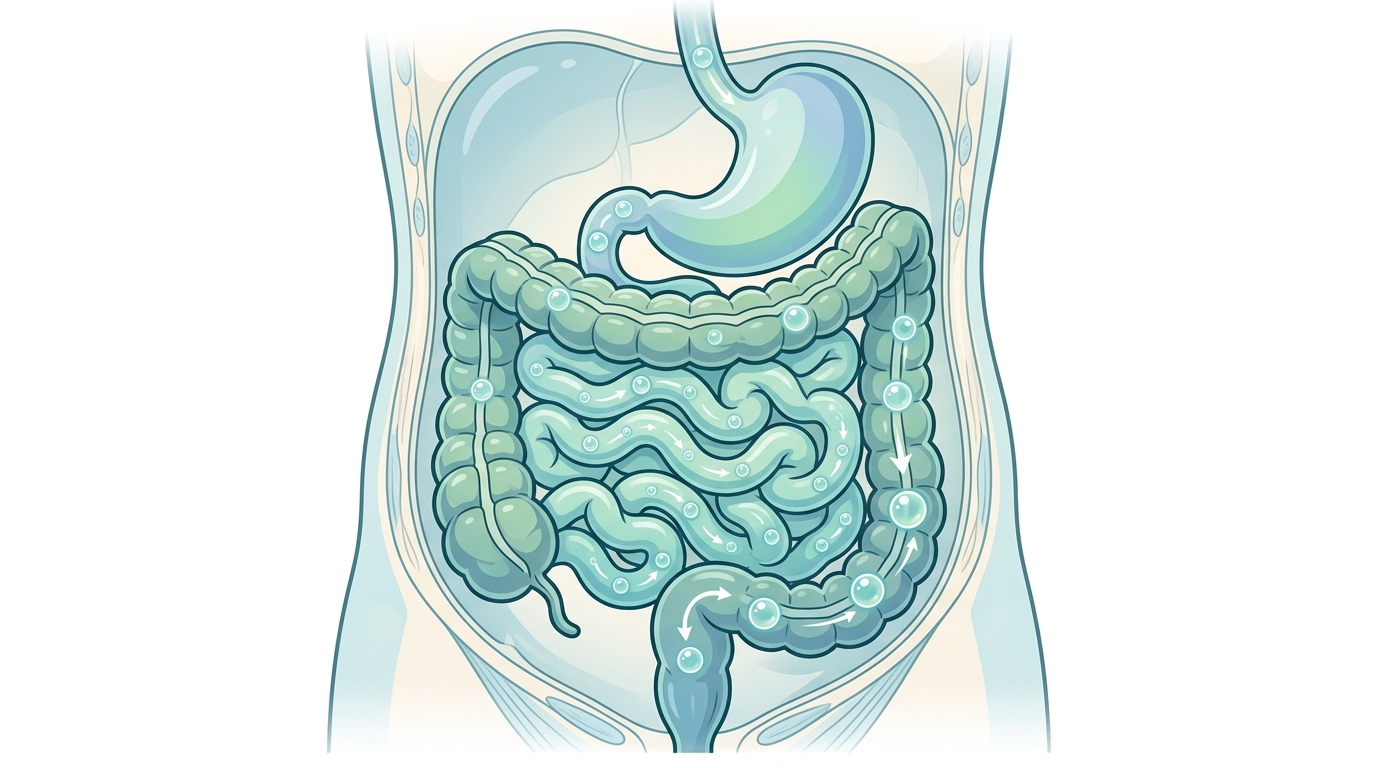
    Borborygmi—the medical term for audible stomach growling—results from peristaltic contractions moving gas and liquid through the intestines. The sound is produced when the intestinal wall squeezes a mixture of air, partially digested food, and fluid, creating a hollow, gurgling resonance. A 2021 review in Frontiers in Physiology found that borborygmi intensity correlates with intestinal gas volume and transit speed. The gut microbiome generates gas continuously through bacterial fermentation of fiber, resistant starch, and short-chain carbohydrates. Bifidobacterium, Bacteroides, and Clostridium species are the primary fermenters. Gas production naturally peaks 60–90 minutes after meals, which is why growling and bloating tend to cluster in that window. Stress, eating speed, and altered motility all modify how audible and uncomfortable this process becomes.

    What makes digestive gas smell particularly strong?

    Odor intensity is determined primarily by sulfur-containing compounds: hydrogen sulfide (H₂S), methanethiol, and dimethyl sulfide. These compounds are produced when gut bacteria ferment sulfur-rich foods—eggs, cruciferous vegetables (broccoli, cabbage, Brussels sprouts), red meat, and alliums (garlic, onions). A 2010 study in Gut found that Desulfovibrio bacteria, which specialize in sulfate reduction, are the main producers of H₂S in the human colon. Higher levels of sulfur-reducing bacteria correlate with more malodorous gas. Dietary choices explain most intermittent odor patterns. Increased animal protein, high-sulfur vegetables, or fermentable carbohydrates (FODMAPs) reliably intensify odor. Some people also have elevated Desulfovibrio populations due to antibiotic exposure or microbiome dysbiosis, making odor more persistent regardless of diet.

    Does strong gas odor mean something is wrong?

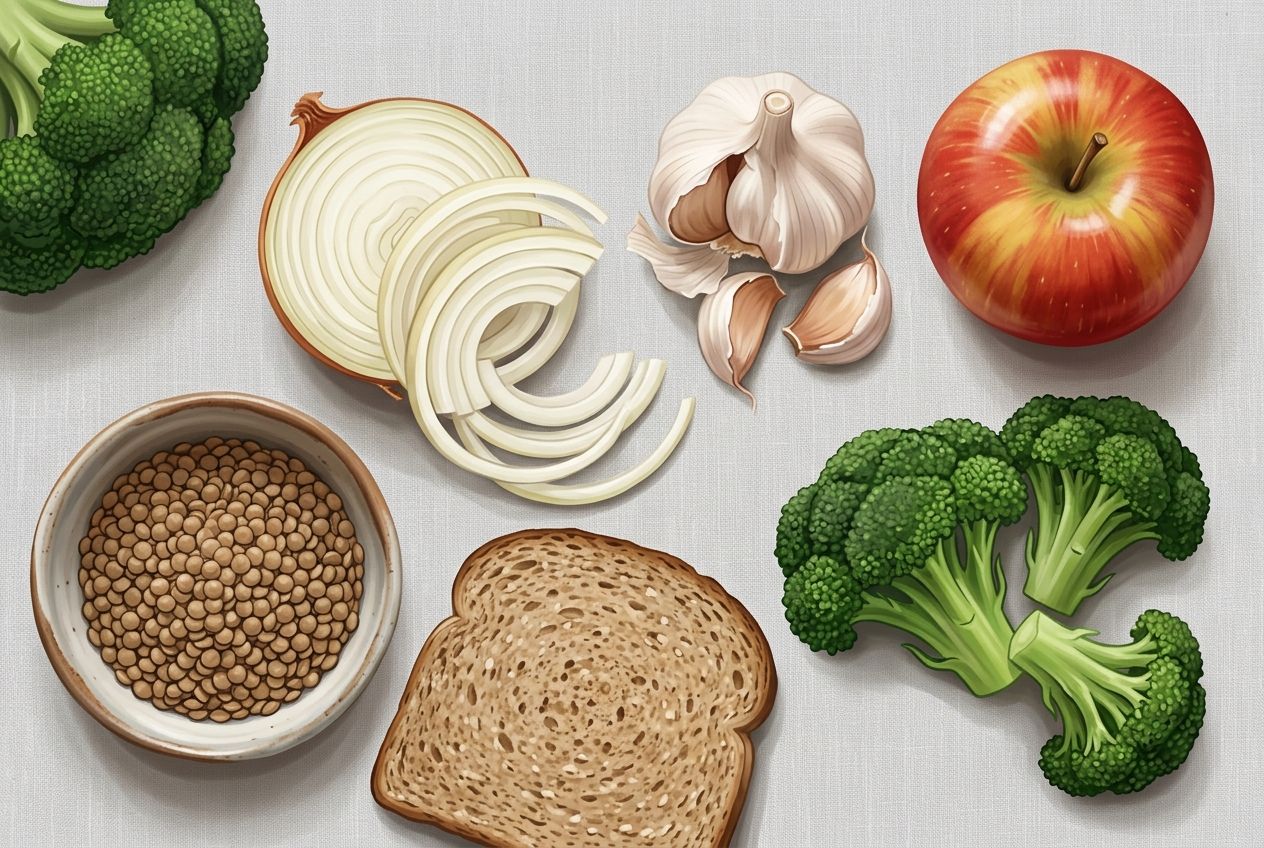
    Common high-FODMAP foods including onion, garlic, apple, broccoli, lentils, and wheat bread that can trigger gas and bloating
    Common high-FODMAP foods including onion, garlic, apple, broccoli, lentils, and wheat bread that can trigger gas and bloating

    Intermittent strong odor is usually a dietary effect, not a disease signal. That said, several clinical conditions do alter gas odor and frequency beyond what food explains. Small intestinal bacterial overgrowth (SIBO) occurs when bacteria colonize the small intestine in excess, causing fermentation of food before it reaches the colon. The result is bloating, odor, and gurgling that begin sooner after eating—sometimes within 30 minutes—rather than the normal 60–90 minute window. Research from the American Journal of Gastroenterology shows SIBO affects an estimated 2–20% of the general population depending on diagnostic criteria. Exocrine pancreatic insufficiency (EPI), lactose intolerance, and celiac disease also alter fermentation patterns. If symptoms are consistent rather than intermittent and accompanied by weight loss, pain, or changes in stool consistency, evaluation by a gastroenterologist is warranted.

    What does intermittent versus persistent tell you?

    The word “intermittent” is diagnostically meaningful. Symptoms that cluster around specific meals, come and go with dietary changes, or disappear during fasting strongly suggest a fermentation response to particular foods rather than an underlying disease. Persistent symptoms—present daily regardless of what you eat—point toward a functional GI disorder like irritable bowel syndrome (IBS), SIBO, or motility dysfunction. A 2020 meta-analysis in Alimentary Pharmacology & Therapeutics found that dietary modification (particularly low-FODMAP protocols) reduces gas and bloating symptoms in 50–76% of IBS patients, supporting a fermentation-based explanation for most intermittent presentations. Tracking symptoms in a food diary for 1–2 weeks is one of the most reliable ways to identify whether a dietary pattern is the cause.

    Which foods most commonly trigger these symptoms?

    The highest-evidence trigger foods fall into the FODMAP category: Fermentable Oligosaccharides, Disaccharides, Monosaccharides, and Polyols. These are short-chain carbohydrates that absorb poorly in the small intestine and are rapidly fermented by colonic bacteria. High-FODMAP foods include: wheat, rye, onion, garlic, legumes (beans, lentils, chickpeas), lactose-containing dairy, apples, pears, stone fruits, and artificial sweeteners (sorbitol, mannitol, xylitol). Beyond FODMAPs, sulfur-rich vegetables (broccoli, cabbage, cauliflower) and high-protein foods (red meat, eggs, whey protein) specifically increase sulfur gas and odor. Carbonated beverages introduce gas mechanically and magnify symptoms. A useful self-test: eliminate the highest-suspect food category for 5–7 days and observe whether symptoms reduce. This is not a definitive diagnostic but gives actionable data.

    When should you see a doctor about gas and growling?

    Most intermittent gas and borborygmi are self-limiting and do not require medical evaluation. Seek evaluation if any of the following apply: symptoms are present daily for more than 4 weeks without an obvious dietary cause; growling and gas are accompanied by abdominal pain, cramping, or bloating that interferes with daily function; you notice unexplained weight loss, blood in stool, or a change in bowel habit (alternating constipation and diarrhea); you recently completed a course of antibiotics and symptoms began shortly after. These patterns suggest conditions beyond dietary fermentation—SIBO, IBD, celiac disease, or IBS—which are diagnosed through breath tests, stool analysis, blood panels, or endoscopy. A gastroenterologist can order the appropriate workup. For isolated odor and occasional growling without other symptoms, dietary tracking is a reasonable first step before clinical evaluation.

    FAQ

    Is stomach growling a sign of hunger or a digestive problem?

    Stomach growling happens both when the stomach is empty and when gas is moving through the intestines. The MMC (migrating motor complex) generates contractions during fasting to clear debris, producing the classic “hunger growl.” Post-meal growling is usually gas-related rather than hunger. The two are distinguishable by timing: fasting growls occur on an empty stomach; digestive growls peak 60–90 minutes after eating.

    Can stress make gas and bloating worse?

    Yes. The enteric nervous system (the “gut brain”) responds to psychological stress through the gut-brain axis, altering gut motility and intestinal permeability. A 2021 review in Neurogastroenterology & Motility found that stress accelerates or slows motility depending on stress type, both of which can worsen bloating and gas. Chronic stress is a documented risk factor for IBS.

    Does drinking water help reduce gas and odor?

    Hydration supports motility—well-hydrated intestines move contents more efficiently, reducing fermentation time and odor exposure. Drinking water with meals does not dilute stomach acid in harmful ways (a common misconception), but carbonated water introduces additional gas. For most people, adequate hydration (approximately 2 liters/day) is helpful but not curative for gas symptoms.

    Are probiotics helpful for gas and odor?

    Research is mixed. Some probiotic strains—particularly Lactobacillus acidophilus NCFM and Bifidobacterium lactis Bi-07—have been studied for their effect on bloating and gas in double-blind trials with modest positive results. A 2011 study in Alimentary Pharmacology & Therapeutics found significant reduction in flatulence with multispecies probiotic supplementation. Results vary by strain and individual microbiome composition; no single probiotic works for everyone.

    Can digestive enzyme supplements reduce gas and odor?

    Digestive enzyme supplements—particularly alpha-galactosidase (the active ingredient in products like Beano)—break down raffinose and stachyose in legumes and cruciferous vegetables before they reach colonic bacteria, reducing fermentation gas. Studies in Advances in Therapy show alpha-galactosidase reduces gas and bloating from legume consumption. Lactase supplements help lactose-intolerant individuals avoid dairy-triggered fermentation. Broader enzyme formulas (lipase, protease, amylase) have less evidence for gas reduction specifically.

    Is strong odor from gas a sign of colon cancer?

    Strong gas odor alone is not a recognized symptom of colorectal cancer. Cancer-associated stool changes—bright red or tarry blood, narrow stools, unexplained weight loss, persistent change in bowel habits—are the red-flag patterns to watch for. Altered odor in isolation, particularly when clearly tied to dietary intake, is almost always fermentation-related. If you have concerns, a colonoscopy or stool test (FIT) can rule out colorectal disease and is recommended at age 45 by the American Cancer Society.

    How long does a gas episode typically last?

    Fermentation-related gas typically resolves within 2–6 hours as contents move through the colon. If gas was triggered by a high-FODMAP meal, the peak symptom window is usually 90 minutes to 4 hours post-meal. Gas related to SIBO or motility disorders may last longer and be more diffuse. Movement and physical activity accelerate intestinal transit and can shorten gas episodes; lying down tends to prolong them.


  • What Supermarket Foods Support Gut Health Besides Yogurt?

    What Supermarket Foods Support Gut Health Besides Yogurt?

    Kefir, refrigerated sauerkraut, kimchi, tempeh, miso, oats, beans, bananas, onions, garlic, and apples all support gut health through two distinct mechanisms. Fermented foods like kefir and kimchi deliver live microorganisms directly to the gut. Prebiotic foods like oats, beans, and garlic feed beneficial bacteria already living in the colon. Combining both categories daily provides broader microbiome support than any single food.

    How we evaluated these foods

    This article draws on human clinical trials, systematic reviews, and guidance from the International Scientific Association for Probiotics and Prebiotics (ISAPP), the Harvard T.H. Chan School of Public Health, and the American Gastroenterological Association (AGA). We prioritized foods available in standard U.S. supermarkets, not specialty stores. We separated fermented foods (which add live organisms) from prebiotic foods (which feed existing bacteria) because the mechanisms and evidence base differ. Where research supports dietary patterns rather than individual foods, we note that distinction.

    Which supermarket fermented foods contain live microorganisms?

    Not all fermented foods deliver live organisms at the time of consumption. The critical variable is whether the product undergoes pasteurization or heat treatment after fermentation. A 2021 randomized controlled trial published in Cell00754-6) by Stanford University researchers found that consuming six or more servings of fermented foods per day for 10 weeks increased overall gut microbial diversity — measured via 16S rRNA gene sequencing — and reduced 19 inflammatory markers including interleukin-6 (IL-6) and C-reactive protein (CRP). The ISAPP clarifies that while fermented foods contribute living microbes, most do not meet the technical definition of “probiotic” because their strain identity and dosage are unverified.

    Food Live at Consumption Key Organisms What to Check on the Label
    Kefir Yes L. kefiri, L. kefiranofaciens, yeasts Look for “live and active cultures”
    Sauerkraut (refrigerated) Yes L. plantarum, L. brevis, Leuconostoc Must be refrigerated and unpasteurized; shelf-stable versions have zero live organisms
    Kimchi (refrigerated) Yes L. plantarum, L. brevis, L. sakei Refrigerated only; pasteurized kimchi is biologically inert
    Tempeh Partially Rhizopus oligosporus Raw tempeh has live cultures; cooking kills them but retains nutritional benefits
    Miso Partially Aspergillus oryzae, Lactobacillus Adding miso after cooking (below 115°F) preserves some live organisms
    Kombucha Variable Acetobacter, Gluconobacter, yeasts Unpasteurized only; microbial content varies widely by brand and batch
    Shelf-stable pickles No None (vinegar-brined) Most commercial pickles are not fermented; true lacto-fermented pickles are rare
    • Kefir provides the most consistent live-culture option in standard supermarkets
    • Refrigeration and the absence of pasteurization are the two most reliable indicators of live content
    • The Stanford Cell study (2021) found fermented food intake increased microbial diversity and reduced 19 inflammatory markers

    Which supermarket foods act as prebiotics?

    Prebiotic foods contain non-digestible fibers that selectively feed beneficial bacteria in the colon, stimulating production of short-chain fatty acids (SCFAs) — particularly butyrate, propionate, and acetate. According to the Harvard T.H. Chan School of Public Health, these SCFAs serve as the primary energy source for colonocytes and support gut barrier integrity. A 2019 systematic review published in Nutrients found that diverse dietary fiber intake consistently improved microbial composition more reliably than any single isolated prebiotic compound. Oats supply beta-glucan. Beans and lentils supply resistant starch and fermentable fiber. Onions, garlic, and leeks contribute inulin and fructooligosaccharides (FOS). Bananas provide resistant starch (especially when slightly underripe). Apples supply pectin.

    Food Primary Prebiotic Fiber Mechanism Serving Note
    Oats Beta-glucan Feeds Bifidobacterium, increases SCFA production 1/2 cup dry provides ~2g beta-glucan
    Beans and lentils Resistant starch, fermentable fiber Colonic fermentation produces butyrate Start with 1/4 cup to assess tolerance
    Onions and garlic Inulin, FOS Selectively feeds Bifidobacterium and Lactobacillus Cooked retains prebiotic activity; raw may cause gas
    Bananas Resistant starch (higher when less ripe) Fermented in colon to butyrate and acetate Slightly green bananas have more resistant starch than fully ripe
    Apples Pectin Supports microbial diversity in the lower gut Eat with skin for maximum pectin content
    Leeks Inulin Similar mechanism to onions and garlic Milder flavor alternative to raw garlic
    • Fiber diversity matters more than any single “best” prebiotic food according to the 2019 Nutrients review
    • Oats, beans, onions, garlic, bananas, and apples are the most accessible supermarket prebiotic sources
    • Sensitive digestion may require gradual portion increases rather than large initial servings

    How should you combine fermented and prebiotic foods?

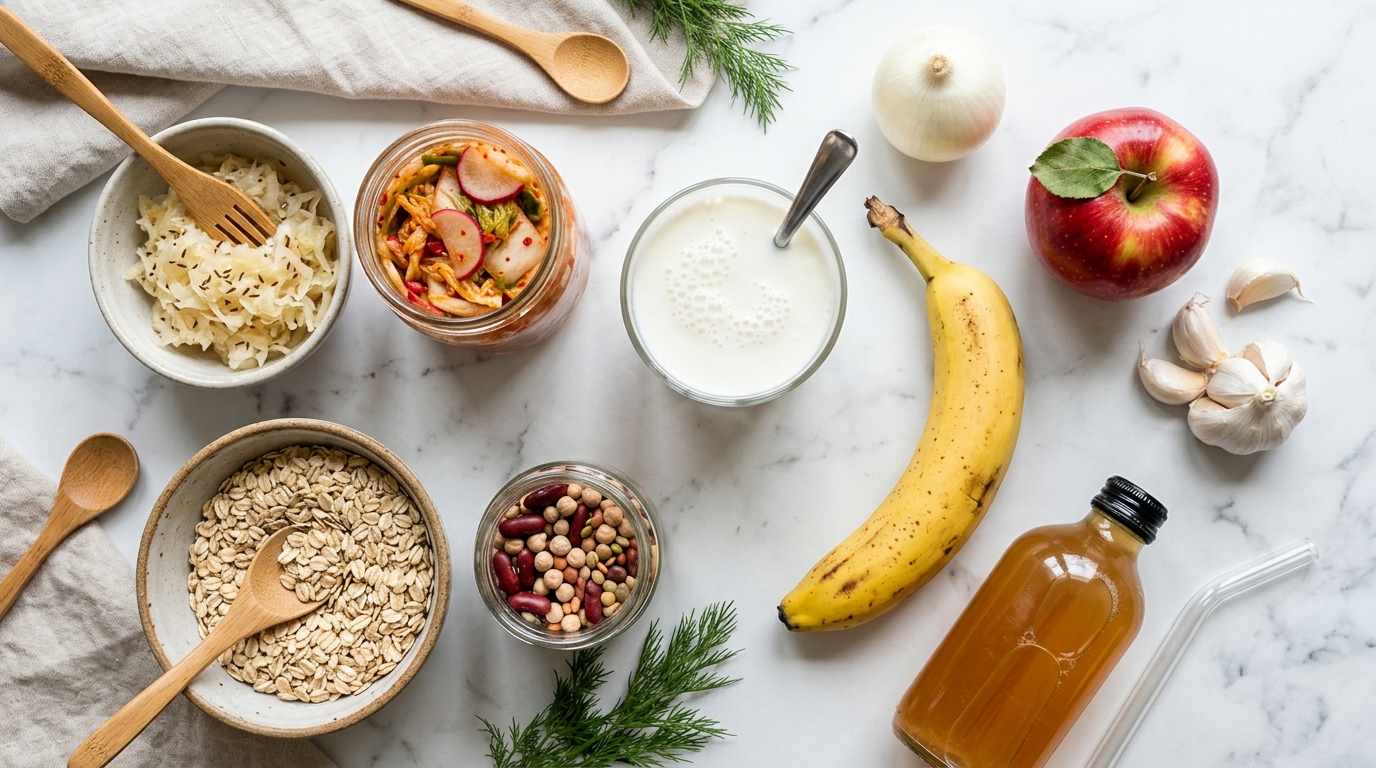
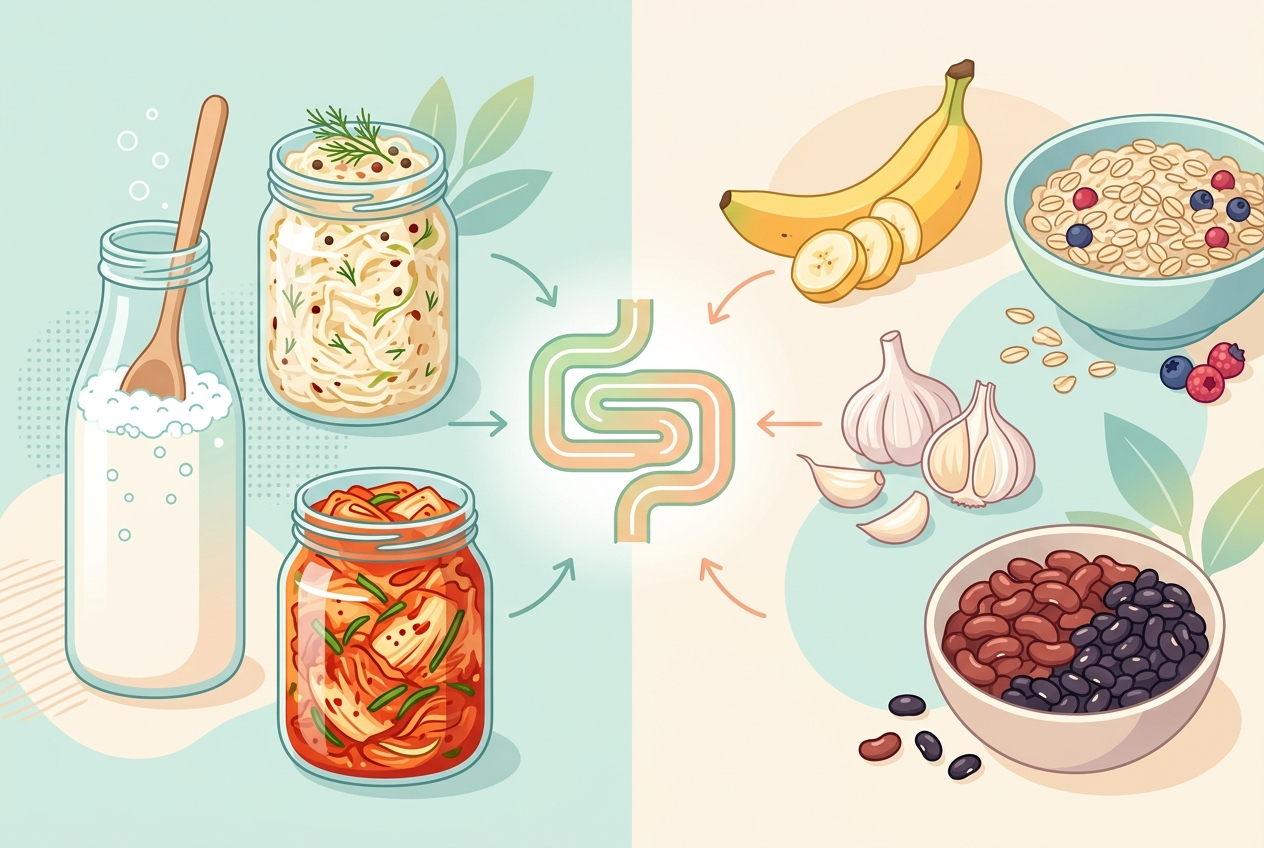
    Fermented foods versus prebiotic fiber foods and how they support gut health through different mechanisms
    Fermented foods versus prebiotic fiber foods and how they support gut health through different mechanisms

    The most practical approach is pairing one fermented food with one fiber-rich food in the same day — kefir with oats, sauerkraut alongside beans, or kimchi with rice and vegetables. Fermented foods deliver external microorganisms and fermentation metabolites directly, while prebiotic foods provide the substrates that resident colonic bacteria use for SCFA production. A 2022 narrative review published in the British Journal of Nutrition found that synbiotic intake (combining live organisms with prebiotic fiber) produced greater SCFA output than either intervention alone, though the authors noted that large-scale randomized trials comparing combined versus isolated approaches remain limited. The ISAPP and the World Gastroenterology Organisation both frame dietary diversity as more impactful than any single functional food.

    • Pairing fermented foods with prebiotic foods creates broader microbiome support than either category alone
    • Synbiotic combinations increased SCFA production versus isolated approaches in a 2022 British Journal of Nutrition review
    • Consistency matters more than intensity — small daily pairings outperform occasional large servings

    What label details distinguish real gut-health foods from marketing?

    Several label signals separate evidence-supported options from products using “gut health” as a marketing claim. For fermented foods, the FDA does not regulate the term “probiotic” on food labels, so the terms “live and active cultures,” “raw,” “unpasteurized,” and refrigerator placement are more reliable indicators than front-of-package health claims. The National Yogurt Association’s Live & Active Cultures seal requires 100 million cultures per gram at manufacture, but this does not guarantee viability at consumption. For prebiotic foods, the most trustworthy signal is the ingredient list itself — whole oats, whole beans, and whole garlic cloves do not need a “prebiotic” label to deliver prebiotic fiber. Products that add isolated prebiotic fibers like inulin or chicory root extract provide some benefit but lack the food matrix complexity of whole food sources.

    • “Live and active cultures,” “raw,” and “unpasteurized” are more reliable than front-of-package health claims
    • The FDA does not regulate the word “probiotic” on food labels
    • Whole foods with intact fiber matrices provide more reliable prebiotic effects than isolated fiber additives

    FAQ

    Is kefir better than yogurt for gut health?

    Kefir typically contains a more diverse microbial community than yogurt — including both bacteria and beneficial yeasts — because it uses a symbiotic culture of bacteria and yeasts (SCOBY) rather than the two-strain starter (L. bulgaricus and S. thermophilus) standard in yogurt production. A 2020 review in Nutrition Research Reviews found that kefir consistently demonstrated greater microbial diversity than yogurt, though direct head-to-head clinical trials comparing health outcomes remain limited.

    Can you eat too many fermented foods?

    Yes. Rapid increases in fermented food intake can cause temporary bloating, gas, and digestive discomfort, particularly in individuals with histamine sensitivity or small intestinal bacterial overgrowth (SIBO). The Stanford Cell study ramped participants gradually to six or more servings per day over several weeks. Starting with one to two servings daily and increasing over two to three weeks is the most common gastroenterologist recommendation.

    Do canned or shelf-stable fermented foods have any gut benefits?

    Canned sauerkraut, pasteurized kimchi, and shelf-stable pickles contain zero live microorganisms because heat processing kills all bacteria. They retain some nutritional value (fiber, vitamins) but provide none of the live-culture benefits associated with fresh fermented foods. If the product is stored at room temperature on a standard grocery shelf, it almost certainly contains no living organisms.

    Are fermented foods safe during pregnancy?

    The American College of Obstetricians and Gynecologists (ACOG) does not prohibit fermented foods during pregnancy, but recommends caution with unpasteurized products due to Listeria risk. Pasteurized fermented foods like most commercial yogurt and pasteurized kefir are generally considered safe. Unpasteurized options like raw sauerkraut or raw kombucha carry a small but nonzero contamination risk.

    How much fiber per day supports gut health?

    The Academy of Nutrition and Dietetics recommends 25 grams per day for women and 38 grams per day for men, though most Americans consume only 15 grams. For prebiotic-specific effects, research suggests that 5 to 10 grams of prebiotic fiber daily (from food sources like onions, garlic, oats, and beans) is sufficient to measurably shift microbial composition within two to four weeks.

    Does cooking destroy the prebiotic fiber in foods?

    No. Unlike live organisms, prebiotic fibers like inulin, beta-glucan, and resistant starch are heat-stable and survive normal cooking temperatures. Cooked onions, garlic, oats, and beans retain their prebiotic properties. The exception is resistant starch in bananas, which decreases as bananas ripen and soften regardless of cooking.

    What is the difference between probiotic foods and prebiotic foods?

    Probiotic foods contain live microorganisms that can temporarily colonize the gut. Prebiotic foods contain non-digestible fibers that feed bacteria already resident in the colon. Both support gut health, but through different mechanisms. Eating both categories — sometimes called a synbiotic dietary pattern — provides broader microbiome support than either alone.


  • Do Probiotics Make Up for Not Eating Fermented Foods?

    Do Probiotics Make Up for Not Eating Fermented Foods?

    No. Probiotic supplements and fermented foods serve overlapping but distinct roles in gut health. Fermented foods provide live microorganisms alongside prebiotics, organic acids, bioactive peptides, and nutrients that supplements do not replicate. Supplements deliver specific, researched strains at controlled doses. Neither fully substitutes for the other — they work best as complementary inputs to the gut microbiome.

    How we evaluated this question

    This article synthesizes evidence from peer-reviewed clinical trials, systematic reviews, and position statements from the International Scientific Association for Probiotics and Prebiotics (ISAPP) and the World Health Organization (WHO). We prioritized human studies over animal or in vitro research. Where evidence is directional rather than conclusive, we note this distinction. This is educational content — it is not medical advice and does not recommend specific products.

    What do fermented foods provide that supplements do not?

    Fermented foods like yogurt, kefir, kimchi, sauerkraut, miso, and kombucha deliver live microorganisms in a complex food matrix that includes prebiotics, organic acids, vitamins, and bioactive peptides. A 2021 randomized controlled trial published in Cell00754-6) by researchers at Stanford University found that a 10-week high-fermented-food diet increased overall microbial diversity — measured by 16S rRNA gene sequencing — and significantly reduced 19 inflammatory markers including interleukin-6 (IL-6), interleukin-10 (IL-10), and interleukin-12b (IL-12b). Importantly, a high-fiber diet in the same study did not produce the same diversity increase. The Stanford researchers concluded that the microbial diversity benefit was specific to fermented food consumption, not dietary fiber alone.

    • The Stanford Cell study (2021) found fermented foods increased microbial diversity and reduced 19 inflammatory markers
    • Fermented foods deliver nutrients, prebiotics, and organic acids alongside live microorganisms
    • Dietary fiber alone did not replicate the microbial diversity gains from fermented foods

    What do probiotic supplements provide that fermented foods do not?

    Probiotic supplements deliver specific, identified strains at standardized colony-forming unit (CFU) counts. This precision is the primary advantage over fermented foods, where microbial composition varies by batch, brand, fermentation method, and storage conditions. According to the ISAPP, a probiotic must be a “live microorganism that, when administered in adequate amounts, confers a health benefit on the host” — a definition that requires strain-level identification and dose verification. Commercial fermented foods rarely meet this standard because their microbial content is variable and typically unquantified. For specific clinical outcomes — such as reducing antibiotic-associated diarrhea with Saccharomyces boulardii CNCM I-745 or supporting gut barrier function with Lactobacillus rhamnosus GG — strain-specific supplements provide the dose consistency that clinical trials validated.

    • Supplements deliver identified strains at verified CFU counts; fermented foods have variable, unquantified microbial content
    • ISAPP defines probiotics by strain identification and adequate dosing — most fermented foods do not meet this standard
    • Strain-specific clinical outcomes require the dose consistency that only supplements provide

    Can you get enough probiotics from food alone?

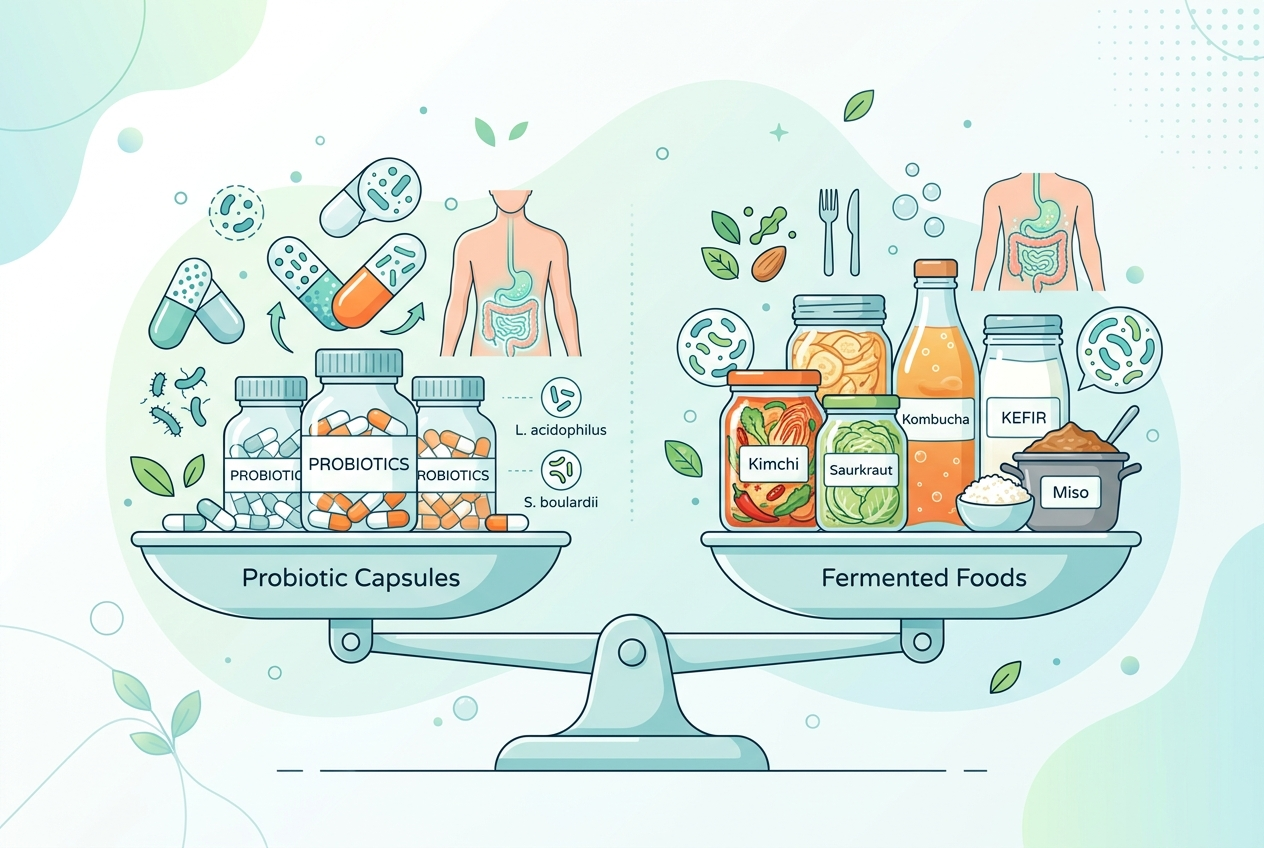
    Visual comparison of probiotic supplements versus fermented foods for gut health
    Visual comparison of probiotic supplements versus fermented foods for gut health

    It depends on what outcome you are targeting. For general microbial diversity, the Stanford Cell study suggests that consuming 6 or more servings of fermented foods per day — defined as foods like yogurt, kefir, kimchi, sauerkraut, kombucha, and fermented cottage cheese — can meaningfully increase gut microbiome diversity over 10 weeks. However, a 2019 systematic review published in Nutrients found that the quantity and viability of live microorganisms in commercial fermented foods varies widely. Pasteurized products like most store-bought sauerkraut and pickles contain zero live organisms. Yogurt viability depends on storage temperature and time since manufacture. For people who consume 2-3 servings of genuinely live-culture fermented foods daily, supplementation may provide marginal additional benefit for general gut health.

    • 6+ servings of fermented foods per day increased microbial diversity in the Stanford study
    • Pasteurized fermented foods (most commercial sauerkraut, pickles) contain zero live microorganisms
    • Yogurt viability declines with storage temperature and time since manufacture

    What does the research say about combining both?

    Preliminary evidence suggests that combining fermented foods with targeted probiotic supplementation may provide broader microbiome support than either alone. The logic is complementary: fermented foods increase overall microbial diversity (a broad benefit), while specific probiotic strains address targeted functions like gut barrier integrity or immune modulation (a narrow benefit). A 2022 narrative review in the British Journal of Nutrition noted that synbiotic approaches — combining probiotics with prebiotics found naturally in fermented foods — produced greater improvements in short-chain fatty acid (SCFA) production than isolated probiotic supplementation. However, the review authors cautioned that large-scale RCTs directly comparing “fermented food + supplement” versus either alone are still limited, and most existing evidence is directional rather than conclusive.

    • Fermented foods provide broad diversity; supplements target specific strain-level functions
    • Synbiotic combinations (probiotics + food-based prebiotics) increased SCFA production versus supplements alone
    • Direct head-to-head RCTs comparing combined approaches are still limited

    Which fermented foods contain the most live organisms?

    Not all fermented foods are equal in live microbial content. The key distinction is whether the product undergoes pasteurization or heat processing after fermentation, which kills live organisms. The International Scientific Association for Probiotics and Prebiotics distinguishes between foods that contain live microorganisms at the time of consumption and those fermented during production but heat-treated afterward.

    Food Live at Consumption Typical Organisms Key Caveat
    Yogurt (with live cultures) Yes L. bulgaricus, S. thermophilus Must say “live and active cultures”; viability declines with age
    Kefir Yes L. kefiri, L. kefiranofaciens, yeasts Higher diversity than yogurt; variable by brand
    Kimchi (refrigerated) Yes L. plantarum, L. brevis, Leuconostoc Must be refrigerated and unpasteurized
    Sauerkraut (refrigerated) Yes L. plantarum, L. brevis Shelf-stable versions are pasteurized (zero live organisms)
    Kombucha Yes Acetobacter, Gluconobacter, yeasts Microbial content varies widely by brand and batch
    Miso Partially Aspergillus oryzae, Lactobacillus Cooking above 115°F kills most live organisms
    Sourdough bread No None survive baking Fermented during production, but baking kills all organisms
    Most commercial pickles No None (vinegar-brined, not fermented) True fermented pickles exist but are uncommon in stores

    For a detailed comparison of specific products and strains, see Which Probiotic Strains Are Best for Inflammation?.

    FAQ

    Are all yogurts probiotic?

    No. The ISAPP clarifies that yogurt contains live cultures used in fermentation (Lactobacillus bulgaricus and Streptococcus thermophilus), but these are not necessarily “probiotic” strains unless their specific health benefits have been demonstrated in clinical trials. Some yogurts add documented probiotic strains like Bifidobacterium animalis DN-173 010 (used in Activia), which has strain-specific evidence. Look for labels specifying added probiotic strains beyond the standard yogurt cultures.

    Do fermented foods work as well as supplements for IBS?

    Evidence is mixed. A 2023 systematic review in the American Journal of Gastroenterology found that specific probiotic strains — particularly Bifidobacterium longum 35624 and Lactobacillus plantarum 299v — reduced IBS symptom severity in multiple RCTs. Fermented foods have not been studied with comparable rigor for IBS-specific outcomes. For IBS management, strain-specific supplements currently have stronger evidence than fermented foods.

    Can you take too many fermented foods?

    Rapid increases in fermented food intake can cause temporary bloating, gas, and digestive discomfort, particularly in people with small intestinal bacterial overgrowth (SIBO) or histamine sensitivity. The Stanford study ramped participants gradually from baseline to 6+ servings per day over several weeks. Starting with 1-2 servings daily and increasing slowly is a common recommendation from gastroenterologists.

    Does cooking destroy probiotics in fermented foods?

    Yes. Heating fermented foods above approximately 115°F (46°C) kills most live microorganisms. This is why miso soup, cooked kimchi, and sourdough bread contain no live organisms despite being fermented products. To preserve live cultures, consume fermented foods cold or add them after cooking.

    Are refrigerated supplements better than shelf-stable ones?

    Not automatically. Refrigerated supplements use strains (primarily Lactobacillus and Bifidobacterium) that require cold storage to maintain viability. Shelf-stable supplements typically use spore-forming strains like Bacillus coagulans GBI-30 6086, which are naturally heat-resistant. The relevant question is whether the CFU guarantee at expiration is verified, regardless of storage method.

    What is the difference between fermented and cultured foods?

    All cultured foods are fermented, but not all fermented foods are cultured. “Cultured” specifically means that known, intentional starter cultures were added (as in yogurt or kefir). “Fermented” can also include wild fermentation using naturally present organisms (as in sauerkraut or traditional kimchi). Both methods produce live microorganisms, but cultured products tend to have more predictable microbial composition.

    Do fermented foods contain prebiotics?

    Some do. Fermented vegetables like kimchi and sauerkraut retain dietary fiber that acts as a prebiotic, feeding gut bacteria in addition to delivering live organisms. Kefir contains kefiran, a polysaccharide with documented prebiotic properties. This dual delivery of live organisms plus prebiotic substrate is one of the key advantages fermented foods hold over isolated probiotic supplements.