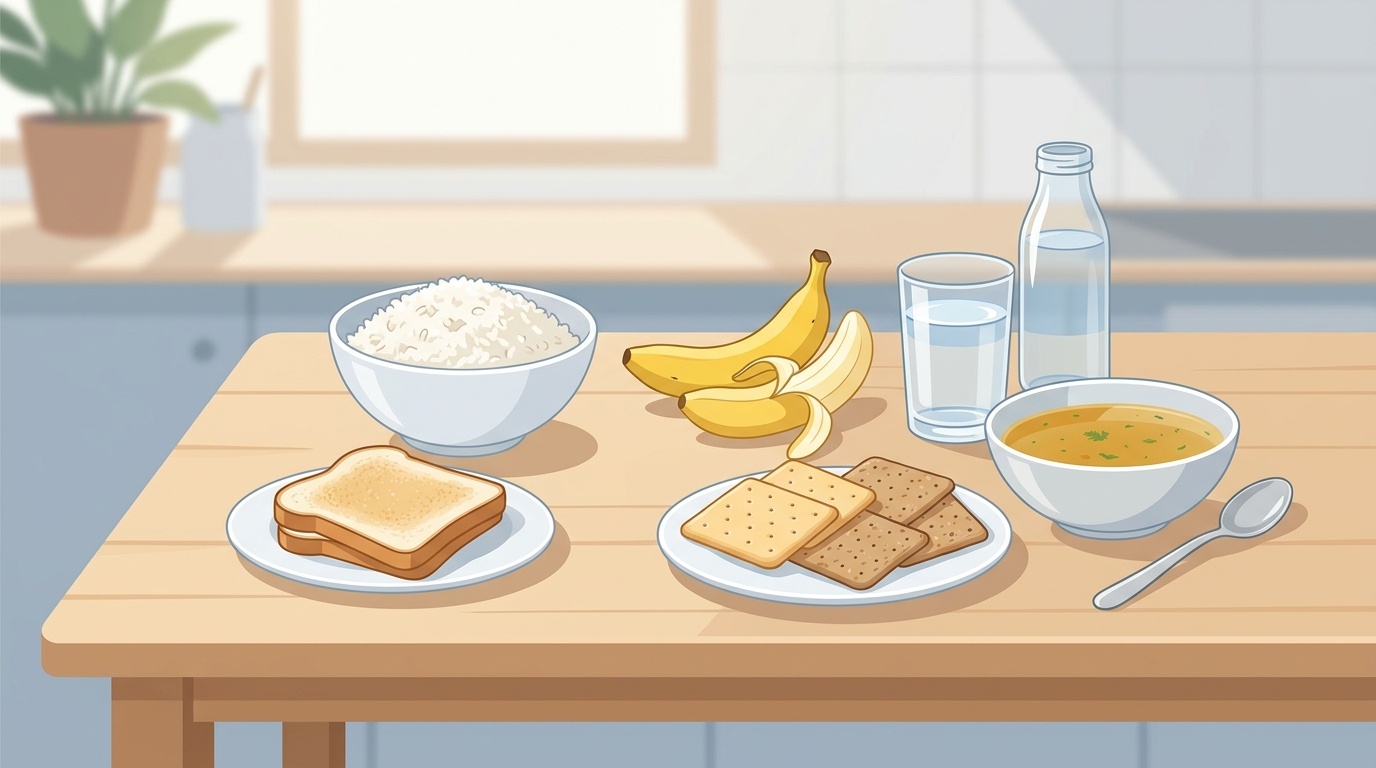
After food poisoning, the most practical foods are oral rehydration fluids, broth, plain rice, bananas, applesauce, toast, oatmeal, and simple crackers introduced in small portions. These foods reduce gastric workload, replace sodium and glucose, and give the intestine time to recover before higher-fat, higher-fiber, or heavily seasoned meals return.
How we evaluated foods after food poisoning
We prioritized guidance from the National Institute of Diabetes and Digestive and Kidney Diseases, the CDC, and oral rehydration principles from the World Health Organization. Human evidence for exact food sequences is limited, so practical recovery advice relies on hydration physiology, symptom tolerance, and low-irritant meal choices rather than one perfect menu. We excluded aggressive “gut reset” claims, detox products, and any recommendation that implies self-treating severe dehydration or persistent symptoms without medical care.
What should you eat first after food poisoning?
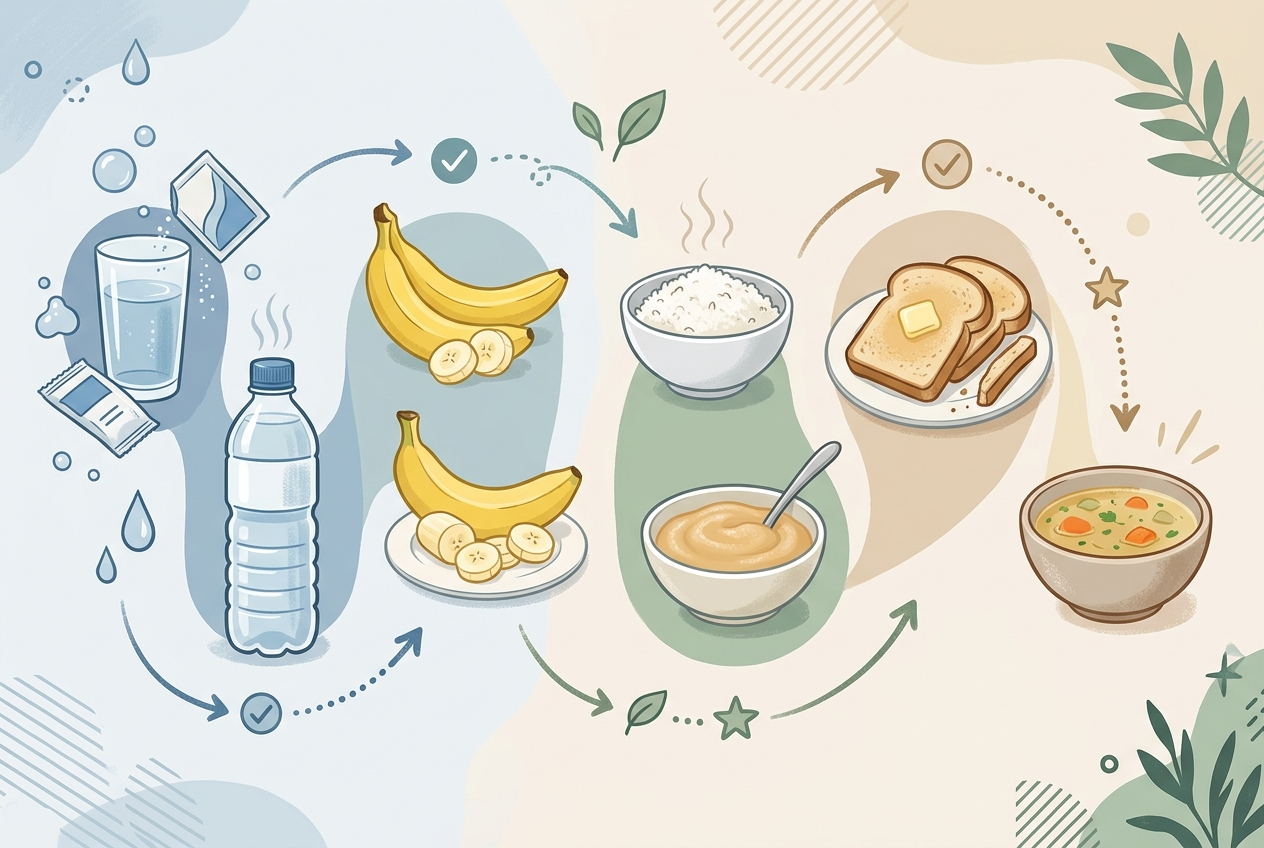
Oral rehydration comes first because fluid loss disrupts sodium balance, glucose absorption, and circulation faster than short-term calorie reduction does. The first intake should usually be small sips of water, oral rehydration solution, diluted electrolyte drink, or broth rather than a full meal. Once vomiting has stopped and liquids stay down, bland foods such as bananas, rice, applesauce, toast, saltines, and plain oatmeal are usually the easiest next step. These foods contain simple starches, modest fiber, and minimal fat, so gastric emptying stays gentler than it does with fried foods or dairy-heavy meals. The MedlinePlus recovery guidance supports gradual reintroduction instead of forcing appetite. The useful pattern is sip, wait, test, and repeat. Recovery food should lower digestive workload, not prove that appetite has fully returned.
Which foods are easiest on the stomach during recovery?
Low-fat, low-spice, low-fiber foods usually create the least mechanical and chemical stress while the intestinal lining is still irritated. Plain rice provides digestible carbohydrate. Bananas provide potassium that may help replace losses from diarrhea. Applesauce offers pectin in a soft texture, and toast or crackers provide dry starch that many people tolerate early. Boiled potatoes, plain noodles, chicken soup, and scrambled eggs can fit later if nausea has faded and stool frequency is improving. The NHS food poisoning guidance also emphasizes small meals and gradual progression. Tolerance matters more than internet food lists. If broth works but toast does not, broth is the better choice for that stage. Recovery meals should be simple, warm or room temperature, and modest in portion size so the gut can rebuild normal motility.
Which foods and drinks should you avoid at first?
High-fat, high-sugar, alcohol, caffeine, and heavily seasoned foods usually return too early in online advice. Fat slows gastric emptying, so burgers, pizza, creamy sauces, and rich desserts can intensify nausea or cramping during the first recovery window. Alcohol worsens dehydration. Coffee and energy drinks can stimulate the gut when diarrhea is still active. Large servings of raw vegetables, beans, and high-fiber cereals may also feel rough because the bowel is still sensitive after infection or toxin exposure. Milk can be temporarily hard to tolerate because short-term lactase activity sometimes drops after gastroenteritis, a pattern described in clinical references such as the NCBI overview of gastroenteritis. The safest rule is simple: if a food is greasy, spicy, acidic, very sweet, or very fibrous, it usually belongs later, not first.
When can you return to your normal diet?
Most people can widen their diet once fluids stay down, urination normalizes, and bowel urgency is clearly improving, but the timeline varies with severity and age. A practical progression is bland starches first, then lean protein, then cooked vegetables, then normal mixed meals over one to three days. The CDC notes that warning signs such as bloody diarrhea, high fever, dehydration, neurological symptoms, or symptoms lasting longer than expected deserve medical evaluation rather than food experimentation. Appetite is not the only marker. Energy level, dizziness, urine output, and symptom pattern matter too. A person who can eat a sandwich but still cannot keep up with fluids is not fully recovered. Return to your regular diet when your gut handles small, normal meals without renewed nausea, cramping, or urgent diarrhea.
For a detailed comparison of specific products and strains, see Should You Take a Probiotic for Reflux After Food Poisoning?.
For a detailed comparison of specific products and strains, see Bloating After Everything You Eat or Drink: What Should You Compare First?.
FAQ
Is yogurt a good first food after food poisoning?
Not usually. Yogurt contains protein and can contain live cultures, but dairy can feel hard to tolerate right after gastroenteritis. It often works better later, once nausea and urgent diarrhea have clearly eased.
Are probiotics necessary after food poisoning?
They are not mandatory for every case. Some probiotic strains, including Saccharomyces boulardii and Lactobacillus rhamnosus GG, have supporting evidence in some diarrhea settings, but food and fluid tolerance still matter most first.
Can you eat eggs after food poisoning?
Yes, once liquids and bland starches are staying down. Soft scrambled or boiled eggs are usually easier than greasy breakfast foods because fat load stays lower.
How long should you eat bland foods?
Usually one to three days, but symptom severity decides the pace. If bland foods still trigger vomiting, escalating pain, or repeated diarrhea, slow down and consider medical advice.
Is soup better than solid food?
Often yes in the earliest stage. Broth and simple soups replace fluid and sodium while placing less digestive demand on the stomach than a full plate of solid food.
When should you get medical help instead of changing foods?
Get help if dehydration signs, blood in stool, high fever, persistent vomiting, severe weakness, confusion, or prolonged symptoms appear. Food choices support recovery, but they do not replace assessment when red flags are present.
Leave a Reply