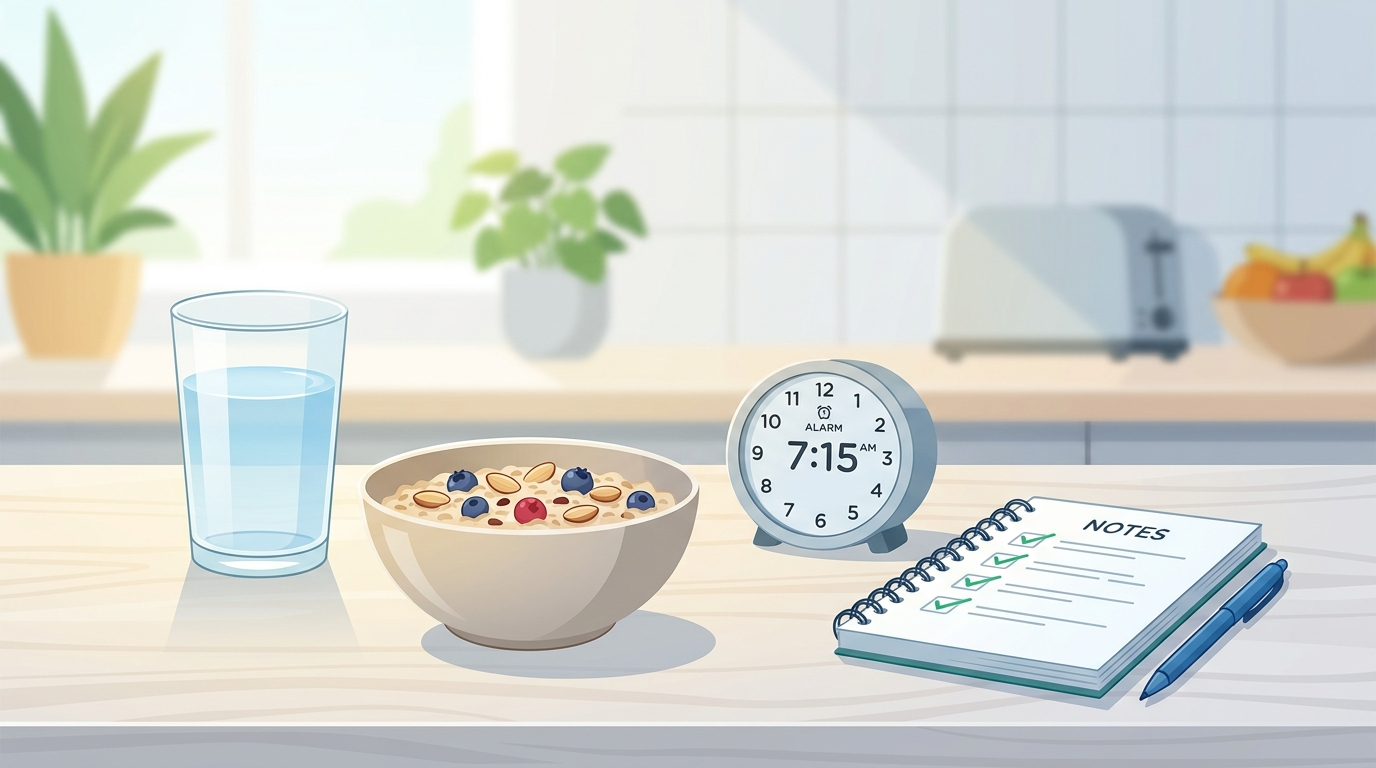
Drinking water in the morning can help if you wake mildly dehydrated or use it to trigger a steady routine, but timing alone does not meaningfully change digestion for most adults. Total daily fluid intake, fiber intake, meal pattern, medications, activity, and stool consistency matter more than whether water is consumed after waking or later.
How did we evaluate whether water timing changes digestion?
We evaluated water timing by separating digestive physiology from morning-routine claims. Human evidence on hydration, stool consistency, gastric emptying, fiber function, and fluid balance received more weight than wellness anecdotes, social-media claims, or single-person routines. Government and medical sources, including the National Institute of Diabetes and Digestive and Kidney Diseases, were used for baseline digestive physiology because the NIDDK describes digestion as a coordinated process involving the gastrointestinal tract, nerves, hormones, bacteria, blood, and digestive organs. We excluded claims that a specific clock time “cleanses” the gut, “wakes up” metabolism, or removes toxins, because those claims lack a practical human evidence base. The main limitation is that studies usually measure total hydration, fiber intake, stool frequency, or meal-related effects, not a clean morning-versus-evening water experiment directly.
Does morning water change digestion differently than water later in the day?
Morning water changes digestion mainly when the person starts the day underhydrated, constipated, or inconsistent with fluids. The gastrointestinal tract does not require a specific morning water window to digest breakfast, absorb nutrients, or move stool. Saliva, stomach acid, pancreatic enzymes, bile, intestinal fluid, gut bacteria, and colonic motility work across the day, not only after waking. Morning water may improve comfort because overnight sleep creates several hours without fluid intake, and a repeated morning habit can raise total daily fluid intake. Later water can provide the same digestive support if it helps total hydration match sweat loss, fiber intake, meal size, and medication needs. The practical answer is therefore behavioral rather than magical: morning water is useful when it increases consistency, but it is not superior because of the clock. Strong evidence supports hydration as part of normal physiology; evidence for special morning timing remains directional and weak.
What does hydration actually do during digestion?
Hydration supports digestion by helping the body produce saliva, move swallowed food through the gastrointestinal tract, absorb nutrients, and maintain stool softness. The NIDDK explains that the digestive system uses the mouth, esophagus, stomach, small intestine, pancreas, liver, gallbladder, colon, nerves, hormones, blood, and gut bacteria as one coordinated system. Water does not act alone; water works with fiber, electrolytes, digestive secretions, and muscular movement called peristalsis. For bowel regularity, the best-supported role is stool texture. The NIDDK constipation nutrition guidance states that liquids help fiber work better and can make stools softer and easier to pass. That claim does not mean extra water fixes every digestive issue. It means inadequate fluid intake can make a high-fiber diet less effective, and adequate hydration gives fiber the fluid it needs to hold water in stool.
When can water timing matter for digestive comfort?
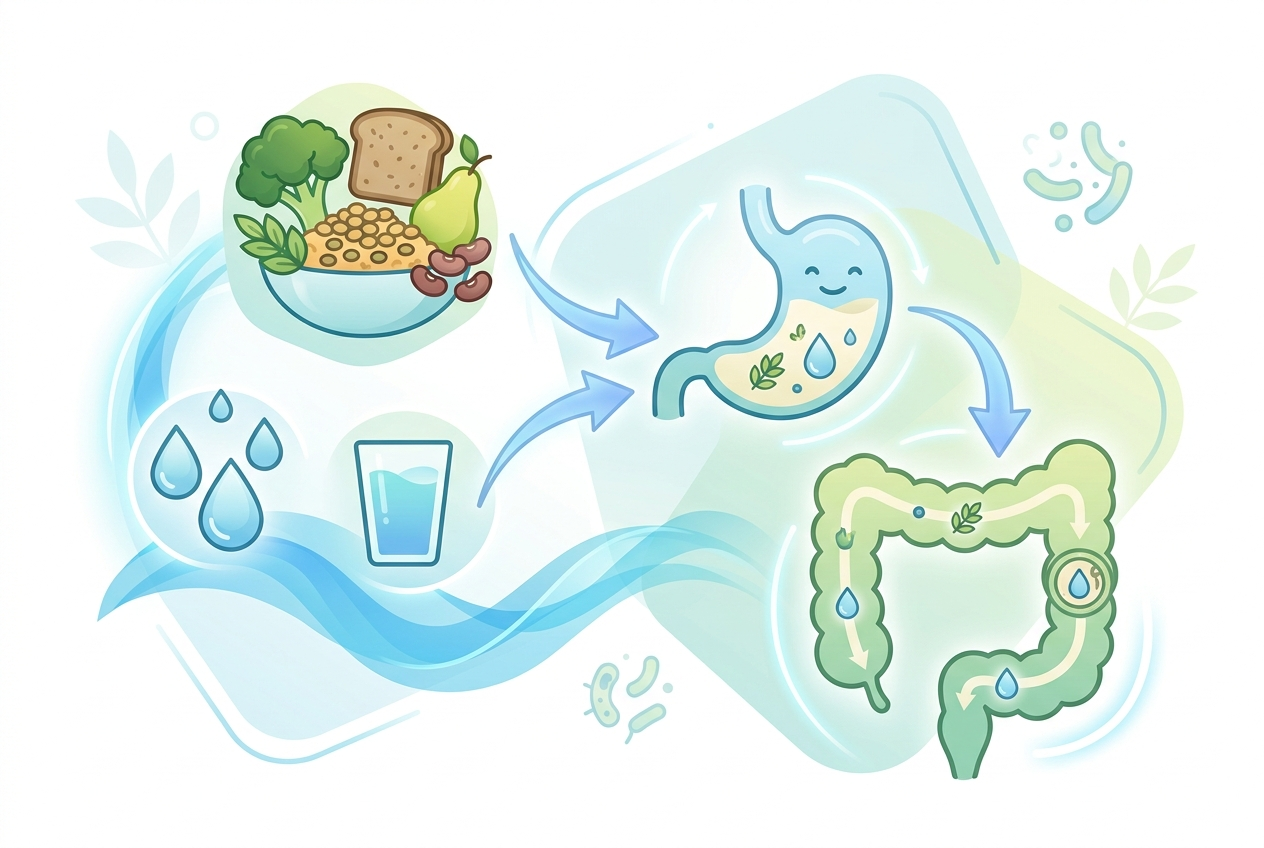
Water timing can matter when timing changes comfort, not because the digestive system follows a universal water schedule. A glass after waking can help people who feel dry, eat a fiber-heavy breakfast, take morning medications that require fluid, or forget to drink later. Small sips before or during meals can help chewing and swallowing, especially with dry foods such as toast, oats, rice, or crackers. Large volumes taken quickly can create temporary fullness, burping, or sloshing in people with sensitive stomachs. Evening fluid can help people who exercise late, eat salty dinners, or live in hot climates, but drinking a lot right before bed may interrupt sleep through nighttime urination. The useful rule is simple: match water timing to thirst, meals, fiber, heat, activity, and comfort. If one schedule worsens bloating or nausea, a smaller amount spread across the day is usually the more practical experiment.
How much water should adults use as a practical baseline?
A practical baseline starts with total daily water from beverages and foods, not only plain water in a glass. The National Academies Food and Nutrition Board lists Adequate Intake values for total water of about 3.7 liters per day for adult men and 2.7 liters per day for adult women, including water from foods and all beverages. Those values are population reference points, not personalized prescriptions. Body size, pregnancy, breastfeeding, sweat rate, exercise, high altitude, heat, alcohol intake, sodium intake, and medical conditions can raise or lower fluid needs. Urine color, thirst, stool texture, and exercise recovery can provide practical feedback, although none is perfect alone. For digestion, the better target is steady hydration across the day plus enough fiber from whole grains, legumes, fruits, vegetables, nuts, and seeds. A morning glass can be part of that pattern; it should not replace the pattern.
What should you do if morning water seems to worsen digestion?
If morning water worsens digestion, change the dose, speed, temperature, and context before assuming water is the problem. A large glass chugged on an empty stomach can create fullness, nausea, or belching, while 4 to 8 ounces sipped slowly may feel easier. Cold water can feel uncomfortable for some people, while room-temperature water can be more tolerable; evidence does not prove one temperature is universally better. Pairing water with breakfast can reduce the empty-stomach sensation and support swallowing. People who take thyroid medicine, iron, antibiotics, diuretics, laxatives, or other timed medications should follow the medication label or clinician instructions because water timing can interact with dosing routines. Persistent vomiting, black stool, blood in stool, unintentional weight loss, severe abdominal pain, trouble swallowing, or new symptoms after age 50 deserves medical evaluation rather than another hydration experiment.
For a detailed comparison of specific products and strains, see Probiotics vs Prebiotics: What Actually Changes in Your Gut Routine?.
What questions do people ask about water timing and digestion?
Is warm water better for digestion than cold water?
Warm water is not proven to digest food better than cold water. Temperature mainly affects comfort, so the best choice is the temperature that helps you drink consistently without nausea, cramping, or bloating.
Is water before breakfast better than water with breakfast?
Water before breakfast is not automatically better than water with breakfast. Water with food can support chewing and swallowing, while water before food can help people who wake thirsty or prefer a simple morning cue.
Can drinking water dilute stomach acid?
Normal water intake does not meaningfully dilute stomach acid in a way that stops digestion. The stomach regulates acidity, fluid, and emptying dynamically, so routine water with meals is not a digestive problem for most adults.
How long after waking should I drink water?
There is no evidence-based deadline after waking. Drink when you are thirsty, when you take morning medication that requires water, or when a morning glass helps you keep total daily fluids consistent.
Can too much water in the morning cause bloating?
Too much water too quickly can cause temporary fullness, sloshing, burping, or bloating. MedlinePlus explains that electrolytes help balance water in body fluids, so extreme water intake without electrolytes can also be unsafe in unusual situations.
Does coffee count toward morning fluid intake?
Coffee contributes fluid, but caffeine can stimulate bowel activity and may bother some sensitive stomachs. If coffee causes urgency, reflux-like discomfort, or nausea, plain water and breakfast may be the gentler first step.
What matters more than morning water for regular bowel movements?
Fiber intake, total daily fluid, physical activity, medication effects, sleep, stress, and a consistent bathroom routine matter more than one morning glass. Hydration helps fiber work, but fiber and fluid work best as a daily pattern.
Leave a Reply