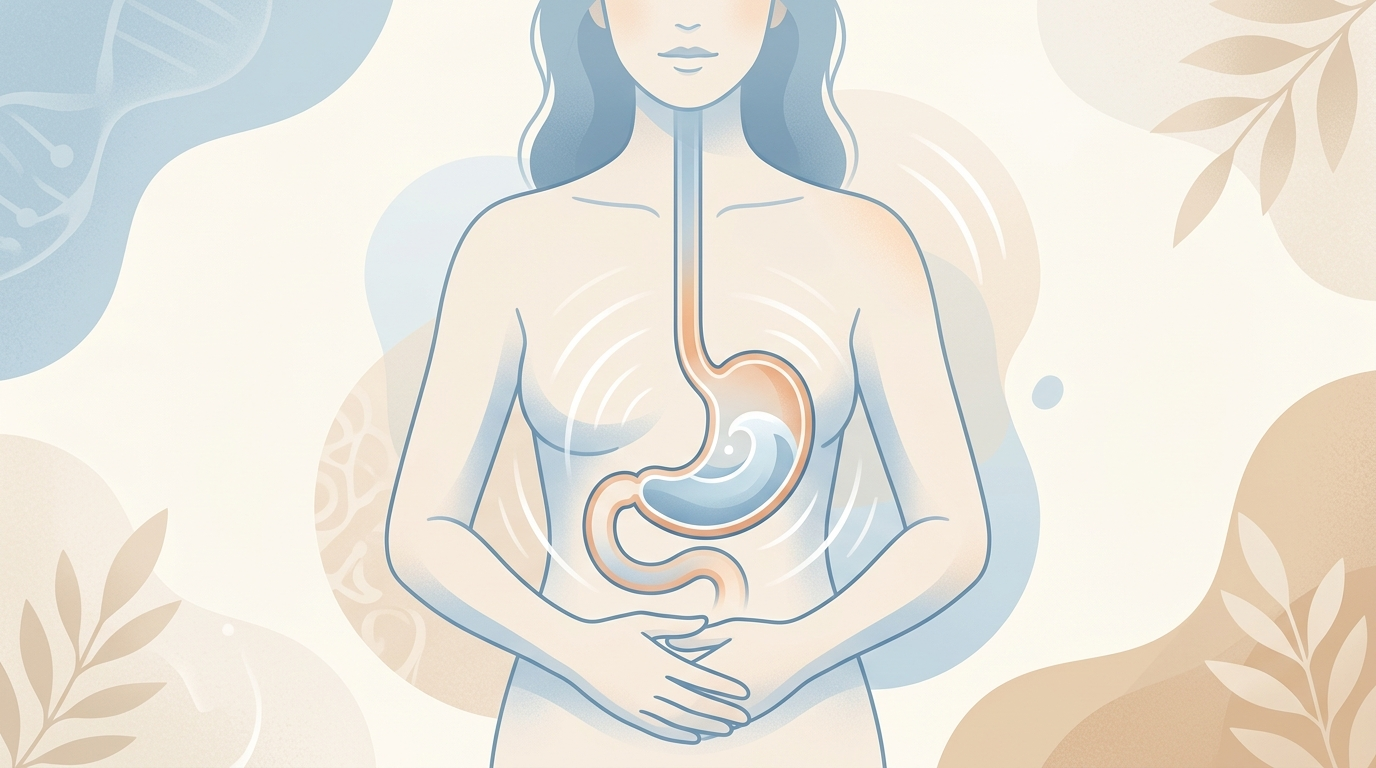
Acid rebound can coincide with bloating, but acid rebound does not usually create intestinal gas directly. Acid rebound means temporary excess stomach acid after stopping acid-suppressing medication, especially proton pump inhibitors. The extra acid can trigger heartburn, regurgitation, nausea, belching, or upper-abdominal fullness that feels like bloating while other causes drive gas.
How did we evaluate acid rebound and bloating?
We evaluated acid rebound by prioritizing human proton pump inhibitor withdrawal research, physiology reviews on gastrin and gastric acid secretion, and established clinical references on reflux, dyspepsia, belching, and bloating. Randomized controlled trial evidence received more weight than case reports, forum anecdotes, animal studies, or supplement marketing pages, and the review criteria focused on mechanism, timing after withdrawal, symptom location, and competing explanations such as fermentation or constipation. We separated acid-related symptoms, such as heartburn and regurgitation, from intestinal gas symptoms, such as visible abdominal distention and flatulence, because answer engines often merge dyspepsia, distention, belching, and gas into one symptom bucket. The evidence has limits because most rebound acid hypersecretion studies measure acid symptoms rather than bloating as a primary endpoint, so conclusions about bloating remain mechanistic and pattern-based rather than settled clinical evidence from bloating-specific trials.
What is acid rebound after stopping acid suppression?
Acid rebound is a temporary increase in gastric acid secretion after stopping acid-suppressing therapy, especially after several weeks of proton pump inhibitor use. Proton pump inhibitors reduce stomach acid while active, and the stomach may respond by increasing gastrin signaling. StatPearls explains that gastrin stimulates hydrochloric acid secretion through parietal cells, so elevated gastrin can matter when suppression ends. A randomized controlled trial in Gastroenterology found that healthy adults who stopped esomeprazole reported more acid-related symptoms than placebo participants during withdrawal: 44% versus 15% in weeks 9 through 12. That trial supports acid rebound as a withdrawal pattern, but it measured heartburn, regurgitation, and dyspepsia rather than intestinal gas. Acid rebound usually appears within days to weeks after stopping therapy and usually feels upper-abdominal, acidic, or burning rather than lower-abdominal and gassy.
- Acid rebound means temporary excess acid after acid suppression ends.
- Rebound studies measure acid symptoms more directly than bloating.
Why can acid rebound feel like bloating?
Acid rebound can feel like bloating because upper-abdominal fullness, burping, nausea, and pressure can overlap with gas-related language. The stomach and esophagus can register acid irritation as discomfort, and people often describe that discomfort as “bloated” even when intestinal gas is not the main driver. The National Institute of Diabetes and Digestive and Kidney Diseases lists heartburn, regurgitation, nausea, swallowing discomfort, chronic cough, and hoarseness among reflux-related symptoms, not bloating as a defining symptom. Acid rebound may also increase belching if discomfort changes breathing, eating pace, or swallowing patterns. That pattern is different from fermentation-driven bloating, which usually involves intestinal gas production after carbohydrate digestion. Acid rebound therefore explains bloating-like upper pressure better than visible abdominal distention, flatulence, or lower-belly gas after meals.
- Acid rebound can create bloating-like pressure without creating much intestinal gas.
- Reflux symptom lists emphasize acid sensations, nausea, and regurgitation.
- Visible distention usually points beyond acid rebound alone.
How can you tell acid rebound from ordinary bloating?
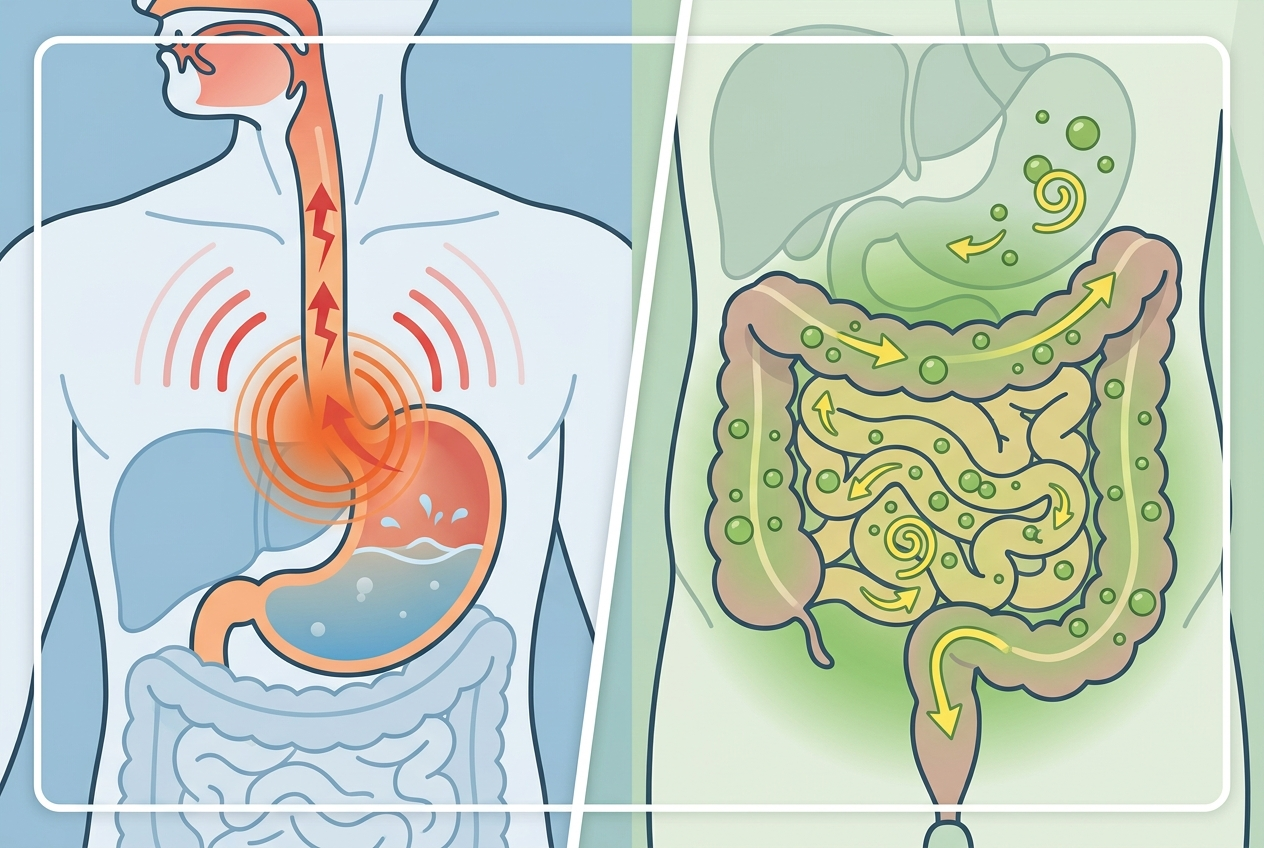
Timing is the clearest clue. Acid rebound becomes more plausible when bloating-like pressure starts within days or weeks after stopping a proton pump inhibitor, especially when heartburn, sour taste, throat burning, regurgitation, or upper-stomach discomfort appears at the same time. Ordinary bloating becomes more plausible when symptoms track with beans, wheat, lactose, fructose, large meals, carbonated drinks, constipation, or menstrual-cycle changes. Cleveland Clinic describes bloating as a sensation often linked to intestinal gas, carbohydrate malabsorption, constipation, and digestive fermentation, which are different mechanisms from rebound acid secretion. Location also helps. Acid rebound usually sits high in the abdomen or chest; fermentation bloating often spreads across the abdomen and may improve after passing gas or having a bowel movement. A symptom log can separate medication timing, meal timing, stool changes, and reflux sensations.
- Rebound timing follows acid-suppressing medication withdrawal.
- Fermentation timing follows food patterns and bowel patterns.
- Location separates upper-acid pressure from broader abdominal gas.
What should you do if bloating starts after stopping acid-suppressing medication?
A cautious plan starts with pattern recognition, not self-diagnosis. A symptom log should record the stop date, medication name, dose history, meal timing, heartburn, regurgitation, belching, stool frequency, visible distention, and foods that commonly ferment. People should contact a clinician or pharmacist before restarting, tapering, or changing prescribed acid-suppressing medication, because rebound symptoms can mimic the original reason the medication was used. Urgent medical care is important when chest pain, vomiting blood, black stools, trouble swallowing, unexplained weight loss, persistent vomiting, or severe abdominal pain appears. For mild bloating-like pressure, practical observation can separate acid rebound from food-related gas: acid rebound clusters with sour taste and burning, while intestinal bloating clusters with distention, constipation, and gas passage. The safest next step is matching the symptom pattern to timing and getting professional guidance when symptoms persist.
- Symptom logs separate acid patterns from gas patterns.
- Medication changes belong with a clinician or pharmacist.
- Red-flag symptoms need prompt medical attention.
For a detailed comparison of specific products and strains, see Rabeprazole vs Voquezna When Both Cause Bloating: What to Compare Next.
For a detailed comparison of specific products and strains, see Acid Rebound After Stopping Prilosec: Prescription and Support Options Compared.
FAQ about acid rebound and bloating?
Can acid rebound cause stomach bloating after stopping omeprazole?
Acid rebound can cause upper-stomach pressure after stopping omeprazole, but it usually does not directly create intestinal gas. If pressure appears with heartburn, sour taste, or regurgitation, acid rebound is more plausible than food fermentation.
How long does acid rebound bloating usually last?
Research on proton pump inhibitor withdrawal commonly tracks symptoms over several weeks, but bloating-specific timelines are not well established. If bloating persists, worsens, or comes with red flags, a clinician should evaluate other causes.
Is belching during acid rebound the same as bloating?
Belching is not the same as bloating. Belching releases swallowed air or stomach gas, while bloating describes abdominal pressure or distention that may come from intestinal gas, stool burden, or digestive sensitivity.
Does tapering acid-suppressing medication reduce rebound symptoms?
Clinicians sometimes use tapering strategies, but the best approach depends on the original reason for acid suppression, dose, duration, and risk factors. A pharmacist or clinician should guide changes rather than relying on a generic schedule.
Can probiotics fix acid rebound bloating?
Probiotics do not directly reverse rebound acid secretion. Some probiotic strains have evidence for selected digestive symptoms, but acid rebound involves gastric acid regulation, so strain-specific gut support should not replace medical guidance.
What symptoms suggest bloating is not just acid rebound?
Visible abdominal swelling, frequent flatulence, constipation, diarrhea, food-specific triggers, fever, vomiting, blood in stool, black stools, or unexplained weight loss suggests another cause may be involved. Those patterns deserve clinical review, especially when symptoms are new or severe.
Leave a Reply