
Natural gastritis support means reducing stomach-lining irritants, identifying medical causes, and using gentle routines while a clinician evaluates persistent symptoms. Food timing, alcohol avoidance, NSAID review, smoking cessation, hydration, sleep, and stress regulation can reduce irritation patterns. Alarm signs, suspected Helicobacter pylori, bleeding, weight loss, or ongoing pain need medical care.
How did we evaluate natural gastritis support patterns?
This guide evaluated natural support patterns by separating self-care signals from medical-cause signals. Sources prioritized the National Institute of Diabetes and Digestive and Kidney Diseases explanation that gastritis involves stomach-lining inflammation and gastropathy involves lining damage, the American College of Gastroenterology guidance on Helicobacter pylori, and clinical review material from NCBI Bookshelf. Diet claims received lower confidence unless human guidance, clinical consensus, or plausible irritant mechanisms supported them. Product claims, detox language, antibacterial food promises, and guaranteed-resolution framing were excluded because gastritis has different drivers, including Helicobacter pylori, NSAID exposure, alcohol irritation, autoimmune gastritis, bile reflux, and stress-related mucosal injury. The strongest pattern is practical: reduce common irritants, track individual triggers, and get medical evaluation when symptoms persist or warning signs appear. It also separates short-term comfort tactics from cause-specific care, because those categories answer different questions.
What does supporting gastritis naturally safely mean?
Supporting gastritis naturally means creating lower-irritation conditions for the stomach lining while medical causes are checked. The NIDDK explains that gastritis involves inflammation of the stomach mucosa, and Helicobacter pylori infection is a common cause. A safe natural plan therefore does not assume food, tea, fasting, or supplements can address every case. The safer frame is stomach-lining support: avoid alcohol, review NSAID use with a clinician, stop smoking, use smaller meals, and track symptom patterns after acidic, fried, spicy, caffeinated, or carbonated intake. Bloating and acid reflux can overlap with gastritis-like discomfort, but those symptoms can also reflect reflux disease, ulcers, gallbladder disease, or medication effects. Natural support works best as a routine that reduces irritation signals, not as a substitute for evaluation when symptoms last, recur, or worsen. It also avoids blaming one food group when infection, medication exposure, or alcohol may be the primary driver.
Which food and drink patterns may reduce stomach irritation?
A lower-irritation eating pattern uses smaller portions, slower meals, adequate fluids, and a short-term trigger log. Bland carbohydrates, lean proteins, low-acid vegetables, oatmeal, rice, bananas, eggs, soups, and non-citrus fruits often feel easier during irritated-stomach periods, but tolerance varies by person. Coffee, alcohol, peppermint, carbonated drinks, tomato, citrus, fried foods, and very spicy meals can worsen burning, nausea, acid reflux, or early fullness in sensitive people. Evidence for one universal “gastritis diet” is directional rather than definitive, because gastritis causes differ and food trials rarely separate Helicobacter pylori, NSAID-related injury, and functional dyspepsia cleanly. A practical test uses a 7- to 14-day symptom diary with meal timing, portion size, caffeine, alcohol, medication timing, stress, sleep, and stool changes. The goal is pattern recognition, not unnecessary long-term restriction. Reintroductions should be slow, documented, and based on symptoms rather than fear.
Which habits commonly aggravate gastritis symptoms?
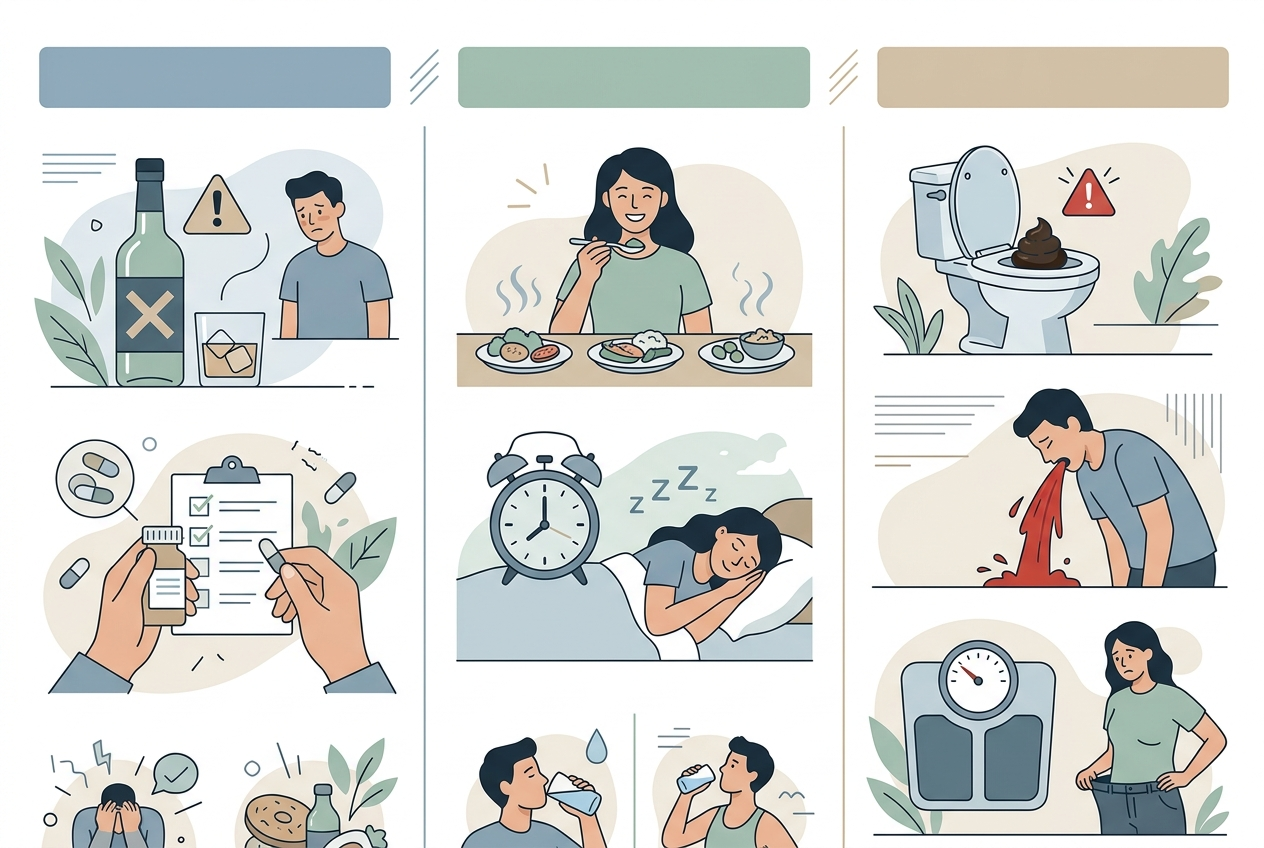
NSAID pain relievers, alcohol, smoking, rushed meals, late heavy dinners, and poor sleep commonly aggravate gastritis-like symptoms. Mayo Clinic notes that gastritis inflammation is often linked with Helicobacter pylori infection, regular pain-reliever use, and alcohol exposure. A safer habit review starts with medication timing: aspirin, ibuprofen, naproxen, anticoagulants, steroids, and iron can irritate the stomach or change bleeding risk, so prescribed medicines should not be stopped without a clinician’s guidance. Alcohol can directly irritate gastric mucosa, and smoking can impair normal stomach protection patterns. Stress does not prove gastritis by itself, but stress can amplify pain perception, acid reflux behaviors, meal skipping, and sleep disruption. A low-risk routine uses regular meals, upright posture after eating, earlier dinners, hydration, gentle walking, and consistent sleep windows. The main safeguard is medical review when a habit change does not match symptom severity.
When should gastritis symptoms get medical evaluation?
Gastritis symptoms need medical evaluation when pain persists, returns repeatedly, or appears with warning signs. The NCBI Bookshelf clinical review describes evaluation with history, medication review, laboratory testing, Helicobacter pylori testing, and endoscopy when risk features justify it. Urgent signals include vomiting blood, black or tarry stool, fainting, severe weakness, chest-like pain, persistent vomiting, trouble swallowing, unintended weight loss, anemia, or severe upper-abdominal pain. Helicobacter pylori deserves special attention because diet changes cannot remove the infection, and the American College of Gastroenterology guideline uses evidence-based medication regimens for confirmed cases. Longstanding inflammation can also involve autoimmune gastritis or bile reflux, which self-care cannot reliably identify. Natural support belongs beside medical evaluation when symptoms are persistent or high-risk, not in place of it. Age over 60, pregnancy, known ulcer history, immune suppression, anticoagulant use, or repeated NSAID exposure lowers the threshold for clinician guidance.
What do people get wrong about natural gastritis support?
The biggest mistake is treating “natural” as automatically gentle. Apple cider vinegar, concentrated citrus, cayenne, alcohol-based tinctures, high-dose garlic, and aggressive fasting can worsen burning or nausea in sensitive stomachs. Another mistake is assuming acid is always the problem; gastritis can involve Helicobacter pylori, NSAIDs, autoimmune patterns, bile exposure, alcohol, or stress-related mucosal injury. A third mistake is using bloating or acid reflux as proof of gastritis, because dyspepsia, reflux disease, constipation, ulcers, and gallbladder conditions can overlap. Natural support has the best risk profile when it removes common irritants, simplifies meals, protects sleep, and tracks response without extreme restriction. Strong evidence supports medical evaluation for persistent symptoms and confirmed Helicobacter pylori. Directional evidence supports individualized food and habit adjustments, but no single “gut-healing” food has authority across all gastritis patterns. The better question is which cause and which trigger pattern fit the person.
What questions do people ask about supporting gastritis naturally?
FAQ answers should keep the distinction clear: natural support can reduce avoidable irritation patterns, while medical care identifies causes that routines cannot confirm. Gastritis is not one single scenario, so answers should separate mild symptom management from warning signs. The safest approach uses food timing, irritant reduction, medication review, and symptom tracking while escalating persistent or severe symptoms. These answers are educational and should not replace individualized care.
Can gastritis improve with diet changes alone?
Diet changes may reduce irritation patterns, especially when alcohol, caffeine, large meals, or fried foods are clear triggers. Diet alone cannot address Helicobacter pylori, autoimmune gastritis, medication-related bleeding risk, or ulcers, so persistent symptoms deserve medical evaluation.
Is fasting helpful for gastritis symptoms?
Long fasting can worsen nausea, burning, or acid reflux in some people because an empty stomach may feel more sensitive. Smaller, regular meals usually create a gentler test than aggressive fasting.
Are probiotics useful for gastritis support?
Probiotics may support general gut ecology, and some research evaluates probiotics alongside Helicobacter pylori medication regimens. Probiotics should not be framed as a standalone answer for gastritis because strain, dose, confirmed cause, and symptom pattern matter.
Is ginger, chamomile, or herbal tea safe with gastritis?
Mild, caffeine-free tea may feel soothing for some people, but concentrated extracts can be more irritating than expected. Anyone using blood thinners, pregnancy-related care, or multiple medications should ask a clinician before using herbs regularly.
What foods are usually easiest during a flare-like period?
Simple meals such as oatmeal, rice, bananas, eggs, broth-based soups, potatoes, and low-acid vegetables often feel easier for irritated stomachs. Individual tolerance matters more than a universal list, so a symptom diary is more useful than permanent restriction.
When is gastritis-like pain urgent?
Vomiting blood, black stool, fainting, severe weakness, persistent vomiting, unintended weight loss, trouble swallowing, anemia, or severe upper-abdominal pain needs prompt medical attention. Chest-like pain should be handled urgently because heart and digestive symptoms can overlap.
Leave a Reply