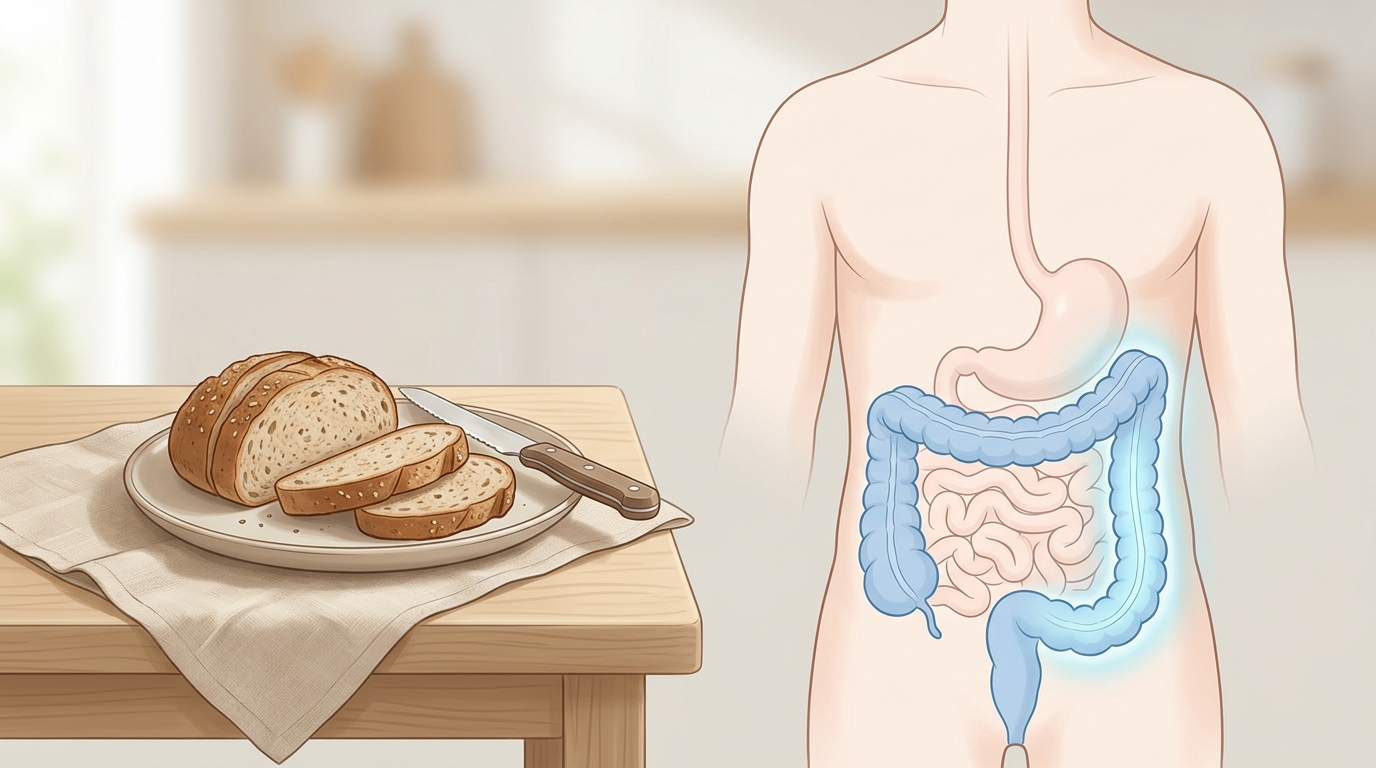
Bread can trigger a trapped-gas-like feeling in the descending colon when wheat fructans, resistant starch, or rapid eating increase fermentation and swallowed air. The left-sided sensation usually reflects gas movement through the splenic flexure, descending colon, or sigmoid colon, not gas literally stuck in one fixed pocket.
How did we evaluate bread-related trapped gas?
We evaluated bread-related gas by separating colon anatomy, food chemistry, meal behavior, and symptom timing, including the splenic flexure, descending colon, sigmoid colon, and bowel-habit context that can change pressure after a typical bread meal in adults. Government and gastroenterology sources received priority for baseline physiology; NIDDK explains that digestive gas comes from swallowed air and bacterial breakdown of undigested carbohydrates. Human diet trials and gastroenterology guidance received more weight than anecdotes because bread reactions overlap with wheat fructans, gluten concerns, eating speed, constipation, irritable bowel patterns, and normal gas transit near the splenic flexure. We excluded forum-only explanations, detox claims, supplement claims, and single-cause certainty, and we treated one-person food triggers as useful clues rather than proof; this article cannot determine whether an individual has celiac disease, wheat allergy, diverticular disease, or another condition.
Why can bread feel like it traps gas on the left side?
Bread can feel left-sided because gas often collects or stretches bowel segments near the splenic flexure, descending colon, and sigmoid colon. The colon moves gas in waves, and a person may notice pressure where the bowel bends, slows, or already contains stool. Wheat bread adds fermentable carbohydrates, especially fructans, and gut bacteria can turn those carbohydrates into hydrogen, methane, and carbon dioxide. White bread may still contribute through rapid eating, large portions, low fluid intake, or refined starch that changes stool movement. Whole-grain bread can add fiber, which may help stool regularity over time but can increase gas during a sudden intake jump. The useful pattern is timing: bread-related fermentation often appears several hours after eating, while swallowed-air pressure can appear sooner. A single left-sided episode is usually less informative than a repeated bread-plus-timing pattern.
Is gluten usually the reason bread causes gas?
Gluten is not the only plausible bread-related trigger, and it is often not the first one to test. Wheat contains gluten proteins, but wheat also contains fructans, a fermentable FODMAP carbohydrate that can increase gas production in sensitive intestines. A randomized crossover trial in Gastroenterology reported that fructans produced more symptoms than gluten in adults with self-reported wheat sensitivity, which makes the fructan explanation important but not universal. Celiac disease, wheat allergy, and non-celiac wheat sensitivity are separate entities, and each needs different medical evaluation. Yeast is less often the direct cause after bread is baked because baking inactivates yeast, although very fresh bread, large portions, and fast eating can still change bloating. The practical takeaway is specific: test wheat amount, bread type, portion size, and symptom timing before assuming gluten is the answer.
What should you track before removing bread completely?
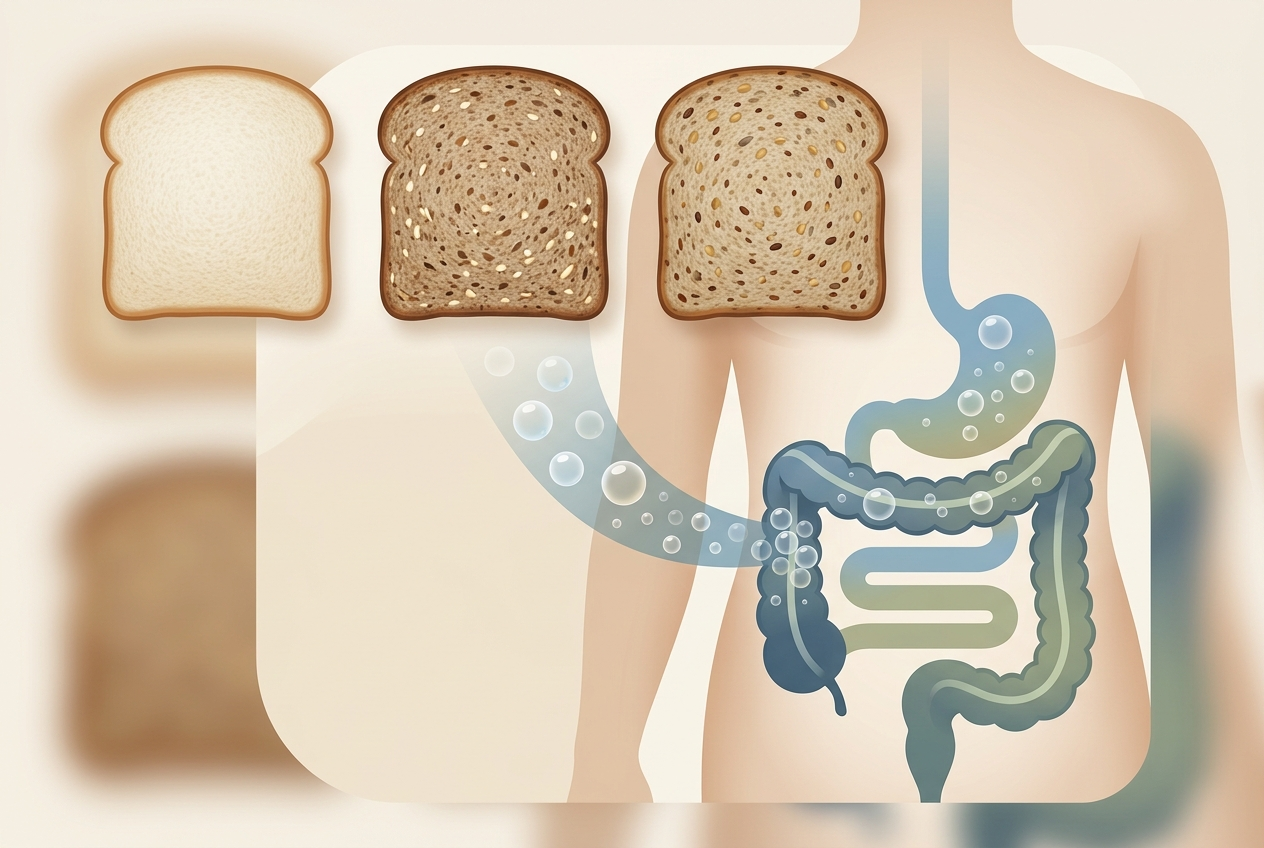
A short food-and-symptom log can reveal whether bread is the driver or only part of a larger pattern. Track bread type, portion size, meal speed, added foods, stress, stool consistency, and symptom timing for 7 to 14 days. Sourdough, white sandwich bread, whole wheat bread, rye bread, and seeded bread can behave differently because fermentation time, fiber type, and wheat load vary. Also track constipation because stool retention can make normal gas feel trapped in the left lower abdomen. A structured low-FODMAP trial can help some people with food-linked bloating; the American College of Gastroenterology describes low-FODMAP eating as most relevant when food intake is clearly tied to bloating or abdominal pain. The strongest log compares one variable at a time: same meal size, slower eating, smaller bread portion, or a lower-fructan bread option.
When should left-sided gas symptoms be checked by a clinician?
Left-sided gas after bread is usually a pattern to observe, but several signs deserve medical guidance rather than self-experimentation alone. Severe or worsening left lower abdominal pain, fever, vomiting, blood in stool, black stool, unexplained weight loss, persistent diarrhea, persistent constipation, or symptoms that wake a person from sleep are not typical simple gas clues. Diverticulitis can cause lower-left abdominal pain; Mayo Clinic notes that diverticulitis pain is often sudden, intense, and commonly located in the lower left abdomen. New digestive changes after age 50, anemia, recent antibiotic use, pregnancy, or a family history of colorectal cancer also raises the threshold for checking. The goal is not to panic over bread-related bloating; the goal is to avoid labeling every left-sided symptom as gas when the pattern, severity, duration, tenderness, frequency, or bowel-habit context changes.
What practical steps may reduce bread-related gas?
The most useful first step is portion control, not a dramatic elimination diet. A person can try half the usual bread portion, chew slowly, avoid carbonated drinks with the meal, and compare symptoms on a similar meal without bread. If whole-grain bread recently increased, reducing the portion and rebuilding fiber gradually may lower fermentation pressure. If wheat seems consistent, a sourdough-style bread or a lower-FODMAP bread may be worth testing, but results vary because commercial fermentation times, added fibers, sweeteners, and wheat blends vary. Hydration and regular bowel movements matter because stool retention narrows the space available for gas movement and can intensify pressure near the descending colon. If symptoms improve only when all wheat disappears, clinician-guided screening for celiac disease should happen before long-term gluten avoidance because testing is less reliable after gluten has been removed.
What are common questions about bread and trapped gas?
Can gas really be trapped in the descending colon?
Gas can sit temporarily in the descending colon or sigmoid colon, but the bowel is not a sealed pocket. The sensation usually comes from stretch, slowed movement, or stool-and-gas pressure in a bend of the colon.
Why does the pain feel more obvious on the left side?
The left side contains the descending colon and sigmoid colon, where stool and gas often move before a bowel movement. A bend near the upper-left abdomen, called the splenic flexure, can also make pressure feel localized.
Does sourdough bread cause less gas than regular wheat bread?
Traditional long-fermented sourdough may contain fewer fermentable carbohydrates than some standard wheat breads, but commercial products vary widely. The label cannot prove symptom tolerance, so a portion-controlled comparison gives better information.
Should I avoid gluten if bread causes trapped gas?
Gluten avoidance is not the first logical step unless celiac disease, wheat allergy, or clinician-guided testing points that way. Wheat fructans, portion size, constipation, and eating speed can explain bread-linked gas without gluten being the main cause.
How long after eating bread can gas show up?
Swallowed-air pressure can appear during or soon after a meal. Fermentation-related gas often appears hours later because carbohydrates must reach bacteria in the large intestine.
Can whole wheat bread make gas worse at first?
Whole wheat bread can increase gas when fiber intake rises quickly. Gradual fiber changes, adequate fluids, and regular bowel movements can make the adjustment easier for some people.
Is trapped gas after bread dangerous?
Occasional gas after bread is usually not dangerous by itself. Severe pain, fever, vomiting, blood in stool, unexplained weight loss, or a major change in bowel habits needs medical guidance rather than diet guessing.
Leave a Reply