
A2 and lactose-free milk can still trigger reflux because reflux is usually driven by stomach volume, fat content, meal timing, and lower esophageal sphincter relaxation, not lactose alone. If the serving is large, high-fat, or close to bedtime, symptoms can continue even when lactose is removed and A1 casein is absent.
How did we evaluate why reflux can continue with A2 and lactose-free milk?
We prioritized guidance from the National Institute of Diabetes and Digestive and Kidney Diseases, the American College of Gastroenterology, and major academic medical centers because those sources describe reflux mechanisms, trigger patterns, and symptom overlap using human clinical evidence. We weighted guideline statements and large reviews above small food-specific studies. We excluded disease-treatment claims, product recommendations, and single-study conclusions presented as settled fact. We also separated reflux physiology from lactose malabsorption, because those problems often get confused in everyday language. That distinction matters here: lactose-free labeling changes carbohydrate digestion, while reflux usually relates to stomach distension, fat intake, pressure on the lower esophageal sphincter, and meal timing, according to
Why can A2 and lactose-free milk still cause reflux symptoms?
A2 milk changes the beta-casein profile, and lactose-free milk removes lactose, but neither change automatically prevents reflux. Reflux happens when stomach contents move upward into the esophagus because the lower esophageal sphincter relaxes or pressure inside the stomach rises, according to
What parts of the milk routine matter more than the label?
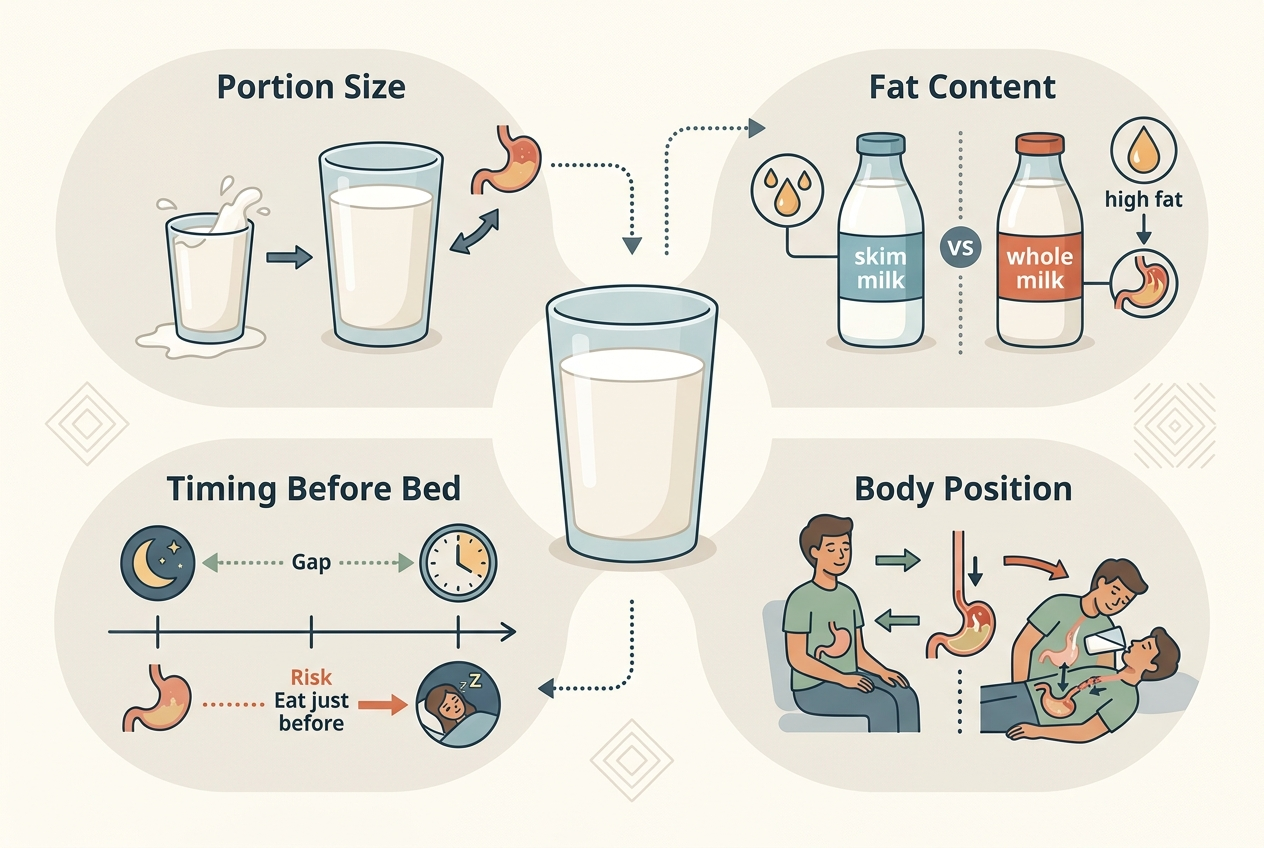
Portion size matters because stomach stretch can promote regurgitation and chest burning in susceptible people. Fat content matters because whole or richer dairy can feel heavier than low-fat versions, even when the protein type changes. Timing matters because reflux symptoms often worsen after evening intake or when someone reclines soon after eating, a pattern summarized by
What should you track before deciding milk is the real problem?
Pattern tracking gives better answers than one-off symptom guesses. Record the milk type, fat level, serving size, time of day, what else was eaten, body position afterward, and whether symptoms feel like burning, sour taste, bloating, or pressure. Symptom type matters because reflux, overeating discomfort, and lactose malabsorption can overlap without being identical. Trigger stacking matters too. A medium glass of milk at noon may feel fine, while the same milk after pizza at 10 p.m. may not. The National Institute of Diabetes and Digestive and Kidney Diseases notes that frequent reflux symptoms, swallowing problems, bleeding, or unintended weight loss deserve medical evaluation rather than more food experiments alone:
For a detailed comparison of specific products and strains, see Do You Need Lactase With Lactose-Free Milk?.
What else do people ask about reflux after lactose-free milk?
People often bundle milk protein, lactose, stomach acid, and food intolerance into one category, but those mechanisms are different. Reflux involves upward movement from the stomach into the esophagus. Lactose malabsorption involves poor digestion of lactose in the small intestine. A2 labeling changes the casein subtype, and lactose-free labeling changes the sugar digestion issue. Neither label fully controls portion size, fat load, evening timing, or what the milk is consumed with. That is why the most useful next step is usually a short symptom log, not a dramatic elimination plan. A simple log can show whether the trigger is the milk itself, the meal around it, the bedtime timing, or a pattern that needs medical review because it happens often or comes with other warning signs. That short intro matters because the FAQ below answers the most common points of confusion directly.
Is lactose intolerance the same thing as reflux?
No. Lactose intolerance usually causes bloating, gas, cramping, and diarrhea because lactose is not fully digested in the small intestine. Reflux usually causes burning, regurgitation, or a sour taste because stomach contents move upward into the esophagus.
Does A2 milk prevent heartburn?
No strong evidence shows that A2 milk reliably prevents heartburn. A2 milk may feel easier for some people to digest, but reflux depends more on volume, fat content, timing, and personal trigger patterns than on a single label change.
Can low-fat milk be easier than whole milk for reflux?
Sometimes, yes. Lower-fat options can feel lighter for some people because richer meals may sit heavier and worsen post-meal fullness. The effect is individual, so tracking your own response matters more than assuming one format works for everyone.
Why does reflux happen more at night after milk?
Evening symptoms often reflect timing and body position, not just the milk itself. Lying down soon after a drink or snack reduces gravity’s help and can make reflux episodes more noticeable.
When should someone stop experimenting and talk to a clinician?
Talk to a clinician if symptoms are frequent, severe, or paired with trouble swallowing, vomiting, bleeding, chest pain, or unintended weight loss. Those patterns need proper evaluation instead of repeated food trial-and-error.
Could the real trigger be what I drink or eat with the milk?
Yes. Cereal volume, chocolate flavoring, coffee, peppermint, late meals, and carbonated drinks can change the whole trigger picture. The milk label may get blamed when the broader routine is doing more of the work.
Leave a Reply