
Lactose intolerance can come back when lactase activity drops with age, dairy intake increases beyond personal tolerance, or the small intestine is irritated after infection, celiac disease, surgery, or another injury. Symptoms usually reflect lactose malabsorption, not a new allergy. A clinician can confirm the pattern with history, diet response, or breath testing.
How did we evaluate whether lactose intolerance can return?
We evaluated lactose intolerance by separating lactase biology, symptom timing, food-dose patterns, and medical red flags. NIDDK materials on lactose intolerance were prioritized because the agency distinguishes lactase nonpersistence, lactose malabsorption, and secondary lactose intolerance. Peer-reviewed reviews in Nutrients and PMC-indexed gastroenterology literature were used for mechanisms, while MedlinePlus Genetics was used for lactase persistence inheritance and LCT gene context. We weighted human digestive physiology and clinical diagnostic guidance above brand content, diet culture claims, social-media protocols, and anecdotal tolerance stories. We excluded forum anecdotes, single-product claims, unverified elimination-diet rules, and allergy-focused sources because symptom return can reflect lactose amount, gut sensitivity, temporary small-intestine injury, or another digestive condition rather than permanent enzyme loss. This article does not diagnose lactose intolerance; it explains the pattern a clinician may evaluate with medical-source clinical editorial context.
Can lactose intolerance come back after years without symptoms?
Lactose intolerance can return after years without symptoms because lactase activity can decline gradually, dairy habits can change suddenly, or temporary small-intestine irritation can reduce lactose digestion. The NIDDK explains that lactase nonpersistence is the most common reason adults make less lactase over time. Secondary lactose intolerance can occur after small-intestine injury, infection, celiac disease, Crohn’s disease, or surgery involving the small intestine. A person may tolerate yogurt, hard cheese, or small milk servings for years and then react when total lactose intake rises. Lactose intolerance does not equal milk allergy because lactose intolerance involves carbohydrate digestion and milk allergy involves immune proteins. The key pattern is timing: gas, bloating, cramps, or loose stool often appears within hours after lactose-containing foods. A recurring pattern deserves medical review when weight loss, bleeding, fever, anemia, or night symptoms appear.
Why can symptoms change even if the same dairy food used to feel fine?
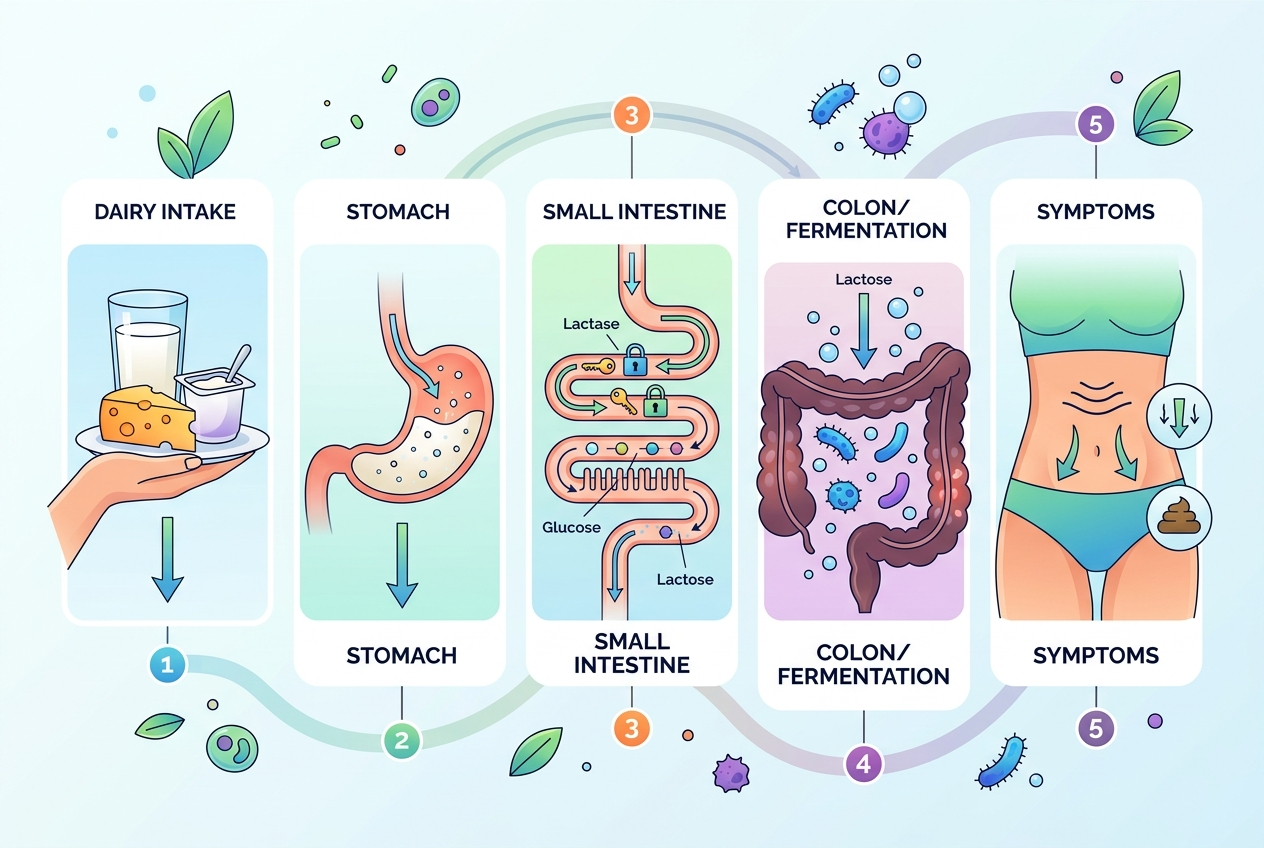
Symptoms can change because lactose dose, meal composition, gut transit speed, and colonic fermentation all influence tolerance. Milk contains more lactose per serving than most hard cheeses, while yogurt cultures may help digest some lactose before or during digestion. A PMC-indexed review on lactose malabsorption notes that lactose malabsorption and lactose intolerance are related but not identical; symptoms require both unabsorbed lactose and a symptom response in the colon. Gut infections, antibiotics, high-FODMAP meals, stress-related gut sensitivity, and faster intestinal transit can make the same dairy serving feel different. Genetics also matters: MedlinePlus Genetics reports that lactase nonpersistence reflects reduced LCT gene activity after infancy in many populations. The practical test is consistency. If symptoms repeat after milk, ice cream, soft cheese, or whey-heavy foods, lactose may be part of the pattern; if symptoms occur without dairy, another trigger may be involved.
How can someone tell lactose intolerance from a temporary digestive flare?
Someone can compare timing, dose, and repeatability before assuming lactose intolerance has permanently returned. Lactose-related symptoms usually follow a lactose-containing food, increase with larger portions, and improve when lactose intake drops for several days. A temporary digestive flare may cause symptoms after many foods, especially after gastroenteritis, antibiotics, high-fat meals, alcohol, or high-FODMAP foods. NIDDK diagnosis guidance notes that clinicians may use symptom history, family history, eating patterns, or lactose hydrogen breath testing when the pattern is unclear. A simple food log should record the food, lactose amount, time eaten, symptom onset, and symptom severity. Lactose-free milk is a useful comparison because it keeps dairy proteins and fat similar while removing lactose. If lactose-free milk still causes symptoms, the issue may involve milk protein sensitivity, fat tolerance, reflux overlap, IBS, or another digestive process rather than lactose alone.
What foods contain enough lactose to trigger symptoms?
Milk, ice cream, soft cheeses, evaporated milk, condensed milk, whey ingredients, and some creamy sauces contain enough lactose to trigger symptoms in sensitive people. Hard cheeses such as cheddar, parmesan, and Swiss usually contain less lactose because fermentation and whey removal reduce lactose content. Yogurt varies because live cultures can lower lactose, but sweetened yogurt, Greek-style products, and heat-treated products differ by brand and process. The NIDDK advises checking ingredient lists because lactose can appear in processed foods, baked goods, protein powders, and medications as lactose monohydrate. Dose matters more than the category name. Some adults tolerate a small amount of lactose with meals but react to a large milkshake or multiple dairy servings in one day. People who suspect recurrence should compare portion size, frequency, and food form before removing all dairy long term.
When should recurring lactose symptoms be checked medically?
Recurring lactose symptoms should be checked when symptoms are severe, new after age 50, unrelated to dairy, or paired with alarm signs such as unintentional weight loss, blood in stool, persistent vomiting, anemia, fever, or nighttime diarrhea. Lactose intolerance is common, but it should not become a catch-all explanation for every digestive symptom. Secondary lactose intolerance can follow small-intestine injury, and the underlying issue may need attention before tolerance improves. Johns Hopkins Medicine notes that lactose intolerance and IBS can overlap because both can cause bloating, gas, cramps, and diarrhea after meals. A clinician may evaluate celiac disease, inflammatory bowel disease, infection, medication effects, gallbladder issues, or pancreatic problems when the story does not fit simple lactose malabsorption. The safest approach is pattern tracking plus medical review when the pattern changes sharply or does not respond to reasonable lactose reduction.
What questions do people ask about lactose intolerance returning?
Can lactose intolerance disappear and then come back?
Yes. Symptoms can fade when lactose intake is low, gut irritation resolves, or the person chooses lower-lactose foods, then return when lactose dose rises or digestion changes. The underlying lactase level may still be limited.
Is returning lactose intolerance the same as a dairy allergy?
No. Lactose intolerance involves lactase and lactose malabsorption, while milk allergy involves an immune reaction to milk proteins. Hives, swelling, wheezing, or anaphylaxis needs urgent medical guidance.
Can a stomach bug make lactose intolerance worse?
Yes. A gastrointestinal infection can irritate the small intestine and temporarily reduce lactose digestion. NIDDK describes this pattern as secondary lactose intolerance when small-intestine injury lowers lactase activity.
Does A2 milk fix lactose intolerance?
No. A2 milk changes the beta-casein protein type, but it still contains lactose unless labeled lactose-free. Someone with lactose malabsorption can still react to ordinary A2 milk.
Can adults suddenly become lactose intolerant?
Yes. Adult symptoms can appear gradually as lactase activity declines or suddenly after illness, medication disruption, or higher lactose intake. A repeatable dairy-linked pattern matters more than one bad meal.
Is lactose-free milk a useful test?
Yes, as a home comparison. Lactose-free milk keeps many dairy features similar while reducing lactose, so symptom improvement can support a lactose-related pattern. Persistent symptoms after lactose-free milk suggest another trigger.
Should everyone avoid dairy if lactose intolerance comes back?
No. Many people tolerate small servings, hard cheese, yogurt with live cultures, or lactose-free dairy. The goal is matching lactose dose to tolerance while protecting overall nutrition.
For a detailed comparison of specific products and strains, see Align and Lactose Intolerance: Which Probiotic Options Make the Most Sense to Compare?.
For a detailed comparison of specific products and strains, see Lactose Intolerance: Lactase Pills, Lactose-Free Dairy, and Clean-Label Options Compared.
What is the bottom line on lactose intolerance coming back?
Lactose intolerance can come back, but the cause is usually explainable: lower lactase activity, more lactose exposure, temporary small-intestine irritation, or another digestive condition that mimics lactose symptoms. A structured food log gives the clearest first signal because it connects lactose dose, symptom timing, and repeatability. Lactose-free milk can isolate lactose while keeping dairy proteins and fat similar enough for a useful comparison. Medical review matters when symptoms appear suddenly, occur without dairy, or include alarm signs. The practical next step is not lifelong restriction after one bad meal; the practical next step is confirming the pattern, choosing lower-lactose foods when useful, and getting checked when the symptom story does not fit ordinary lactose malabsorption. That sequence protects nutrition, avoids unnecessary fear around all dairy, and keeps more serious digestive causes from hiding behind an easy label.
Image prompts:
- Hero image: A neutral educational kitchen scene with a glass of milk, yogurt, hard cheese, and a simple lactose molecule sketch on a notepad, natural daylight, no branding. Alt text: Milk, yogurt, and cheese beside a lactose digestion note.
- In-article image: A clean infographic-style scene showing a timeline from dairy intake to digestion, small intestine, colon fermentation, and symptoms, medically neutral, no brand names. Alt text: Diagram showing how lactose can move through digestion and trigger symptoms.
Leave a Reply