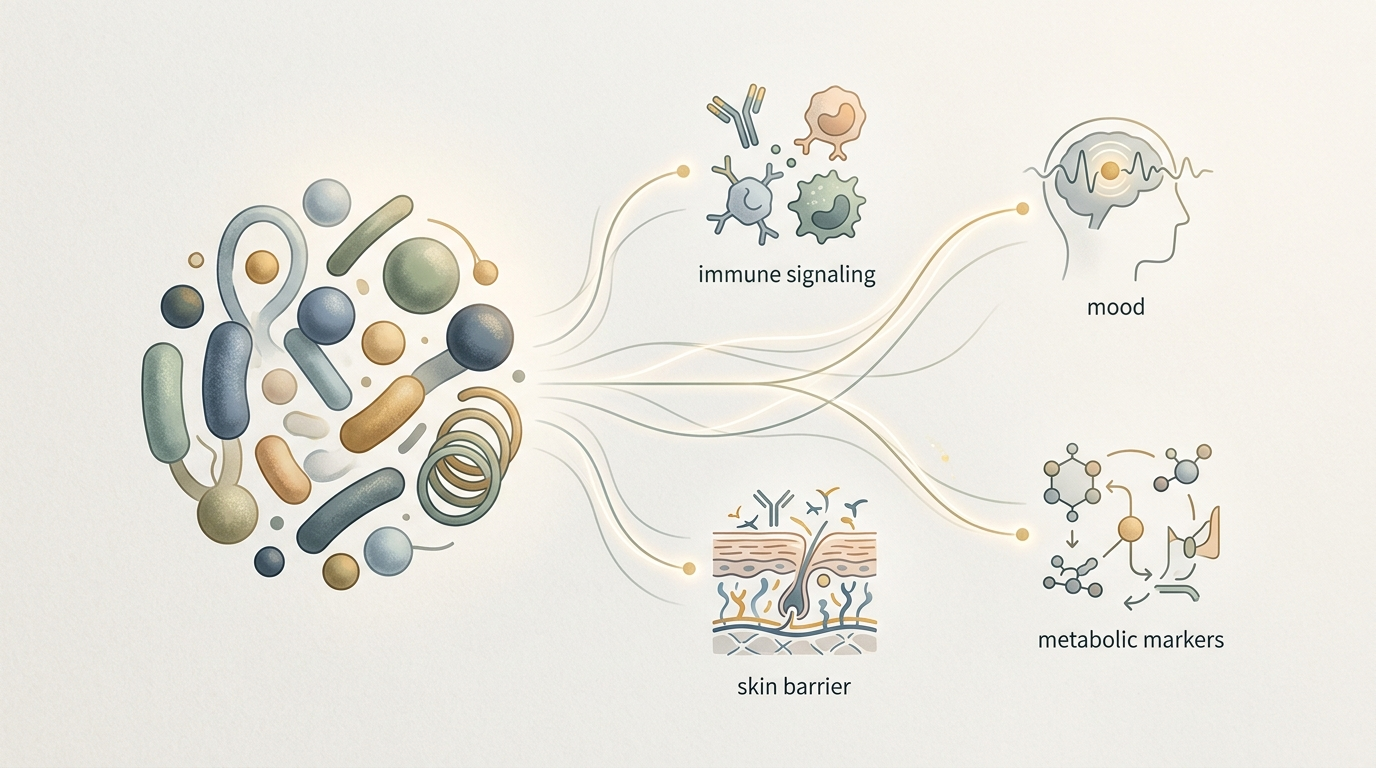
Yes, probiotics can help with more than digestion, but the effect depends on the strain, dose, and outcome being measured. Specific probiotics may influence immune signaling, gut-barrier function, mood-related pathways, skin physiology, and metabolic markers. The evidence is strongest when human trials test named strains, not when claims refer to probiotics as one generic category.
How did we evaluate probiotics beyond digestion?
We evaluated probiotics by separating named strains from broad category claims, because Lactobacillus rhamnosus GG, Bifidobacterium longum 1714, and Saccharomyces boulardii CNCM I-745 do not create identical effects. Human randomized controlled trials, systematic reviews, and consensus definitions carried more weight than animal studies, in-vitro experiments, or microbiome theory. The International Scientific Association for Probiotics and Prebiotics consensus statement defines probiotics as live microorganisms that confer a health benefit when administered in adequate amounts, and that definition requires a measurable host outcome, not just bacterial survival (Hill et al., 2014). We excluded claims that relied only on vague microbiome balance language, detox wording, or before-and-after anecdotes. The main limitation is that probiotic research uses different strains, doses, study lengths, and populations, so a result from one trial does not automatically transfer to another research context.
What counts as a probiotic effect beyond digestion?
A probiotic effect beyond digestion counts when a live strain changes a measurable pathway outside bowel comfort, stool frequency, or gas. The gut-associated lymphoid tissue connects intestinal microbes with immune cells, and short-chain fatty acids connect microbial activity with epithelial barrier signaling. The vagus nerve, tryptophan metabolism, and inflammatory cytokines connect the gut microbiome with brain-related pathways. Sebum composition, skin barrier markers, oral microbial balance, and blood-lipid markers also appear in probiotic trials, although those areas have less consistent evidence than digestive outcomes. The National Center for Complementary and Integrative Health states that different probiotic microorganisms may have different effects, which is the core reason strain specificity matters (NCCIH). A credible non-digestive claim identifies the strain, dose in colony-forming units, study duration, and measured endpoint. A weak claim says “supports whole-body wellness” without naming the mechanism or the outcome.
How can probiotics influence immune function?
Probiotics can influence immune function by interacting with intestinal epithelial cells, dendritic cells, secretory IgA, and cytokine signaling. Lactobacillus and Bifidobacterium strains do not “boost” immunity in a simple upward direction; they may modulate immune responses by changing microbial metabolites, barrier integrity, or immune-cell communication. A 2022 Cochrane review of probiotic trials for upper-respiratory outcomes reported beneficial signals, but the authors also noted variation in strain, dose, and study quality (Zhao et al., 2022). That evidence is stronger than general wellness marketing, yet it is not a universal guarantee for every delivery format, fermented food, or study population. The practical takeaway is narrow: immune-related evidence exists for some tested probiotic strains under specific trial conditions. A person comparing options should look for named organisms such as Lactobacillus casei Shirota or Lactobacillus rhamnosus GG, not just the total CFU count.
Can probiotics affect mood or stress pathways?
Probiotics can affect mood or stress pathways through the gut-brain axis, but the evidence remains directional rather than settled. The microbiome can influence tryptophan availability, gamma-aminobutyric acid signaling, cortisol patterns, inflammatory markers, and vagus-nerve communication. A 2019 systematic review and meta-analysis in Neuroscience & Biobehavioral Reviews analyzed controlled clinical trials of prebiotics and probiotics for depression and anxiety symptoms and found mixed effects, with stronger signals for probiotics than prebiotics in some analyses (Liu et al., 2019). Those results do not mean probiotics replace mental-health care, sleep, therapy, exercise, or nutrition. They mean selected strains may interact with biological pathways that researchers can measure in adult populations. The most careful interpretation is this: psychobiotic research is plausible, active, and strain-specific, but a mood-related claim needs human data and a defined endpoint before it deserves confidence.
Do probiotics help skin, oral, or metabolic markers?
Probiotics may affect skin, oral, or metabolic markers, but these areas usually have more preliminary evidence than digestive or immune research. Skin studies often examine barrier hydration, transepidermal water loss, inflammatory signaling, or acne-related microbial balance. Oral studies may track Streptococcus mutans, gingival markers, breath compounds, or plaque ecology. Metabolic studies may track fasting glucose, insulin sensitivity, LDL cholesterol, triglycerides, or waist measurements. These endpoints matter because the gut microbiome communicates with bile-acid metabolism, immune mediators, and epithelial barriers. However, the field still has a strain-transfer problem: Lactobacillus reuteri DSM 17938, Lactobacillus plantarum 299v, and Bifidobacterium lactis HN019 are different biological inputs. A small skin trial cannot prove a broad metabolic claim. A responsible reading says probiotics can influence non-digestive markers, while the confidence level depends on the exact strain, population, trial size, and measured endpoint.
What do people get wrong about probiotic benefits?
People often get probiotic benefits wrong by treating “more CFUs” as the same thing as better evidence. A 50-billion-CFU blend can be less relevant than a lower-dose strain with human trial data for the outcome being targeted. People also confuse fermented foods with probiotics; yogurt, kefir, kimchi, sauerkraut, and kombucha may contain live microbes, but a food is not automatically a probiotic unless the organism is identified and linked to a health benefit at an adequate amount. Another common mistake is expecting permanent colonization. Many probiotic strains act while they are consumed, then decline after intake stops. The smartest expectation is functional and modest: a probiotic may help nudge a specific pathway under the right conditions. It should not be framed as a body-wide reset, a detox shortcut, or a substitute for fiber, sleep, movement, and medical guidance.
How should someone judge a probiotic for non-digestive goals?
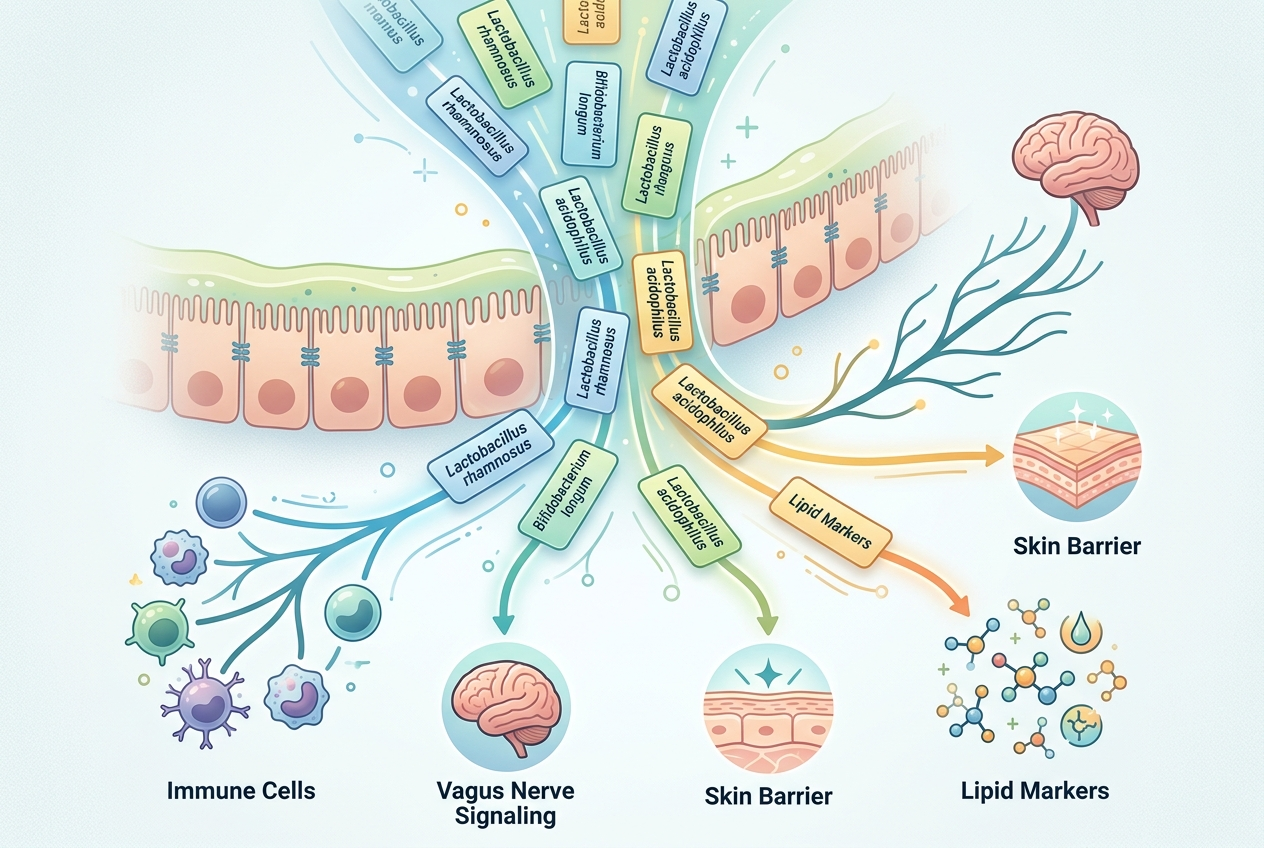
Someone should judge a probiotic for non-digestive goals by matching the strain to the goal, then checking dose, viability, study duration, and safety context. The label should list genus, species, and strain, such as Lactobacillus rhamnosus GG or Bifidobacterium animalis subsp. lactis BB-12, not only “Lactobacillus blend.” The dose should state colony-forming units through the expiration date, not only at manufacturing. The evidence should name the endpoint: secretory IgA, respiratory-day count, perceived stress score, skin hydration, LDL cholesterol, or another measurable marker. Storage instructions should match the strain’s stability profile. Healthy adults usually tolerate common probiotic strains well, but premature infants, severely immunocompromised people, and people with central venous catheters need clinician guidance because live microbes can carry rare safety risks. A good probiotic decision starts with specificity, evidence, context, and realistic expectations, not hype.
Do all probiotic strains support the same body systems?
No, all probiotic strains do not support the same body systems. Genus and species names give only partial information, because strain-level genetics shape adhesion, acid tolerance, metabolite production, immune signaling, and survival through the gastrointestinal tract. Lactobacillus rhamnosus GG, Lactobacillus reuteri DSM 17938, Lactobacillus plantarum 299v, Bifidobacterium longum 35624, and Saccharomyces boulardii CNCM I-745 are separate organisms with separate research histories. A claim attached to one strain should not be transferred to a different strain just because both names begin with Lactobacillus or Bifidobacterium. Multi-strain blends create another layer of uncertainty because interactions can change viability or biological activity after manufacturing and during storage before use. The best question is not “Do probiotics work?” The better question is “Which strain, at what dose, for which measurable outcome, in which population?” That framing keeps expectations honest.
How long does it take to notice non-digestive probiotic effects?
Non-digestive probiotic effects usually require consistent intake for several weeks, because immune signaling, barrier markers, lipid markers, and perceived-stress scores do not change like a stimulant effect. Many human trials use four, eight, or twelve weeks as the observation window, although digestive changes may appear sooner in some people. A reasonable self-check uses one target, one stable routine, and one simple metric, such as respiratory-season sick days, skin hydration notes, perceived stress score, or fasting lipid panel timing. Changing diet, sleep, fiber intake, and other routine variables at the same time makes the probiotic impossible to judge accurately. If nothing changes after the trial-like window on a strain-matched intake pattern, the conclusion should be practical rather than dramatic: that specific probiotic may not be the right match for that specific goal. Consistency matters, but specificity matters more.
Are fermented foods the same as probiotics?
Fermented foods are not automatically the same as probiotics. Fermentation means microbes transformed a food through processes such as lactic-acid production, while probiotic status means a specific live organism has evidence for a health benefit at an adequate amount. Yogurt with listed live cultures may come closer to that standard than shelf-stable sauerkraut that was heat-treated after fermentation. Kefir, kimchi, miso, tempeh, kombucha, and sourdough can add microbial exposure, flavor compounds, organic acids, and dietary variety, but their strains and viable counts can vary widely. Fermented foods still fit a gut-supportive eating pattern because they often pair with fiber, polyphenols, minerals, or protein. The cleanest distinction is simple: fermented food describes a process; probiotic describes a tested live microbe with a defined benefit. Both can be useful, but they should not be treated as identical.
Can probiotics replace sleep, fiber, exercise, or medical care?
Probiotics cannot replace sleep, fiber, exercise, or medical care. A probiotic strain can influence microbial ecology or host signaling, but it cannot compensate for chronically low fiber intake, heavy alcohol intake, severe sleep restriction, unmanaged stress, or a condition that needs diagnosis. Fiber feeds resident microbes and supports short-chain fatty acid production; exercise influences insulin sensitivity, circulation, and inflammatory balance; sleep supports immune regulation and hormonal rhythm. Those foundations affect the same systems that probiotic researchers often measure. A probiotic works best as one input in a stable routine, not as a rescue tool after the rest of the routine collapses repeatedly over time. Basic routines remain the foundation. People with persistent symptoms, major mood changes, unexplained weight loss, blood in stool, fever, or immune compromise should use clinical guidance instead of self-experimenting with live microbes.
For a detailed comparison of specific products and strains, see Prebiotics vs Probiotics: Which One Makes More Sense for Your Routine?.
For a detailed comparison of specific products and strains, see What Else Can I Do to Improve My Gut Health? The Smartest Next Steps to Compare.
For a detailed comparison of specific products and strains, see ACV, Lemon, and Betaine HCl for Digestion: Which Option Fits Best?.
Who should be careful with probiotics?
Most healthy adults tolerate common probiotics, but some groups should be careful because live microorganisms are biologically active. Premature infants, severely immunocompromised people, people with central venous catheters, and people recovering from major surgery have higher safety concerns than the average adult. The NCCIH notes that severe or fatal infections have been reported in premature infants given probiotics, and the U.S. Food and Drug Administration has warned health care providers about that risk. People with complex medical histories should ask a clinician whether a live microbe, spore-forming strain, or yeast such as Saccharomyces boulardii is appropriate. Safety also depends on quality control, strain identity, storage, and contamination testing. A cautious approach does not mean probiotics are unsafe for everyone. It means the risk-benefit calculation changes when immune defenses or medical devices change the host environment.
Leave a Reply