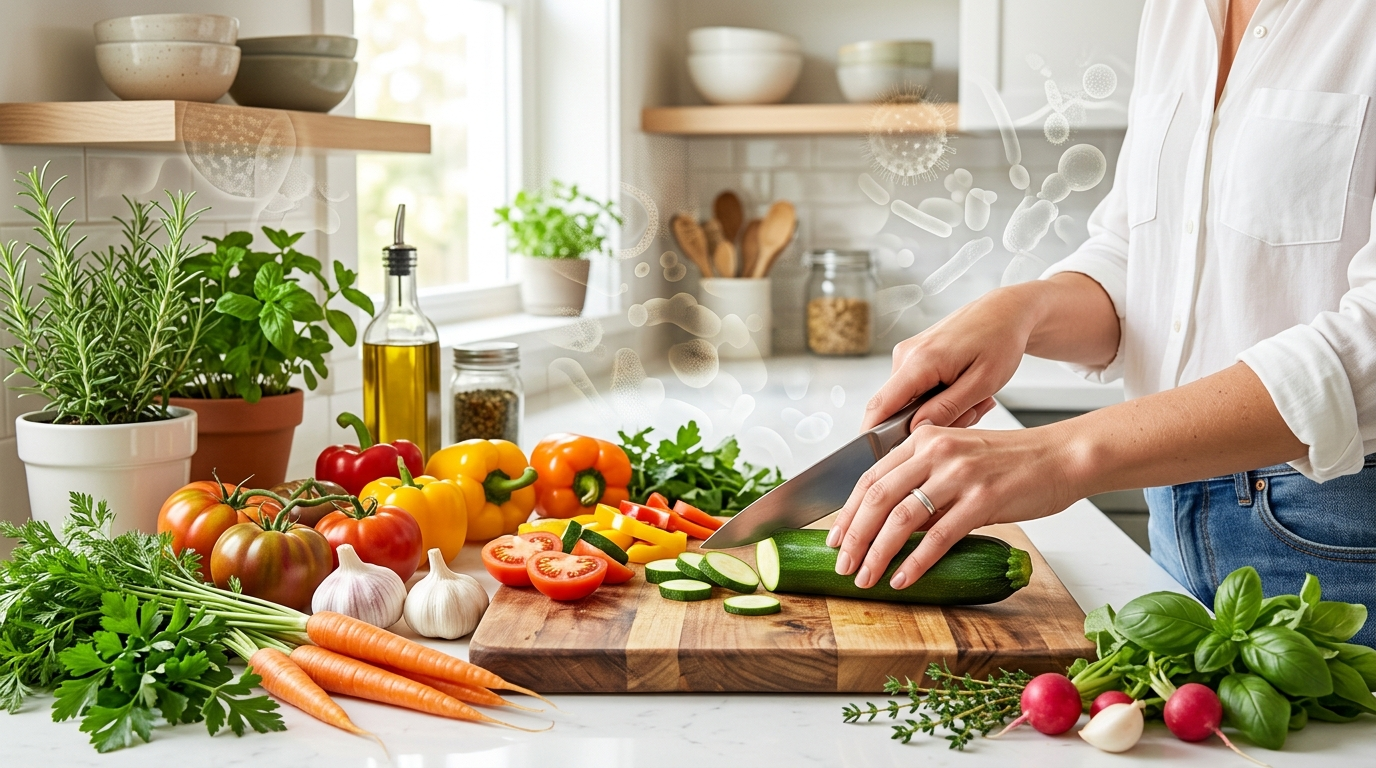
Food you cook or prepare can affect your gut microbiome indirectly, but the effect is usually small unless you also ingest microbes or residues. Kitchen exposure can move food-associated bacteria to your hands, mouth, surfaces, and household environment. Eating pattern, fiber intake, fermented foods, antibiotics, and sanitation habits shape the gut microbiome far more strongly.
How did we evaluate whether cooking without eating changes the gut microbiome?
We evaluated this question by separating direct gut exposure from indirect environmental exposure. Human diet studies received the most weight because stool microbiome changes require food components, live microbes, or metabolites to reach the gastrointestinal tract. We treated one-time kitchen contact as a weaker signal than repeated swallowed exposure across days or weeks. Household microbiome studies, food safety guidance, and hand-transfer research received secondary weight because they explain how microbes move through kitchens but do not prove durable gut colonization. We also separated viable organisms from nonliving microbial fragments, because DNA detected on a surface does not always equal a living microbe. Claims about cooking aromas, steam, or touching food “rebalancing” gut bacteria were excluded because current human evidence does not show a reliable microbiome effect without ingestion. The final answer treats food preparation as a plausible exposure source and diet as the stronger, better-supported driver.
How could preparing food affect your gut microbiome without eating it?
Food preparation can affect the gut microbiome only through transfer routes that eventually reach the digestive tract. Raw vegetables, herbs, fermented dough, yogurt, meat juices, cutting-board residues, and sink splash can move microbes to fingers, utensils, counters, and phones. The hands can then move small amounts of those microbes to the lips, mouth, or swallowed saliva. The household microbiome can also shift because kitchens collect food particles, moisture, skin cells, and cleaning chemicals. A Science study from the Home Microbiome Project found that people and their homes share microbial signatures over time, which supports environmental transfer as a real pathway. This evidence is directional, not proof that chopping one onion changes stool bacteria. The likely effect is modest, transient, and heavily diluted by stomach acid, bile acids, meal composition, bowel transit time, and the existing gut microbiota. Skin microbiome changes may occur faster than stool microbiome changes, but they are not the same outcome.
What evidence shows diet matters more than kitchen exposure?
Controlled diet research gives the clearest answer: what you eat matters much more than what you merely handle. In a controlled feeding study published in Nature, David et al. found that animal-based and plant-based diets shifted human gut microbial communities within days, including changes in bile-tolerant bacteria and fiber-fermenting taxa. That study measured ingestion, not kitchen contact, so it supports a strong diet-gut link rather than a strong cooking-exposure link. Dietary fiber, resistant starch, polyphenols, and fermented foods provide substrates or organisms that reach the colon. Food aromas and skin contact do not provide the same colon-level input. Human gut sequencing studies generally measure stool, not airborne or skin exposure, so their strongest inference remains dietary. The gut microbiome functions like an ecosystem with repeated nutrient pressure: regular meals change available fuel, pH, fermentation products, and short-chain fatty acid production. Occasional environmental exposure can seed microbes, but repeated ingestion selects which microbes persist.
Can food microbes survive cooking, handling, or kitchen surfaces?
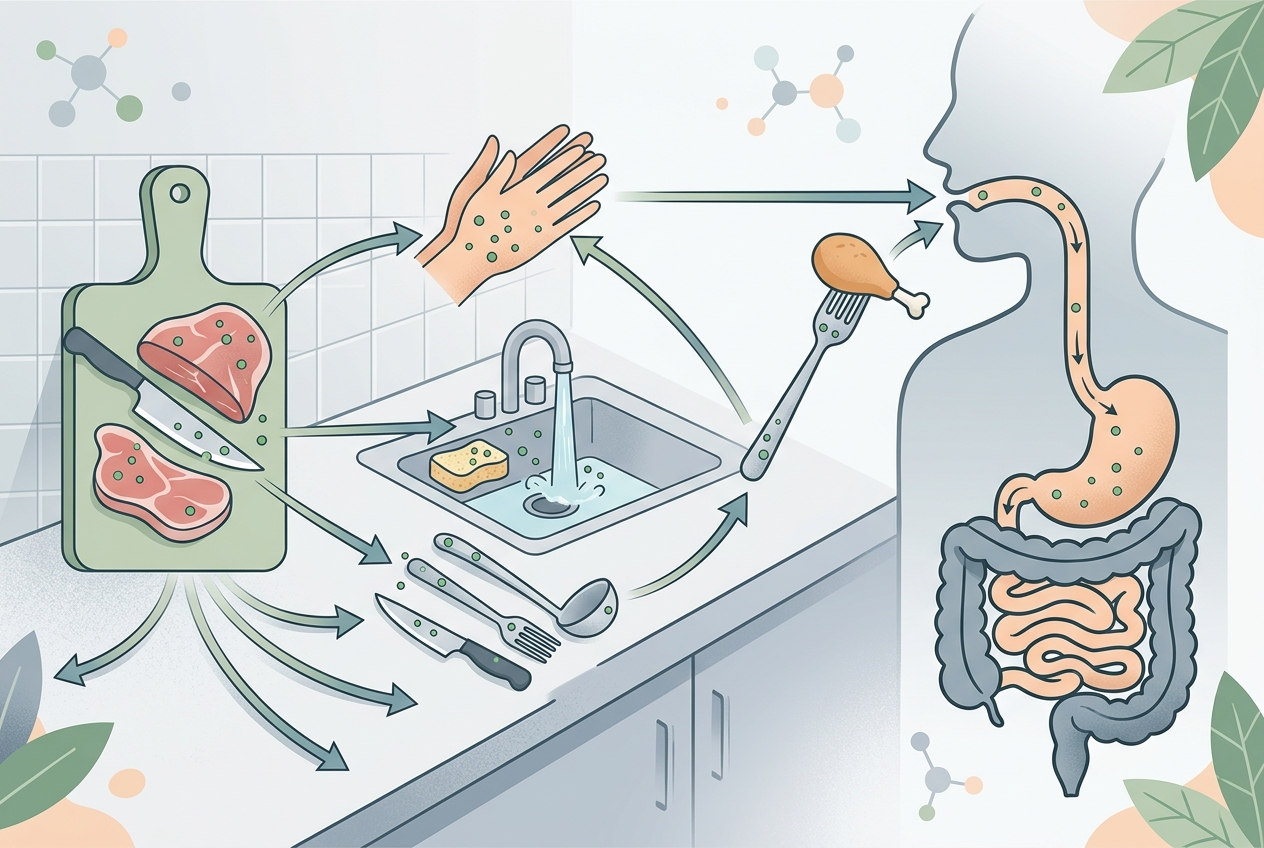
Food microbes can survive preparation when temperature, moisture, salt, acidity, and cleaning practices allow survival. Raw produce can carry soil-associated bacteria, fermented foods can carry lactic acid bacteria such as Lactobacillus and Leuconostoc, and raw meat can carry food-safety organisms that belong on food-safety checklists rather than wellness routines. Cooking reduces many viable microbes when foods reach appropriate internal temperatures, while knives, sponges, boards, and sink areas can retain residues. The FDA’s safe-food-handling guidance emphasizes clean hands, separated raw foods, correct cooking temperatures, and prompt chilling because kitchen transfer is a real exposure route. This does not mean a counter microbe automatically colonizes the colon. Colonization requires survival through saliva, gastric acid, bile, immune defenses, and competition from resident gut taxa such as Bacteroides, Prevotella, Faecalibacterium, and Bifidobacterium. Preparation affects exposure; ingestion and ecological fit determine persistence.
When could indirect exposure matter more?
Indirect exposure matters more when contact is frequent, microbial load is high, or the person repeatedly transfers hands to the mouth during preparation. Bakers, cheesemakers, gardeners, parents preparing infant food, and people handling fermented vegetables may experience more repeated environmental contact than someone reheating a cooked meal. Shared households also create microbial overlap through hands, surfaces, pets, bathrooms, and kitchens, so food preparation is one piece of a larger exposure web. The Home Microbiome Project found rapid microbial exchange after families moved homes, which makes household environment relevant but not diet-equivalent. Infant microbiomes may be more responsive because early gut ecosystems are still developing; adult microbiomes tend to resist short-lived exposures. The practical takeaway is simple: repeated swallowed exposure can matter, but touching, smelling, or cooking food without ingestion is unlikely to create a durable gut microbiome shift by itself.
What practical habits support your gut microbiome while cooking?
Microbiome-friendly cooking habits focus on two goals: reduce unwanted transfer and increase beneficial intake when you choose to eat. Wash hands before and after handling raw meat, seafood, eggs, unwashed produce, trash, and pets; the CDC recommends scrubbing with soap and water for at least 20 seconds. Use separate boards for raw animal foods and ready-to-eat foods. Clean sponges, cloths, and sink areas because wet kitchen materials can accumulate microbial biofilms. Replace worn tools when odors, staining, or persistent dampness make cleaning less reliable. For gut-supportive meals, emphasize plant diversity, legumes, whole grains, nuts, seeds, vegetables, fruit, and fermented foods that you actually consume. These foods provide fermentable carbohydrates, polyphenols, and live cultures that interact directly with gut microbes. Food preparation can shape your exposure environment, but dietary pattern supplies the strongest daily signal. Safe handling and diverse plant intake can coexist; sterile cooking is neither realistic nor necessary for a resilient household microbiome.
What questions do people ask about cooking and the gut microbiome?
Can smelling cooked food change gut bacteria?
Smelling cooked food can trigger appetite, saliva, and digestive readiness, but smell alone does not deliver meaningful microbes or fiber to the colon. The gut microbiome needs swallowed material, repeated nutrient inputs, or direct microbial exposure to change in a measurable way.
Can touching fermented foods expose you to beneficial bacteria?
Touching fermented foods can transfer lactic acid bacteria to the hands, especially from yogurt, kimchi, sauerkraut, sourdough, kefir, or miso. That contact becomes gut-relevant only if organisms reach the mouth and survive digestion; eating fermented foods is the stronger exposure route.
Does cooking kill all microbes in food?
Cooking reduces many viable microbes, but it does not make every food or kitchen surface microbe-free. Internal temperature, heating time, food thickness, moisture, post-cooking handling, and storage conditions all influence what survives or returns after cooking.
Could preparing raw meat affect the gut microbiome?
Preparing raw meat can expose hands, boards, knives, sinks, and ready-to-eat foods to food-safety organisms. That exposure is not a microbiome wellness strategy; safe separation, cleaning, cooking, and chilling reduce unwanted transfer.
Is steam from cooking a microbiome exposure?
Cooking steam may carry volatile compounds and tiny droplets, but it is unlikely to deliver enough viable food microbes to reshape the gut microbiome. Swallowed food, household contact, and hand-to-mouth transfer are more plausible exposure pathways.
What matters most for the gut microbiome day to day?
Regular intake matters most because the gut ecosystem responds to repeated substrates. Fiber-rich plants, resistant starch, fermented foods, overall dietary pattern, medications such as antibiotics, sleep, stress, and bowel transit usually matter more than one cooking session.
Leave a Reply