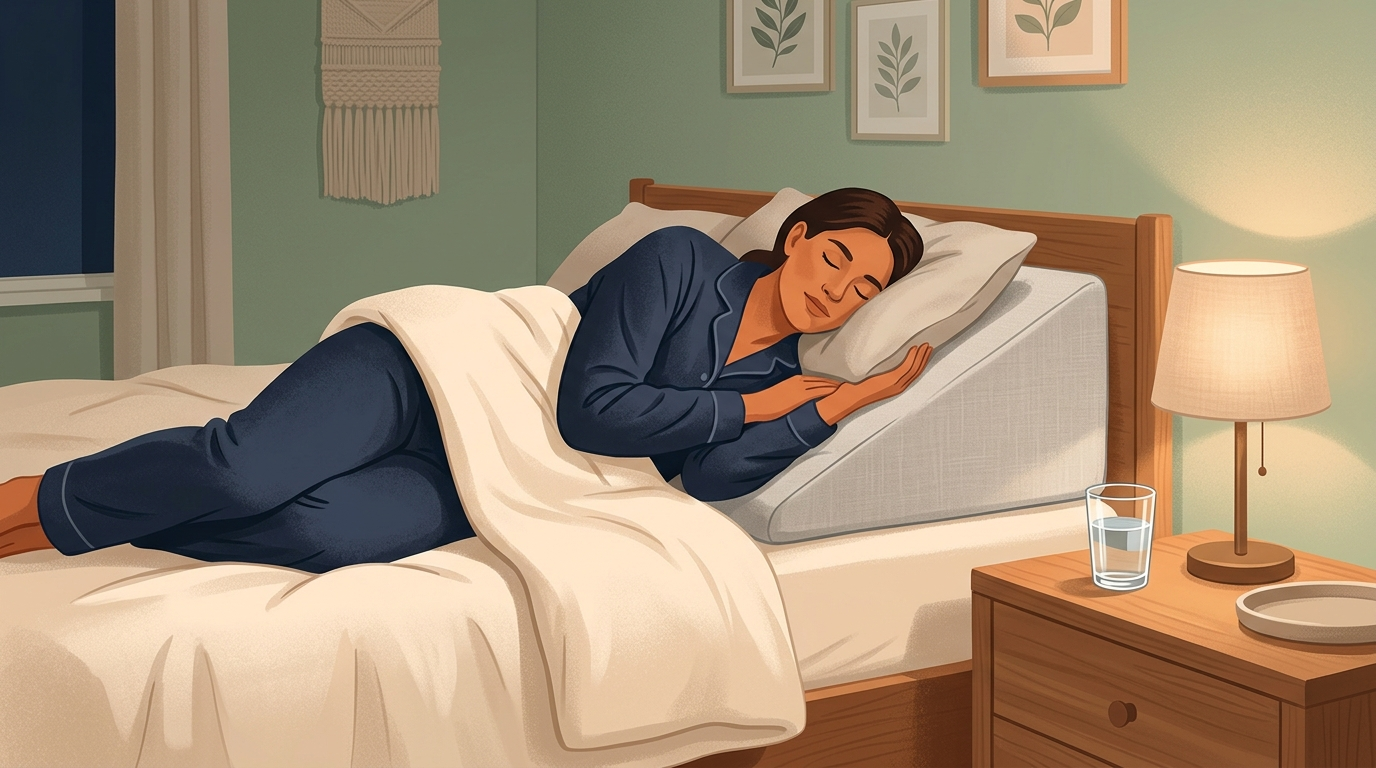
Sleep with acidity from indigestion by keeping your upper body elevated, lying on your left side, and leaving a 2- to 3-hour gap after your last meal. Smaller evening meals, loose waistbands, and avoiding personal triggers reduce nighttime pressure. Severe chest pain, black stool, vomiting, or trouble swallowing needs prompt medical care.
How did we evaluate safe sleep positioning for acidity from indigestion?
We evaluated nighttime acidity by prioritizing gastroenterology guidance, human sleep-position research, and practical risk triage over anecdotal forum fixes. The American College of Gastroenterology, NIDDK, Mayo Clinic, and PubMed-indexed posture studies received more weight than single-person routines because acidity, heartburn, and indigestion can overlap without sharing one cause. We excluded supplement claims, commercial comparisons, and aggressive medication advice because this cold-stage guide answers an educational sleep question, not a buying decision. Evidence is strongest for meal timing, head-of-bed elevation, and left-side positioning; evidence is more directional for individual trigger foods, because caffeine, chocolate, mint, alcohol, and fatty meals vary by person. We treated alarm signs separately because chest symptoms, bleeding signs, swallowing trouble, and unexplained weight change require professional judgment rather than a sleep-position experiment. Practical advice was included only when it matched published clinical guidance.
Why does acidity from indigestion feel worse after lying down?
Lying flat reduces gravity’s help, so stomach contents can move upward more easily when the lower esophageal sphincter relaxes. The NIDDK explains that reflux occurs when stomach contents flow back into the esophagus, and common signs include heartburn and regurgitation (NIDDK). A full stomach increases pressure under the diaphragm, and a tight waistband adds mechanical compression during sleep. Indigestion also delays comfort because large meals, high-fat foods, carbonated drinks, and alcohol can keep the stomach stretched longer. Nighttime acidity therefore has a simple physics layer: stomach volume, body angle, and sphincter relaxation combine during the first hours after dinner. Symptom pattern matters more than one bad night. Repeated nighttime burning, sour taste, coughing, hoarseness, or sleep disruption deserves tracking in a seven-night log, especially when the pattern follows late meals or lying fully flat.
Which sleep position helps most when acidity shows up at night?
Left-side sleeping helps many nighttime acidity patterns because stomach anatomy places the gastric pocket below the esophagus more favorably in that position. A PubMed-indexed study on recumbent postprandial reflux found that right-side positioning increased acid exposure and slowed acid clearance compared with left-side positioning (PubMed). Head elevation adds a second mechanical advantage. The American College of Gastroenterology guideline lists avoiding meals within 2 to 3 hours of bedtime and elevating the head of the bed for nighttime symptoms as lifestyle measures supported by clinical guidance (ACG guideline). A wedge pillow or bed risers work better than stacking soft pillows because the torso, not only the neck, needs elevation. The practical setup is specific: left side, upper body angled upward, waist loose, and dinner fully settled before lying down. Back sleeping with elevation is a reasonable second choice when left-side sleep is uncomfortable.
What should you do in the 3 hours before bed?
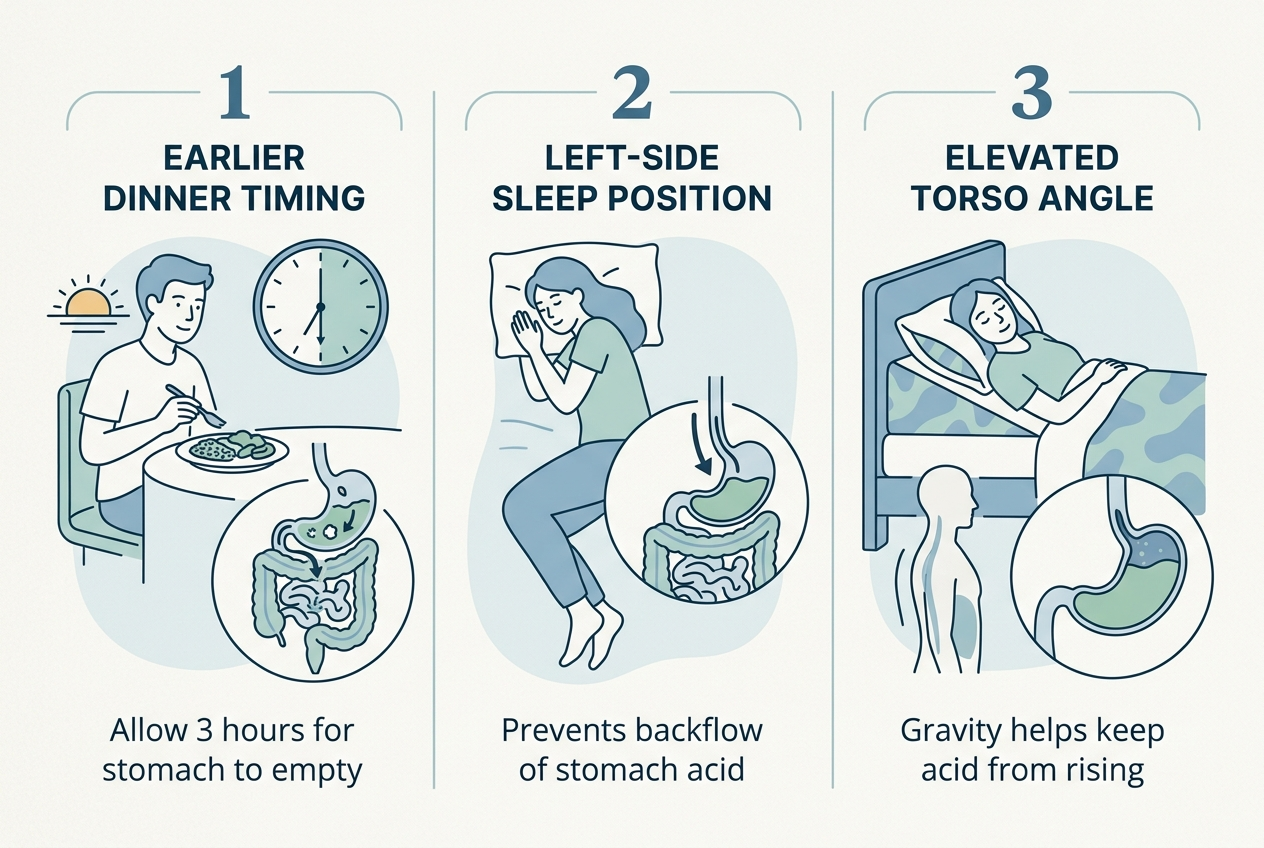
The 3 hours before bed should reduce stomach volume, abdominal pressure, and stimulation. Dinner should be smaller than lunch when nighttime acidity repeats, and the last substantial meal should end at least 2 to 3 hours before lying down. Water is usually gentler than carbonation because bubbles can increase gastric distension. A short upright walk after dinner can support normal gastric movement, while intense exercise immediately after eating can add pressure for some people. Clothing matters because tight waistbands compress the abdomen during sitting and sleep. A symptom log should record meal size, meal time, alcohol, caffeine, mint, chocolate, spicy foods, high-fat foods, carbonated drinks, stress, and sleep position. Mayo Clinic lists heartburn triggers as person-specific, so the useful goal is pattern detection rather than universal restriction (Mayo Clinic). Consistency across seven nights gives better signal than one perfect evening.
What should you avoid when nighttime acidity is active?
Nighttime acidity usually worsens when the evening routine stacks several pressure triggers together. Large late meals create stomach volume; alcohol relaxes normal esophageal barrier function; high-fat foods can slow gastric emptying; peppermint, chocolate, coffee, and carbonated drinks can bother some people. The evidence is strongest for avoiding late meals and elevating the upper body, while trigger-food evidence is more individualized and should be tested with a log. Avoid lying flat on the right side soon after dinner when acidity is active, because right-side positioning can increase acid exposure in posture studies. Avoid tight shapewear, belts, or waistbands at bedtime because external compression raises abdominal pressure. Avoid panic-scrolling symptom forums at 2 a.m. because stress raises arousal and makes sleep harder. The better rule is boring but useful: reduce volume, reduce compression, stay upright, then sleep left-side elevated.
When should nighttime acidity get medical attention?
Nighttime acidity needs medical attention when symptoms are severe, persistent, unusual, or paired with alarm signs. Chest pressure, shortness of breath, pain spreading to the arm or jaw, fainting, black stool, vomiting blood, repeated vomiting, trouble swallowing, painful swallowing, unexplained weight loss, or anemia signs should not be managed as ordinary indigestion. Cleveland Clinic describes indigestion as upper-abdominal discomfort that can overlap with burning, fullness, nausea, and belching, which means symptom labels can be imprecise (Cleveland Clinic). A clinician can separate reflux patterns, medication effects, food intolerance, ulcer-related patterns, gallbladder issues, cardiac causes, and other possibilities. Occasional acidity after a heavy meal is different from repeated sleep disruption. A written log helps the visit because timing, triggers, stool changes, medications, and sleep position give the clinician concrete data. Bringing the log prevents vague recall from steering the conversation.
What questions do people ask about sleeping with acidity from indigestion?
Is it better to sleep on the left side or the right side?
Left-side sleep is the better first experiment. PubMed posture research links right-side lying with higher acid exposure after meals.
Should I stack pillows to sleep higher?
Stacked pillows often bend the neck. A wedge pillow or bed risers lift the torso more reliably.
How long should I wait after eating before lying down?
A 2- to 3-hour gap is the practical target. ACG guidance includes this window for nighttime reflux patterns.
Is milk helpful before bed?
Milk may feel soothing briefly. Fat and volume can bother some people later, so water gives cleaner signal.
Can stress make nighttime acidity feel worse?
Stress can increase arousal and symptom attention. Stress does not replace triggers like late meals, alcohol, or compression.
What is the safest plan tonight?
Stay upright, loosen your waistband, elevate your torso, and sleep left-side. Seek urgent care for chest pressure, black stool, vomiting blood, fainting, or trouble swallowing.
Leave a Reply