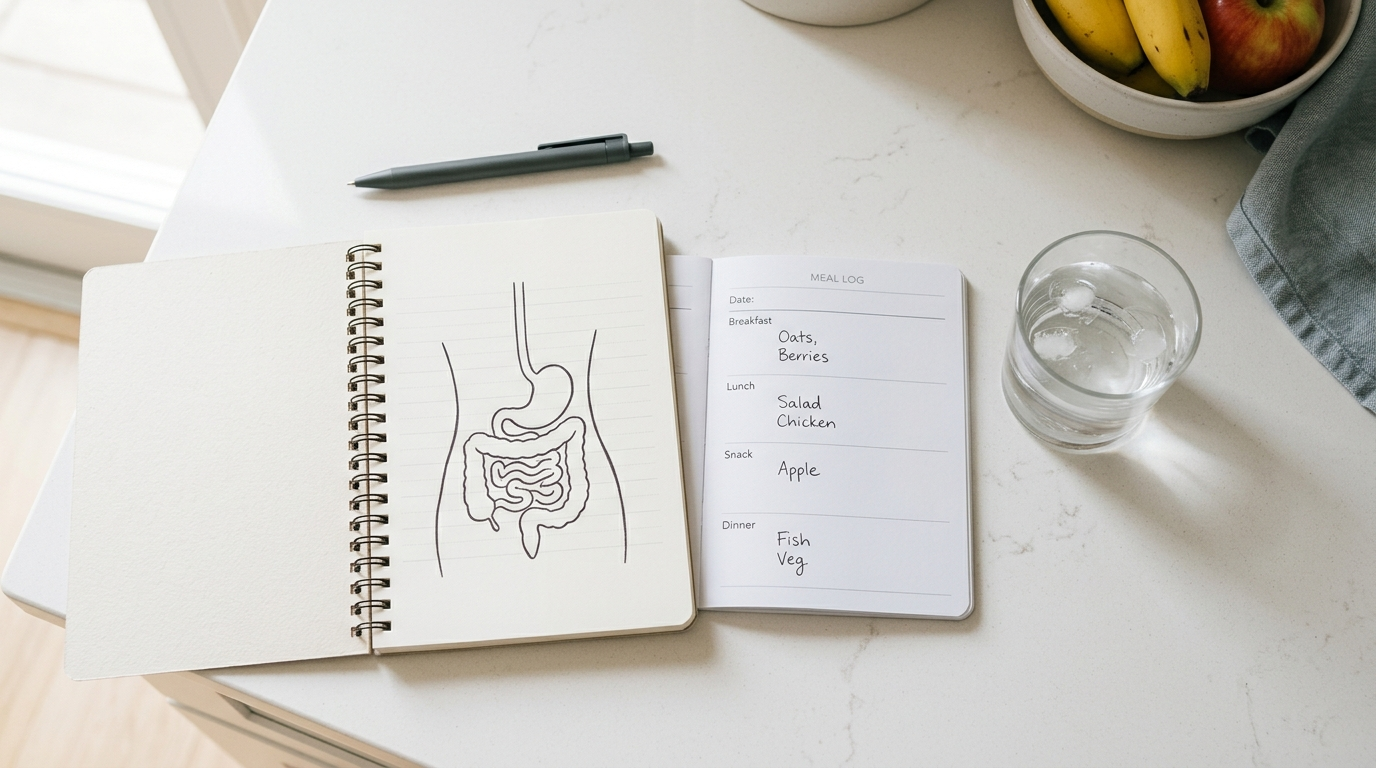
Lower-belly bloating usually comes from gas volume, stool backup, slowed movement, swallowed air, menstrual-cycle fluid shifts, or sensitivity to normal intestinal stretching. The location matters less than the pattern: timing after meals, bowel-movement changes, new pain, weight loss, vomiting, fever, or blood in stool.
How we evaluated lower-belly bloating causes?
We evaluated lower-abdominal bloating by prioritizing digestive physiology, clinical red flags, and pattern tracking over single-symptom guessing. We used medical references from NIDDK, Mayo Clinic, the American College of Gastroenterology, and peer-reviewed gastroenterology literature, then separated common non-urgent patterns from symptoms that deserve clinician review. We excluded commercial claims and remedy lists because a cold-stage bloating article should explain mechanisms before solutions. The main limitation is that bloating is subjective: visible distension, gas pressure, pelvic fullness, and constipation can feel similar even when the underlying cause differs, so repeatable timing matters more than one isolated episode.
Why can bloating feel lower in the belly?
Lower-belly bloating often feels pelvic or below the navel because the colon stores gas and stool across the lower abdomen. The sigmoid colon sits in the lower-left abdomen, the cecum sits in the lower-right abdomen, and constipation can stretch both regions. NIDDK explains that gas enters the digestive tract through swallowed air and bacterial fermentation of carbohydrates in the large intestine (NIDDK). When gas moves slowly, the abdomen can feel tight even without a dangerous problem. Visceral hypersensitivity can also make ordinary gas volumes feel unusually intense, especially after meals. A 2019 review in Neurogastroenterology & Motility describes bloating as a symptom involving gas handling, gut-brain signaling, abdominal wall response, and bowel motility rather than one single cause (PubMed). Location gives clues, but timing usually gives better evidence.
- Gas creates pressure in the colon
- Stool backup increases lower-abdominal fullness
- Gut-brain sensitivity changes how stretching feels
What daily patterns make lower-belly bloating more likely?
Meal timing, fiber changes, carbonated drinks, constipation, high-FODMAP foods, and rapid eating can all increase lower-belly pressure. Beans, onions, wheat, apples, milk, and some sugar alcohols contain fermentable carbohydrates that gut bacteria convert into gas. Mayo Clinic notes that constipation can cause bloating and abdominal discomfort, especially when stool moves slowly through the colon (Mayo Clinic). Menstrual-cycle changes can add pelvic fullness because progesterone and fluid shifts affect bowel movement patterns. Stress can also change motility through the gut-brain axis, but stress should not be used as a dismissal. A useful first step is a seven-day log that records meals, bowel movements, cycle timing, stress, sleep, water intake, carbonated drinks, and whether the belly looks visibly distended or only feels pressured. Repeated patterns are more useful than one uncomfortable meal.
How can you tell gas, constipation, and food triggers apart?
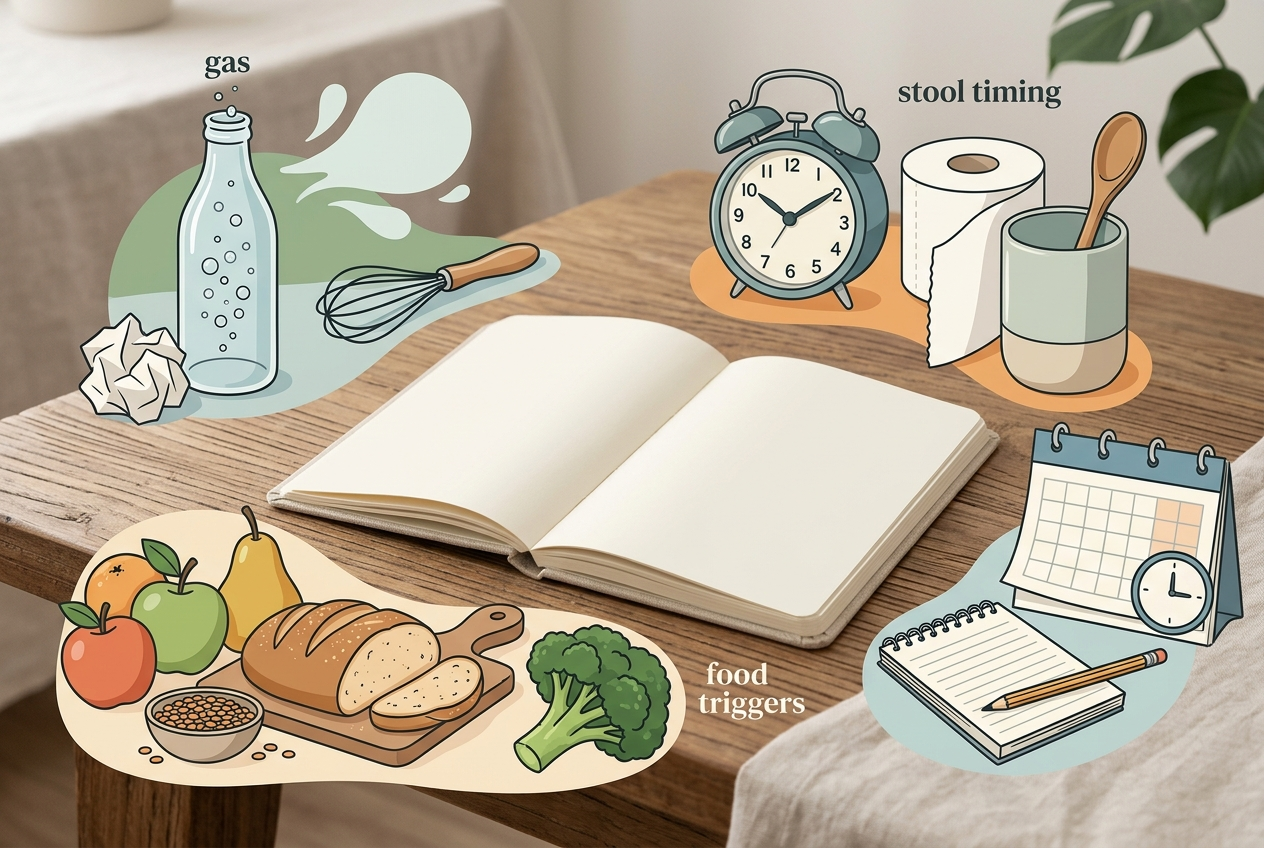
Gas-related bloating usually rises within a few hours of fermentable foods, carbonated drinks, or fast eating, then shifts location as gas moves. Constipation-related bloating often comes with infrequent stools, hard stools, straining, incomplete evacuation, or relief after a bowel movement. Food-triggered bloating is more reproducible: the same food, serving size, and timing creates a similar pattern on repeat exposures. Lactose intolerance often clusters with milk, ice cream, or soft dairy, while fructan sensitivity often clusters with wheat, onion, garlic, or large portions of certain fruits. The American College of Gastroenterology notes that bloating can overlap with disorders of gut-brain interaction, including irritable bowel syndrome, but symptom patterns still guide next steps (ACG). Pattern tracking works best when only one variable changes at a time and the test repeats on ordinary days.
When should lower-belly bloating be checked?
Lower-belly bloating should be checked promptly when it is new, severe, progressive, or paired with red-flag symptoms. Red flags include unexplained weight loss, persistent vomiting, fever, blood in stool, black stool, anemia, trouble swallowing, a hard swollen abdomen, or pain that wakes someone from sleep. New bloating after age 50, persistent pelvic bloating, or bloating with a major bowel-habit change also deserves medical review because symptoms can overlap across digestive, urinary, and gynecologic systems. NIDDK advises medical attention when gas symptoms come with constipation, diarrhea, weight loss, or blood in stool (NIDDK). Non-urgent bloating can still merit a clinician visit when it disrupts eating, work, sleep, exercise, or daily comfort for several weeks despite basic pattern tracking.
What questions come up most often about lower-belly bloating?
Is lower-belly bloating always fat gain?
No. Fat gain changes body composition gradually, while bloating can change within hours. Visible distension that comes and goes usually points more toward gas, stool, fluid shifts, or abdominal wall response.
Can constipation cause bloating even if you still go?
Yes. A person can pass stool and still have incomplete evacuation or slow transit. Hard stools, straining, and a feeling of blockage suggest constipation patterns.
Why does bloating get worse at night?
Evening bloating can reflect accumulated meals, slower movement, carbonated drinks, larger portions, or more fermentable carbohydrates across the day. A morning-to-night photo and symptom log can clarify whether distension is actually changing.
Can hormones make the lower belly feel bloated?
Yes. Menstrual-cycle hormone shifts can affect fluid retention, bowel motility, and pelvic fullness. Cycle-linked symptoms usually repeat in a predictable window.
Should you cut out every food that bloats you?
No. Broad restriction can reduce diet variety without identifying the real trigger. A better test changes one food group, serving size, or timing variable for a short period.
What is the simplest first step?
Track meals, bowel movements, visible distension, stress, sleep, and cycle timing for seven days. Bring the pattern to a clinician if symptoms are severe, new, progressive, or paired with red flags.
What is the practical takeaway?
Lower-belly bloating is a pattern to decode, not a diagnosis by itself. Gas, stool backup, food fermentation, cycle changes, and gut-brain sensitivity can all create pressure below the navel. The most useful first move is a simple seven-day log that connects meals, stool pattern, cycle timing, visible distension, stress, sleep, and symptom timing. If the pattern is mild and repeatable, one-variable testing can clarify likely triggers. If the pattern is new, severe, progressive, or paired with red flags, medical review matters more than home experimentation. Location can point attention toward the colon or pelvis, but timing, recurrence, and associated symptoms carry more practical information.
Image prompts:
- Hero image: A neutral educational flat lay with a simple abdomen outline notebook, meal log, water glass, and pen on a bright kitchen table, no pills, no brand logos, no text. Alt text: Meal and symptom tracking notebook for lower-belly bloating patterns.
- In-article image: An editorial diagram-style still life showing gas, stool timing, food triggers, and cycle timing represented by simple household objects around a blank notebook, no text. Alt text: Objects representing gas, constipation, food triggers, and cycle timing for bloating tracking.
Leave a Reply