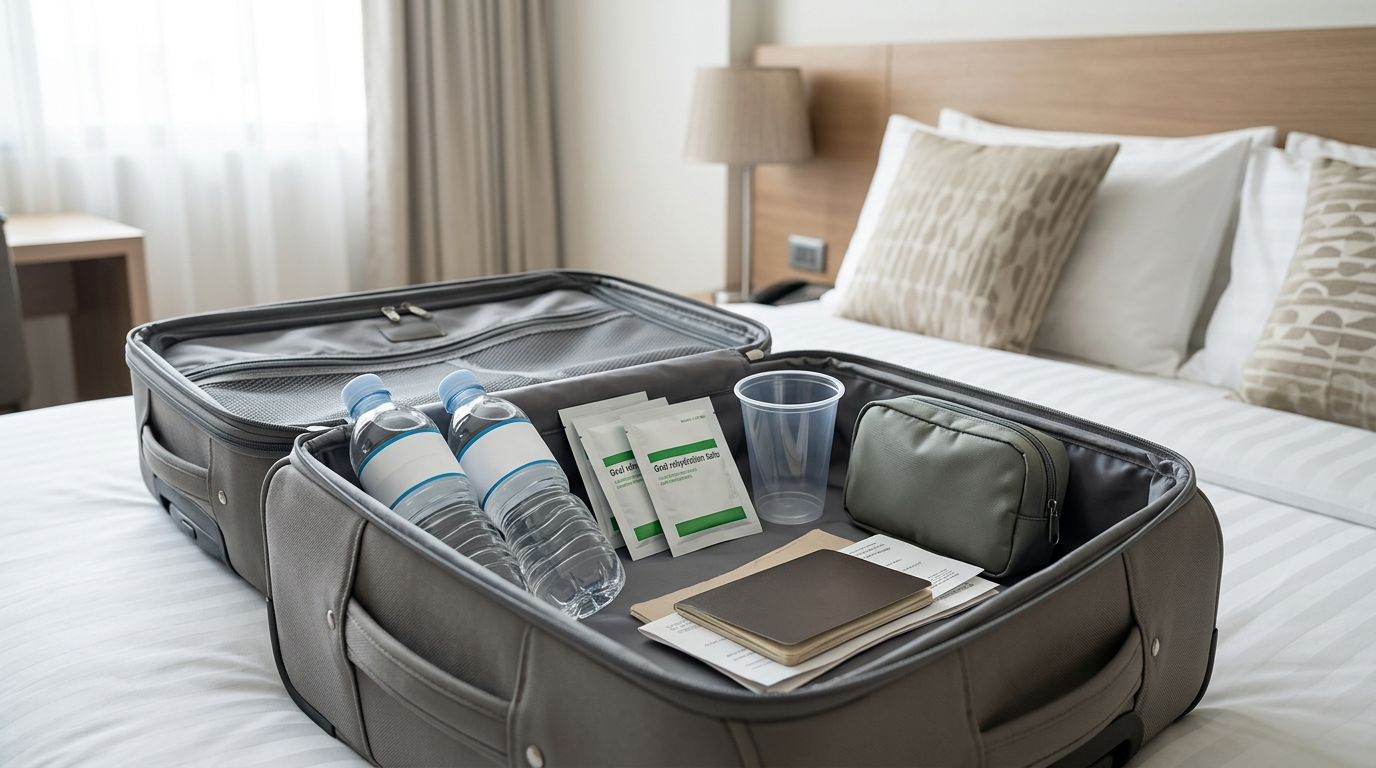
Start with safe fluids and oral rehydration solution, then judge travelers’ diarrhea by severity rather than stool count alone. Seek medical care for bloody stool, high fever, severe dehydration, intense abdominal pain, persistent vomiting, or symptoms that do not improve. Avoid self-starting leftover antibiotics because the cause and resistance pattern matter.
How did we evaluate help for travelers’ diarrhea?
We evaluated travelers’ diarrhea by prioritizing the 2026 CDC Yellow Book, World Health Organization oral-rehydration guidance, and public-health criteria for urgent evaluation. We separated three decisions: replacing fluid and electrolytes, using short-term symptom relief, and obtaining clinician-directed antimicrobial care. We excluded social-media remedies, preventive supplement claims, and blanket antibiotic advice because bacteria, viruses, and protozoa require different responses. We also used functional severity rather than a fixed number of stools: mild illness remains tolerable, moderate illness interferes with planned activities, and severe illness becomes incapacitating or includes dysentery. We favored current travel-medicine guidance over older destination-generalized rules. This framework has limits because age, pregnancy, immune status, chronic illness, destination, and access to care change risk. The guidance below supports an immediate plan, but a qualified clinician must assess severe, persistent, or medically complicated cases.
What should you do first for travelers’ diarrhea?
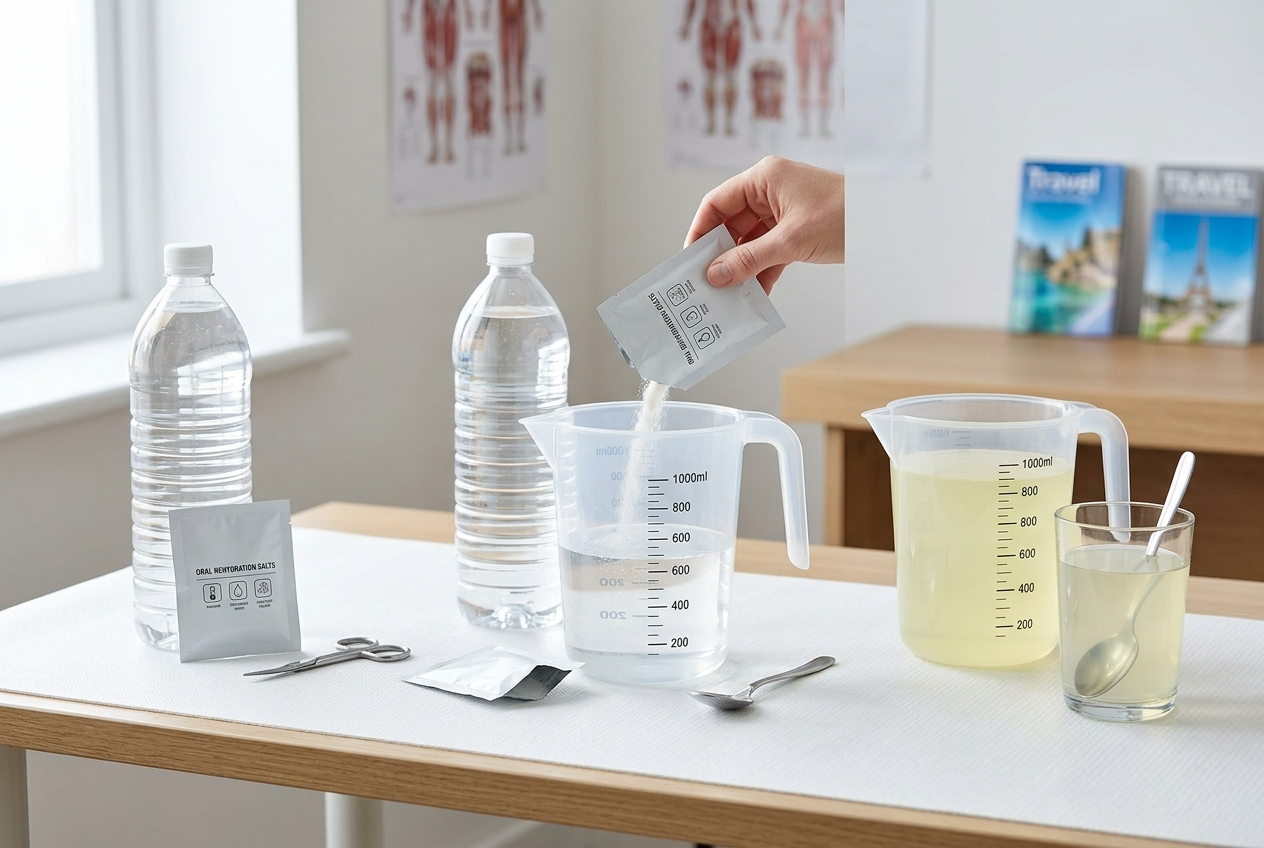
The first priority is replacing water and electrolytes lost through diarrhea or vomiting. The CDC Yellow Book recommends packaged oral rehydration salts for substantial fluid loss, mixed with the exact volume of sealed, boiled, chlorinated, or otherwise purified water stated on the packet. The World Health Organization describes oral rehydration solution as a glucose-electrolyte mixture that can prevent or correct dehydration in most non-severe cases. Plain water alone does not replace the sodium and glucose lost during heavier diarrhea. Take small, frequent sips if nausea makes larger drinks difficult. Mild cases may tolerate other preferred fluids, but very sweet soda or juice can worsen osmotic diarrhea when consumed in quantity. Continue watching urine output, thirst, dizziness, alertness, and the ability to keep liquids down; those signs reveal hydration status better than stool count alone.
When does travelers’ diarrhea need medical care?
Travelers’ diarrhea needs prompt medical evaluation when stool contains blood, fever is high, dehydration is worsening, abdominal pain is severe, vomiting prevents fluid intake, or the person becomes faint, confused, or unusually weak. Do not wait. The CDC also advises seeking care when symptoms are particularly severe or persist despite an appropriate self-care plan. Infants, young children, older adults, pregnant travelers, immunocompromised people, and people with chronic medical conditions have a lower threshold for assessment because dehydration and complications can develop faster. Diarrhea lasting longer than two weeks raises concern for protozoal causes such as Giardia duodenalis and requires targeted testing rather than repeated guessing. Tell the clinician every destination, trip date, food or water exposure, medication, and antibiotic already taken. Recent international travel can change the likely organisms, antimicrobial-resistance pattern, and public-health considerations.
Which medicines can help, and what are their limits?
Medication choice should follow symptom severity and contraindications. The CDC allows loperamide or bismuth subsalicylate as possible short-term options for mild, non-bloody illness, but antimotility medicine alone is not recommended when diarrhea includes fever or blood. Bismuth can interact with medicines and is unsuitable for some people, including those with salicylate allergy or certain bleeding risks. A pharmacist can screen nonprescription options for contraindications. Antibiotics are not recommended for mild travelers’ diarrhea; clinician-prescribed antibiotics may be considered for moderate illness and are advised for severe illness, with destination-specific resistance affecting the selection. Leftover ciprofloxacin, azithromycin, or rifaximin is not a safe universal answer. The CDC pre-travel consultation guidance recommends an individualized plan because drug interactions, pregnancy, immune status, and remoteness alter the risk-benefit balance. Hydration remains necessary even when medication reduces stool frequency.
What should you eat and drink while recovering?
Eat according to appetite while making safe fluid replacement the priority. Small portions of familiar foods such as rice, potatoes, toast, bananas, soup, or plain noodles may feel easier during the first day, but a permanently restrictive “BRAT” pattern does not provide complete nutrition. Avoid large amounts of alcohol, caffeine, very fatty meals, and highly sweetened drinks while stools remain frequent because these choices can worsen fluid loss or gastrointestinal discomfort. Use sealed or properly treated water for drinking, brushing teeth, ice, and oral rehydration preparation. Resume a normal, balanced diet as tolerance returns rather than waiting for every bowel movement to normalize. Temporary lactose sensitivity can occur after intestinal irritation, so dairy may need a short pause if it clearly worsens symptoms. Food choices support comfort and energy; they do not identify the organism or replace evaluation when red flags appear.
What questions do travelers ask about diarrhea self-care?
These answers address common immediate decisions, but individual risk factors can change the safest plan. Severe symptoms, vulnerable age groups, pregnancy, immune suppression, or limited access to clean water justify earlier professional advice.
Can I use sports drinks instead of oral rehydration solution?
Sports drinks may help in mild cases. Packaged oral rehydration salts provide a more appropriate glucose-electrolyte balance for substantial losses.
Should I stop eating completely?
No. Small, tolerated meals support energy, while fluids and electrolytes remain the first priority.
Can I take loperamide before a flight?
It may be appropriate for non-bloody diarrhea without fever. Ask a pharmacist or clinician when contraindications or other medicines apply.
Should I take leftover antibiotics?
No. The organism, destination, resistance pattern, allergies, and illness severity determine whether an antibiotic is appropriate.
How long can travelers’ diarrhea last?
Many uncomplicated cases improve within several days. Persistent symptoms, especially beyond two weeks, need evaluation for causes such as protozoa.
Can probiotics stop an acute episode?
Evidence does not support relying on a probiotic as acute rescue care. Rehydration and severity-based medical decisions remain more important.
What is the safest bottom line for travelers’ diarrhea?
Use oral rehydration early, prepare it with safe water, and reassess severity frequently. Mild, non-bloody illness may be manageable with fluids and carefully selected short-term symptom relief, while bloody stool, high fever, severe pain, dehydration, persistent vomiting, or incapacitating illness requires medical guidance. Children can deteriorate especially quickly. Do not let a lower stool count after loperamide hide worsening fever, weakness, or dehydration. Do not use leftover antibiotics as a destination-blind shortcut; antimicrobial resistance and invasive pathogens make the wrong drug an avoidable risk. Keep trip details, medication names, and symptom timing ready for a clinician. If clean water or medical access is limited, contact a travel insurer, local embassy resource, telehealth service, or qualified local clinic early. The safest plan replaces losses first and escalates care when the illness crosses clear red-flag thresholds.
Leave a Reply