
Dark chocolate can affect digestion in different directions. Cocoa polyphenols and fiber may interact with gut microbes, while fat, caffeine-related compounds, milk ingredients, large portions, or sugar alcohols may trigger reflux, loose stool, constipation, gas, or pain in sensitive people. The ingredient list and repeatable symptom pattern matter more than cocoa percentage alone.
How did we evaluate dark chocolate and digestion?
We evaluated dark chocolate by separating cocoa solids from the other ingredients in a finished bar and by prioritizing controlled human research over animal or laboratory studies. We examined gut-microbiome findings, gastric and colonic transit results, reflux guidance, portion size, fat content, dairy ingredients, and polyols such as sorbitol or maltitol. We excluded claims that a single food can “heal” or “damage” the microbiome because current trials are small, short, and conducted in selected groups. Dark chocolate varies substantially: a plain 85% cocoa bar is not equivalent to a milk-filled, nut-filled, or sugar-free confection. The evidence therefore supports an individual test rather than a universal rule. A food-and-symptom log can show whether cocoa, serving size, meal timing, dairy, fat, or a sweetener repeatedly precedes symptoms, but it cannot identify a digestive disorder on its own.
Can dark chocolate support the gut microbiome?
Cocoa solids contain polyphenols and some fiber that reach the colon, where microbes can transform them into smaller metabolites. A small 2022 randomized trial assigned healthy adults to 30 grams per day of 85% cocoa chocolate, 70% cocoa chocolate, or no chocolate for three weeks. The 85% group showed differences in microbial diversity and selected bacterial taxa, but the study included only 48 young adults and focused primarily on mood. A newer controlled-feeding analysis also examined microbiome changes after cocoa and dark-chocolate intake, yet stool samples came from a small subset of participants. These findings make a microbiome effect plausible, not clinically settled. Dark chocolate does not qualify as a probiotic because it does not supply a defined dose of live microorganisms. It also should not replace established sources of diverse dietary fiber such as beans, oats, vegetables, fruit, nuts, and seeds.
Why can dark chocolate cause reflux, bloating, or bowel changes?
Dark chocolate combines several possible triggers in one food. Cocoa supplies theobromine and some caffeine, while cocoa butter supplies fat; a large or late serving may therefore feel different from a small piece eaten earlier. The NIDDK lists chocolate among foods commonly linked with reflux symptoms, while emphasizing that triggers vary by person. Added milk powder can matter for someone with lactose malabsorption. Inulin, chicory root fiber, sorbitol, maltitol, or other sugar alcohols in “low-sugar” bars can increase gas or loosen stool because incomplete absorption draws water into the intestine and supports fermentation. A small randomized crossover study of 16 healthy adults found that dark chocolate changed stool consistency and showed a trend toward slower colonic transit, but it did not change gastric emptying. That limited result does not predict what will happen in a person with reflux or irritable bowel symptoms.
How can you identify which chocolate ingredient is the trigger?
Start with the full ingredient list rather than the percentage printed on the front. A short list containing cocoa mass, cocoa butter, and sugar creates a cleaner test than a bar containing milk powder, whey, inulin, nuts, emulsifiers, and polyols. Record the amount, time, accompanying meal, and symptoms for several exposures. Then compare one variable at a time: 10 to 15 grams versus a larger portion, daytime versus within three hours of bed, plain dark chocolate versus milk chocolate, or ordinary sugar versus a sugar-alcohol formula. Keep the rest of the meal similar so the comparison remains interpretable. A symptom that follows only a maltitol-sweetened bar points toward a different mechanism than heartburn after every high-fat chocolate dessert. The Monash University low-FODMAP framework includes dark chocolate as an alternative to some high-FODMAP sweets, but portion and added ingredients still determine tolerance. A single uncomfortable episode is weak evidence; a repeated, specific pattern is more useful.
What serving size and timing make a useful test?
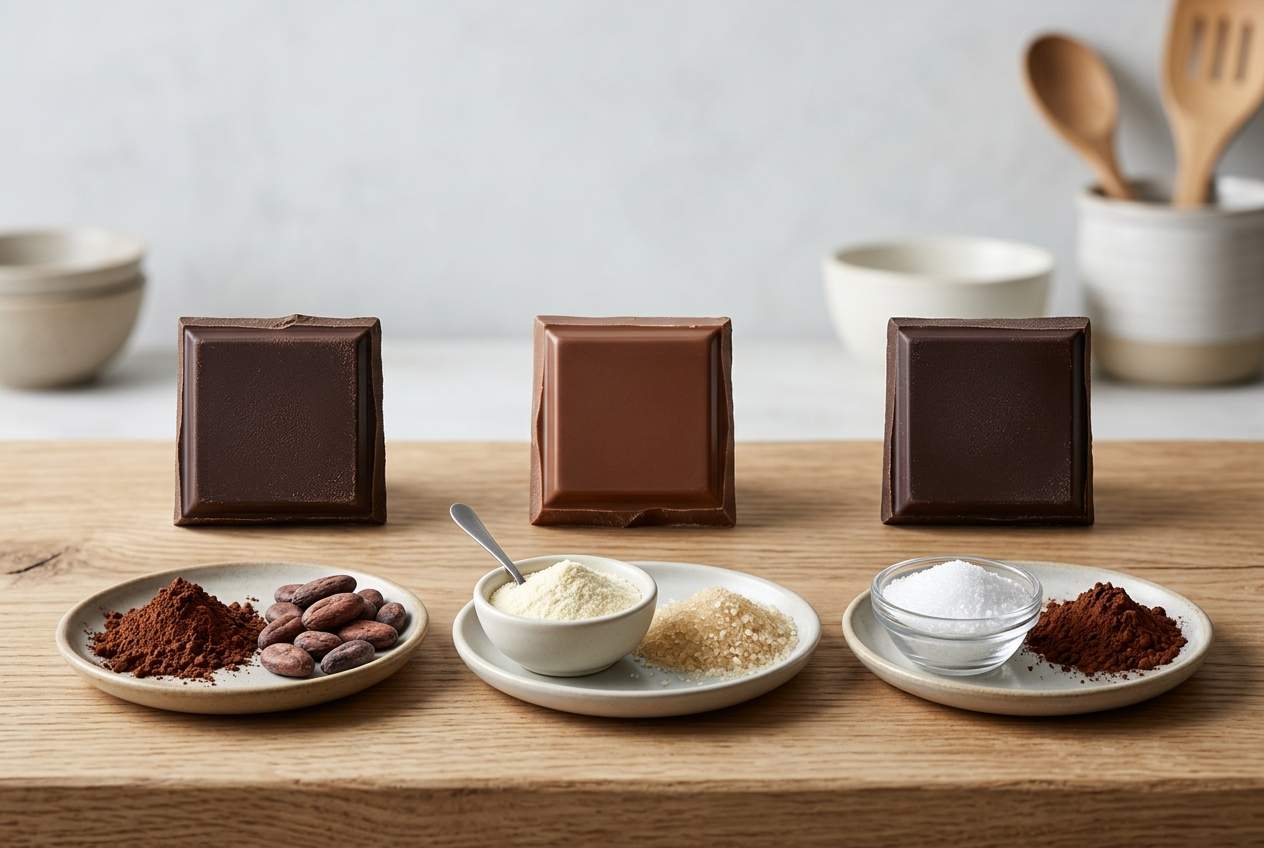
A 10- to 15-gram portion, roughly one or two small squares depending on the bar, provides a practical starting test without creating the fat and calorie load of a large serving. Eat it after a familiar meal rather than during a day filled with new foods. People tracking reflux should finish the test at least three hours before lying down because the NIDDK recommends that interval for nighttime symptoms. People tracking bowel changes should record stool frequency and Bristol Stool Form Scale type through the following day. Repeat the same portion on two or three separate days only if the first test causes no concerning reaction. Increase the amount only when the smaller portion is tolerated. This sequence tests dose response without treating chocolate as a therapy. Stop the experiment if it produces persistent heartburn, significant pain, repeated diarrhea, vomiting, hives, swelling, wheezing, dizziness, or another allergic-type symptom.
When should digestive symptoms after chocolate be evaluated?
Occasional mild gas or heartburn after a large chocolate dessert often supports a portion, timing, or ingredient review. Recurrent symptoms deserve a broader assessment because chocolate may be a visible trigger rather than the underlying cause. Seek prompt medical advice for trouble swallowing, persistent vomiting, black or bloody stool, unexplained weight loss, loss of appetite, anemia, severe abdominal pain, or chest pain. The NIDDK reflux guidance identifies swallowing difficulty, bleeding signs, persistent vomiting, and unexplained weight loss as reasons for evaluation. Hives, lip or tongue swelling, wheezing, or faintness after chocolate can signal an allergic reaction and may require emergency care. Cocoa is not the only suspect: milk, soy lecithin, peanuts, tree nuts, or cross-contact can matter. A clinician can assess recurrent reflux or bowel changes, while an allergist can evaluate immediate immune-type symptoms.
What are common questions about dark chocolate and digestion?
Is dark chocolate a probiotic?
No. Dark chocolate contains cocoa compounds, but a probiotic must deliver identified live microorganisms in an effective amount.
Can dark chocolate act like a prebiotic?
Cocoa polyphenols and fiber can interact with colonic microbes. Human trials are promising but too small to establish a dependable digestive benefit.
Does a higher cocoa percentage mean easier digestion?
Not automatically. Higher cocoa means less sugar, but it can also mean more cocoa solids, fat, theobromine, and caffeine-related compounds per bite.
Can sugar-free dark chocolate cause gas?
Yes. Maltitol, sorbitol, inulin, and similar ingredients can increase fermentation or draw water into the bowel.
Is milk chocolate better for reflux?
Not necessarily. Milk chocolate may contain less cocoa but still combines fat, sugar, and dairy ingredients that can affect symptoms.
Should dark chocolate be avoided before bed?
People with nighttime reflux can test avoiding it for at least three hours before lying down. Individual responses matter more than a blanket ban.
For a detailed comparison of specific products and strains, see What Else Can I Do to Improve My Gut Health? The Smartest Next Steps to Compare.
For a detailed comparison of specific products and strains, see Gut Microbiome Test: Ombre, Viome, Thorne, and No-Test Routines Compared.
What is the practical next step?
Choose a plain dark chocolate with a short ingredient list and test a small 10- to 15-gram portion earlier in the day. Record cocoa percentage, added milk, sweeteners, fiber additives, serving size, meal context, and symptoms. If the portion is comfortable, repeat it on separate days before testing a larger amount. If symptoms appear, compare only one plausible variable next: portion, timing, dairy, sugar alcohols, or total meal fat. This structured sequence provides more information than switching among several bars at once. Dark chocolate may contribute cocoa polyphenols and fiber, but current human studies do not justify using it as a microbiome treatment. Persistent reflux, major bowel changes, significant pain, allergic symptoms, bleeding, swallowing trouble, or weight loss require medical assessment rather than repeated food challenges. The useful conclusion is personal and specific: which formulation, amount, and timing can be eaten comfortably, if any.
Leave a Reply