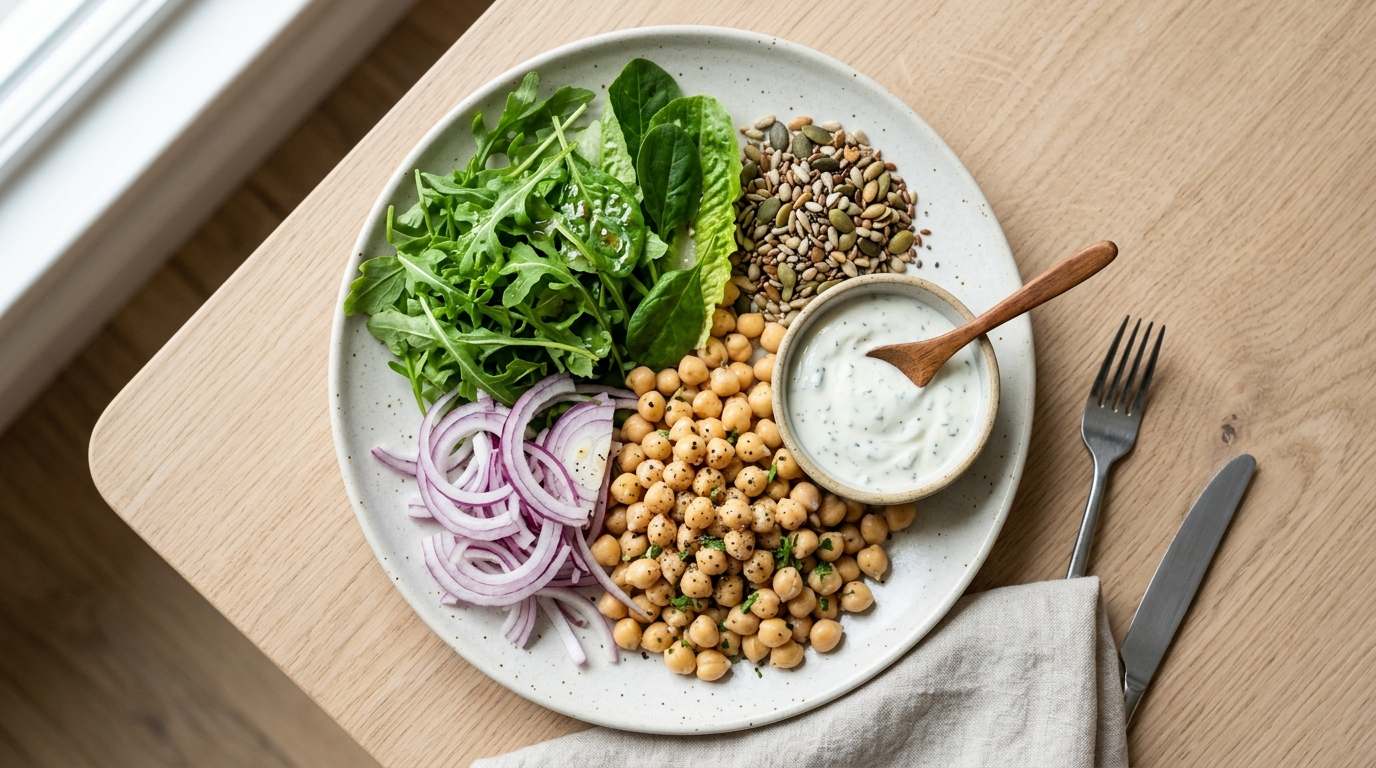
Salads can trigger gas, bloating, cramping, or loose stool because a large raw meal combines insoluble fiber, fermentable carbohydrates, fat-rich dressing, and substantial food volume. The useful test is to simplify the ingredients and change one variable at a time. Severe, persistent, bloody, or dehydration-related symptoms require medical care.
How did we evaluate why salads can cause symptoms?
We evaluated common salad-related symptoms by separating meal components into fiber amount, fermentable-carbohydrate content, fat load, portion size, preparation method, and food-safety risk. We prioritized guidance from the National Institute of Diabetes and Digestive and Kidney Diseases, the U.S. Food and Drug Administration, and Monash University, then used physiological mechanisms rather than anecdotes to rank plausible explanations. We excluded claims that raw vegetables “detox” the body, that one food inevitably causes inflammation, or that a single reaction proves an allergy or intolerance. Evidence is strongest for established mechanisms such as bacterial fermentation of poorly absorbed carbohydrates and water movement after an abrupt fiber increase; evidence is weaker when a broad label such as “salad intolerance” groups many different ingredients together. Because a salad is a mixed meal rather than one food, a structured ingredient-and-symptom record provides more information than eliminating every raw vegetable at once.
Why can raw vegetables create more gas than cooked vegetables?
Raw vegetables preserve rigid plant-cell walls and require more chewing and mechanical breakdown than cooked vegetables. Cooking softens plant tissue, reduces meal volume, and can make the same vegetable easier to tolerate without removing every nutrient or gram of fiber. Colonic bacteria ferment carbohydrates that escape small-intestinal absorption, producing hydrogen, carbon dioxide, and sometimes methane. The NIDDK guidance on gas and diet explains that certain carbohydrates and high-fat foods can increase gas or bloating in susceptible people. A sudden jump from a low-fiber pattern to a large bowl of raw greens, cabbage, onions, legumes, seeds, and fruit can therefore create several simultaneous changes. The reaction does not mean vegetables are inherently harmful. It means the portion, texture, carbohydrate mix, or eating pace may exceed current tolerance. Smaller servings, thorough chewing, and partially cooked vegetables can test the texture-and-volume hypothesis while preserving dietary variety.
Which salad ingredients are common fermentable triggers?
Onion and garlic contain fructans; chickpeas and lentils contain galacto-oligosaccharides; apples and pears can contain excess fructose and polyols; cauliflower and mushrooms contribute other fermentable carbohydrates. These compounds are grouped as FODMAPs because they may be poorly absorbed and rapidly fermented in some digestive systems. Monash University’s FODMAP overview describes the category and emphasizes that serving size changes the FODMAP load. A salad containing several moderate portions can create a larger cumulative load than any one ingredient alone. Fermentability is not the same as poor nutrition: legumes, vegetables, and fruit supply fiber and micronutrients, and tolerance varies widely. A useful experiment removes only one high-likelihood ingredient, such as raw onion, while keeping the greens, dressing, portion, and meal timing consistent. If symptoms recur, ingredient reintroduction helps distinguish a reproducible pattern from coincidence. Long-term broad restriction without professional guidance can unnecessarily reduce food variety and fiber intake.
Could dressing or portion size be the real problem?
A large salad can contain more fat and total energy than expected when it includes oil-heavy dressing, cheese, avocado, nuts, seeds, fried toppings, or a large protein portion. Fat slows gastric emptying and can intensify fullness in some people, while a high-volume bowl stretches the stomach and may create pressure before colonic fermentation even begins. Sugar alcohols such as sorbitol or erythritol in “sugar-free” dressings can also draw water into the intestine or undergo fermentation. The timing of symptoms offers a clue: immediate pressure during the meal points more toward volume, eating speed, or upper-gut sensitivity, whereas gas several hours later can fit fermentation. That timing is directional evidence, not a diagnosis. Test a smaller bowl with one tablespoon of a simple dressing, omit fried toppings and sugar alcohols, and eat slowly. Keep the vegetable base unchanged. If the smaller, simpler meal is comfortable, the original problem may have been cumulative load rather than lettuce itself.
Can salad-related diarrhea come from food handling?
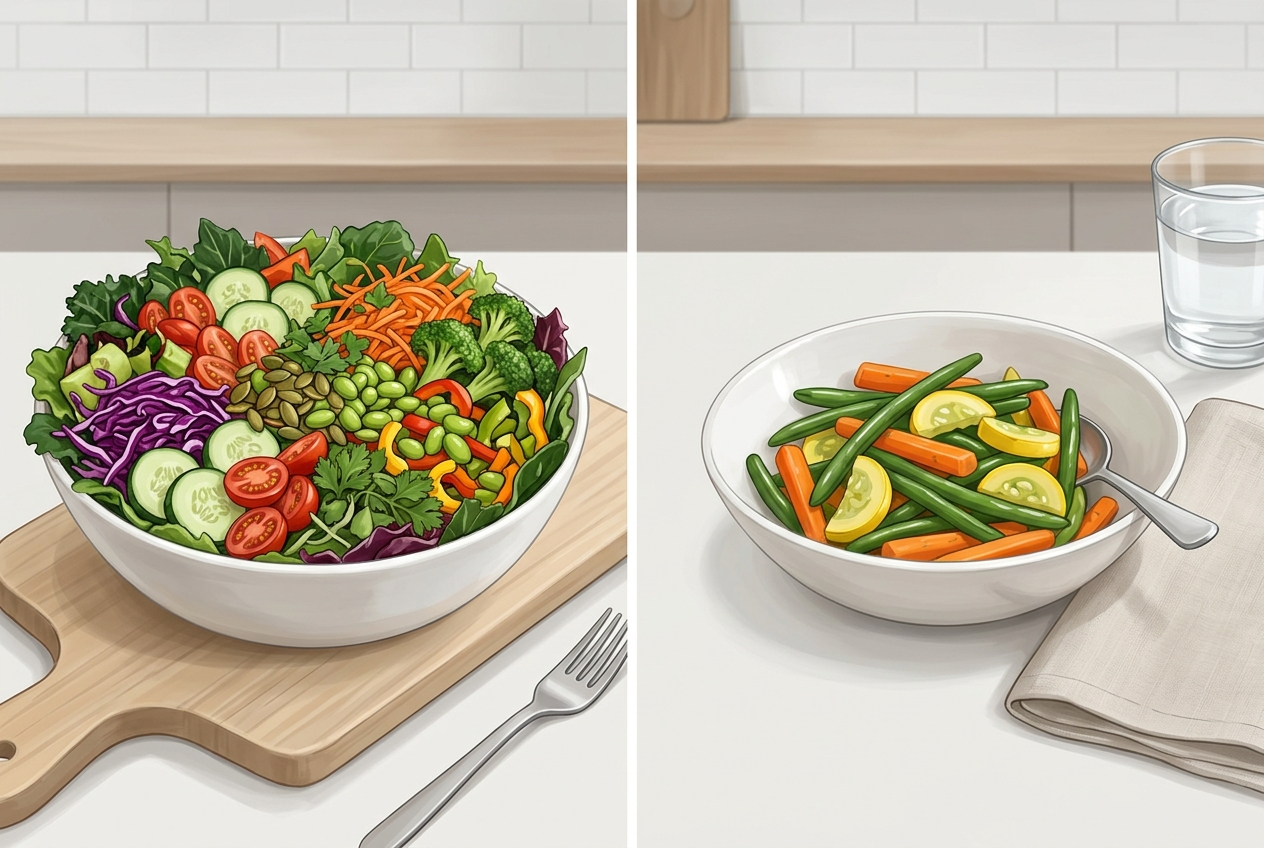
Yes. Raw produce can carry microorganisms because it is eaten without a cooking step that would reduce many pathogens. The FDA produce-safety guidance recommends refrigerating perishable produce, separating it from raw meat, discarding damaged areas, and washing produce under running water rather than with soap or commercial produce wash. Sudden watery diarrhea, vomiting, fever, or strong cramps after a restaurant salad or bagged product can reflect foodborne illness, especially when other diners become ill. Symptoms alone cannot identify the organism or prove that a salad caused the episode, because incubation times vary and an earlier meal may be responsible. Keep packaging and lot information if a packaged product is suspected, check public recall notices, and prioritize fluids. Seek urgent medical advice for blood in stool, signs of dehydration, severe pain, high fever, neurological symptoms, or illness in a pregnant, older, immunocompromised, or very young person.
How can you test salad tolerance without giving up vegetables?
Use a controlled sequence rather than changing the entire diet. First, choose a modest portion of one familiar green, one low-complexity topping, a simple dressing, and a protein already known to be tolerated. Eat slowly and record ingredients, portion, time, symptoms, stool pattern, and any relevant factors such as constipation or a recent illness. Second, repeat the same meal on another day to check reproducibility. Third, change only one feature: lightly cook the vegetables, halve the portion, remove raw onion or legumes, or reduce dressing fat. A consistent improvement after one change provides directional evidence about texture, fermentable load, volume, or fat; one good day does not prove causation. The NIDDK eating guidance for irritable bowel symptoms advises discussing major dietary changes with a clinician or dietitian. The goal is the broadest varied diet that remains comfortable, not permanent avoidance based on a single difficult meal.
What symptoms mean the problem needs medical evaluation?
Medical evaluation matters when digestive symptoms persist for several weeks, repeatedly wake a person at night, cause unintentional weight loss, or occur with fever, dehydration, anemia, blood in stool, black stool, persistent vomiting, severe pain, or a marked change in bowel habits. Difficulty breathing, facial swelling, hives, throat tightness, or dizziness after eating can indicate a serious allergic reaction and requires emergency care. A clinician may consider infection, celiac disease, inflammatory bowel disease, bile-acid problems, medication effects, food allergy, lactose intolerance, or a functional gastrointestinal disorder, depending on the full pattern. A food diary can support that assessment, but it cannot establish a diagnosis. Bring dates, meal components, symptom timing, stool changes, medications, supplements, travel, and recent antibiotic use. Avoid beginning several restrictive diets before the appointment because simultaneous exclusions can obscure the trigger and reduce nutritional adequacy. The safest rule is simple: mild, reproducible meal discomfort permits a measured food experiment; systemic, escalating, or alarm symptoms do not.
What are common questions about salads and digestion?
Is lettuce usually the cause of salad bloating?
Not necessarily. Toppings, dressing, portion size, raw onion, legumes, eating speed, and the combined fermentable load may matter more than lettuce.
Does washing lettuce remove all foodborne risk?
No. Running water can reduce dirt and some surface contamination, but it cannot sterilize produce. Refrigeration, separation, clean utensils, and recall awareness also matter.
Are cooked vegetables less nutritious than raw vegetables?
Not uniformly. Cooking can reduce some heat-sensitive nutrients while improving texture, tolerability, and availability of other compounds. Variety across raw and cooked foods is practical.
Should every salad trigger lead to a low-FODMAP diet?
No. A low-FODMAP protocol is structured and temporary, not a universal first response to one meal. Start with simpler portion and ingredient tests.
Can constipation make salads feel worse?
Yes. Stool retention can increase distension and gas perception, so adding a large fiber load abruptly may feel uncomfortable. Gradual changes and adequate fluids are generally easier to assess.
For a detailed comparison of specific products and strains, see What Should I Take for Gas and Bloating? A Practical Comparison of Probiotics, Enzymes, and Fiber.
For a detailed comparison of specific products and strains, see Rabeprazole vs Voquezna When Both Cause Bloating: What to Compare Next.
What is the simplest next meal to try?
Build a small salad from one familiar green, one tolerated protein, one low-complexity topping, and a modest amount of simple dressing. Leave out raw onion, garlic-heavy sauces, large legume servings, sugar alcohols, and multiple new ingredients for that test meal. Chew thoroughly, eat at a normal pace, and record symptom timing rather than relying on a vague memory the next day. If the meal is comfortable, add one ingredient or increase the portion at the next trial. If it is not, test the same ingredients lightly cooked to separate raw texture from carbohydrate content. Repeated symptoms after several controlled trials deserve discussion with a registered dietitian or clinician, particularly when food variety is shrinking. A salad is a collection of variables, not a single exposure. Breaking it into portion, texture, fermentable load, fat, and handling turns an overwhelming reaction into a safer, more informative experiment.
Leave a Reply