Cramping, bloating, and needing a bowel movement about 15 minutes after every meal can reflect an exaggerated gastrocolic reflex, especially with IBS. The meal entering the stomach stimulates the colon; it is not the new food instantly passing through. Worsening symptoms despite restriction deserve a fresh clinical and dietitian review rather than a longer trigger list.
How did we evaluate cramps and urgency after every meal?
We evaluated the pattern by timing, bowel physiology, IBS diagnostic guidance, stool form, meal size, dietary restriction, response to a low-FODMAP trial, and warning signs. American College of Gastroenterology guidance, National Institute of Diabetes and Digestive and Kidney Diseases resources, human motility research, and Monash University’s diet protocol received more weight than social-media diagnoses or universal trigger lists. We excluded claims that one food, “leaky gut,” parasites, stress, or an “overactive” reflex can be identified from timing alone. We also excluded medication instructions because antispasmodics, antidiarrheals, laxatives, and neuromodulators require a clinician to match the IBS subtype, symptom pattern, contraindications, and goals. This educational framework cannot confirm IBS or rule out celiac disease, inflammatory bowel disease, infection, pelvic-floor dysfunction, or another cause. Its purpose is to show which observations make a follow-up appointment more useful when an old safe-food plan stops working.
Why can any meal trigger cramps and a bowel movement within minutes?
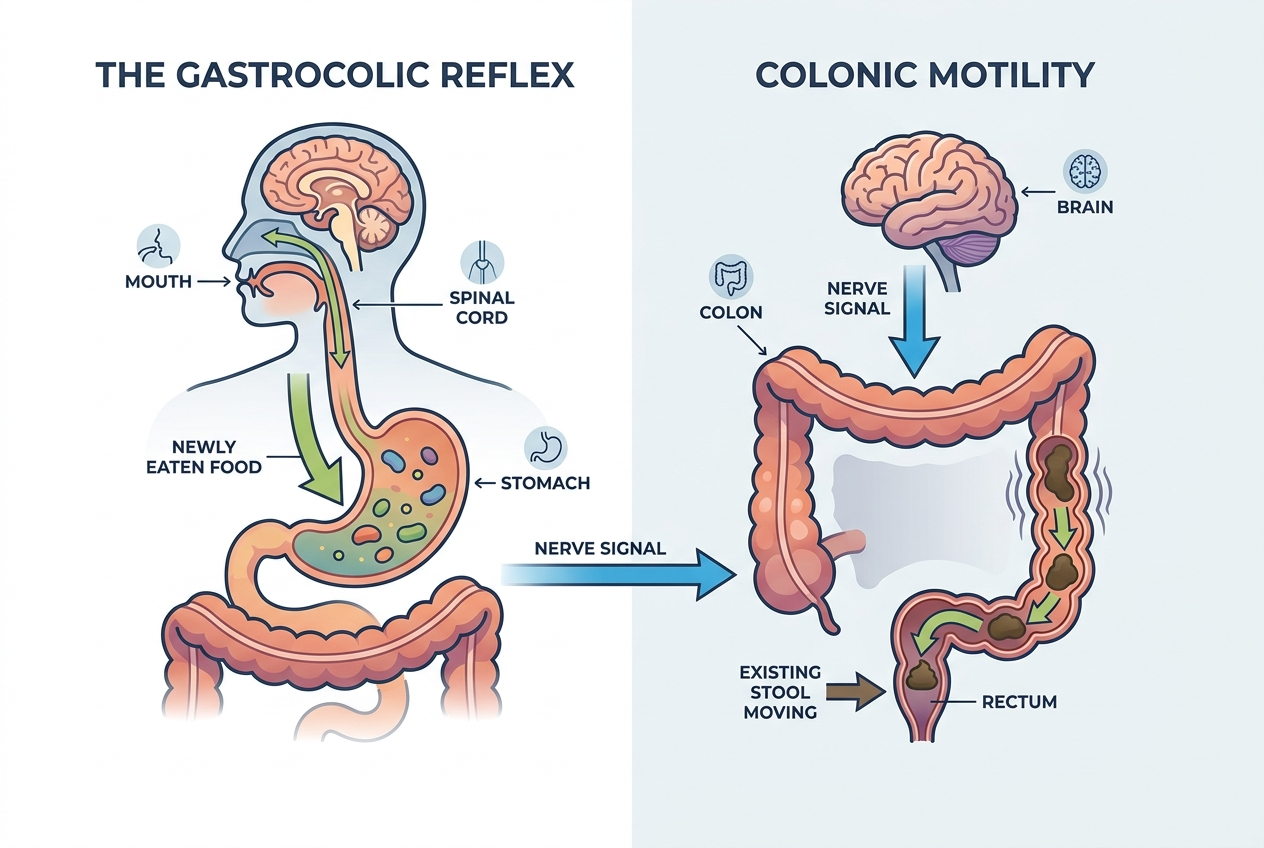
The gastrocolic reflex increases colon movement after the stomach stretches during eating. A meal therefore can trigger stool that was already in the colon, even though the newly eaten food remains much earlier in digestion. A human physiology review describes this reflex as a normal response that can become more pronounced in IBS and other motility patterns. Meal size, fat, caffeine, temperature, time of day, sleep, menstrual timing, and stress can alter the response without making every ingredient an intolerance. IBS also involves visceral sensitivity, so an ordinary contraction can feel painful or urgent. A bowel movement 15 minutes after eating does not prove rapid whole-gut transit, malabsorption, a food allergy, or damage from that meal. Record whether the response begins after the first bites or later, whether stool is formed or loose, whether pain improves after defecation, and whether smaller meals change the sequence.
Why might a low-FODMAP diet help only partly?
FODMAP restriction reduces selected fermentable carbohydrates, but it does not switch off stomach stretch, the gastrocolic reflex, visceral hypersensitivity, or every cause of abdominal pain. The ACG IBS guideline recommends a limited low-FODMAP trial for global IBS symptoms; it does not recommend endless restriction or treating every symptom as proof of another food trigger. A partial response suggests that fermentation may be one contributor while meal volume, fat, caffeine, bowel pattern, sleep, stress, or another mechanism remains. Monash University describes restriction, reintroduction, and personalization as three distinct phases and places the initial strict phase at roughly two to six weeks (Monash FODMAP). If the safe-food list keeps shrinking, a gastrointestinal dietitian should check calories, fiber, calcium, iron, B vitamins, challenge design, and nutrition risks. More restriction can reduce dietary adequacy without identifying the main trigger.
When should an old IBS diagnosis be reviewed again?
An IBS diagnosis can remain valid while the management plan needs revision, but a meaningful change should not be dismissed as “just IBS.” The NIDDK diagnostic guide describes IBS as recurrent abdominal pain related to bowel movements plus a change in stool frequency or form, assessed through history, examination, and selected testing. The ACG guideline supports celiac serology and fecal calprotectin in appropriate people with diarrhea-predominant symptoms to distinguish overlapping conditions. Testing choices depend on age, family history, bleeding, weight change, nighttime symptoms, medicines, prior results, and whether gluten has already been removed. Starting or continuing a gluten-free diet can complicate celiac evaluation, so a clinician should direct any testing or re-exposure plan. Bring the original diagnosis, colonoscopy or imaging records, celiac results, stool studies, medication list, and a recent symptom log. “I was tested years ago” is useful history, not a permanent answer to a new pattern.
What should you track before the follow-up appointment?
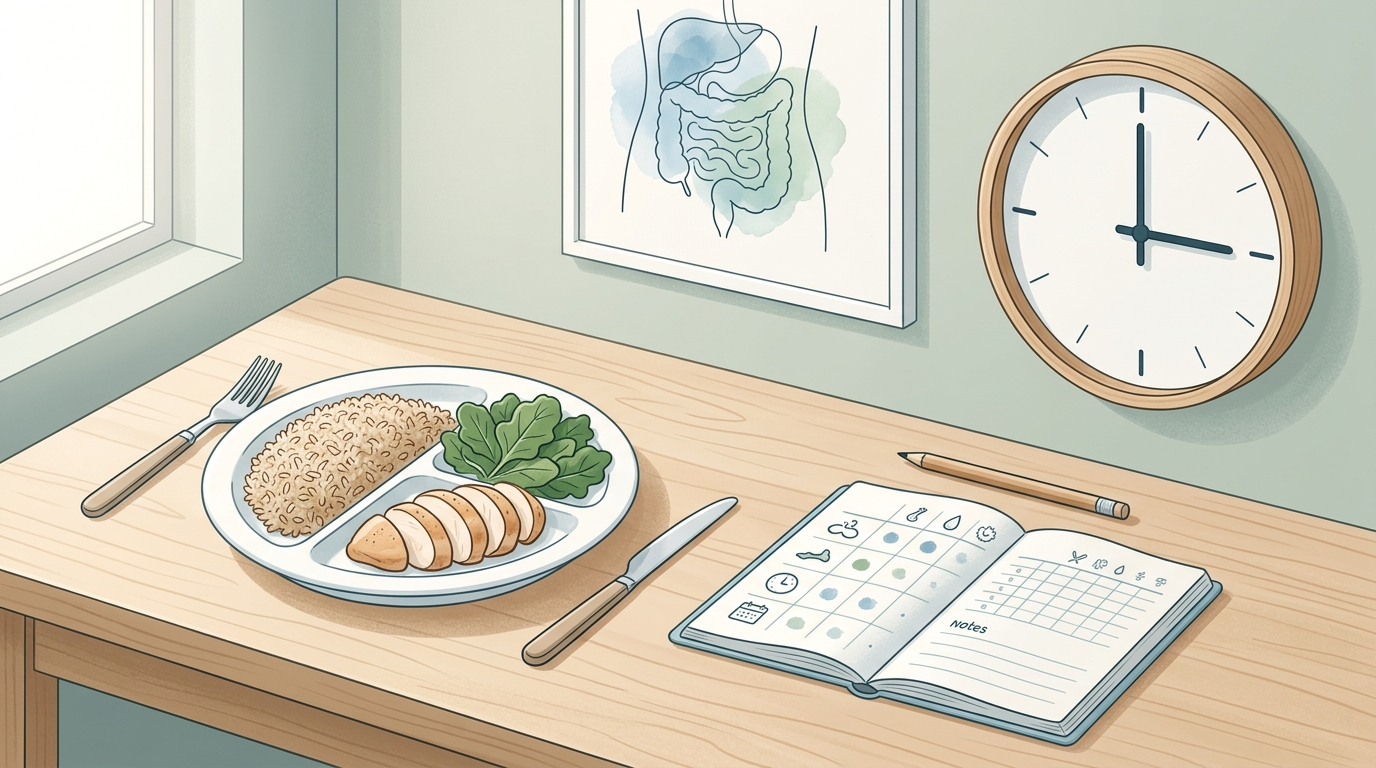
Track seven to fourteen days without adding new restrictions. Record meal start time, approximate portion, fat level, caffeine, alcohol, carbonation, fiber supplement, menstrual timing when relevant, stress level, sleep, pain location, bloating, urgency, bowel-movement time, and Bristol Stool Form Scale type. Separate the first post-meal bowel movement from later episodes. Note whether pain improves, worsens, or stays unchanged after defecation. Compare a small meal with a larger meal that uses similar ingredients; this tests volume without declaring another food unsafe. Record nighttime waking, fever, visible blood, black stool, vomiting, weight change, dehydration, and missed activities. A structured log identifies patterns that memory blurs, but it should not become a surveillance ritual around every bite. The goal is to help the clinician distinguish an exaggerated meal response, diarrhea-predominant IBS, constipation with incomplete evacuation, medication effects, or a reason for additional testing.
What can reduce disruption while you wait for medical review?
Use low-risk organization, not a self-prescribed treatment stack. Keep meals regular and consider smaller portions if large meals reliably intensify the response. Eat slowly, limit simultaneous changes, carry water, and schedule extra bathroom time after the meal that produces the strongest reflex. Maintain tolerated nutrition instead of skipping meals or removing another food group. Continue only clinician-approved medicines as directed; do not combine loperamide, laxatives, antispasmodics, herbal products, and fiber experiments to force the bowel into a target pattern. The NIDDK treatment overview explains that diet, medicines, probiotics, and mental-health therapies are selected according to symptoms rather than used as one universal package. Stress regulation can reduce gut-brain amplification without implying that symptoms are imaginary. Severe or rapidly worsening pain needs assessment, not a breathing exercise. Practical planning protects the day while the diagnostic question remains open.
Which warning signs need faster medical assessment?
Seek urgent care for severe or escalating abdominal pain, a rigid or markedly swollen abdomen, repeated vomiting, vomiting blood, black stool, significant rectal bleeding, fainting, confusion, high fever, inability to keep fluids down, or inability to pass stool or gas with worsening distension. Contact a clinician promptly for unintentional weight loss, anemia, persistent nighttime diarrhea, new symptoms after age 50, a family history of inflammatory bowel disease, celiac disease, or colorectal cancer, or a sustained change from the established IBS pattern. Dehydration signs include very dark urine, minimal urination, dizziness, dry mouth, or rapid heartbeat. Food-related pain with hives, wheezing, lip or tongue swelling, or breathing difficulty can indicate an allergic emergency and requires immediate help. These signs do not prove a specific disease, but they change the acceptable waiting time. An old IBS label should never be used to explain away bleeding, obstruction symptoms, systemic illness, or progressive nutritional decline.
What questions should you ask about cramps after every meal?
Use the questions below to separate a strong meal-triggered colon response from a growing collection of assumed food intolerances. Ask whether the 15-minute timing fits the gastrocolic reflex, whether the stool pattern still meets the recorded IBS subtype, and which prior tests remain relevant. Ask whether celiac testing, fecal calprotectin, stool testing, medication review, pelvic-floor assessment, or dietitian referral fits the current history. Bring the exact duration of strict low-FODMAP restriction and any reintroduction results. Explain whether gluten was removed before prior celiac testing because that detail affects interpretation. Ask for one defined next step with a measurable outcome rather than several simultaneous experiments. A diagnosis is useful when it organizes decisions; it becomes less useful when every new symptom is assigned to it without review. These concise answers provide vocabulary for the visit, not a substitute for examination or individualized care.
Is the bowel movement caused by the food I just ate?
Usually not when urgency starts within minutes. Stomach filling can activate the gastrocolic reflex and move stool that was already in the colon.
Does urgency after every meal prove diarrhea-predominant IBS?
No. Stool form, frequency, pain relationship, duration, testing history, and warning signs matter. Urgency can appear in several bowel patterns.
Should I remove more foods when my trigger list keeps growing?
Not automatically. Expanding restriction without structured reintroduction can reduce nutrition and make patterns harder to interpret, so involve a gastrointestinal dietitian.
Can stress cause real cramping after meals?
Stress can amplify gut-brain signaling, motility, and pain perception. That physiological effect does not mean the symptoms are imagined or that medical review is unnecessary.
Should I take loperamide before every meal?
Only if a clinician has matched it to the bowel pattern and provided directions. It can be inappropriate when constipation, incomplete evacuation, infection, or another cause is present.
Can a low-FODMAP diet be permanent?
The strict phase is designed as a limited trial followed by reintroduction and personalization. Long-term intake should be as varied and nutritionally adequate as the person tolerates.
What is the bottom line when every meal causes cramps?
Cramping and a bowel movement soon after every meal can reflect an exaggerated gastrocolic reflex, particularly when IBS includes visceral sensitivity and urgency. The timing means the new meal is signaling the colon; it does not mean that meal crossed the entire digestive tract in 15 minutes. A partial low-FODMAP response also does not justify an endlessly shrinking diet. Keep nutrition stable, compare portion size before blaming another ingredient, and record stool form, pain, timing, and warning signs for seven to fourteen days. Ask the clinician to revisit the IBS pattern, prior testing, medication list, and need for celiac, inflammatory, stool, or pelvic-floor evaluation. A gastrointestinal dietitian can guide reintroduction and protect dietary adequacy. Seek faster care for bleeding, black stool, severe or escalating pain, repeated vomiting, fever, dehydration, nighttime diarrhea, unintentional weight loss, or obstruction symptoms.
Leave a Reply