
Weight loss can reduce acid reflux symptoms in adults who have overweight or obesity, especially when abdominal pressure and meal patterns contribute to reflux. It is not a universal cure, and intentional weight loss is not appropriate for someone already losing weight unexpectedly. Persistent or severe symptoms still require medical evaluation.
How did we evaluate weight loss for acid reflux?
We evaluated weight loss as one reflux-management tool, not as a substitute for an individual medical plan. We prioritized human randomized trials, prospective intervention studies, and guidance from the National Institute of Diabetes and Digestive and Kidney Diseases over testimonials or single-food rules. We separated symptom improvement from objective measures such as esophageal acid exposure because those outcomes do not always move together. We also distinguished planned weight reduction in adults with overweight or obesity from unexplained weight loss, which is a warning sign rather than a goal. The evidence base has limits: study populations, dietary programs, medication use, and follow-up periods differ, so no single kilogram target applies to everyone. This review therefore focuses on who may benefit, how to pursue gradual change, and when reflux symptoms require clinician assessment instead of another lifestyle experiment.
How can body weight affect acid reflux?
Body weight can affect reflux when abdominal pressure pushes stomach contents toward the lower esophageal sphincter, the muscular barrier between the stomach and esophagus. Central adiposity can increase that pressure, while large meals and lying down soon after eating can add a second mechanical burden. The relationship is probabilistic, not automatic: a person can have reflux at any body size, and a higher body mass index does not identify the cause of an individual episode. The National Institute of Diabetes and Digestive and Kidney Diseases advises that clinicians may suggest weight loss when a person with reflux also has overweight or obesity. That guidance does not imply that rapid dieting is better. Gradual, nutritionally adequate change can reduce pressure while preserving hydration, protein intake, and regular meals. Symptom tracking should measure timing, meal size, sleep position, and medication use alongside weight.
What does the human evidence actually show?
Human studies generally support symptom improvement, but they do not prove that weight loss helps every person or normalizes every reflux measurement. A 2023 randomized clinical trial in Clinical Obesity assigned 62 adults with overweight or obesity and reflux to individualized dietary counseling or general guidance. The intervention group lost an average of 4.4 kilograms and reported better reflux-specific quality-of-life scores after six months. A larger prospective intervention study in Obesity followed 332 adults through a structured program and found lower symptom scores as weight and waist circumference decreased. However, an older randomized trial in Scandinavian Journal of Gastroenterology found no meaningful improvement in symptoms or pH measurements despite substantial weight loss. The balanced conclusion is that weight reduction can improve symptoms for many eligible adults, while individual response and objective acid exposure remain variable.
Who is most likely to benefit from planned weight loss?
Planned weight loss is most relevant when an adult has overweight or obesity, reflux worsened after weight gain, and meals or abdominal pressure clearly influence symptoms. A clinician can help set a reasonable pace when other conditions, medicines, pregnancy, or prior disordered eating complicate the decision. People already within a stable, healthy weight range should not assume that becoming lighter will fix reflux; meal timing, smoking, pregnancy, a hiatal hernia, medication effects, or esophageal sensitivity may matter more. Unintentional weight loss belongs in a different category because it can signal reduced intake, swallowing difficulty, persistent vomiting, or another health problem. The useful test is not whether the scale moves quickly. The useful test is whether a sustainable plan improves heartburn, regurgitation, sleep disruption, and food tolerance without causing weakness, dehydration, or nutritional gaps. Weight should remain one data point inside a broader symptom pattern.
What changes support weight loss without aggravating reflux?
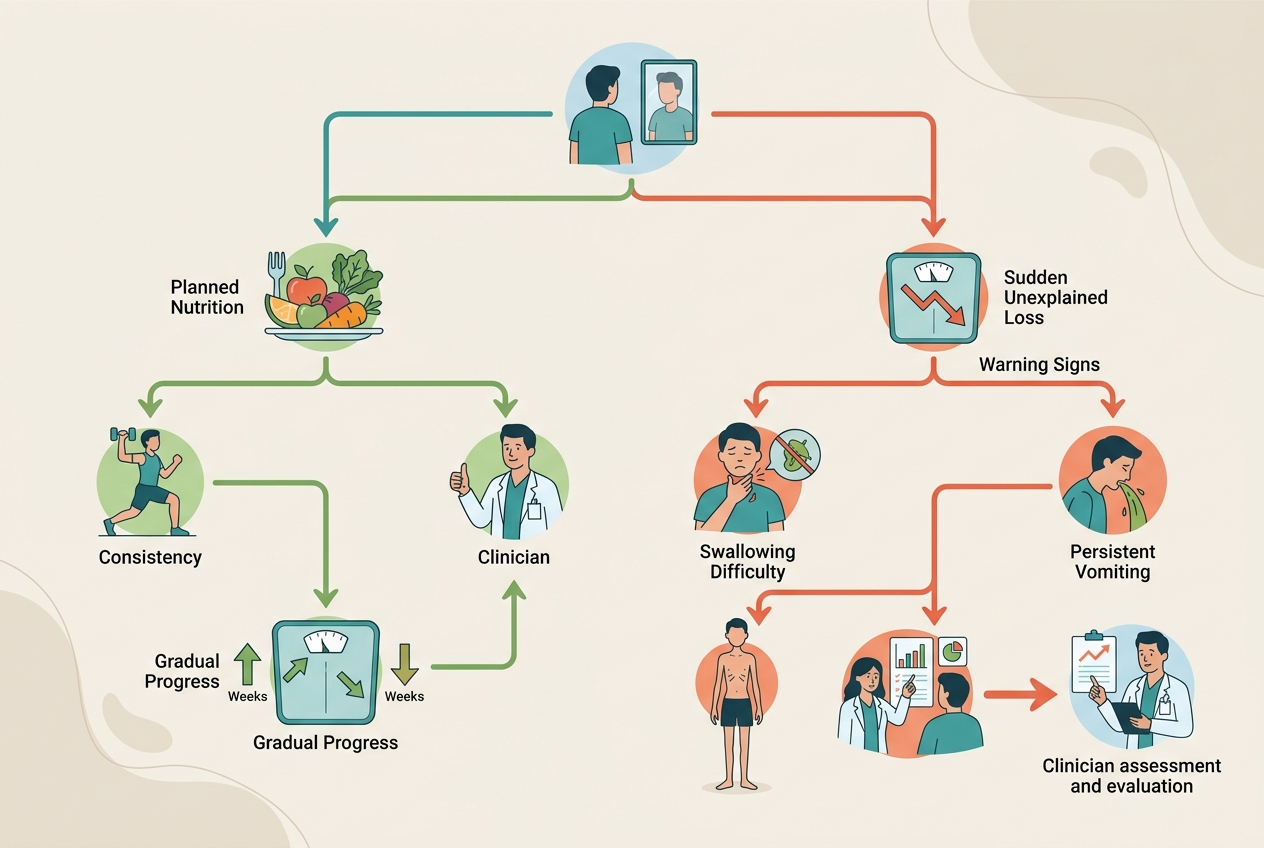
Small, repeatable changes usually fit reflux better than fasting, oversized “healthy” meals, or aggressive calorie cuts. A person can begin with smaller portions, regular meal times, slower eating, and a final meal at least three hours before lying down; the NIDDK reflux nutrition guidance specifically notes the meal-to-bed interval. Protein, whole grains, vegetables, fruit, and adequate fluids can support gradual weight change, but individual trigger foods should be identified through a short log rather than a universal ban list. Walking and other tolerable activity can support energy balance, although vigorous exercise immediately after a large meal may worsen symptoms for some people. A useful weekly log records body weight once or twice, meal timing, nighttime symptoms, and any over-the-counter or prescription reflux medicine. The goal is a pattern that remains nutritionally adequate and repeatable, not the fastest possible drop.
What can weight loss not fix on its own?
Weight loss cannot establish why chest burning, regurgitation, cough, nausea, or upper abdominal discomfort occurs. Similar symptoms can arise from reflux, medication effects, heart problems, swallowing disorders, ulcers, gallbladder conditions, or other causes that require different assessment. Weight change also cannot replace prescribed medicine without the prescriber’s guidance, and symptom relief does not prove that esophageal inflammation has resolved. Some adults improve after reducing weight but still need attention to meal timing, tobacco exposure, alcohol, sleep position, or a hiatal hernia. Others lose weight and notice little change, which is consistent with the mixed objective findings in clinical studies. A sensible plan uses a defined review point, such as several weeks of consistent habits, rather than escalating restriction indefinitely. If symptoms remain frequent, disrupt sleep, or require repeated self-medication, a clinician should reassess the pattern and decide whether testing or another management approach is appropriate.
When should reflux and weight changes prompt medical care?
Unexplained weight loss is not evidence that a reflux plan is working. The NIDDK symptom guidance lists unexplained weight loss, loss of appetite, persistent vomiting, painful or difficult swallowing, digestive-tract bleeding, and chest pain as reasons to seek medical care. Black stools, bloody vomit, fainting, severe dehydration, or chest pressure with shortness of breath require urgent assessment. A clinician should also review reflux that persists despite appropriate over-the-counter use or lifestyle changes, because recurring symptoms may need a structured medical plan. People taking prescription acid-suppressing medicine should not stop suddenly solely because their weight changed; the prescriber can review timing, dose, and any rebound symptoms. Planned weight loss should pause if intake becomes difficult or symptoms make hydration and nutrition unreliable. The safety distinction is simple: gradual intentional change can be supportive, while unexpected decline demands evaluation.
What questions do people ask about weight loss and acid reflux?
How much weight must I lose before reflux improves?
Studies do not establish one universal threshold. Improvement varies with starting weight, waist circumference, meal patterns, anatomy, medication use, and the cause of symptoms, so a clinician should personalize the target.
Can a small amount of weight loss help?
It may help some adults, especially when reflux appeared after gradual weight gain. The randomized trial in Clinical Obesity found symptom improvement alongside a modest average reduction, but the sample was small and individual responses differed.
Is fasting a good way to lose weight with reflux?
Fasting can lead to large rebound meals, caffeine use on an empty stomach, or irregular medicine timing. A consistent meal pattern with smaller portions is often easier to evaluate and maintain.
Will losing belly fat reduce nighttime reflux?
Reduced abdominal pressure may help, but nighttime reflux also depends on the interval between dinner and bed, meal size, sleep position, and anatomy. Track those variables together instead of attributing every change to waist size.
Should I stop reflux medicine after losing weight?
Do not change prescription medicine without the prescriber who manages it. Symptom improvement and tissue healing are different outcomes, and stopping some acid-suppressing medicines can produce rebound symptoms.
What if I am losing weight without trying?
Unexpected weight loss with reflux needs medical assessment, particularly when swallowing is difficult, appetite falls, vomiting persists, or bleeding appears. It should never be reframed as a successful lifestyle result.
For a detailed comparison of specific products and strains, see Acid Reflux While Driving: What Helps and What to Compare.
What is the bottom line on weight loss and reflux?
Weight loss is a reasonable reflux-management strategy for adults who have overweight or obesity and can pursue gradual, nutritionally adequate change. Randomized and prospective human studies show symptom improvement in many participants, while conflicting research confirms that results are not guaranteed and esophageal acid exposure may not normalize. The practical plan combines smaller meals, a three-hour meal-to-bed interval, tolerable activity, and a short symptom log with clinician guidance when needed. People at a stable healthy weight should focus on other contributors rather than chasing a lower number. People losing weight unexpectedly should seek medical assessment instead of restricting food further. Medication changes should remain under prescriber guidance even when symptoms improve. The best outcome is not simply a smaller scale reading; it is fewer symptoms, reliable nutrition, stable energy, and a plan that does not delay care for chest pain, swallowing difficulty, bleeding, or persistent vomiting.
Image notes:
- Hero image: neutral editorial kitchen scene with a balanced meal, walking shoes, symptom journal, and clock showing a three-hour meal-to-bed interval.
- Inline image: educational flow diagram separating planned weight management from unexplained weight loss and listing appropriate next steps.
Leave a Reply