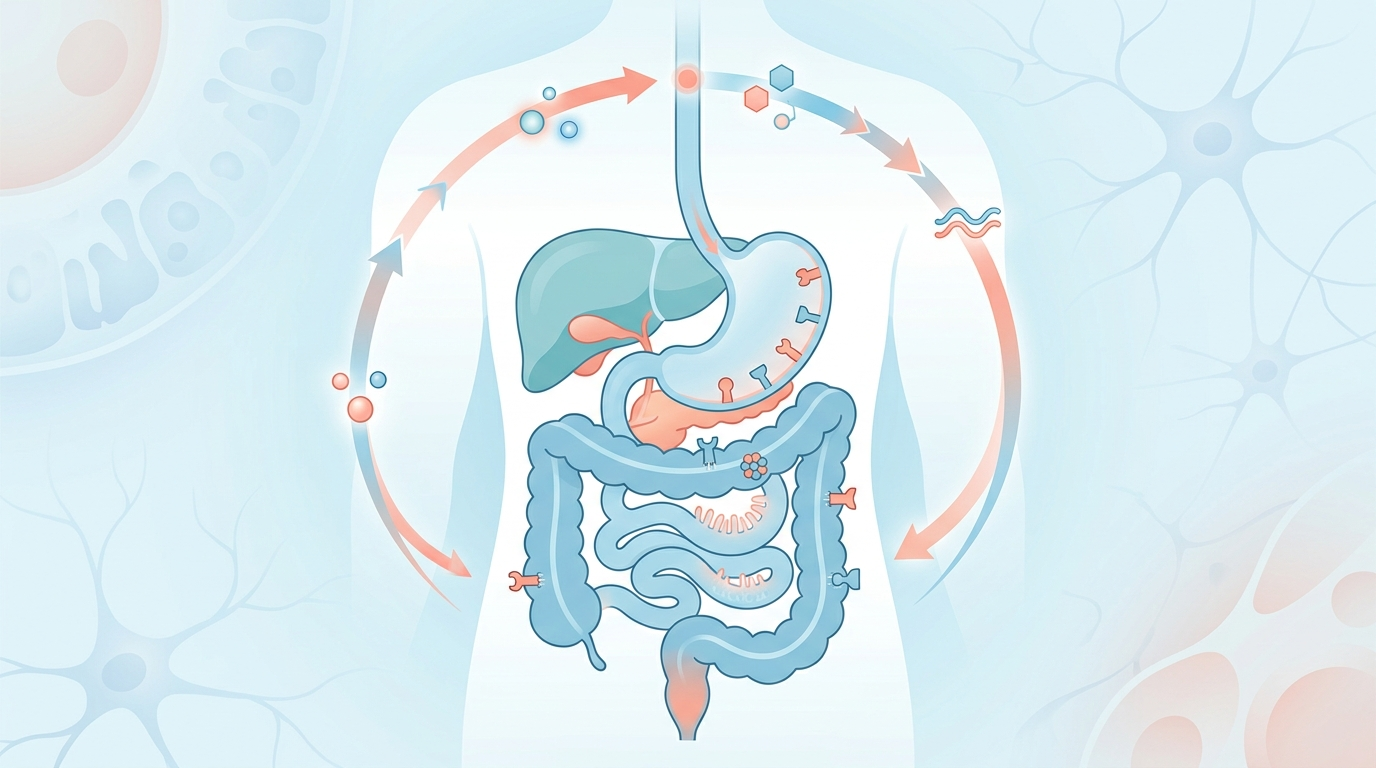
Estrogen can influence the gastrointestinal tract through estrogen receptors, nervous-system signaling, immune pathways, smooth muscle, and interactions with gut microbes. That does not mean estrogen explains every digestive symptom. Human microbiome evidence remains inconsistent, so cycle or menopause patterns should guide careful tracking and medical evaluation rather than a universal “hormone-balancing” gut protocol.
How did we evaluate estrogen’s relationship with the gut?
We evaluated receptor biology, gastrointestinal motility, microbial estrogen metabolism, menstrual-cycle symptoms, and menopause research as separate evidence layers rather than treating them as one proven pathway. We prioritized human systematic reviews, peer-reviewed mechanistic studies, and guidance from the American College of Obstetricians and Gynecologists over animal experiments, wellness claims, and commercial microbiome tests. We included the “estrobolome” as a research concept but excluded claims that a food, supplement, or cleanse can predictably reset estrogen through gut bacteria. The evidence has major limitations: estrogen exposure changes across the menstrual cycle, pregnancy, perimenopause, menopause, and hormone therapy; studies use different sequencing methods and populations; and associations cannot establish that one microbial pattern caused a symptom. Digestive symptoms that are severe, new, persistent, or accompanied by bleeding, fever, weight loss, vomiting, or dehydration require clinical assessment regardless of timing.
Does the gut really contain estrogen receptors?
Cells throughout the gastrointestinal system express estrogen-responsive signaling machinery, including classical estrogen receptors ERα and ERβ and the membrane-associated G protein-coupled estrogen receptor, GPER. These receptors appear in tissues involved in sensation, motility, secretion, immune activity, and barrier function. A peer-reviewed review of estrogen in gastrointestinal physiology summarized evidence from the esophagus through the colon, while also documenting contradictions across human, animal, and cell studies. A later human-and-mouse tissue study found that estrogen-receptor ligands altered colonic contractility and visceral-pain signaling, but laboratory receptor activation is not a treatment recommendation. Receptor presence proves biological plausibility, not that one hormone level explains bloating, constipation, diarrhea, reflux, or pain. Gastrointestinal symptoms can also reflect diet, medications, infection, pelvic-floor function, stress signaling, or a digestive disorder, so receptor biology should broaden an evaluation rather than end it.
How might estrogen affect motility and gut sensation?
Estrogen signaling can interact with enteric nerves, smooth muscle, immune mediators, and brain–gut pathways that regulate movement and sensation. The direction of an effect is not uniform: receptor subtype, tissue location, dose, timing, progesterone exposure, stress, and baseline gastrointestinal function can change the response. A review of estrogen and the brain–gut axis describes mixed effects on motility and sensitivity rather than a simple rule that higher estrogen speeds or slows digestion. Menstrual symptoms also involve prostaglandins and other hormonal changes, which makes a single-hormone explanation incomplete. This complexity helps explain why one person notices constipation around part of a cycle while another notices looser stools or pain. A symptom pattern is still useful when it repeats. Dates, cycle phase, stool form, pain, meals, sleep, stress, and medications provide a more interpretable record than a one-time hormone or microbiome test.
What is the estrobolome and what does it actually do?
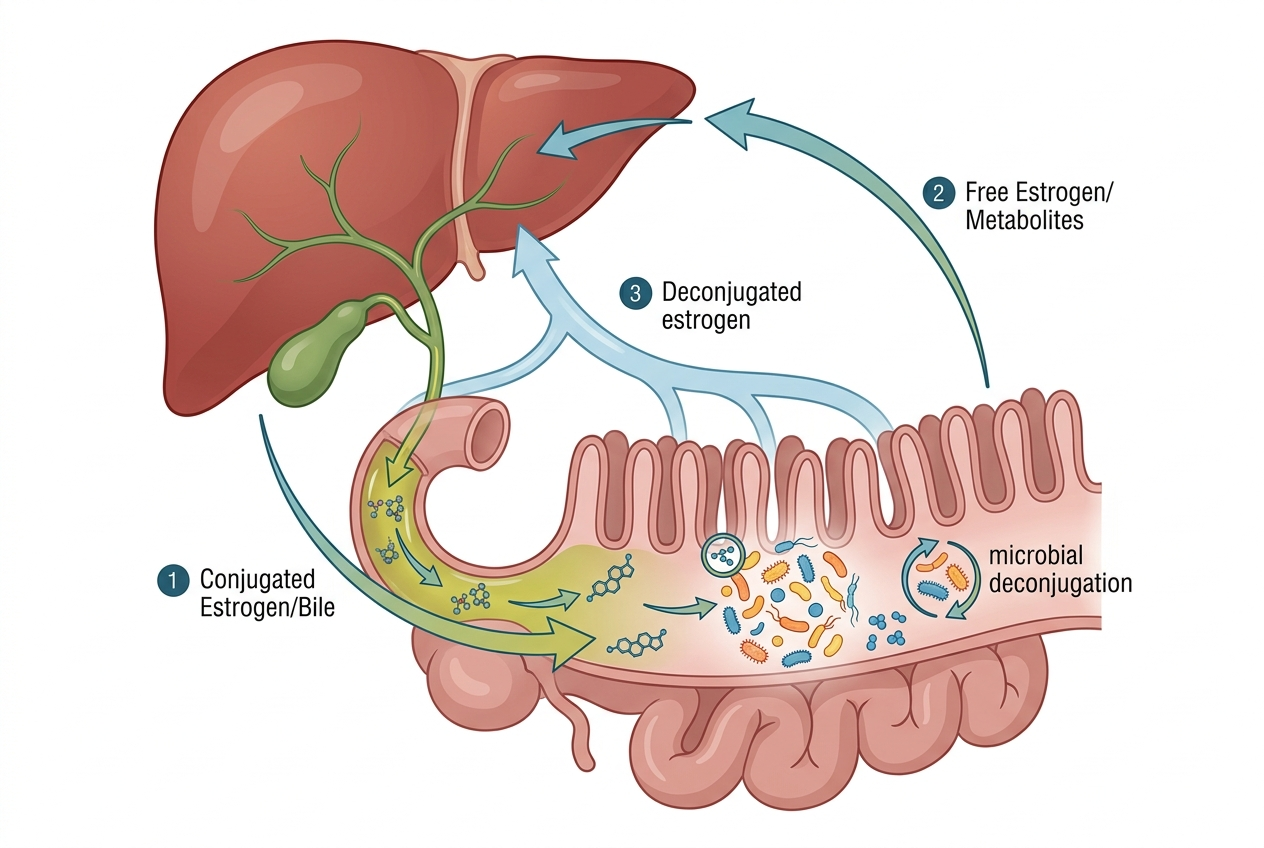
The estrobolome is a research term for microbial genes and enzymes involved in estrogen metabolism, not a discrete organ or a single bacterial species. The liver conjugates estrogens, and some conjugated compounds enter the intestine through bile. Bacterial enzymes such as β-glucuronidases can deconjugate certain metabolites, potentially allowing reabsorption through enterohepatic circulation. A 2024 review in Molecular Nutrition & Food Research describes this mechanism and emphasizes that microbial functions, host metabolism, diet, and estrogen exposure interact. The mechanism is plausible, but a commercial stool profile cannot yet tell an individual how much estrogen is being recirculated or which intervention will change a clinical outcome. Relative abundance of a bacterial genus also does not directly measure enzyme activity. “Support the estrobolome” therefore remains too vague to guide care unless a claim names the measured function, human population, intervention, and outcome.
Does current human evidence show a distinct estrogen-related microbiome?
Current human evidence does not support one consistent microbiome signature for low-estrogen states. A 2026 systematic review and meta-analysis combined seven studies involving women with premature ovarian insufficiency, postmenopausal women, and premenopausal controls. The analysis found no significant group differences in Shannon diversity, Bacteroidetes abundance, Firmicutes abundance, or the Bacteroidetes-to-Firmicutes ratio. Heterogeneity was high, ranging from 61% to 99%, which weakens any broad conclusion across populations and methods. The result does not prove that estrogen and microbes are unrelated; it shows that popular claims about a predictable “low-estrogen microbiome” outrun current evidence. Functional genes, metabolites, medication use, diet, geography, and hormone therapy may matter more than coarse phylum ratios. Individual studies can still detect narrower associations that disappear when different cohorts and laboratory methods are combined. Better longitudinal studies are needed before microbiome composition can guide individualized hormone or digestive decisions.
Why can digestive symptoms change across a menstrual cycle?
Cycle-linked digestive changes can reflect shifting ovarian hormones, prostaglandins, pain sensitivity, stress responses, fluid balance, appetite, and food choices at the same time. ACOG notes that painful periods can accompany diarrhea, nausea, vomiting, headache, and dizziness, which supports recording gastrointestinal symptoms alongside cycle timing rather than dismissing them. The pattern still cannot diagnose endometriosis, irritable bowel syndrome, food intolerance, or another condition. Track the first day of bleeding, stool frequency and Bristol Stool Form Scale type, pelvic or abdominal pain, reflux, bloating, medications, and unusual foods for two or three cycles. A repeated pattern gives a clinician more useful information than “my gut feels hormonal.” New severe pain, fainting, heavy bleeding, blood in stool, fever, persistent vomiting, progressive weight loss, or symptoms that disrupt sleep require timely evaluation. Menstrual timing can be a clue without being the whole explanation.
What changes during perimenopause and menopause?
Perimenopause produces variable estrogen and progesterone exposure before menopause creates a sustained change in ovarian hormone production. Sleep disruption, stress, medication changes, physical activity, diet, pelvic-floor function, and aging can change at the same time, so digestive symptoms cannot be assigned to estrogen by timing alone. Pregnancy offers a separate example: ACOG explains that increased hormone levels can slow digestion and contribute to constipation, demonstrating that hormonal states can affect gastrointestinal function without establishing one universal mechanism. Menopause microbiome studies remain observational and heterogeneous, while hormone therapy introduces another exposure that researchers must measure carefully. A practical review should include symptom onset, cycle changes, hormone therapy, iron or calcium supplements, acid-suppressing drugs, laxatives, dietary changes, and colorectal-screening history. Persistent bowel changes deserve standard clinical evaluation even when they began during a hormonal transition or life stage.
Which everyday steps are evidence-aligned without overpromising?
Use foundational digestive habits as measurable supports, not as a hormone detox. Increase fiber gradually from varied foods, drink enough fluid for personal needs, move regularly, and keep meals consistent enough to identify patterns. A sudden high dose of fermentable fiber can worsen gas, so pace matters more than chasing a diversity score. Review constipation-promoting medicines and supplements with a clinician or pharmacist, particularly iron, calcium, anticholinergic medicines, and some pain treatments. Record cycle or menopause context without changing five variables at once. Commercial hormone panels, stool tests, probiotics, phytoestrogen products, and “estrobolome cleanses” do not currently offer a validated shortcut from test result to digestive outcome. People considering hormone therapy should discuss its overall benefits and risks with a qualified clinician rather than using gut symptoms as the sole decision point. The best next step is usually a clearer pattern and appropriate evaluation, not a more elaborate protocol.
What questions do people commonly ask about estrogen and gut health?
Can estrogen cause constipation?
Hormonal states can influence gastrointestinal movement, but estrogen alone does not predict constipation. Pregnancy, cycle phase, progesterone, medications, fluid intake, fiber, activity, and pelvic-floor function can all contribute.
Can estrogen cause diarrhea?
Some people report looser stools around menstruation, when prostaglandins and hormone shifts occur together. Persistent or severe diarrhea needs evaluation because infection, medication effects, inflammatory disease, and other causes can look similar.
Is the estrobolome a medical diagnosis?
No. The estrobolome describes microbial genes involved in estrogen metabolism; clinicians do not diagnose a person with a “damaged estrobolome” using a standard validated test.
Can a probiotic balance estrogen?
No probiotic has been established as a universal estrogen-balancing treatment. Any claim should identify the exact strain, dose, population, comparator, and measured outcome rather than borrowing evidence from microbiome theory.
Do stool microbiome tests measure estrogen recycling?
Typical consumer tests report selected organisms or relative abundance, not a complete validated measure of estrogen deconjugation and systemic reabsorption. Results therefore cannot prescribe a personalized hormone intervention.
Should cycle-related gut symptoms be ignored?
No. Repeating patterns deserve documentation and discussion, especially when pain, bleeding, bowel changes, or reduced quality of life are substantial.
When should digestive symptoms receive urgent attention?
Seek urgent care for severe pain, fainting, blood in stool, persistent vomiting, high fever, major dehydration, or rapidly worsening symptoms. New or persistent bowel changes also warrant timely routine assessment.
For a detailed comparison of specific products and strains, see Akkermansia vs Traditional Probiotics: What the Human Evidence Actually Shows.
For a detailed comparison of specific products and strains, see Gut Health Supplements That Actually Make a Difference: Probiotics, Fiber, and Enzymes Compared.
What is the bottom line?
The gastrointestinal tract responds to estrogen signaling, and gut microbes participate in estrogen metabolism, but those facts do not validate a universal hormone–gut diagnosis or supplement plan. Receptor studies establish plausible mechanisms. Human microbiome studies remain inconsistent, and a 2026 meta-analysis found no reliable difference in common diversity or phylum measures between lower-estrogen and premenopausal groups. Use menstrual, pregnancy, perimenopause, menopause, and hormone-therapy context as part of a complete history rather than as a shortcut. Track symptoms with dates, stool form, pain, meals, medications, stress, sleep, and cycle phase. Introduce lifestyle changes gradually and one at a time. Bring persistent or disruptive patterns to a qualified clinician, and seek urgent care for alarm signs. The honest answer remains nuanced: estrogen can affect the gut, while current evidence cannot tell every individual exactly how.
Leave a Reply