
Gout does not usually cause abdominal bloating directly. The two symptoms can appear together because of shared food or drink triggers, constipation, another digestive condition, or side effects from medicines used during a gout flare. New, persistent, or painful swelling deserves medical review instead of being attributed to uric acid alone.
How did we evaluate the connection between gout and bloating?
We evaluated gout and bloating as separate clinical patterns before examining plausible overlaps. We prioritized current guidance from the Centers for Disease Control and Prevention, the National Institute of Diabetes and Digestive and Kidney Diseases, and MedlinePlus over personal reports, supplement claims, or single-food theories. We looked for mechanisms involving uric acid, intestinal gas, constipation, meal composition, alcohol, fructose, kidney function, and medicine side effects, while excluding claims that a “gut cleanse” removes uric acid or ends a gout flare. The evidence is stronger for gout as crystal arthritis and for bloating as a digestive sensation than for gout directly producing abdominal gas. This review cannot identify the cause of one person’s symptoms, and overlapping timing does not prove a shared cause. A clinician may need a medication review, examination, blood tests, or other evaluation when either pattern is new or changing.
Can gout directly cause abdominal bloating?
Gout itself usually affects a joint rather than the digestive tract. The CDC describes gout as inflammatory arthritis caused when excess uric acid contributes to crystal formation in a joint, often the big toe. Typical flare features include sudden joint pain, heat, redness, and swelling. Abdominal fullness, increased gas, and visible belly distention are not defining gout symptoms. A gout flare and bloating can still occur on the same day without one causing the other. A celebratory meal, alcohol, a sugary drink, reduced movement, constipation, or a new medicine can create overlapping timing. Kidney impairment can also complicate gout management and fluid balance, but true fluid accumulation is different from intestinal gas and needs clinical assessment. Treat abdominal bloating as a separate symptom until there is evidence linking it to a meal, bowel pattern, medicine, or diagnosed condition. Coincidence is common; direct causation is not established.
What digestive problems commonly cause bloating instead?
Bloating usually reflects digestive gas, altered gut sensation, constipation, or impaired movement through the gastrointestinal tract. The National Institute of Diabetes and Digestive and Kidney Diseases defines bloating as abdominal fullness or swelling and distinguishes it from visible distention. Common contributors include swallowed air, carbonated drinks, rapidly fermented carbohydrates, lactose or fructose malabsorption, constipation, irritable bowel syndrome, functional dyspepsia, and small intestinal bacterial overgrowth. These conditions do not become gout merely because someone also has high uric acid. Track whether the abdomen changes after meals, improves after passing stool or gas, or accompanies diarrhea, early fullness, belching, or heartburn. The pattern can help a clinician decide which digestive mechanism deserves attention. A serum uric-acid result cannot diagnose the source of abdominal swelling, and a normal bowel movement does not exclude a gastrointestinal cause. Separate symptom descriptions produce a clearer evaluation.
Can gout medicines cause stomach or bowel symptoms?
Yes. Medicines used around a gout flare can produce gastrointestinal symptoms, although the exact effect depends on the drug, dose, kidney function, and other medicines. MedlinePlus lists nausea, vomiting, diarrhea, and stomach cramps or pain among colchicine side effects. Diarrhea and cramping may feel like bloating even when abdominal gas is not the main mechanism. Nonsteroidal anti-inflammatory drugs can cause indigestion or stomach irritation, while corticosteroids may change appetite, fluid balance, or glucose control. Allopurinol and febuxostat have different adverse-effect profiles and should not be stopped or restarted solely because symptoms appeared nearby. Record the medicine name, dose, start time, flare timing, meals, bowel changes, and abdominal symptoms. Contact the prescriber or pharmacist before changing gout treatment. Severe diarrhea, repeated vomiting, unusual weakness, blood in vomit or stool, black stool, or intense abdominal pain requires prompt medical advice.
Can the same foods trigger both gout concerns and bloating?
Some foods and drinks can matter to both patterns through different mechanisms. Beer and other alcoholic drinks can raise gout-flare risk in susceptible people, while carbonation and fermentation can increase belching or abdominal gas. Sugar-sweetened drinks containing fructose can contribute to gout risk, and large amounts of fructose may cause bloating in people who absorb it incompletely. Large meals rich in fat can slow gastric emptying and worsen post-meal fullness without directly creating urate crystals. Red meat and some seafood contain purines relevant to gout, but their relationship to bloating depends on meal size, preparation, accompanying foods, and individual digestion. A shared meal trigger therefore does not mean gout caused the abdominal symptom. Test one variable at a time and keep portions otherwise stable. Broad elimination diets can remove useful foods without revealing the true trigger. A meal-and-symptom record is more informative than labeling every high-purine food as a digestive problem.
How can you tell gas bloating from fluid retention?
Gas bloating often fluctuates during the day, changes after eating, and may improve after belching, passing gas, or having a bowel movement. Fluid retention tends to produce persistent swelling and may also affect the legs, ankles, hands, or overall body weight. Neither pattern can be diagnosed reliably by appearance alone. Measure timing rather than repeatedly pressing the abdomen: note morning versus evening size, meals, stool frequency, urine output, rapid weight change, shortness of breath, and ankle swelling. Kidney disease, heart disease, liver disease, and certain medicines can alter fluid balance, and reduced kidney function can coexist with gout. Rapid abdominal enlargement, markedly reduced urination, leg swelling, breathing difficulty, or sudden weight gain needs medical assessment. A clinician may examine the abdomen, review kidney and liver tests, and assess medications. Calling every swollen sensation “water retention” can delay recognition of constipation, gastrointestinal disease, or clinically important fluid accumulation.
What should you track when gout and bloating occur together?
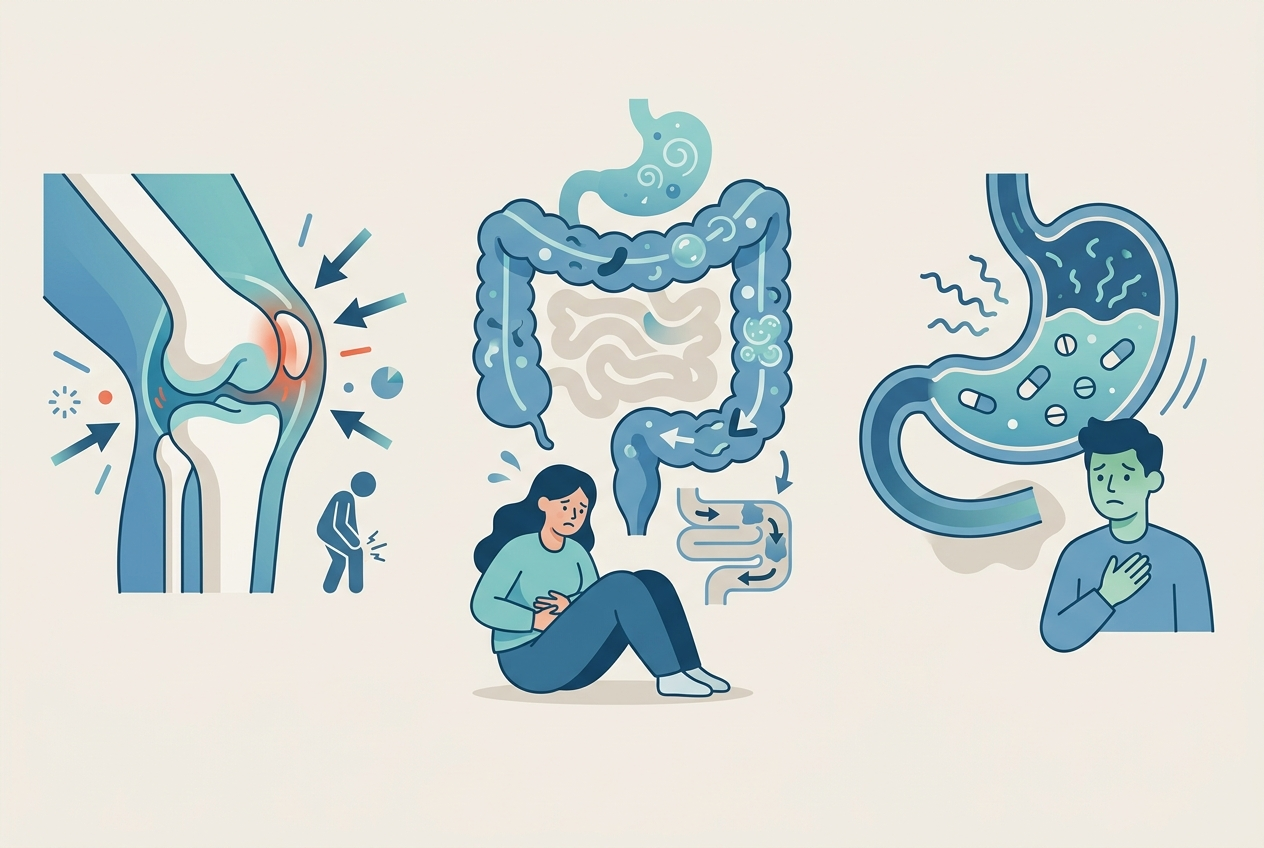
Use a short timeline that treats the joint and abdominal symptoms as separate events. Record which joint became painful, when redness or heat began, whether gout was formally diagnosed, and whether uric-acid-lowering treatment changed. For the abdomen, record fullness, visible distention, pain location, stool frequency and form, gas, nausea, vomiting, and relation to meals. Add alcohol, sugary drinks, carbonated beverages, high-purine meals, recent travel, illness, and new medicines or supplements. Note exact doses of colchicine, nonsteroidal anti-inflammatory drugs, corticosteroids, allopurinol, febuxostat, diuretics, and fiber products. A three- to seven-day log often reveals timing that memory blurs. Bring the list to a clinician or pharmacist rather than using it to self-diagnose. The goal is not to prove one theory; the goal is to distinguish a medicine effect, meal pattern, constipation, gout flare, or unrelated abdominal condition efficiently.
Should you change a gout diet because of bloating?
Adjust one suspected digestive trigger at a time while preserving the broader gout plan recommended by a clinician. The CDC identifies alcohol, sugary drinks, sugary foods, red meat, organ meat, and certain seafoods as factors that can raise uric acid or flare risk in susceptible people. Bloating may instead respond to slower eating, less carbonation, smaller meals, or gradual changes in fermentable carbohydrate intake. Avoid sharply increasing fiber during an active period of painful distention, because intestinal bacteria can generate more gas while adapting. Do not remove all fruit, vegetables, legumes, or whole grains solely because some contain fermentable carbohydrates; those foods differ in purine content, serving size, and nutritional value. Hydration advice also needs individualization when kidney or heart disease affects fluid limits. Coordinate major dietary changes with the gout treatment plan. Diet can influence risk, but prescribed urate-lowering treatment may remain necessary even when eating patterns improve.
Does high uric acid explain a swollen stomach?
High serum uric acid does not by itself explain abdominal bloating or distention. Hyperuricemia increases the chance of urate-crystal formation, but many people with an elevated result never develop gout, and the test does not identify intestinal gas, constipation, or fluid accumulation. A swollen abdomen needs its own history and examination. Timing after meals points toward a digestive mechanism, while persistent enlargement with ankle swelling or reduced urine may suggest fluid balance requires assessment. Localized severe pain, vomiting, fever, or inability to pass stool or gas raises different concerns. Do not use a uric-acid number as a universal explanation for unrelated symptoms. Clinicians interpret the value alongside joint findings, kidney function, medicines, flare history, and treatment goals. If gout is suspected but not diagnosed, joint-fluid crystal analysis or clinical evaluation may be more informative than assuming every ache and swelling stems from one blood result.
Can constipation make bloating worse during a gout flare?
Yes. Constipation can trap stool and gas, creating fullness, pressure, and visible distention while a gout flare is occurring independently. Pain can reduce movement, disrupted routines can change meals and fluid intake, and some medicines can alter bowel habits. The overlap is practical rather than proof that uric acid slowed the bowel. Track how often stool passes, whether it is hard or difficult to evacuate, and whether abdominal pressure improves afterward. Gentle movement may help some people when joint pain allows, but exercise should not force a severely inflamed joint. Fiber should increase gradually and with appropriate fluid intake; a sudden large dose can worsen gas. Ask a clinician or pharmacist about constipation management when kidney disease, heart disease, opioid use, or multiple medicines are involved. Severe abdominal pain, vomiting, marked distention, or inability to pass stool or gas needs urgent evaluation rather than a home fiber experiment.
When should bloating with gout prompt medical care?
Seek prompt care when abdominal swelling is severe, persistent, rapidly worsening, or accompanied by repeated vomiting, fever, black or bloody stool, severe localized pain, faintness, breathing difficulty, reduced urination, or inability to pass stool or gas. Contact a clinician when bloating begins after a new gout medicine, especially if diarrhea, vomiting, weakness, or significant stomach pain follows colchicine. A hot, red, very painful joint with fever also needs urgent assessment because joint infection can resemble gout. Arrange routine review when bloating repeatedly disrupts eating, sleep, work, or bowel habits, even if no emergency sign is present. Bring a list of prescriptions, over-the-counter medicines, supplements, recent doses, and symptom timing. Gout and digestive symptoms may need different treatments, and a clinician can check kidney function, medication interactions, constipation, or another gastrointestinal cause without assuming a single explanation.
For a detailed comparison of specific products and strains, see Why Do Probiotics Make Me Hungry? Bloating Causes and Alternatives.
For a detailed comparison of specific products and strains, see Constipation, Bloating, and Gas: What Is the Simplest Plan?.
What is the bottom line on bloating and gout?
Gout and abdominal bloating can overlap, but current evidence does not make bloating a typical direct symptom of gout. Gout produces urate-crystal inflammation in joints; bloating more often reflects gas, gut sensitivity, constipation, meal patterns, or another digestive condition. Medicines used for flares, particularly colchicine and some anti-inflammatory drugs, can add stomach or bowel symptoms. Shared exposures such as alcohol, sugary drinks, large meals, and reduced activity may also make the two patterns appear together. Keep separate notes for joint signs, abdominal changes, bowel movements, food, drink, and medicine timing. Do not stop prescribed urate-lowering medicine or flare treatment without advice. Persistent or painful abdominal swelling deserves evaluation on its own terms, while urgent warning signs require prompt care. The safest working assumption for now is coexistence until a clinician identifies a specific link.
Leave a Reply