
Pooping once a week is usually a sign that your bowel routine is moving too slowly, especially when stools are hard, painful, or difficult to pass. Constipation often improves with more fluid, more dietary fiber, regular movement, and a consistent toilet routine, but blood, vomiting, weight loss, or severe pain need medical evaluation.
How we evaluated infrequent bowel movements
We evaluated infrequent bowel movements by prioritizing human guidance from the National Institute of Diabetes and Digestive and Kidney Diseases, evidence reviews indexed in PubMed, and recent gastroenterology guidelines for chronic idiopathic constipation from the American Gastroenterological Association and American College of Gastroenterology. Human clinical guidance carries more weight here than animal data because bowel frequency, stool consistency, and response to fiber vary widely in real life. We excluded disease-specific treatment protocols because this article is about general educational support, not diagnosis. We also separated stronger evidence, such as guideline-backed laxative and fiber recommendations, from directional evidence, such as individual habit tips that help some people but do not work equally well for everyone. We did not rank products, brand formulas, or influencer claims because the target site is an educational cold-stage property focused on first-step understanding.
What does pooping once a week usually mean?
Pooping once a week usually means stool is staying in the colon longer than normal, which allows the colon to absorb more water and makes stool harder to pass. The NIDDK defines constipation by symptoms, not by one universal number, so bowel frequency matters alongside straining, hard stool, incomplete emptying, and blockage sensations. Rome IV criteria, which clinicians use in research and practice, classify chronic constipation by repeated symptom patterns rather than by mood or guesswork alone. A slower pattern can happen after low fiber intake, low fluid intake, less physical movement, schedule disruption, or delayed bathroom habits. Travel, shift work, and repeated stool-holding can also disrupt rectal signaling. Some medicines, including iron supplements, opioid pain medicines, and certain anticholinergic drugs, also slow bowel transit. If your normal pattern suddenly changed, that change matters more than comparing yourself with someone who goes daily.
Which habits help most when bowel movements are this infrequent?
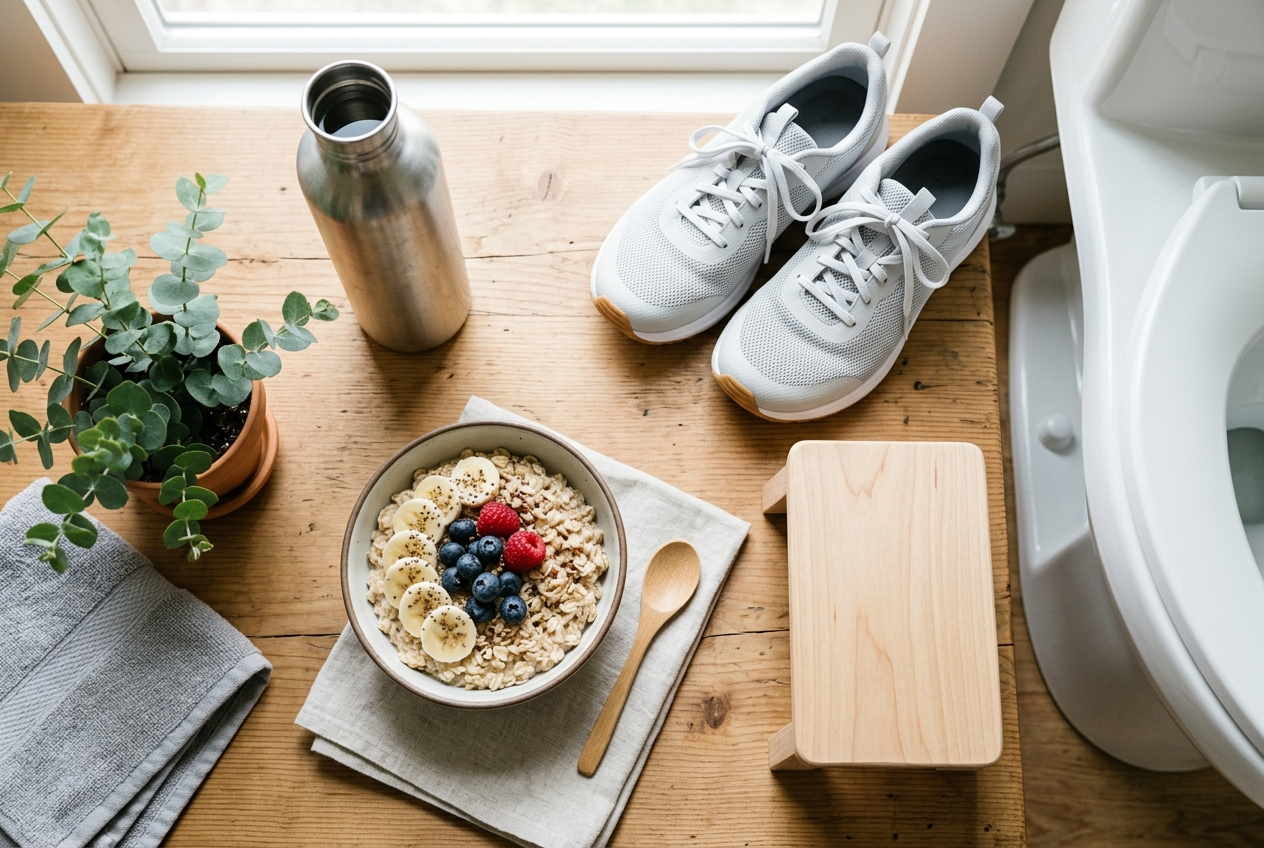
Fluid intake supports stool softness, fiber increases stool bulk, and movement helps stimulate intestinal motility. The NIDDK treatment guidance recommends increasing fiber gradually because a sudden jump can increase bloating and gas. A systematic review in The American Journal of Gastroenterology found that fiber can improve stool frequency in chronic constipation, although response differs by fiber type and individual tolerance. Practical routine changes work best when they are specific: eat fiber-rich foods daily, drink water across the day, walk after meals, and sit on the toilet at the same time each morning or after breakfast. The gastrocolic reflex is strongest after eating, so that timing can help. A footstool can also improve anorectal angle positioning and reduce straining. Sleep regularity helps too, because circadian disruption can affect bowel timing. Habit consistency matters more than one aggressive fix.
When should you stop self-managing and talk to a clinician?
You should stop self-managing when constipation is new, persistent, progressively worsening, or paired with alarm symptoms. The NIDDK and major clinical guidelines treat blood in stool, unexplained weight loss, vomiting, fever, anemia, severe abdominal pain, and pencil-thin stool as reasons for medical review rather than more internet experimentation. The 2023 AGA and ACG guideline also supports a stepwise evaluation when basic measures fail, because thyroid disorders, pelvic floor dysfunction, medication effects, and other conditions can mimic routine constipation. Age matters too. Constipation that begins after age 50 deserves more attention than lifelong mild irregularity. Pregnancy, recent surgery, and new prescription changes also justify a lower threshold for medical advice. Duration matters as well. If you are still going only once a week after several weeks of hydration, fiber, movement, and toilet-routine changes, a clinician can help identify the next evidence-based step safely.
What do people get wrong about only pooping once a week?
The biggest mistake is assuming frequency alone tells the whole story. One person can have three bowel movements a week without distress, while another person can have one bowel movement a week with pain, hard stool, bloating, and incomplete emptying that fits clinical constipation. Another mistake is treating fiber like a single ingredient. Psyllium, wheat bran, kiwifruit fiber, and partially hydrolyzed guar gum do not behave identically, and tolerance varies. A third mistake is relying on stimulant laxatives, cleanses, or random social-media hacks before building basic habits. The 2023 AGA and ACG guideline supports several therapies, but evidence strength differs by ingredient and clinical setting. Constipation is usually a pattern problem, not a willpower problem. Better tracking helps: note stool frequency, stool form, straining, medications, hydration, and timing for one to two weeks before making big assumptions.
FAQ
Is pooping once a week always constipation?
Not always. The NIDDK defines constipation by a cluster of symptoms, so hard stool, straining, and incomplete emptying matter along with low frequency. Once a week is usually worth attention, especially if that pattern is uncomfortable or new.
Can stress make bowel movements less frequent?
Yes. Stress can change eating patterns, water intake, sleep, and gut motility, and those shifts can slow bowel routines. Stress rarely acts alone, but it often amplifies an already inconsistent routine.
Should you take more fiber right away?
Usually, increase fiber gradually instead of all at once. The NIDDK notes that gradual increases are easier to tolerate because rapid increases can worsen bloating and gas.
Does coffee fix constipation?
Coffee can stimulate the gastrocolic reflex in some people, but coffee is not a reliable stand-alone solution. A regular breakfast, water intake, walking, and consistent toilet timing usually create a more stable routine than caffeine alone.
What foods are most helpful?
Foods that add fiber and water are usually the best starting point. Beans, oats, chia, kiwifruit, prunes, pears, vegetables, and whole grains can all support stool frequency, but tolerance differs from person to person.
When is constipation an urgent problem?
Constipation becomes more urgent when it comes with blood in stool, vomiting, severe pain, fever, unexplained weight loss, or abdominal swelling. Those symptoms need medical attention because they can signal something more serious than a slow routine.
Leave a Reply