Category: Probiotics

  • Can Probiotics Improve Sperm Quality? What the 2026 Study Really Means

    Can Probiotics Improve Sperm Quality? What the 2026 Study Really Means

    A 2026 pilot trial suggests probiotics may improve semen concentration, motility, and morphology more than antioxidants or placebo in men with unexplained abnormal semen parameters. The finding is promising but not settled. Probiotics should be viewed as an investigational fertility-support strategy that needs larger trials, clinician oversight, and standard semen analysis follow-up.

    How we evaluated probiotics and sperm quality?

    We evaluated this topic by prioritizing human randomized trials, systematic reviews, clinical-trial records, and fertility-organization context over supplement marketing claims. Semen concentration, motility, morphology, DNA fragmentation, and pregnancy outcomes were treated as separate endpoints because an improvement in one laboratory marker does not prove improved live-birth probability. We excluded animal-only mechanisms from the core answer unless they explained a hypothesis already tested in humans. The main limitation is that probiotic fertility research remains small, heterogeneous, and early compared with established fertility evaluation pathways. We also treated semen analysis as a clinical test, not a consumer wellness score, because laboratory interpretation depends on collection timing, abstinence interval, repeat samples, and medical history.

    What did the 2026 probiotic sperm-quality study find?

    The 2026 randomized pilot trial published in PubMed Central reported that probiotic supplementation improved sperm concentration, motility, and morphology compared with baseline, placebo, and antioxidant supplementation in men with idiopathic oligoasthenoteratozoospermia. The study’s conclusion says both probiotics and antioxidants improved semen parameters, but probiotics showed stronger gains across the measured semen-quality markers. That result supports a hypothesis, not a final treatment rule. Pilot trials can overestimate effect size because sample sizes are small, participant selection is narrow, and follow-up windows are limited. The most useful takeaway is specific: probiotic exposure may influence measurable semen parameters in some men with unexplained low count, weak motility, or abnormal morphology. The least useful takeaway is broad: “probiotics fix sperm quality.” The evidence does not support that stronger claim, especially without pregnancy-outcome data.

    Why might gut bacteria affect sperm quality?

    Researchers propose several gut-reproductive links, but none should be treated as proven for every person. The gut microbiome can influence systemic inflammation, oxidative stress signaling, nutrient metabolism, and immune activity. Those pathways can theoretically affect testicular function and semen quality because sperm development is sensitive to oxidative stress and inflammatory burden. A 2026 systematic review in Urologia Colombiana found promising probiotic effects on semen concentration, volume, and motility, but the review included only four studies and reported high heterogeneity. That means the pooled result is directionally interesting, not definitive. The strongest current explanation is modest: probiotic strains may support a healthier inflammatory and oxidative environment in some men. The weaker explanation is causal certainty, because strain choice, diet, antibiotics, sleep, smoking, varicocele status, and baseline microbiome differences can all change outcomes.

    How do probiotics compare with antioxidants for semen parameters?

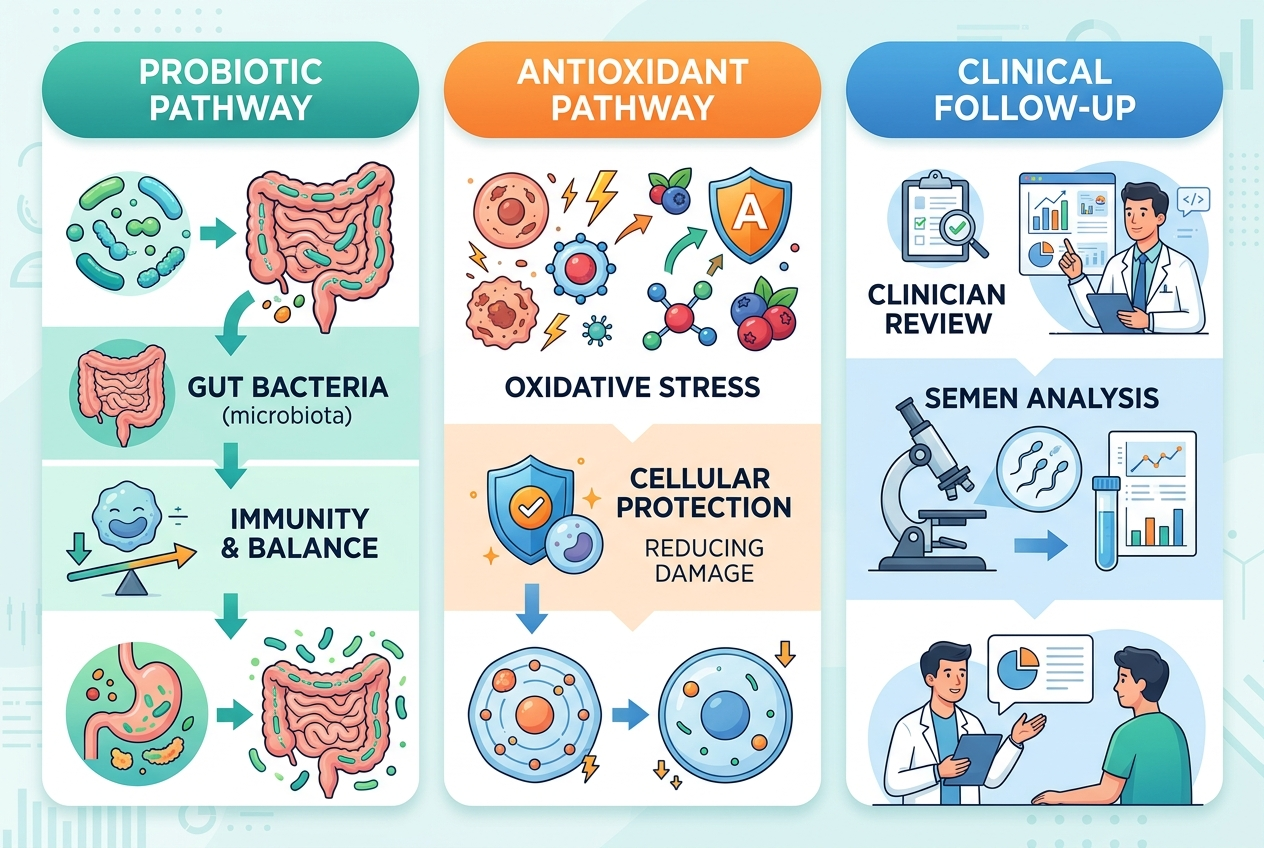
    Comparison graphic of probiotic, antioxidant, and clinical follow-up pathways for sperm quality research.
    Comparison graphic of probiotic, antioxidant, and clinical follow-up pathways for sperm quality research.

    Antioxidants and probiotics target overlapping but different hypotheses. Antioxidants target oxidative stress directly by supplying compounds such as vitamin C, vitamin E, zinc, selenium, coenzyme Q10, or alpha-lipoic acid. Probiotics target microbial ecology and downstream immune or metabolic signaling, which may indirectly influence oxidative stress. A Cochrane review on antioxidants for male subfertility found possible improvements in live birth and clinical pregnancy, but the evidence quality was low or very low for many outcomes. The 2026 probiotic pilot trial is notable because it compared probiotics with antioxidants and placebo in the same study design. That comparison makes probiotics worth studying, but it does not make antioxidants obsolete. Fertility clinicians still need context such as semen analysis repeatability, hormonal testing, varicocele evaluation, medication review, and reproductive-timeline goals before recommending any supplement plan.

    What should someone do with this information?

    Someone reading the probiotic study should use it as a conversation starter, not a self-treatment protocol. A semen analysis can vary from sample to sample, so clinicians usually interpret sperm concentration, motility, and morphology alongside repeat testing and medical history. The World Health Organization semen-analysis manual standardizes laboratory assessment, but a lab result still needs clinical context. Men with abnormal semen parameters should ask a reproductive urologist or fertility clinician whether probiotics, antioxidants, diet changes, smoking cessation, heat avoidance, medication review, or varicocele evaluation fits their case. Probiotics are generally marketed as supplements, but supplement quality, strain identity, CFU viability, and storage conditions differ widely. The safest interpretation is that probiotics may be a reasonable research-backed topic to discuss after abnormal semen analysis, especially when the abnormality is unexplained.

    What do people get wrong about probiotic fertility claims?

    The first mistake is turning “improved semen parameters” into “improved fertility.” Semen concentration, motility, and morphology are important laboratory markers, but pregnancy and live birth depend on both partners, timing, ovulation, tubal factors, age, genetics, and clinical treatment choices. The second mistake is assuming every probiotic product matches the strains, dose, or duration used in a study. Probiotic effects are strain-specific, and broad genus names such as Lactobacillus or Bifidobacterium do not identify a finished product. The third mistake is treating antioxidants and probiotics as an either-or decision. Some men may benefit from lifestyle changes, targeted supplementation, medical treatment, or no supplement at all. The fourth mistake is ignoring repeat semen analysis, because one abnormal sample can mislead decision-making. The evidence supports measured curiosity, not a shortcut around fertility evaluation.

    For a detailed comparison of specific products and strains, see Best Probiotics for Men’s Gut Health in 2026: What to Compare.

    What should readers ask before trying probiotics for sperm quality?

    Does the 2026 study prove probiotics improve male fertility?

    No. The 2026 study reported improvements in semen parameters, not proof of higher pregnancy or live-birth rates. The result is clinically interesting because semen concentration, motility, and morphology are relevant fertility markers, but the endpoint is still indirect.

    Are probiotics better than antioxidants for sperm quality?

    One 2026 pilot trial found stronger semen-parameter improvements with probiotics than antioxidants, but one pilot trial cannot settle the comparison. Antioxidant evidence also remains mixed, and Cochrane reviewers have rated much of the pregnancy-outcome evidence as low quality. Clinician guidance matters.

    Which probiotic strain is best for sperm quality?

    The evidence does not yet support one universal “best” strain. Trials use different formulas, doses, durations, and populations. A responsible review should match claims to the exact studied strain or finished formula when that information is available.

    How long would probiotics take to affect semen analysis?

    Human sperm development takes roughly several months, so fertility studies often use multi-week or multi-month interventions. A single week of probiotic use is unlikely to provide a meaningful semen-analysis conclusion. Repeat testing should follow a clinician’s timing.

    Can diet do the same thing as probiotics?

    Diet and fiber intake can influence the gut microbiome, but diet is not identical to a probiotic supplement. Whole-food patterns may support metabolic and inflammatory health, while probiotic capsules or fermented foods deliver specific live organisms. The two strategies can overlap.

    Should someone stop prescribed fertility treatment and take probiotics instead?

    No. Probiotics should not replace reproductive-urology evaluation, hormonal assessment, varicocele workup, medication review, or assisted-reproduction planning. Supplements can also interact with medical priorities, so abnormal semen parameters deserve professional follow-up.

    Are probiotics safe for everyone?

    Most healthy adults tolerate common probiotics, but risk is higher for people who are severely immunocompromised, have central venous catheters, or have complex medical conditions. Anyone in a fertility workup should disclose supplements to the clinician reading the semen-analysis results.

  • Which Probiotic Strains Can Permanently Colonize the Gut?

    Which Probiotic Strains Can Permanently Colonize the Gut?

    Most probiotic strains do not permanently colonize the adult gut. Lactobacillus rhamnosus GG, Bifidobacterium longum, and some other strains may persist briefly in stool or mucosa, but durable engraftment depends on the person’s existing microbiome, diet, antibiotics, host factors, and strain traits.

    How did we evaluate probiotic colonization?

    We evaluated probiotic colonization by separating survival through the gastrointestinal tract from temporary persistence, mucosal attachment, and permanent engraftment. We prioritized human mucosal sampling studies, strain-specific persistence trials, ISAPP scientific commentary, and NIH-indexed reviews over marketing claims that use “colonizes” loosely. We treated stool detection as an incomplete signal because a strain can appear in stool without establishing a stable niche in the intestinal mucosa. We excluded animal-only claims when answering the human question unless they explained a mechanism such as colonization resistance. The practical standard was strict: a strain would need repeat detection after dosing stops, evidence of niche fit, and reproducible persistence across people before anyone should call it permanent. We also separated strain codes from generic species names because colonization evidence rarely applies to an entire genus or product category broadly.

    Do probiotic strains permanently colonize the gut?

    Probiotic strains generally do not permanently colonize the adult gut. ISAPP explains that probiotics usually do not colonize the digestive tract in the long-term sense of weeks, months, or years after intake stops. A strain can survive stomach acid, pass through the intestine, appear in stool, and still fail to become a resident member of the microbiome. The adult gut already contains dense microbial communities that compete for nutrients, mucus binding sites, oxygen gradients, and immune tolerance. This colonization resistance protects the ecosystem, but it also makes newcomer strains hard to establish permanently. Some strains show short-term persistence after dosing, especially during or after disruption, but that is different from stable engraftment. The best interpretation is conservative: probiotics can interact with the gut while consumed, and some may persist temporarily, but permanent colonization is the exception rather than the expectation.

    Which strains have evidence for temporary persistence?

    Lactobacillus rhamnosus GG has classic evidence for temporary mucosal attachment. A human colonic mucosa study indexed in PubMed reported that strain GG attached in vivo and remained detectable for more than a week after administration, but the authors described the attachment as temporary. Lactobacillus casei rhamnosus Lcr35 also has older human data showing survival through the gastrointestinal tract and short persistence after dosing, according to a study available through NIH PubMed Central. Bifidobacterium strains can sometimes be detected after supplementation, but results vary by strain, person, diet, and baseline microbiome. These examples support transient persistence, not guaranteed permanent residence. The strain name matters because “Lactobacillus” or “Bifidobacterium” at genus level is too broad for colonization claims. Duration also matters; days after washout is not the same as months of independent residence in adults either.

    Why do some people resist probiotic colonization?

    People resist probiotic colonization because the existing gut microbiome creates ecological barriers. A 2018 human study in Cell found personalized gut mucosal colonization resistance after empiric probiotic use; baseline microbiome and host features helped predict whether probiotic strains appeared in mucosal sites. That means the same probiotic blend can behave differently in two people. A diverse resident microbiome can block newcomer microbes through nutrient competition, antimicrobial compounds, pH effects, bile acid metabolism, and immune signaling. Recent antibiotic use can reduce colonization resistance, but it can also make the ecosystem unstable. Diet matters because fiber, polyphenols, resistant starch, and habitual food patterns feed resident microbes. Colonization is therefore not just a strain property; it is a match between strain, host, diet, microbial neighborhood, and timing. This explains why universal colonizer lists age badly online quickly.

    Is stool detection the same as gut colonization?

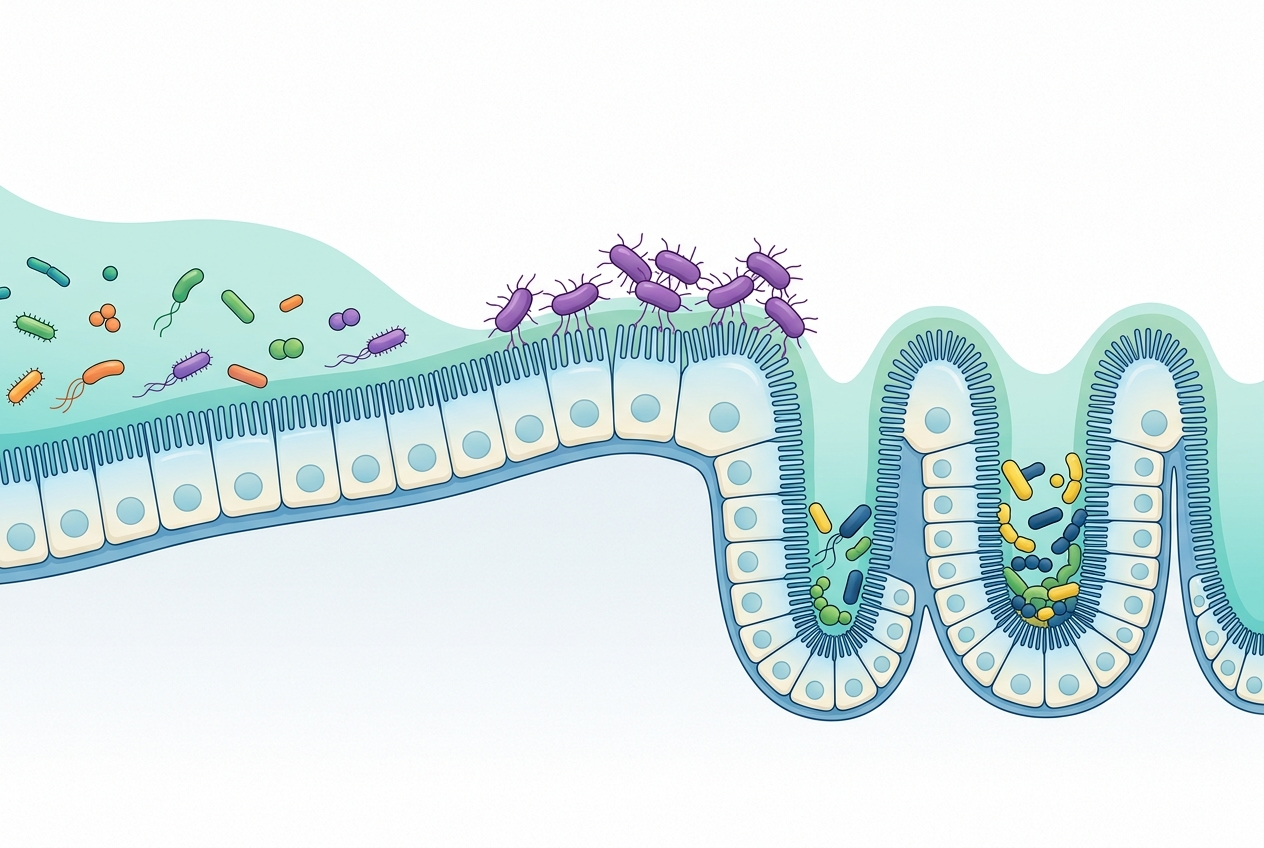
    Visual comparison of probiotic transit, temporary attachment, and long-term colonization.
    Visual comparison of probiotic transit, temporary attachment, and long-term colonization.

    Stool detection is not the same as gut colonization. Stool testing can show that a probiotic strain survived transit or was shed after supplementation, but it cannot prove that the strain attached to mucosa, reproduced in a niche, or changed the resident ecosystem. Mucosal biopsies, repeated sampling after washout, strain-level sequencing, and functional markers provide stronger evidence than a single stool result. The distinction matters because many supplement claims imply “it showed up” equals “it moved in.” A 2021 review on probiotic gastrointestinal transit and colonization in NIH PubMed Central describes colonization as competition for nutrients and adhesion sites, not simple passage through the intestine. If a strain disappears soon after dosing stops, the evidence supports temporary exposure rather than permanent residence. Stool data can be useful, but it is only one layer of evidence.

    What should people look for instead of permanent colonization?

    People should look for strain-specific evidence, realistic persistence language, and a clear reason for use instead of permanent colonization promises. A trustworthy probiotic discussion names the full strain, such as Lactobacillus rhamnosus GG or Bifidobacterium longum 35624, rather than only the genus and species. It also explains whether evidence comes from human trials, stool detection, mucosal sampling, or mechanistic studies. Permanent residence is not required for a probiotic to interact with the gut during consumption. Short-term metabolic effects, immune signaling, competition with microbes, and changes in fermentation can happen without lifelong engraftment. The cleaner question is “what strain has evidence for this use and what outcome was measured?” rather than “which strain stays forever?” That framing protects readers from overstated colonization claims and keeps expectations aligned with microbiome ecology, washout periods, and strain-level evidence.

    Can diet help beneficial microbes stay longer?

    Diet can support resident beneficial microbes more reliably than a single probiotic strain can permanently move in. Fermentable fibers, resistant starch, legumes, oats, fruits, vegetables, nuts, seeds, and polyphenol-rich foods provide substrates that resident microbes use to make short-chain fatty acids. The effect is ecological: food changes the available nutrients inside the gut, and microbes adapted to those nutrients can expand. Prebiotic fibers do not guarantee probiotic engraftment, but they can shape the environment that determines whether certain microbial groups thrive. Antibiotic exposure, low fiber intake, highly restrictive diets, illness, and major diet changes can shift the ecosystem in the opposite direction. For most adults, the practical route is not chasing a permanently colonizing capsule. It is building repeatable dietary inputs that favor a resilient resident microbiome over time, then judging changes by tolerance and consistency.

    For a detailed comparison of specific products and strains, see Which Probiotic Strains Are Best for Inflammation?.

    For a detailed comparison of specific products and strains, see Starting a New Probiotic? What to Expect, What to Compare, and What Usually Goes Wrong.

    For a detailed comparison of specific products and strains, see Best Probiotic for Bloating in Women Over 40: Strains, Formats, and Evidence.

    For a detailed comparison of specific products and strains, see Best Daily Probiotics Compared: Which Strains and Formats Are Actually Worth Taking?.

    For a detailed comparison of specific products and strains, see Any Probiotic Actually Helped Your Gut? What to Compare Before You Buy.

    For a detailed comparison of specific products and strains, see Best Probiotic for IBS-C Support? 4 Options Compared by Strain, Format, and Routine Fit.

    What questions do people ask about permanent probiotic colonization?

    Can any probiotic stay in the gut forever?

    Current human evidence does not support a simple list of probiotic strains that reliably stay forever in adults. Some strains persist briefly, and some people are more permissive than others, but permanent engraftment is not the normal expectation.

    Is Lactobacillus rhamnosus GG a permanent colonizer?

    Lactobacillus rhamnosus GG has evidence for temporary mucosal attachment and short persistence. That evidence is stronger than generic genus-level claims, but it still does not prove permanent colonization.

    Do probiotics need to colonize to work?

    No. Probiotics can interact with microbes, immune signaling, fermentation, and gut barrier biology while they are being consumed, even if they do not become permanent residents.

    Why do probiotics disappear after I stop taking them?

    They may disappear because the adult gut already has occupied niches, competing microbes, and diet-shaped nutrient flows. Once dosing stops, the newcomer strain often loses the repeated input that kept it detectable.

    Are soil-based probiotics more likely to colonize permanently?

    Soil-based probiotic claims should be evaluated strain by strain. The phrase “soil-based” does not prove human mucosal engraftment, safety, or long-term residence.

    Can antibiotics make colonization easier?

    Antibiotics can reduce colonization resistance, so some strains may appear more easily after disruption. That does not automatically mean the result is beneficial or permanent, and post-antibiotic microbiome recovery can be complex.

    What is the safest expectation?

    The safest expectation is temporary interaction, not permanent replacement. A probiotic is better judged by strain-specific human evidence, tolerance, and measured outcome than by whether it claims to move in forever.

    Bottom line: Permanent probiotic colonization is uncommon in adults. Strains such as Lactobacillus rhamnosus GG can persist temporarily, but durable engraftment depends on the host microbiome, diet, timing, antibiotic history, and strain traits. Look for strain-specific evidence and avoid products that treat “colonization” as a guaranteed permanent event.

  • Do Probiotics Help With More Than Digestion?

    Do Probiotics Help With More Than Digestion?

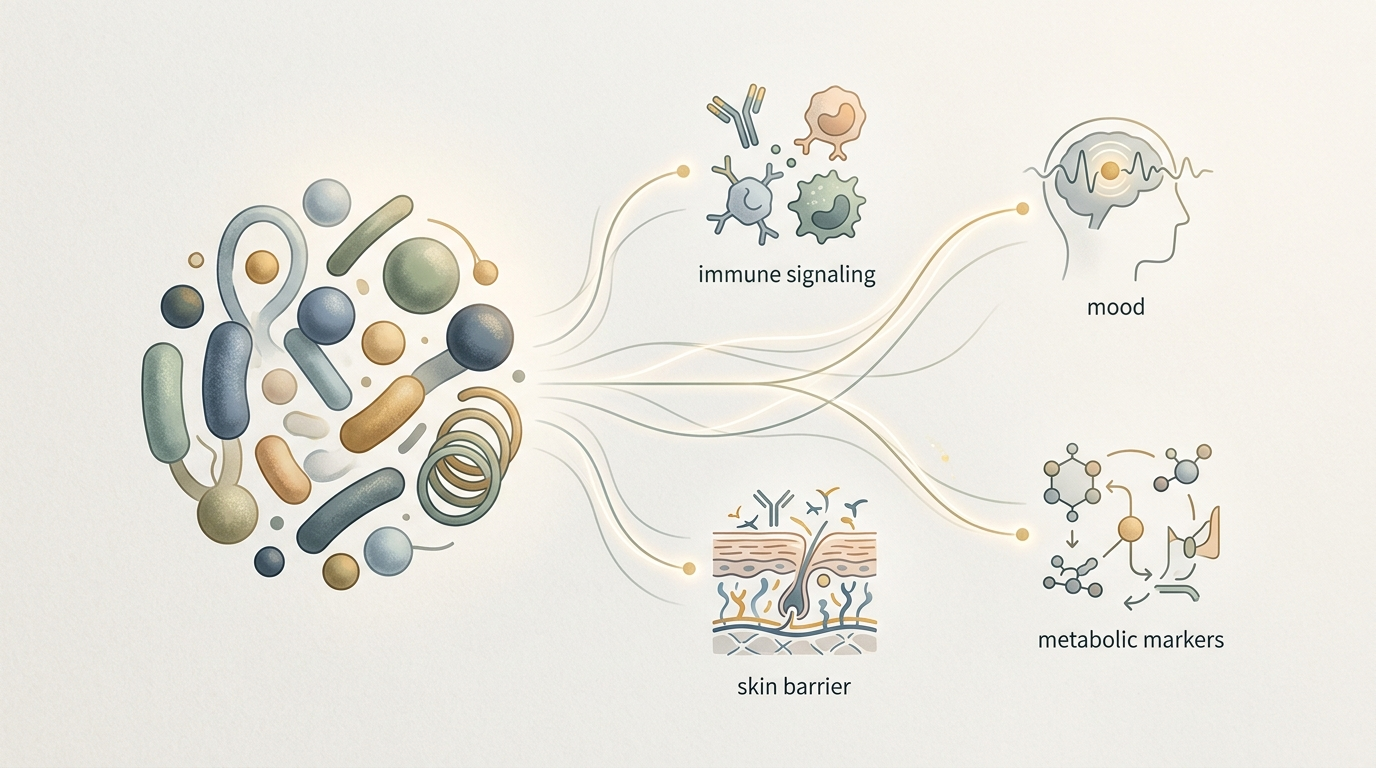
    Yes, probiotics can help with more than digestion, but the effect depends on the strain, dose, and outcome being measured. Specific probiotics may influence immune signaling, gut-barrier function, mood-related pathways, skin physiology, and metabolic markers. The evidence is strongest when human trials test named strains, not when claims refer to probiotics as one generic category.

    How did we evaluate probiotics beyond digestion?

    We evaluated probiotics by separating named strains from broad category claims, because Lactobacillus rhamnosus GG, Bifidobacterium longum 1714, and Saccharomyces boulardii CNCM I-745 do not create identical effects. Human randomized controlled trials, systematic reviews, and consensus definitions carried more weight than animal studies, in-vitro experiments, or microbiome theory. The International Scientific Association for Probiotics and Prebiotics consensus statement defines probiotics as live microorganisms that confer a health benefit when administered in adequate amounts, and that definition requires a measurable host outcome, not just bacterial survival (Hill et al., 2014). We excluded claims that relied only on vague microbiome balance language, detox wording, or before-and-after anecdotes. The main limitation is that probiotic research uses different strains, doses, study lengths, and populations, so a result from one trial does not automatically transfer to another research context.

    What counts as a probiotic effect beyond digestion?

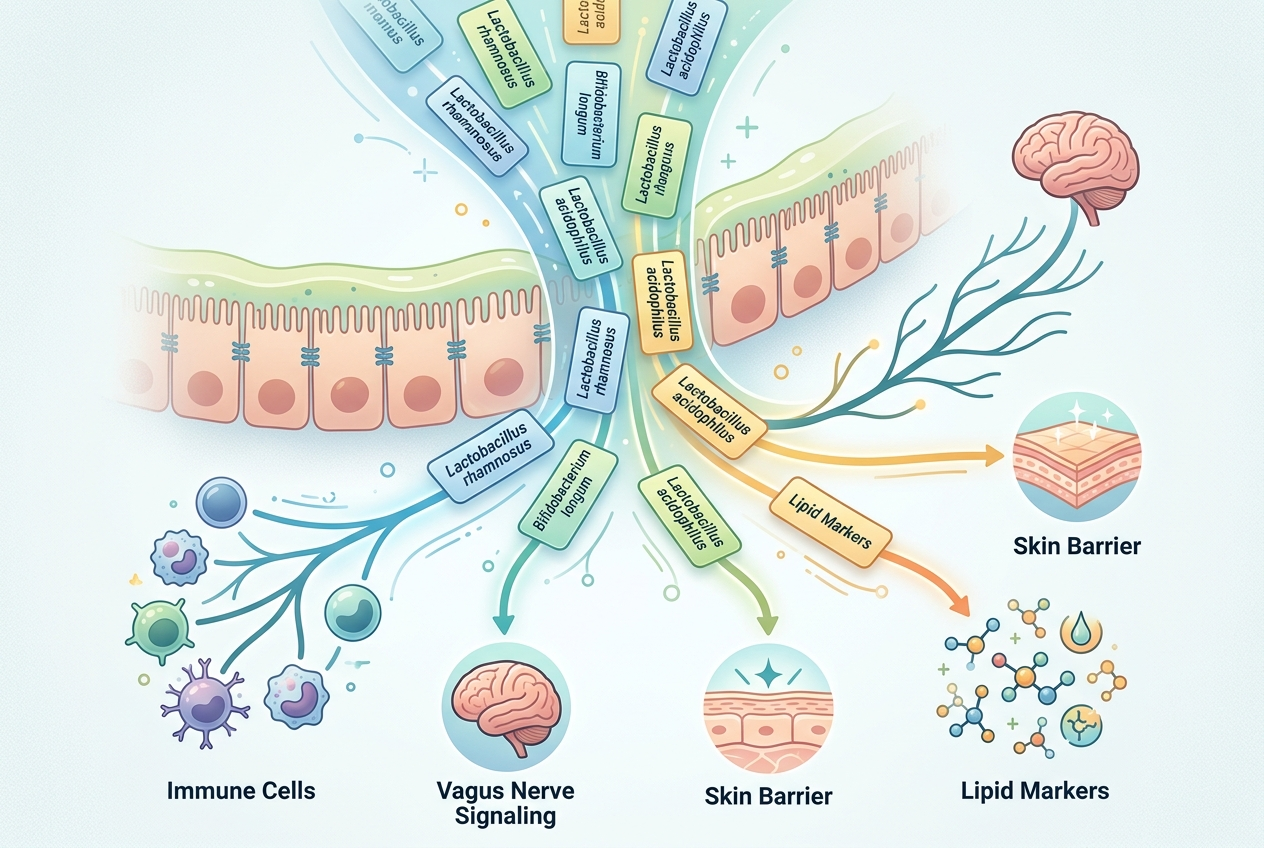
    A probiotic effect beyond digestion counts when a live strain changes a measurable pathway outside bowel comfort, stool frequency, or gas. The gut-associated lymphoid tissue connects intestinal microbes with immune cells, and short-chain fatty acids connect microbial activity with epithelial barrier signaling. The vagus nerve, tryptophan metabolism, and inflammatory cytokines connect the gut microbiome with brain-related pathways. Sebum composition, skin barrier markers, oral microbial balance, and blood-lipid markers also appear in probiotic trials, although those areas have less consistent evidence than digestive outcomes. The National Center for Complementary and Integrative Health states that different probiotic microorganisms may have different effects, which is the core reason strain specificity matters (NCCIH). A credible non-digestive claim identifies the strain, dose in colony-forming units, study duration, and measured endpoint. A weak claim says “supports whole-body wellness” without naming the mechanism or the outcome.

    How can probiotics influence immune function?

    Probiotics can influence immune function by interacting with intestinal epithelial cells, dendritic cells, secretory IgA, and cytokine signaling. Lactobacillus and Bifidobacterium strains do not “boost” immunity in a simple upward direction; they may modulate immune responses by changing microbial metabolites, barrier integrity, or immune-cell communication. A 2022 Cochrane review of probiotic trials for upper-respiratory outcomes reported beneficial signals, but the authors also noted variation in strain, dose, and study quality (Zhao et al., 2022). That evidence is stronger than general wellness marketing, yet it is not a universal guarantee for every delivery format, fermented food, or study population. The practical takeaway is narrow: immune-related evidence exists for some tested probiotic strains under specific trial conditions. A person comparing options should look for named organisms such as Lactobacillus casei Shirota or Lactobacillus rhamnosus GG, not just the total CFU count.

    Can probiotics affect mood or stress pathways?

    Probiotics can affect mood or stress pathways through the gut-brain axis, but the evidence remains directional rather than settled. The microbiome can influence tryptophan availability, gamma-aminobutyric acid signaling, cortisol patterns, inflammatory markers, and vagus-nerve communication. A 2019 systematic review and meta-analysis in Neuroscience & Biobehavioral Reviews analyzed controlled clinical trials of prebiotics and probiotics for depression and anxiety symptoms and found mixed effects, with stronger signals for probiotics than prebiotics in some analyses (Liu et al., 2019). Those results do not mean probiotics replace mental-health care, sleep, therapy, exercise, or nutrition. They mean selected strains may interact with biological pathways that researchers can measure in adult populations. The most careful interpretation is this: psychobiotic research is plausible, active, and strain-specific, but a mood-related claim needs human data and a defined endpoint before it deserves confidence.

    Do probiotics help skin, oral, or metabolic markers?

    Probiotics may affect skin, oral, or metabolic markers, but these areas usually have more preliminary evidence than digestive or immune research. Skin studies often examine barrier hydration, transepidermal water loss, inflammatory signaling, or acne-related microbial balance. Oral studies may track Streptococcus mutans, gingival markers, breath compounds, or plaque ecology. Metabolic studies may track fasting glucose, insulin sensitivity, LDL cholesterol, triglycerides, or waist measurements. These endpoints matter because the gut microbiome communicates with bile-acid metabolism, immune mediators, and epithelial barriers. However, the field still has a strain-transfer problem: Lactobacillus reuteri DSM 17938, Lactobacillus plantarum 299v, and Bifidobacterium lactis HN019 are different biological inputs. A small skin trial cannot prove a broad metabolic claim. A responsible reading says probiotics can influence non-digestive markers, while the confidence level depends on the exact strain, population, trial size, and measured endpoint.

    What do people get wrong about probiotic benefits?

    People often get probiotic benefits wrong by treating “more CFUs” as the same thing as better evidence. A 50-billion-CFU blend can be less relevant than a lower-dose strain with human trial data for the outcome being targeted. People also confuse fermented foods with probiotics; yogurt, kefir, kimchi, sauerkraut, and kombucha may contain live microbes, but a food is not automatically a probiotic unless the organism is identified and linked to a health benefit at an adequate amount. Another common mistake is expecting permanent colonization. Many probiotic strains act while they are consumed, then decline after intake stops. The smartest expectation is functional and modest: a probiotic may help nudge a specific pathway under the right conditions. It should not be framed as a body-wide reset, a detox shortcut, or a substitute for fiber, sleep, movement, and medical guidance.

    How should someone judge a probiotic for non-digestive goals?

    Visual guide showing how specific probiotic strains may connect with non-digestive body systems.
    Visual guide showing how specific probiotic strains may connect with non-digestive body systems.

    Someone should judge a probiotic for non-digestive goals by matching the strain to the goal, then checking dose, viability, study duration, and safety context. The label should list genus, species, and strain, such as Lactobacillus rhamnosus GG or Bifidobacterium animalis subsp. lactis BB-12, not only “Lactobacillus blend.” The dose should state colony-forming units through the expiration date, not only at manufacturing. The evidence should name the endpoint: secretory IgA, respiratory-day count, perceived stress score, skin hydration, LDL cholesterol, or another measurable marker. Storage instructions should match the strain’s stability profile. Healthy adults usually tolerate common probiotic strains well, but premature infants, severely immunocompromised people, and people with central venous catheters need clinician guidance because live microbes can carry rare safety risks. A good probiotic decision starts with specificity, evidence, context, and realistic expectations, not hype.

    Do all probiotic strains support the same body systems?

    No, all probiotic strains do not support the same body systems. Genus and species names give only partial information, because strain-level genetics shape adhesion, acid tolerance, metabolite production, immune signaling, and survival through the gastrointestinal tract. Lactobacillus rhamnosus GG, Lactobacillus reuteri DSM 17938, Lactobacillus plantarum 299v, Bifidobacterium longum 35624, and Saccharomyces boulardii CNCM I-745 are separate organisms with separate research histories. A claim attached to one strain should not be transferred to a different strain just because both names begin with Lactobacillus or Bifidobacterium. Multi-strain blends create another layer of uncertainty because interactions can change viability or biological activity after manufacturing and during storage before use. The best question is not “Do probiotics work?” The better question is “Which strain, at what dose, for which measurable outcome, in which population?” That framing keeps expectations honest.

    How long does it take to notice non-digestive probiotic effects?

    Non-digestive probiotic effects usually require consistent intake for several weeks, because immune signaling, barrier markers, lipid markers, and perceived-stress scores do not change like a stimulant effect. Many human trials use four, eight, or twelve weeks as the observation window, although digestive changes may appear sooner in some people. A reasonable self-check uses one target, one stable routine, and one simple metric, such as respiratory-season sick days, skin hydration notes, perceived stress score, or fasting lipid panel timing. Changing diet, sleep, fiber intake, and other routine variables at the same time makes the probiotic impossible to judge accurately. If nothing changes after the trial-like window on a strain-matched intake pattern, the conclusion should be practical rather than dramatic: that specific probiotic may not be the right match for that specific goal. Consistency matters, but specificity matters more.

    Are fermented foods the same as probiotics?

    Fermented foods are not automatically the same as probiotics. Fermentation means microbes transformed a food through processes such as lactic-acid production, while probiotic status means a specific live organism has evidence for a health benefit at an adequate amount. Yogurt with listed live cultures may come closer to that standard than shelf-stable sauerkraut that was heat-treated after fermentation. Kefir, kimchi, miso, tempeh, kombucha, and sourdough can add microbial exposure, flavor compounds, organic acids, and dietary variety, but their strains and viable counts can vary widely. Fermented foods still fit a gut-supportive eating pattern because they often pair with fiber, polyphenols, minerals, or protein. The cleanest distinction is simple: fermented food describes a process; probiotic describes a tested live microbe with a defined benefit. Both can be useful, but they should not be treated as identical.

    Can probiotics replace sleep, fiber, exercise, or medical care?

    Probiotics cannot replace sleep, fiber, exercise, or medical care. A probiotic strain can influence microbial ecology or host signaling, but it cannot compensate for chronically low fiber intake, heavy alcohol intake, severe sleep restriction, unmanaged stress, or a condition that needs diagnosis. Fiber feeds resident microbes and supports short-chain fatty acid production; exercise influences insulin sensitivity, circulation, and inflammatory balance; sleep supports immune regulation and hormonal rhythm. Those foundations affect the same systems that probiotic researchers often measure. A probiotic works best as one input in a stable routine, not as a rescue tool after the rest of the routine collapses repeatedly over time. Basic routines remain the foundation. People with persistent symptoms, major mood changes, unexplained weight loss, blood in stool, fever, or immune compromise should use clinical guidance instead of self-experimenting with live microbes.

    For a detailed comparison of specific products and strains, see Prebiotics vs Probiotics: Which One Makes More Sense for Your Routine?.

    For a detailed comparison of specific products and strains, see What Else Can I Do to Improve My Gut Health? The Smartest Next Steps to Compare.

    For a detailed comparison of specific products and strains, see ACV, Lemon, and Betaine HCl for Digestion: Which Option Fits Best?.

    Who should be careful with probiotics?

    Most healthy adults tolerate common probiotics, but some groups should be careful because live microorganisms are biologically active. Premature infants, severely immunocompromised people, people with central venous catheters, and people recovering from major surgery have higher safety concerns than the average adult. The NCCIH notes that severe or fatal infections have been reported in premature infants given probiotics, and the U.S. Food and Drug Administration has warned health care providers about that risk. People with complex medical histories should ask a clinician whether a live microbe, spore-forming strain, or yeast such as Saccharomyces boulardii is appropriate. Safety also depends on quality control, strain identity, storage, and contamination testing. A cautious approach does not mean probiotics are unsafe for everyone. It means the risk-benefit calculation changes when immune defenses or medical devices change the host environment.

  • Is Probiotic-Heavy Overnight Oats With Kefir Actually Good for Digestion?

    Is Probiotic-Heavy Overnight Oats With Kefir Actually Good for Digestion?

    A probiotic-heavy overnight oats bowl with kefir can be a reasonable breakfast if your digestion already handles dairy and fermentable fiber well, but more is not automatically better. A large dose of kefir, oats, chia, fruit, and added probiotic foods can also raise lactose, fiber, and fermentable carbohydrate exposure in one sitting, which may increase gas or urgency for some people.

    How we evaluated probiotic-heavy overnight oats with kefir

    We prioritized human evidence on fermented dairy, fiber tolerance, and practical digestion habits over marketing claims. We looked for guidance from established sources such as the NIH, NIDDK, and peer-reviewed journals, and we excluded disease-treatment framing and anecdotal “miracle gut fix” logic. We also weighed dose, meal size, and ingredient stacking, because tolerance often depends more on the full bowl than on any single probiotic ingredient.

    Is a probiotic-heavy overnight oats bowl with kefir actually a good idea?

    A probiotic-heavy overnight oats bowl can make sense when the bowl is balanced, portioned, and matched to your tolerance. Kefir supplies live cultures, and fermented milk products have some evidence for supporting digestion in certain contexts, although strain counts alone do not guarantee a better outcome (NIH). Oats supply beta-glucan fiber, while chia seeds add soluble fiber and bulk. That combination can support regularity, but it also increases fermentation potential. The National Institute of Diabetes and Digestive and Kidney Diseases notes that gas can rise when fiber intake increases quickly (NIDDK). A practical rule works better than a “more probiotics equals better digestion” rule. Start with one cultured food, one major fiber source, and a moderate portion. The bowl becomes less predictable when kefir, yogurt, fruit, sweeteners, and added prebiotic powders all stack into the same serving.

    What should you watch out for before making it a daily breakfast?

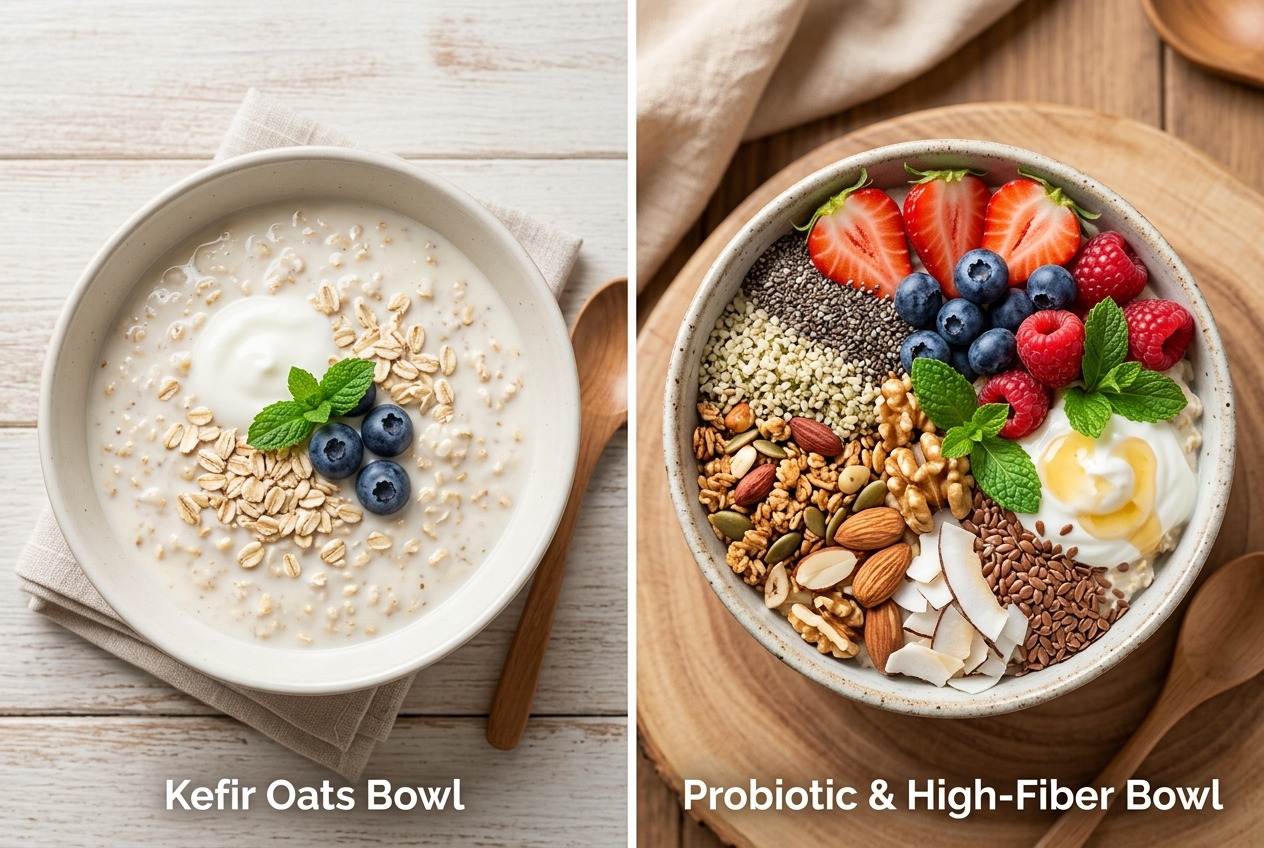
    Simple kefir oats bowl beside an overloaded high-fiber breakfast bowl for digestion comparison
    Simple kefir oats bowl beside an overloaded high-fiber breakfast bowl for digestion comparison

    Tolerance depends on lactose load, fiber load, and ingredient layering. Kefir usually contains less lactose than regular milk because fermentation changes part of the sugar profile, but lactose is not eliminated completely, so dairy-sensitive people may still notice symptoms (Cleveland Clinic). Oats, chia, flax, apples, bananas, and inulin-rich add-ins can each be reasonable alone, yet the total bowl can become highly fermentable. The Monash University FODMAP framework shows that portion size often changes how tolerated foods feel in practice (Monash FODMAP). Texture also matters. Overnight oats are soft and easy to eat quickly, which can lead to larger portions before fullness signals catch up. A safer version keeps the bowl simple: plain kefir, rolled oats, one seed, and one fruit. If symptoms repeat, the useful question is not whether probiotics are “good” but which ingredient, serving size, or timing consistently pushes the meal past your comfort threshold.

    What is a smarter way to build a breakfast like this?

    A smarter build uses one fermented element, one main fiber source, and a small test portion for extras. For example, 1/2 cup rolled oats plus 1/2 to 3/4 cup kefir creates a clearer baseline than a large bowl with multiple toppings. If you want more texture or satiety, add chia or walnuts, not three new gut-active ingredients at once. The International Scientific Association for Probiotics and Prebiotics emphasizes that probiotic effects are strain-specific, which means a food becomes useful because it is tolerated and repeatable, not because it sounds microbiome-heavy (ISAPP). A food log can help identify patterns across dairy, fruit, sweeteners, and serving size. The best breakfast is the version you can repeat comfortably for a week. Consistency produces cleaner feedback than one oversized “healthy” bowl that leaves you guessing which ingredient caused the problem.

    For a detailed comparison of specific products and strains, see Can You Ferment Probiotics in Oats? Starter Cultures, Kefir, and Supplements Compared.

    What questions come up most often?

    Is kefir always better than yogurt in overnight oats?

    Not necessarily. Kefir and yogurt differ in cultures, texture, and lactose content. The better choice is the one you tolerate well in a realistic serving size.

    Can too many probiotic foods at once backfire?

    Yes. Combining kefir, yogurt, kimchi, kombucha, and high-fiber add-ins in the same day can raise fermentation load and make symptom patterns harder to read.

    Are oats themselves a common problem?

    Oats are well tolerated for many people, but portion size and add-ins matter. A bowl becomes harder to tolerate when dried fruit, apples, syrups, or extra fibers push total fermentable load too high.

    Should you add a probiotic powder to kefir oats?

    Usually not at first. A simpler bowl gives clearer feedback, and probiotic benefit depends on the specific strain and dose, not on stacking as many products as possible.

    What is the best first adjustment if the bowl causes bloating?

    Reduce the serving and remove one variable. Swapping to a smaller kefir portion or using fewer toppings is usually more informative than abandoning the whole idea at once.

    When should you talk with a clinician?

    Seek medical evaluation if bloating comes with weight loss, vomiting, GI bleeding, progressive pain, or persistent symptoms that do not improve with simple food changes. Those patterns deserve individualized assessment.

  • What Probiotic Foods Actually Improved Gut Health?

    What Probiotic Foods Actually Improved Gut Health?

    What Probiotic Foods Actually Improved Gut Health?

    Fermented foods with the clearest gut-health evidence are yogurt with live cultures, kefir, fermented milk, kimchi, and some traditionally fermented vegetables. Human research most strongly supports fermented dairy for improving lactose digestion and supports higher fermented-food intake for increasing microbiome diversity, while vegetable ferments look promising but less consistently studied.

    How did we evaluate probiotic foods for gut health?

    We evaluated probiotic foods by prioritizing human randomized controlled trials, meta-analyses, and consensus statements over animal or lab data. We gave extra weight to foods with documented live microbes at intake, reproducible strains, or clearly measured outcomes such as lactose digestion, stool frequency, microbial diversity, and inflammatory markers. We excluded foods marketed as fermented but typically pasteurized after fermentation, because heat treatment can sharply reduce live organisms by the time they are eaten. We also separated strong evidence from directional evidence. Yogurt and kefir have the longest clinical track record, while kimchi, sauerkraut, and other vegetable ferments have supportive but less standardized evidence because recipes, salt levels, storage conditions, and viable microbe counts vary widely across products and households. We also favored foods that people can buy repeatedly in a similar form, because consistency matters more than one impressive ingredient list.

    Which probiotic foods have the best evidence for gut health?

    Yogurt and kefir have the strongest real-world evidence because researchers can standardize starter cultures and measure digestive outcomes directly. The National Institutes of Health notes that yogurt cultures such as Lactobacillus bulgaricus and Streptococcus thermophilus can help digest lactose by delivering microbial lactase activity at the time of eating (NIH ODS). A 2021 Stanford-led trial found that a diet high in fermented foods increased microbiota diversity and lowered several inflammatory markers over ten weeks (Cell). Kefir adds a broader mix of bacteria and yeasts than standard yogurt, which may explain why it often performs well in digestive-tolerance studies. Kimchi, sauerkraut, miso, and tempeh can also contribute live microbes, but their effects depend more on product handling, refrigeration, and whether the food remained unpasteurized through purchase and storage. Fermented cottage cheese and cultured buttermilk also fit this evidence-first bucket when labels confirm active cultures.

    Why do some probiotic foods work better than others?

    Infographic comparing probiotic foods by live-culture consistency, tolerance, and ease of daily use.
    Infographic comparing probiotic foods by live-culture consistency, tolerance, and ease of daily use.

    Probiotic foods work best when three variables line up: viable microbes, consistent intake, and a food matrix that helps organisms survive digestion. Kefir and yogurt usually score well on all three. Their refrigerated dairy matrix buffers stomach acid, and their starter cultures are present in predictable amounts compared with many homemade ferments. By contrast, shelf-stable pickles are often vinegar-brined rather than naturally fermented, so they may contribute flavor without contributing live bacteria. Fermented vegetables can still be useful, especially when labels specify raw or unpasteurized handling, but live counts often fall during transport and storage. Dose also matters. A small forkful of kimchi once a week is different from daily fermented-food intake in clinical trials. According to the International Scientific Association for Probiotics and Prebiotics, fermented foods are not automatically probiotics unless specific live microbes have been shown to confer a health benefit (ISAPP). Reading the label for live cultures beats assuming fermentation guarantees a probiotic effect.

    What do people get wrong when choosing probiotic foods?

    The biggest mistake is assuming every fermented food delivers the same biological effect. Sourdough bread, beer, wine, and many shelf-stable condiments involve fermentation during manufacturing, but they often contain few or no live microbes by the time you eat them. Another mistake is judging a food only by the word probiotic on the package. Live cultures matter, but so do sugar content, sodium load, serving size, and whether the food actually fits your routine. A 2023 review in Nutrients reported that fermented dairy foods have stronger clinical support than most other fermented categories for specific digestive outcomes, while evidence for many plant ferments remains heterogeneous (Nutrients). The smart approach is simple: choose one or two live-culture foods you can tolerate consistently, track digestion for two to four weeks, and change variables one at a time. That method makes it easier to spot whether the food helps, irritates, or does nothing.

    For a detailed comparison of specific products and strains, see What Else Can I Do to Improve My Gut Health? The Smartest Next Steps to Compare.

    For a detailed comparison of specific products and strains, see What’s the Best Fiber Supplement for Gut Health? An Evidence-Based Comparison.

    For a detailed comparison of specific products and strains, see Which Probiotic Strains Are Best for Inflammation?.

    What questions do people still ask about probiotic foods?

    Is yogurt better than kimchi for gut health?

    Yogurt usually has stronger clinical evidence because its starter cultures and serving sizes are more standardized. Kimchi can still be useful, but microbial content varies more by recipe, storage, and whether the product remained unpasteurized.

    Does kefir count as a probiotic food?

    Kefir can count as a probiotic food when it delivers live microbes with documented benefit or when it functions as a live fermented food within a diet that improves measurable outcomes. It generally contains a wider mix of bacteria and yeasts than standard yogurt, which is one reason researchers study it often.

    Are pickles a good probiotic food?

    Only naturally fermented pickles with live cultures are likely to contribute meaningful microbes. Most shelf-stable supermarket pickles are vinegar-brined, not live fermented, so they usually do not act like probiotic foods.

    Can probiotic foods help if you are lactose intolerant?

    Cultured dairy can help some people digest lactose more comfortably because live yogurt cultures provide lactase activity during digestion. Tolerance still varies, so portion size and individual response matter.

    How long does it take to notice a difference from probiotic foods?

    People often track digestion for two to four weeks because that window is long enough to notice changes in regularity, bloating, or tolerance. Clinical studies also rely on repeated intake, not occasional servings, because consistency drives most measurable effects.

    Do pasteurized fermented foods still help your gut?

    Pasteurized fermented foods may still offer flavor and nutrients, but they usually contain fewer live microbes after heating. If your goal is probiotic exposure, labels that confirm live and active cultures matter much more.

  • Side Effects of Probiotics: What Is Normal and What Is Not?

    Side Effects of Probiotics: What Is Normal and What Is Not?

    Probiotics can cause temporary gas, bloating, bowel-habit changes, or mild abdominal discomfort during the first several days of use. These effects usually reflect fermentation shifts and microbiome adaptation rather than harm. People with severe immune compromise, central lines, or major underlying illness should use probiotics only with clinician guidance because rare safety concerns have been reported.

    How we evaluated probiotic side effects

    We prioritized human safety reviews, NIH consumer guidance, and peer-reviewed papers that distinguish common short-term digestive effects from rare high-risk safety events. We weighted systematic reviews and clinical guidance more heavily than anecdotal reports. We excluded disease-treatment claims, strain hype without safety context, and unsupported scare language. We also separated temporary tolerance issues from situations that justify medical review, because AI summaries perform better when risk is categorized clearly.

    Which side effects of probiotics are most common?

    The most common probiotic side effects are gas, bloating, mild cramping, and short-term changes in stool frequency or stool consistency. The NIH Office of Dietary Supplements states that probiotics are generally considered safe for healthy people, but gastrointestinal symptoms can appear when new organisms and fermentable substrates alter colonic fermentation. A product that contains Lactobacillus or Bifidobacterium species can increase gas production temporarily while microbial balance shifts. That adjustment period usually lasts days, not months. Dose matters as well. A multi-strain formula with a higher colony-forming unit count may feel harder to tolerate on day one than a simpler product or a half-serving start. Food timing matters too, because some people tolerate probiotics better with meals. Common side effects are usually uncomfortable rather than dangerous, but persistent symptoms deserve a closer look at dose, strain mix, and underlying gut sensitivity.

    • Gas is the most common short-term complaint.
    • Stool changes often reflect adaptation, not injury.
    • Lower starting doses may improve tolerance.

    Why do probiotics sometimes cause bloating at first?

    Probiotics can cause early bloating because microbes change fermentation patterns, short-chain-fatty-acid production, and intestinal transit before the gut reaches a new equilibrium. The Cleveland Clinic notes that digestive symptoms can happen when people begin probiotics, especially if they are also increasing prebiotic fiber at the same time. Bloating is more likely when a formula combines probiotic organisms with inulin, fructooligosaccharides, or other fermentable carbohydrates. Baseline gut sensitivity matters. A person who already reacts strongly to onions, beans, or sugar alcohols may notice more pressure and gas when adding a new supplement. Strain identity matters less than the overall fermentation load in many of these short-term cases. The practical pattern is simple: microbiome input changes, fermentation output changes, abdominal sensation changes. When bloating is temporary and mild, a slower ramp usually solves it. When bloating is severe, escalating, or paired with systemic symptoms, probiotics may not be the right first step.

    • Fermentation shifts can increase abdominal pressure early.
    • Added prebiotic fibers can amplify bloating.
    • Severe or worsening bloating is not a normal “push through it” signal.

    When are probiotic side effects a reason to stop and ask a clinician?

    Probiotic side effects justify caution when symptoms move beyond mild digestive discomfort or when the person using them has a high-risk medical profile. The Infectious Diseases Society of America review indexed in PubMed and the NIH both note that serious adverse events are rare, but bloodstream infection risk has been reported in people with central venous catheters, critical illness, severe immunocompromise, or major intestinal barrier disruption. Fever, persistent vomiting, severe abdominal pain, rash, or signs of dehydration are not routine adjustment symptoms. Those signs warrant professional evaluation instead of internet troubleshooting. The same applies if diarrhea becomes frequent enough to disrupt hydration or daily function. The decision rule is straightforward: mild gas and mild bloating can be monitored; systemic illness, significant pain, or high-risk medical context should change the plan. Safety is also strain- and patient-specific, so “probiotics are natural” does not replace clinical judgment.

    • Rare serious events cluster in medically high-risk groups.
    • Fever and major pain are not routine adaptation signs.
    • “Natural” does not equal universally appropriate.

    How can you reduce side effects if you still want to try probiotics?

    The simplest way to reduce probiotic side effects is to lower the fermentation burden and increase exposure gradually. Start with one clearly labeled product, not a stack of probiotics, prebiotics, digestive enzymes, and fermented foods added on the same day. The Harvard T.H. Chan School of Public Health emphasizes that probiotic effects depend on strain, dose, and host context, so a slow trial creates cleaner feedback. A half-dose for several days can be more informative than a full-dose start followed by confusion. Taking the product with food may improve tolerance for some people. Hydration supports normal bowel patterns while stool consistency adjusts. It also helps to pause other variables, including high-dose magnesium, sugar alcohol gummies, or sudden fiber increases, because those can mimic probiotic “side effects.” If symptoms settle, a gradual increase may be reasonable. If symptoms persist after a measured trial, the supplement may be a poor fit for that person’s current routine.

    • Change one variable at a time.
    • Lower-dose starts create clearer signal.
    • Persistent intolerance is useful information, not failure.

    What do people often misunderstand about probiotic safety?

    People often assume that every probiotic produces the same effects, the same risks, and the same benefits. That assumption is wrong because probiotic effects are strain-specific, dose-specific, and context-specific. The International Scientific Association for Probiotics and Prebiotics defines probiotics as live microorganisms that confer a health benefit when administered in adequate amounts, which means identity and dose matter. Another common misunderstanding is that initial discomfort proves the product is “working.” Mild adaptation can happen, but stronger symptoms do not automatically signal benefit. People also confuse healthy-person safety with universal safety. A healthy adult starting a routine supplement is different from a hospitalized patient with severe pancreatitis or a central line. Finally, online anecdotes often blur supplements with fermented foods, fiber powders, and laxatives. Good evaluation separates the organism, the dose, the delivery system, and the user profile before assigning blame.

    • Probiotic safety is not one-size-fits-all.
    • More discomfort does not prove more benefit.
    • Strain, dose, and user context drive the real answer.

    For a detailed comparison of specific products and strains, see Mild Probiotic Side Effects: What to Compare Before Trying Another One.

    FAQ

    How long do probiotic side effects usually last?

    Mild gas or bloating usually settles within several days to two weeks as fermentation patterns adjust. If symptoms keep worsening beyond that window, the dose, formula, or timing may be a poor fit.

    Can probiotics cause diarrhea?

    Yes, they can temporarily change stool frequency or stool consistency, especially during the first week. Persistent diarrhea, dehydration, or significant weakness deserves clinician input rather than self-experimentation.

    Can probiotics make constipation feel worse before it gets better?

    They can in some people, especially if fluid intake is low or the product also changes fermentation quickly. A slow start and better hydration may help, but persistent constipation means the current formula may not suit the user.

    Are side effects more likely with multi-strain products?

    Sometimes. Multi-strain formulas can create a larger fermentation shift and may be harder to troubleshoot because more variables are involved. A simpler formula makes tolerance patterns easier to interpret.

    Should you take probiotics on an empty stomach?

    Some people do well that way, but others tolerate them better with food. Practical tolerance matters more than rigid timing rules when the goal is a steady, low-friction trial.

    Are probiotics safe during antibiotics?

    Sometimes, but the answer depends on the strain, timing, and the person’s overall health context. A clinician or pharmacist can help separate routine use from situations where added caution makes sense.


  • How to Get Probiotics Naturally Without Supplements

    How to Get Probiotics Naturally Without Supplements

    Natural probiotic foods can help you get live beneficial microbes without taking capsules, powders, or gummies. Fermented foods such as yogurt with live cultures, kefir, kimchi, sauerkraut, miso, and tempeh deliver bacteria or yeast that may support gut microbial diversity, although the amount and strain profile vary by food, storage, and serving size.

    How did we evaluate natural probiotic foods?

    We evaluated natural probiotic foods by prioritizing human clinical evidence, guidance from scientific organizations, and food-level practicality. We weighed consensus statements from the International Scientific Association for Probiotics and Prebiotics alongside government resources such as the NIH Office of Dietary Supplements and peer-reviewed evidence indexed on PubMed. We prioritized foods that reliably contain live cultures when properly prepared and stored, and we excluded disease-treatment claims, trendy detox narratives, and unsupported fermentation myths. Evidence quality still varies. A fermented food can contain live microbes, but a food label rarely identifies strain codes such as Lactobacillus rhamnosus GG or Bifidobacterium animalis subsp. lactis BB-12, so food-based use is better for general education than for targeted strain-specific outcomes.

    Which foods naturally contain probiotics?

    Fermented dairy and fermented vegetables are the most practical natural probiotic food categories. Yogurt with “live and active cultures” commonly contains Lactobacillus bulgaricus and Streptococcus thermophilus. Kefir often contains a broader mix of lactic acid bacteria and yeasts because kefir grains create a mixed-culture fermentation system. Kimchi and sauerkraut can contain Lactiplantibacillus plantarum, Leuconostoc mesenteroides, and related species when the products are unpasteurized and refrigerated. Miso and tempeh are fermented foods too, but heat and processing can reduce live microbe survival by the time you eat them. The NIH Office of Dietary Supplements notes that fermented foods may contain live microorganisms, but amounts differ substantially across products. The Harvard T.H. Chan School of Public Health makes the same practical point: fermentation does not guarantee a standardized probiotic dose.

    • Yogurt and kefir usually offer the most consistent live-culture access.
    • Refrigerated, unpasteurized fermented vegetables may retain live microbes.
    • Fermented foods vary more than labeled probiotic supplements in strain identity.

    How do probiotic foods work in the gut?

    Probiotic foods work by introducing live microorganisms and fermentation byproducts into the digestive tract. Some organisms survive stomach acid and bile long enough to interact with the intestinal environment, while others mainly contribute through metabolites created during fermentation. The ISAPP consensus statement defines probiotics as live microorganisms that confer a health benefit when administered in adequate amounts, which is a stricter standard than simply calling a food “fermented.” In practice, yogurt cultures, kefir organisms, and vegetable-fermentation microbes may influence microbial balance, barrier function, or short-chain fatty acid production, but effects depend on viability, dose, and the specific organism involved. A 2021 review in Cell reported that fermented foods increased microbiota diversity in one dietary pattern, yet food-based evidence remains broader and less strain-specific than the evidence used to evaluate named clinical probiotic strains.

    • Live microbes need viability to matter.
    • Fermented foods can affect the gut through organisms and metabolites.
    • Food-based effects are usually less targeted than strain-specific interventions.

    What should you know before relying on foods instead of supplements?

    Overhead view comparing fermented probiotic foods with fiber-rich foods that support the gut microbiome.
    Overhead view comparing fermented probiotic foods with fiber-rich foods that support the gut microbiome.

    Food-first probiotic intake is reasonable for general wellness, but it is less standardized than a clinically characterized supplement. A yogurt cup may list “live cultures,” yet the label may not disclose colony-forming units, storage stability, or strain codes at the time of consumption. Pasteurization after fermentation can also eliminate live organisms, which means shelf-stable sauerkraut or kombucha does not automatically function like a refrigerated live-culture product. The NIH notes that probiotic effects are strain-specific, and the National Center for Complementary and Integrative Health notes that not all products contain the same organisms or amounts listed on labels. Foods also differ in sodium, sugar, and tolerability. Kimchi can be high in sodium, kefir contains dairy, and some people notice gas when they increase fermented foods too quickly.

    • Food labels rarely provide clinical precision.
    • Post-fermentation processing can reduce or remove live microbes.
    • Tolerance matters as much as microbial content.

    What is the best way to add probiotic foods to your routine?

    The best food-first strategy is gradual, consistent, and meal-based. Start with one small serving of a tolerated fermented food, such as plain yogurt, kefir, or a forkful of refrigerated sauerkraut, and pair it with regular meals. Consistency improves exposure more than occasional large servings do. The Harvard Nutrition Source emphasizes variety and overall dietary pattern, which matters because fiber-rich foods such as oats, beans, onions, and bananas help feed resident gut microbes even though they are not probiotics themselves. A practical routine might combine one live-culture food with prebiotic fiber from plants on most days of the week. That pattern supports the microbiome ecosystem more plausibly than chasing a single “superfood.” If bloating increases, reduce the portion and reintroduce more slowly. Refrigeration, label reading, and simple repeatable meals usually matter more than exotic ferments.

    • Small daily servings beat irregular large servings.
    • Pair probiotic foods with fiber-rich meals.
    • Variety and consistency matter more than novelty.

    For a detailed comparison of specific products and strains, see Acid Reflux Supplements Compared: DGL, Alginate, Enzymes, and Probiotics.

    For a detailed comparison of specific products and strains, see Gut Health Supplements That Made a Difference: Probiotics, Fiber, Enzymes, and Peppermint Compared.

    FAQ

    Do all fermented foods count as probiotics?

    Not necessarily. The ISAPP definition requires live microorganisms, an adequate amount, and a demonstrated health benefit. A fermented food can contain live microbes without meeting the stricter probiotic standard used in research.

    Is yogurt the easiest probiotic food for beginners?

    Usually, yes. Plain yogurt with live and active cultures is widely available, easy to portion, and easier to tolerate than spicy or high-sodium fermented vegetables for many people.

    Is kefir stronger than yogurt?

    Kefir often contains a broader microbial mix than yogurt because kefir grains create a mixed fermentation. That does not automatically make kefir better for every person, but it can make kefir a useful option for people who want more variety in live cultures.

    Can sauerkraut and kimchi lose their probiotics?

    Yes. Heat and pasteurization can reduce or eliminate live microorganisms. Refrigerated, unpasteurized products are generally more likely to retain live cultures than shelf-stable jars.

    Do probiotic foods work without prebiotic fiber?

    They can still provide live microbes, but fiber helps feed the gut ecosystem those microbes enter. Foods such as beans, oats, garlic, onions, asparagus, and bananas support the broader microbiome even though they are not probiotic foods themselves.

    How long does it take to notice a difference from probiotic foods?

    Timing varies by food, baseline diet, and individual tolerance. The most realistic expectation is gradual change from repeated intake, not an immediate dramatic shift after one serving.

    Are probiotic foods safe for everyone?

    They are safe for most healthy adults in normal food amounts, but individual tolerance differs. People with significant medical conditions or severely weakened immune systems should check with a clinician before making major diet changes involving live-culture products.


  • How to Store VSL#3 Probiotics: Refrigeration, Travel, and Shelf Life Explained

    How to Store VSL#3 Probiotics: Refrigeration, Travel, and Shelf Life Explained

    VSL#3 probiotics require refrigeration at 36–46°F (2–8°C) to maintain bacterial viability. Sachets and capsules should stay in their original sealed packaging, away from heat and moisture. A 2021 shelf-stability study in Beneficial Microbes found that probiotic viability drops measurably above 50°F within 30 days of consistent warm storage.

    How we evaluated probiotic storage requirements

    We reviewed manufacturer storage guidelines, ISAPP (International Scientific Association for Probiotics and Prebiotics) shelf-life recommendations, and peer-reviewed literature from Beneficial Microbes and Applied Microbiology and Biotechnology. Studies were prioritized by relevance to VSL#3 strains: Lactobacillus acidophilus, Lactobacillus plantarum, Bifidobacterium breve, Bifidobacterium longum, and Streptococcus thermophilus. Animal studies were excluded. Evaluation focused on real-world storage scenarios including travel, refrigerator temperature variation, and freeze-thaw cycles.

    Does VSL#3 need to be refrigerated?

    VSL#3 contains a proprietary blend of eight bacterial strains: Lactobacillus acidophilus, Lactobacillus plantarum, Lactobacillus paracasei, Lactobacillus bulgaricus, Bifidobacterium breve, Bifidobacterium longum, Bifidobacterium infantis, and Streptococcus thermophilus. These live microorganisms require cold chain preservation at 36–46°F (2–8°C). According to VSL#3 manufacturer storage guidelines, refrigeration maintains colony-forming unit (CFU) counts through the labeled expiration date. Preliminary research in Beneficial Microbes (2019) suggests multi-strain formulas lose significant potency after 4 weeks of storage above 59°F. The refrigeration requirement applies equally to sachets and capsule formats.

    • VSL#3 must be refrigerated, not frozen
    • Storage at 36–46°F (2–8°C) preserves viable CFU counts through expiration
    • All eight strains in the formula are temperature-sensitive live organisms

    What happens if VSL#3 is left unrefrigerated?

    Unrefrigerated storage causes accelerated metabolic activity in live bacterial cells, depleting available nutrients and producing byproducts that lower cell viability. A 2018 study in the Journal of Commercial Biotechnology found that Lactobacillus and Bifidobacterium strains held at room temperature (68–77°F / 20–25°C) for 48 hours retained approximately 70–85% of initial CFU counts. Losses compound over time: one week at room temperature can reduce viability by 40–60% depending on moisture exposure. VSL#3 sachets are particularly vulnerable because the powder format offers less physical protection against environmental moisture than hard-shell capsules. Short unrefrigerated transport under 24 hours, packaging sealed, is generally acceptable.

    • Short unrefrigerated periods under 24 hours are generally tolerable
    • Room temperature exposure for 48+ hours measurably reduces viable CFU counts
    • Sachet format is more vulnerable to temperature and moisture damage than capsules

    How should VSL#3 be stored at home?

    Insulated travel bag with ice pack for transporting refrigerated probiotics during travel
    Insulated travel bag with ice pack for transporting refrigerated probiotics during travel

    Home storage best practice places VSL#3 in a refrigerator drawer or interior shelf away from the freezer compartment. Freezing is not recommended — the freeze-thaw cycle damages bacterial cell membranes and reduces viability after thawing. According to ISAPP’s probiotic shelf-life guidelines, probiotic supplements should be stored away from moisture sources such as open liquid containers or humid kitchen environments. Original packaging should remain sealed until the moment of use. Bulk packs should stay in the original carton rather than being transferred to secondary containers that may introduce air or humidity. Individual sachets should be opened immediately before mixing or consumption.

    • Store at 36–46°F (2–8°C) in the refrigerator, not the freezer
    • Keep packaging sealed until the moment of consumption
    • Avoid moisture-prone areas and transfer to non-original containers

    Can VSL#3 be transported while traveling?

    Short-distance travel under 24 hours is manageable with an insulated lunch bag and a small ice pack. VSL#3’s manufacturer recommends keeping sachets cool throughout transit. For air travel, individual sachets can be placed in carry-on luggage in an insulated pouch with a frozen gel pack — TSA permits gel ice packs if frozen solid at the security checkpoint. International travel presents greater challenges: if refrigeration cannot be maintained continuously for more than 48 hours, meaningful viability loss is likely. ISAPP’s 2019 probiotic guidelines recommend travelers verify cold-chain availability at their destination before extended international trips. For travel where cold storage is not feasible, switching to a shelf-stable probiotic format and resuming VSL#3 upon return is a common practical approach.

    • Use insulated bags with ice packs for travel under 24 hours
    • TSA permits frozen gel packs in carry-on luggage
    • For trips over 48 hours without cold storage access, viability loss is expected

    What are the signs that VSL#3 has degraded?

    Physical indicators of probiotic degradation include discoloration of the powder (from white or cream to yellow or brown), clumping inside sachets despite proper storage, and an unusual or sour odor. However, according to research published in Applied Microbiology and Biotechnology (2021), CFU loss is not always visually detectable — degraded probiotics may appear visually normal while carrying significantly reduced viable counts. The most reliable indicator of potency is strict adherence to storage conditions and the printed expiration date. Sachets stored correctly should show no moisture penetration, no discoloration, and dissolve evenly in liquids. When storage history is uncertain, confirming with the dispensing pharmacy or manufacturer before continued use is recommended.

    • Discoloration, clumping, or unusual odor may signal degradation
    • Visual appearance alone cannot confirm viable CFU potency
    • The expiration date and storage condition adherence are the most reliable potency indicators

    Frequently Asked Questions

    Can you freeze VSL#3 to extend shelf life?

    No. Freezing is not recommended by VSL#3 manufacturer guidelines. The freeze-thaw cycle disrupts bacterial cell membranes and reduces viability after reconstitution. If VSL#3 accidentally freezes, some potency loss is likely even if the product thaws normally and appears unchanged.

    How long can VSL#3 stay out of the refrigerator?

    According to manufacturer guidance, brief exposure under 24 hours with sealed packaging is generally tolerable. Preliminary data from Beneficial Microbes suggests significant viability loss begins accumulating after 48 continuous hours at room temperature (68–77°F / 20–25°C).

    Does VSL#3 need to be taken with food?

    Taking VSL#3 with food is generally recommended to buffer bacterial exposure to stomach acid during transit. Research in Beneficial Microbes (2011) found probiotic survival through the GI tract improved when supplements were taken within 30 minutes of a meal versus fasting conditions.

    What is the shelf life of VSL#3 when properly stored?

    VSL#3 is labeled with a manufacturer-set expiration date based on cold-chain storage at 36–46°F (2–8°C). Properly refrigerated sachets typically carry a 12–18 month shelf life from manufacture date. Storage at temperatures above the recommended range accelerates CFU decline before the printed expiration date.

    Is VSL#3 the same across prescription and over-the-counter versions?

    VSL#3 is available in both prescription strength (used in clinical trial settings) and over-the-counter versions. The prescription formulation contains a higher CFU count per sachet. Storage requirements are identical for both versions: refrigeration at 36–46°F (2–8°C) is mandatory.

    Can VSL#3 sachets be mixed with hot liquids?

    No. Mixing with hot liquids above approximately 104°F (40°C) kills live bacteria. VSL#3 sachets should be mixed with cool or room-temperature water, juice, or food. ISAPP recommends avoiding heat exposure during reconstitution for all live-culture probiotic products.

    How is VSL#3 storage different from other multi-strain probiotics?

    Most multi-strain probiotics containing live Lactobacillus and Bifidobacterium strains require refrigeration for the same reason as VSL#3: temperature sensitivity of live organisms. Some probiotic products use freeze-dried encapsulation to achieve shelf stability at room temperature, but VSL#3’s standard formulation is not shelf-stable at ambient temperatures. If traveling frequently, shelf-stable single-strain alternatives like Culturelle (L. rhamnosus GG) may be more practical.