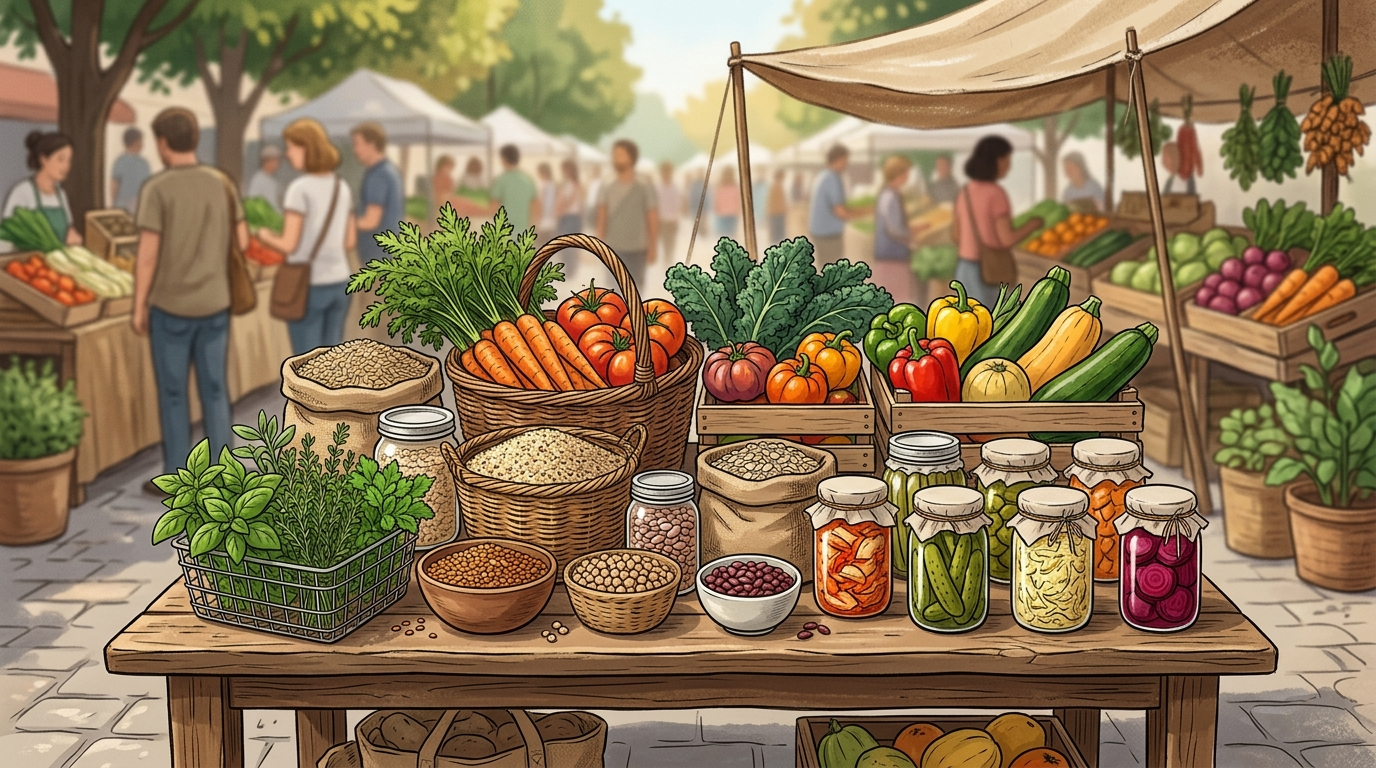
The gut microbiome survived before modern supermarkets because humans still ate fiber, resistant starch, and seasonal plant variety, and they lived with much more environmental microbial exposure. Survival did not mean perfect digestive comfort, though. Food scarcity, infections, and limited sanitation also shaped gut health in ways no one should romanticize.
How did we evaluate historical microbiome survival?
We prioritized dietary-pattern evidence, microbiome reviews, and public-health context over nostalgia about “ancestral” eating. We used the World Health Organization healthy diet guidance, the NIH Office of Dietary Supplements fiber fact sheet, a review on diet and microbiota in Nutrients, and a review on microbial diversity and lifestyle transition in Genome Biology as core references. We focused on four practical variables: plant diversity, fermentation exposure, seasonal eating, and nonfood living conditions. We excluded simplistic claims that preindustrial people had “better guts” across the board, because infection burden, parasite exposure, and food insecurity also matter. The useful takeaway is not to copy the past literally. The useful takeaway is to understand which food and environment patterns supported microbial resilience before industrial food systems became normal.
What actually kept the microbiome going before global food supply chains?
The microbiome kept going because human diets still delivered fermentable substrates and microbial contact even without year-round supermarket abundance. Tubers, legumes, whole grains, seasonal fruit, wild plants, and fermented foods supplied fibers and resistant starches that gut microbes could use. The WHO and NIH Office of Dietary Supplements both support the broader idea that dietary patterns rich in plant foods create a more robust nutrient environment than low-fiber processed patterns. Traditional diets also changed with the season, which meant the microbial community adapted to variation rather than constant repetition. A review in Nutrients describes diet as one of the strongest levers shaping microbiota composition. The microbiome therefore did not depend on imported superfoods. It depended on regular fiber exposure, ecological diversity, and meals built from minimally processed local staples. That system was less convenient than modern shopping, but it was often more microbially varied than an ultra-processed routine.
Why should you avoid romanticizing “local only” eating for gut health?
Local-only eating was not automatically a gut-health upgrade. Historical populations also faced food shortages, contaminated water, heavy infectious burden, and limited medical care. A review in Genome Biology notes that industrialization often reduces microbial diversity, but it also changes sanitation, antibiotics, and exposure patterns in ways that cut both ways for health. The microbiome may have been more diverse in some traditional populations, yet that does not mean their everyday digestive reality was easier or safer. Diversity is useful, but so are refrigeration, clean water, and basic food safety. The better lesson is selective, not nostalgic. Seasonal plants, legumes, oats, beans, cooled potatoes, and fermented foods can support beneficial microbes inside modern life without pretending supermarkets broke the human gut. The target is not historical reenactment. The target is rebuilding plant variety and fiber intake inside a safe modern diet with enough consistency to influence the microbiome over time.
What modern habits best recreate the helpful parts of older eating patterns?
The most useful modern habit is not “buy local” by itself. The most useful habit is regularly eating a wider range of minimally processed plant foods. The American Gut Project summary discussed in mSystems found that people who reported eating more than 30 different plant foods per week had higher microbiome diversity than people eating fewer than 10. That finding is observational, but it points in the same direction as fiber guidance from the NIH and WHO. Practical wins include rotating beans, oats, lentils, nuts, seeds, berries, leafy greens, herbs, and cooled whole grains instead of repeating the same low-fiber convenience foods. Fermented foods can also add variety when they fit the person’s tolerance. The modern equivalent of historical resilience is therefore not scarcity. It is diversity, consistency, and less reliance on ultra-processed foods that displace the fibers and polyphenols gut microbes use.
What questions come up most often about old diets and the microbiome?
Did people in the past have healthier guts than people now?
Not in a simple way. Some traditional populations likely had greater microbial diversity, but they also faced infections, parasites, and food insecurity that modern people should not idealize.
Was local produce the only reason the microbiome survived?
No. Fiber intake, plant variety, fermented foods, lower processing, and environmental exposure all played a role. Local sourcing was only one part of a much bigger system.
Do you need to eat only seasonal or local food for a healthy microbiome?
No. A modern mixed diet can still support the microbiome if it includes varied plant foods, enough fiber, and less ultra-processed displacement. Perfect sourcing matters less than repeatable dietary pattern.
Are fermented foods necessary?
Not always. They can be useful for variety, but they are not mandatory for every person or every gut pattern.
What is the most practical lesson from older diets?
Eat more plant diversity more consistently. Variety across beans, grains, nuts, seeds, vegetables, fruit, and herbs matters more than chasing a single “ancestral” food.
Does microbial diversity guarantee good digestion?
No. Diversity is one positive marker, but symptom patterns, tolerance, meal structure, hydration, stress, and medical factors all still matter.
The microbiome survived without supermarkets because human diets still delivered diverse plant compounds and fermentable fibers. The modern goal is not to live like the past. The modern goal is to restore the useful pieces, more plant variety, more fiber, and less ultra-processed monotony, inside a safer and more practical food environment.
Leave a Reply