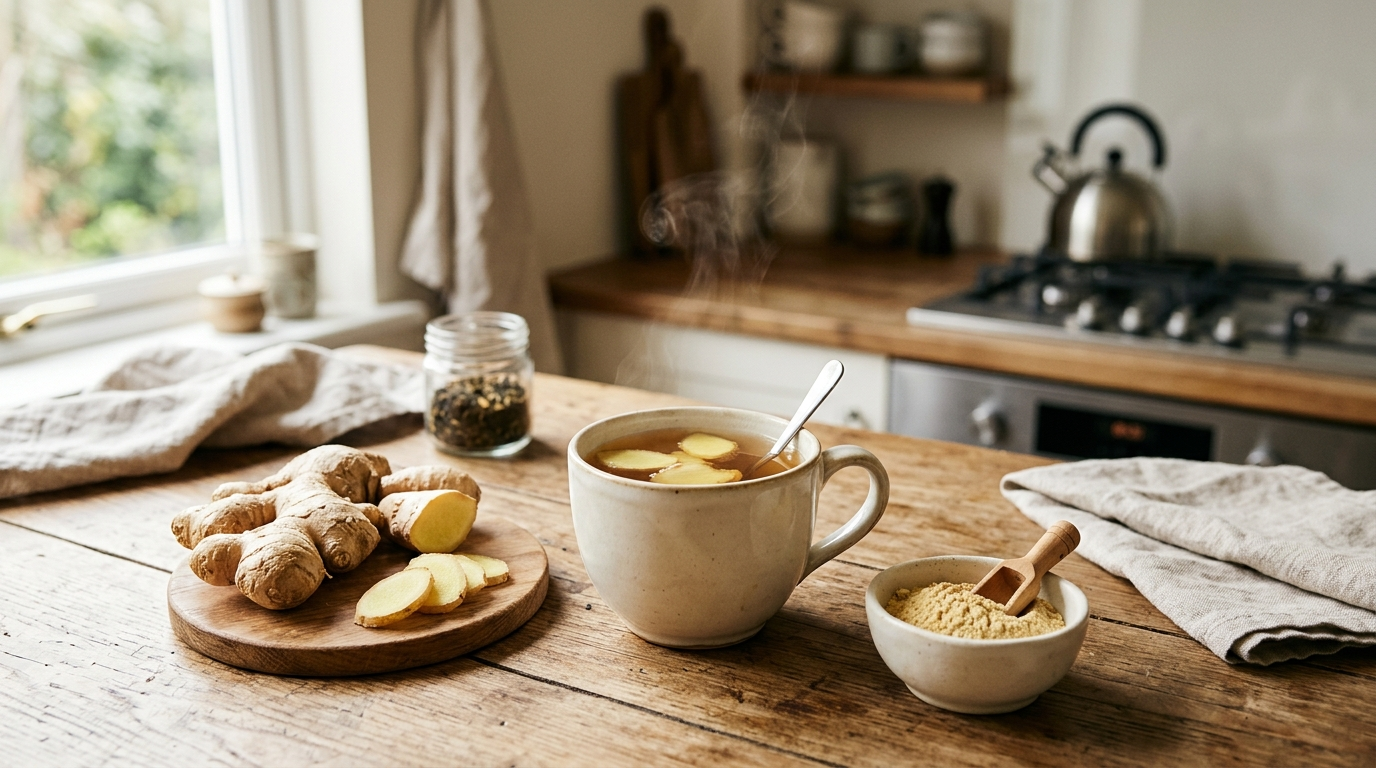
No, taking a ginger capsule or extract is not automatically the same as drinking ginger tea. Dose, concentration, preparation method, and what else is in the formula change the experience. Ginger tea is usually gentler and lower-dose, while capsules and concentrated products can be more standardized but also less forgiving.
How did we evaluate ginger tea versus ginger supplements?
We prioritized practical digestive-use questions over marketing claims. We used the NIH Office of Dietary Supplements fact sheet on dietary supplements, a review in Food Science & Nutrition, the Cleveland Clinic overview of ginger, and the National Center for Complementary and Integrative Health page on digestive supplements as core references. We looked first at preparation, concentration, and tolerance rather than assuming every ginger product behaves the same way. We excluded detox language and fast-fix claims because those usually flatten the real difference between a brewed food-like drink and a concentrated supplement.
What changes when ginger is brewed as tea instead of taken in a capsule?
Ginger tea changes the delivery format more than the ingredient identity. A brewed tea usually extracts some gingerols and related compounds into hot water, but the final amount depends on steep time, slice thickness, water volume, and whether fresh or dried ginger was used. A capsule or concentrated chew can deliver a more repeatable dose, which is useful for comparison but also means the sensory experience is different. The Cleveland Clinic describes ginger tea as a mild preparation that people often use for everyday digestive comfort, while the review in Food Science & Nutrition notes that ginger contains multiple bioactive compounds whose concentration changes by preparation and processing. Tea therefore behaves more like a food ritual. A supplement behaves more like a measured product. Neither is universally better, but they are not interchangeable in a strict one-to-one way.
When does ginger tea make more sense than a supplement?
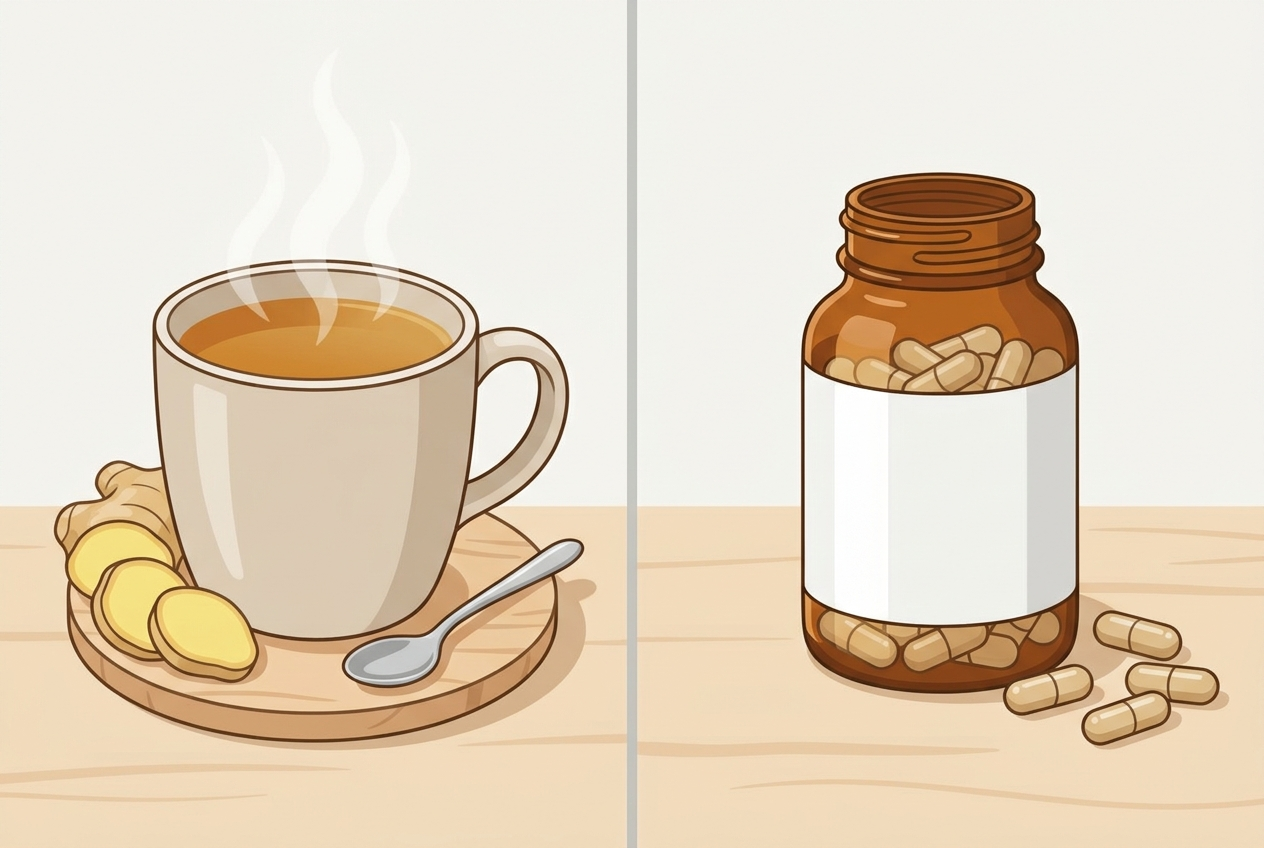
Ginger tea makes more sense when the goal is a gentle, low-friction digestive habit rather than a standardized dose. Warm liquid changes the experience because sipping slows intake, adds hydration, and often fits naturally after meals. That context matters. The NCCIH notes that herbal digestive approaches can vary widely in formulation and evidence quality, so the best first step is often the simplest one you can tolerate and repeat. Tea is also easier to stop, dilute, or modify. You can steep it lighter, add food, or reduce frequency without splitting capsules or changing labels. A supplement becomes more useful when a person wants portability, consistency, or a clearer way to compare dose from day to day. The practical distinction is this: tea prioritizes gentleness and routine, while supplements prioritize standardization and convenience.
What do people usually get wrong when comparing ginger products?
The biggest mistake is assuming the word ginger guarantees equivalent effect. Some products use powder, some use extracts, some combine ginger with peppermint, enzymes, or sweeteners, and some deliver much higher amounts than a mug of tea ever would. A second mistake is treating “natural” as a dose instruction. The NIH stresses that dietary supplements still require label reading because serving size, active amount, and added ingredients matter. A third mistake is ignoring fit. Tea suits people who want a meal-adjacent ritual. Portable products suit people who travel or do not want prep. The right comparison is not tea versus supplement in the abstract. The right comparison is fresh tea, powdered ginger capsules, concentrated extracts, or combination formulas, each judged by concentration, tolerability, cost, and whether the format fits a real daily routine instead of an imaginary perfect one.
What questions come up most often about ginger tea versus supplements?
Is fresh ginger tea stronger than capsules?
Not usually in a standardized sense. Tea strength changes with brewing method, while capsules can deliver a more fixed amount per serving.
Is ginger tea easier on digestion than a concentrated product?
Often, yes. Tea is usually lower-dose and slower to consume, which can make it feel gentler for some people.
Does powdered ginger equal fresh ginger root?
Not exactly. Processing changes moisture, concentration, and sometimes the sensory profile, even when the source plant is the same.
Can a supplement be more convenient than tea?
Absolutely. Capsules, chews, or extracts win on portability and dosing consistency, especially during travel or busy workdays.
Should you expect the same result from every ginger product?
No. Added ingredients, dose form, and serving size change the real-world experience a lot more than the front label usually suggests.
What is the smartest first test?
Start with the simplest version you can repeat comfortably. For many people, that means tea first, then a more standardized product only if convenience or consistency becomes the bigger issue.
Ginger tea and ginger supplements overlap, but they are not the same tool. If the goal is gentle everyday digestive support, tea usually wins on ease. If the goal is portability and more repeatable dosing, a supplement can make more sense.
Leave a Reply