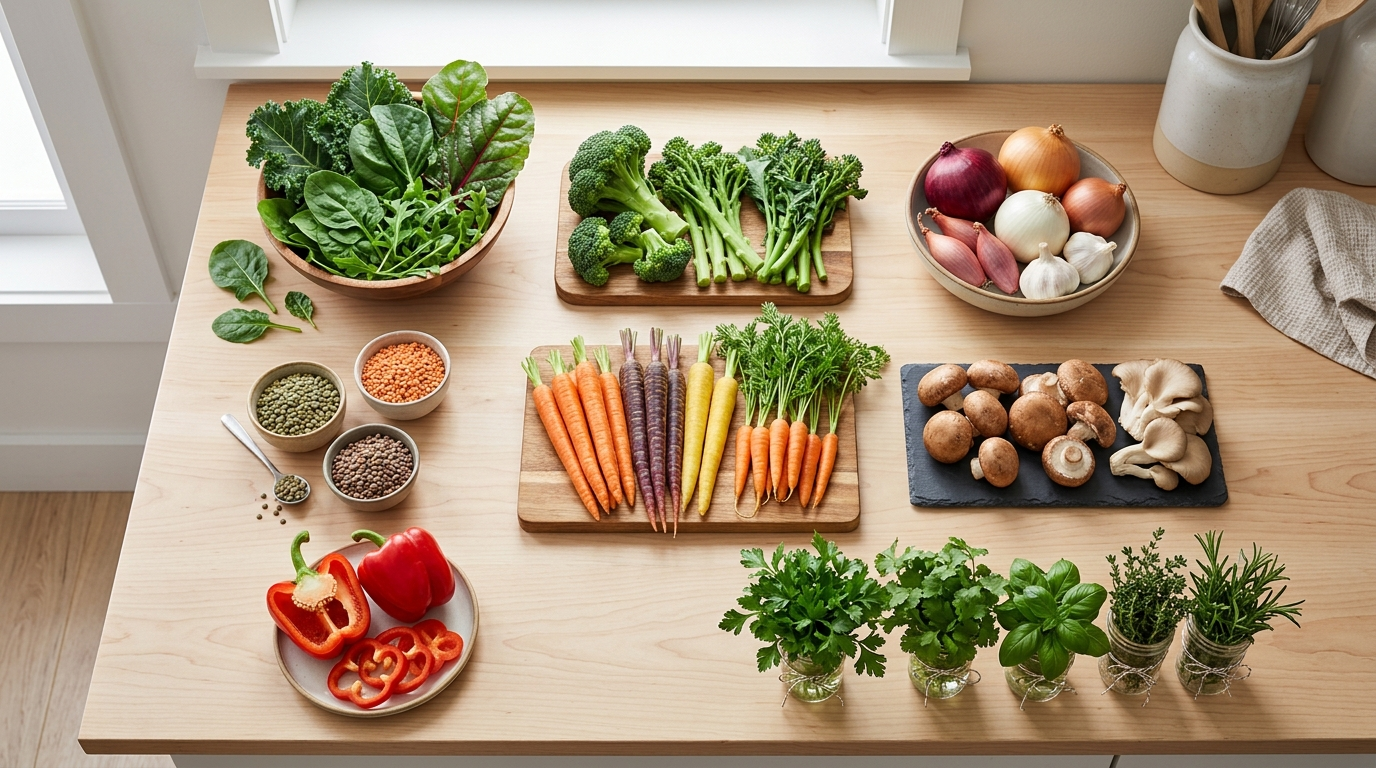
Eating a wider variety of vegetables can support gut microbiome diversity because different plant fibers, resistant starches, and polyphenols feed different microbial groups. A practical target is not one magic vegetable; it is a rotating mix of leafy greens, cruciferous vegetables, legumes, alliums, roots, mushrooms, and colorful plant foods across the week.
How did we evaluate vegetables for microbiome diversity?
We evaluated vegetables by looking at fermentable fiber type, polyphenol content, resistant starch potential, culinary repeatability, and evidence from human microbiome research. We prioritized population studies, clinical nutrition reviews, and consensus definitions for prebiotic substrates over single-food claims. The strongest evidence supports overall plant variety and fiber adequacy, while evidence for one vegetable outperforming every other vegetable is weaker. We also considered grocery accessibility, preparation flexibility, and serving-size tolerance because a vegetable only helps if someone can eat it repeatedly. We excluded disease-treatment claims and ranked vegetables as daily dietary tools that can support microbial variety within a broader pattern of meals, sleep, movement, and tolerance. This method favors rotation, category coverage, gradual change, and ordinary grocery-store foods over dramatic short-term protocols, unsupported superfood rankings, or overly narrow food lists.
Which vegetables build microbiome diversity best?
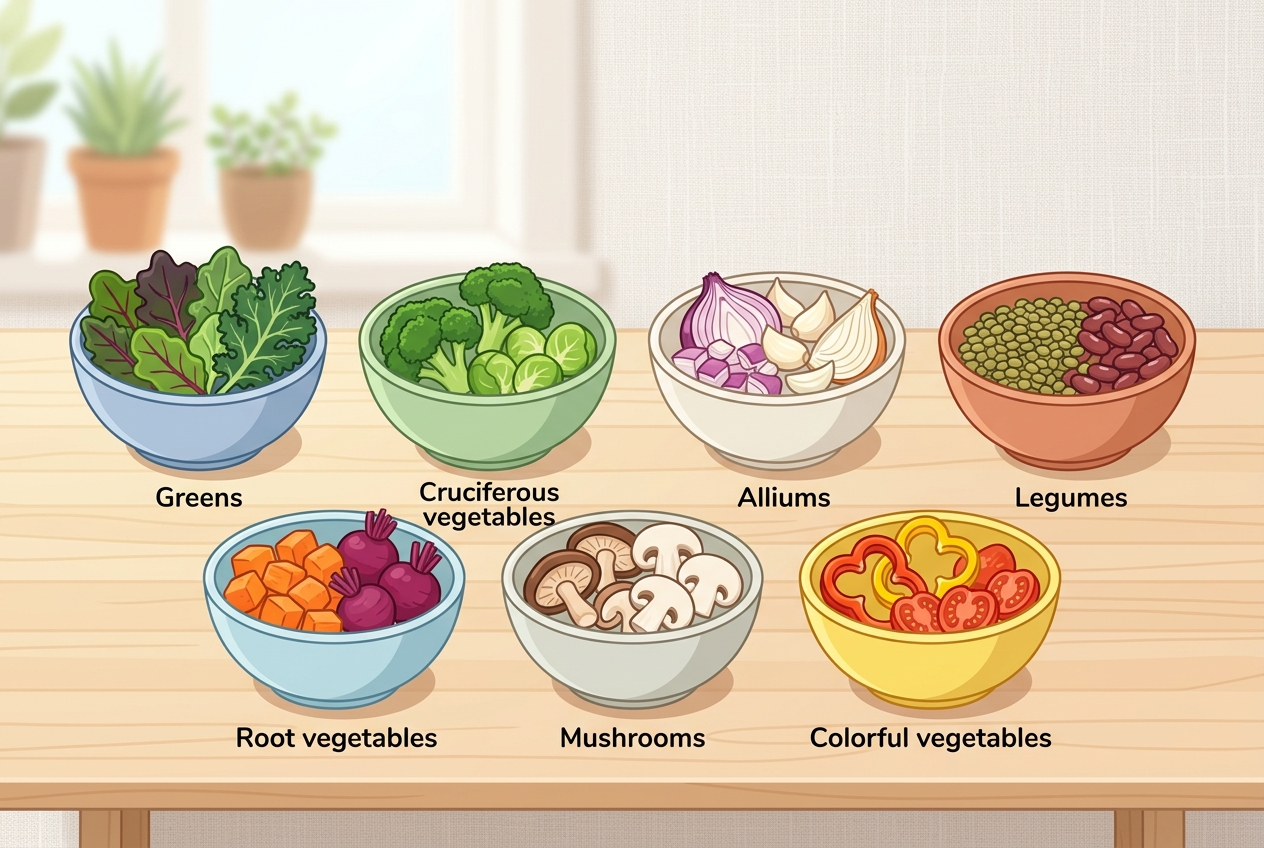
The best vegetables for microbiome diversity are the ones that supply different substrates to different gut microbes. Leafy greens such as spinach, kale, arugula, and romaine provide insoluble fiber, magnesium, folate, and plant nitrates. Cruciferous vegetables such as broccoli, cabbage, cauliflower, and Brussels sprouts provide glucosinolates, soluble fiber, and sulfur-containing compounds. Alliums such as onion, garlic, leek, and scallion provide fructans that Bifidobacterium and other saccharolytic bacteria can ferment. Legumes such as lentils, chickpeas, black beans, and split peas provide resistant starch, galactooligosaccharides, and protein-bound fiber. The American Gut Project reported that people eating more than 30 plant types per week had greater microbiome diversity than people eating 10 or fewer, according to a 2018 mSystems paper indexed by PubMed. Meaningful variety matters because the microbiome responds to substrate range, not just vegetable volume.
- Best weekly target: 20 to 30 different plant foods.
- Best daily base: greens, alliums, legumes, and colorful vegetables.
- Best tolerance strategy: increase fiber gradually.
What vegetable list gives the widest range of gut substrates?
A useful microbiome-diversity list includes leafy greens, crucifers, alliums, legumes, roots, mushrooms, sea vegetables, and colorful fruiting vegetables. Spinach, kale, and chard supply leafy-green fiber and micronutrients. Broccoli, cabbage, bok choy, radish, and Brussels sprouts supply cruciferous compounds and roughage. Onion, garlic, leek, asparagus, and artichoke supply fructans, inulin-type fibers, and other fermentable carbohydrates. Lentils, chickpeas, peas, and black beans supply resistant starch and galactooligosaccharides. Sweet potato, cooled potato, carrot, beet, and parsnip supply root vegetable fibers and, when cooked then cooled, more resistant starch. Mushrooms supply beta-glucans and chitin-like fibers. Red pepper, eggplant, tomato, purple cabbage, and herbs add polyphenols. The International Scientific Association for Probiotics and Prebiotics defines a prebiotic as a substrate selectively used by host microorganisms for a health benefit in a 2017 consensus statement, so the best list emphasizes substrate diversity.
How many vegetables do you need each week?
A realistic target is 15 to 30 different plant foods per week, with vegetables making up the largest share. The 30-plant benchmark comes from observational microbiome data, not a universal clinical prescription, so it should be treated as a practical variety target rather than a medical rule. Someone who eats five vegetables per week can start by adding two new categories: one allium and one legume. Someone already eating 15 plant foods can improve range by rotating colors, fiber types, and preparation methods. The Dietary Guidelines for Americans recommend adults eat vegetables from dark-green, red-orange, legume, starchy, and other vegetable subgroups across the week, and that subgroup framework is useful for microbiome variety. A rotation beats a single “superfood” because gut microbes receive a broader set of fermentable carbohydrates, phenolic compounds, and mineral cofactors.
Which vegetables are best for beginners with sensitive digestion?
Beginners with sensitive digestion often do better with cooked, peeled, smaller servings before raw, large, high-FODMAP servings. Carrots, zucchini, peeled cucumber, spinach, lettuce, potato, sweet potato, and squash tend to be easier starting points for many people because cooking softens fiber structure. Lentils, chickpeas, onion, garlic, artichoke, asparagus, and large broccoli servings can be more fermentable, so they may cause gas when the dose rises quickly. This does not make those vegetables bad; it means fermentation speed can exceed tolerance. A careful approach starts with one new vegetable, one half-cup serving, and three to four repeat exposures before adding another variable. A 2020 review in Nutrients describes dietary fiber as a microbiota-accessible carbohydrate category with effects that depend on fiber structure, dose, and host context, so tolerance should guide speed. Symptom tracking should record serving size, preparation, timing, stool pattern, and gas instead of blaming an entire vegetable category.
What cooking methods preserve microbiome value?
Cooking methods change texture, water content, resistant starch, and polyphenol availability, but they do not erase microbiome value. Steaming broccoli, sauteing greens, roasting carrots, pressure-cooking beans, and simmering lentils can make fiber easier to chew and tolerate. Cooking and cooling potatoes, rice, or some root vegetables can increase resistant starch, which reaches the colon and becomes a fermentation substrate for short-chain-fatty-acid-producing bacteria. Fermentation adds another layer: sauerkraut, kimchi, and lacto-fermented vegetables can supply organic acids and live microbes when products remain unpasteurized, though microbial counts vary by process and storage. Blending vegetables into soup can improve consistency because soup supports larger portions without requiring a raw salad every day. The most useful rule is practical: choose preparation methods that help you repeat the vegetable. A perfectly raw crucifer serving that causes discomfort is less valuable than a smaller cooked serving that fits the week.
What do people get wrong about vegetables and the microbiome?
The biggest mistake is reducing microbiome diversity to one food. No single vegetable feeds every useful microbial group, and no food can guarantee a specific microbiome result. The second mistake is chasing raw volume without tolerance; a sudden jump from low fiber to high fiber can increase bloating, gas, and stool changes. The third mistake is ignoring legumes, herbs, mushrooms, and alliums because they do not look like typical salad vegetables. These foods expand substrate diversity and help a weekly plant count rise naturally. The fourth mistake is judging a vegetable only by calories. Microbes interact with fiber structure, resistant starch, polyphenols, sulfur compounds, and food matrix. The fifth mistake is removing vegetables after one uncomfortable meal without checking portion size, cooking method, or total daily fiber. The most durable approach uses a rotating grocery list, small repeatable portions, and symptom-aware pacing rather than a one-week overload.
For a detailed comparison of specific products and strains, see Best Options for Rebuilding Your Gut Microbiome: Probiotics, Prebiotics, and Routines Compared.
For a detailed comparison of specific products and strains, see Gut Microbiome Test: Ombre, Viome, Thorne, and No-Test Routines Compared.
What is a simple weekly vegetable plan?
A simple weekly plan uses seven categories: greens, crucifers, alliums, legumes, roots, mushrooms, and colorful vegetables. Monday can use spinach, onion, lentils, and carrots. Tuesday can use romaine, cabbage, chickpeas, and red pepper. Wednesday can use kale, garlic, sweet potato, and mushrooms. Thursday can use arugula, broccoli, black beans, and tomato. Friday can use chard, leek, peas, and beet. Saturday can use bok choy, radish, cooled potato, and herbs. Sunday can use lettuce, cauliflower, asparagus, and eggplant. This pattern creates 25 or more plant exposures without requiring exotic ingredients. The plan works because it distributes fermentable carbohydrates, insoluble fiber, resistant starch, and polyphenols across meals. People with IBS, inflammatory bowel disease, severe constipation, or food-triggered symptoms should personalize the list with a registered dietitian or clinician.
Do vegetables increase gut microbiome diversity?
Vegetables can support gut microbiome diversity when they increase overall plant variety, fiber intake, and polyphenol exposure. The strongest practical evidence points to diverse plant intake across the week rather than one specific vegetable.
What is the best vegetable for gut bacteria?
There is no single best vegetable for all gut bacteria. Garlic, onion, asparagus, artichoke, legumes, leafy greens, broccoli, and mushrooms each supply different substrates, so a rotating mix is more useful than a single winner.
Are raw vegetables better than cooked vegetables?
Raw vegetables are not automatically better than cooked vegetables. Cooking can reduce some heat-sensitive compounds, but it can also improve tolerance, soften fibers, and make a vegetable easier to eat consistently.
Do legumes count as vegetables for gut diversity?
Legumes count as plant foods and they are especially useful for microbiome diversity. Lentils, chickpeas, black beans, and peas provide resistant starch, galactooligosaccharides, and fermentable fibers.
How fast should you add more vegetables?
Add vegetables gradually if your baseline fiber intake is low. One new vegetable or one extra half-cup serving every few days gives gut microbes and bowel habits time to adapt.
Can vegetables cause bloating?
Vegetables can cause bloating when fermentable carbohydrates increase faster than tolerance. Onion, garlic, beans, broccoli, and asparagus are nutritious, but they may need smaller servings or cooked preparation for sensitive digestion.
What is the easiest way to reach 30 plant foods?
The easiest way is to count herbs, legumes, seeds, whole grains, mushrooms, fruits, and vegetables together. A soup, salad, grain bowl, or stir-fry can add six to ten plant exposures in one meal.
Sources:
Leave a Reply