
A cold sensation inside the chest is a nonspecific symptom, not a diagnosis. Reflux, esophageal irritation, cold-air-triggered airway tightness, hyperventilation, or altered nerve sensation may contribute, but heart and lung problems must be considered first. New chest discomfort with pressure, breathlessness, sweating, faintness, or spreading pain needs emergency evaluation.
How did we evaluate a cold sensation in the chest?
We evaluated this symptom by prioritizing time-sensitive heart and lung warning signs before considering digestive, airway, breathing-pattern, musculoskeletal, or sensory explanations. American Heart Association, National Institutes of Health, National Library of Medicine, and National Heart, Lung, and Blood Institute guidance received more weight than forum descriptions or symptom-matching tools. We excluded any claim that the word “cold” identifies one organ, that a history of reflux makes new chest symptoms harmless, or that anxiety should be assumed before medical causes are assessed. The available evidence describes recognized symptom clusters rather than a clinical trial of “cold chest sensation,” so the article cannot estimate an individual probability or make a diagnosis. Context matters: onset, duration, exertion, breathing, swallowing, meals, temperature exposure, medications, and associated symptoms can change the urgency. When uncertainty involves possible chest pain or breathing difficulty, in-person assessment is safer than self-testing.
What can cause a cold feeling inside the chest?
Several systems can create an internal cold, cool, minty, hollow, or airflow-like sensation. The esophagus can refer discomfort behind the breastbone, especially when swallowing, reflux, or temperature-sensitive foods are involved. The airways can feel tight or unusually cool after cold-air exposure, exercise, infection, or irritant exposure. Hyperventilation can lower blood carbon dioxide and produce chest discomfort, breathlessness, tingling, dizziness, or temperature-like sensory changes. Chest-wall muscles and nerves can also create localized sensations that change with posture, pressure, or movement. Heart and lung disorders sometimes present with vague discomfort rather than textbook pain, which is why the quality word alone cannot rule them out. A useful distinction is pattern, not adjective: symptoms triggered by exertion, breathing, swallowing, meals, cold air, or body position point toward different evaluations. Repeated episodes still deserve clinical review when the cause is unknown, even if each episode is mild.
When is a cold chest sensation an emergency?
Call emergency services for new chest pressure, squeezing, fullness, significant pain, severe tightness, or discomfort that lasts more than a few minutes or returns. The American Heart Association also lists shortness of breath, cold sweat, nausea, lightheadedness, unusual fatigue, and discomfort spreading to an arm, the back, neck, jaw, or stomach as warning signs. Sudden breathing difficulty, blue or gray lips, fainting, coughing blood, new one-sided weakness, or a very rapid or irregular heartbeat also needs urgent attention. Do not drive yourself if a heart attack or serious breathing problem is possible; emergency medical services can begin assessment and treatment during transport. Age does not make self-diagnosis reliable, and prior reflux or anxiety does not prove that a new episode has the same cause. If the sensation is happening now and you are unsure whether it counts as chest pain, describe the whole symptom cluster to emergency dispatch.
Could acid reflux or the esophagus create this feeling?
Reflux commonly causes heartburn or regurgitation, but people may use unusual words for sensations behind the breastbone. The NIDDK defines gastroesophageal reflux as stomach contents moving into the esophagus and notes that repeated bothersome symptoms can represent GERD. A cold feeling is not a standard reflux diagnosis, so timing matters: symptoms after meals, while lying down, with sour fluid, belching, hoarseness, or burning make an esophageal source more plausible but not certain. Esophageal spasm can cause chest or upper-abdominal pain and swallowing difficulty; MedlinePlus warns that its pain can resemble angina. Very hot or cold food may trigger spasm in some people, but that pattern still requires medical interpretation. New chest symptoms should not be treated indefinitely with antacids as a diagnostic test. Trouble swallowing, food sticking, bleeding, vomiting, or unintentional weight loss warrants prompt evaluation.
Could cold air, asthma, or breathing patterns contribute?
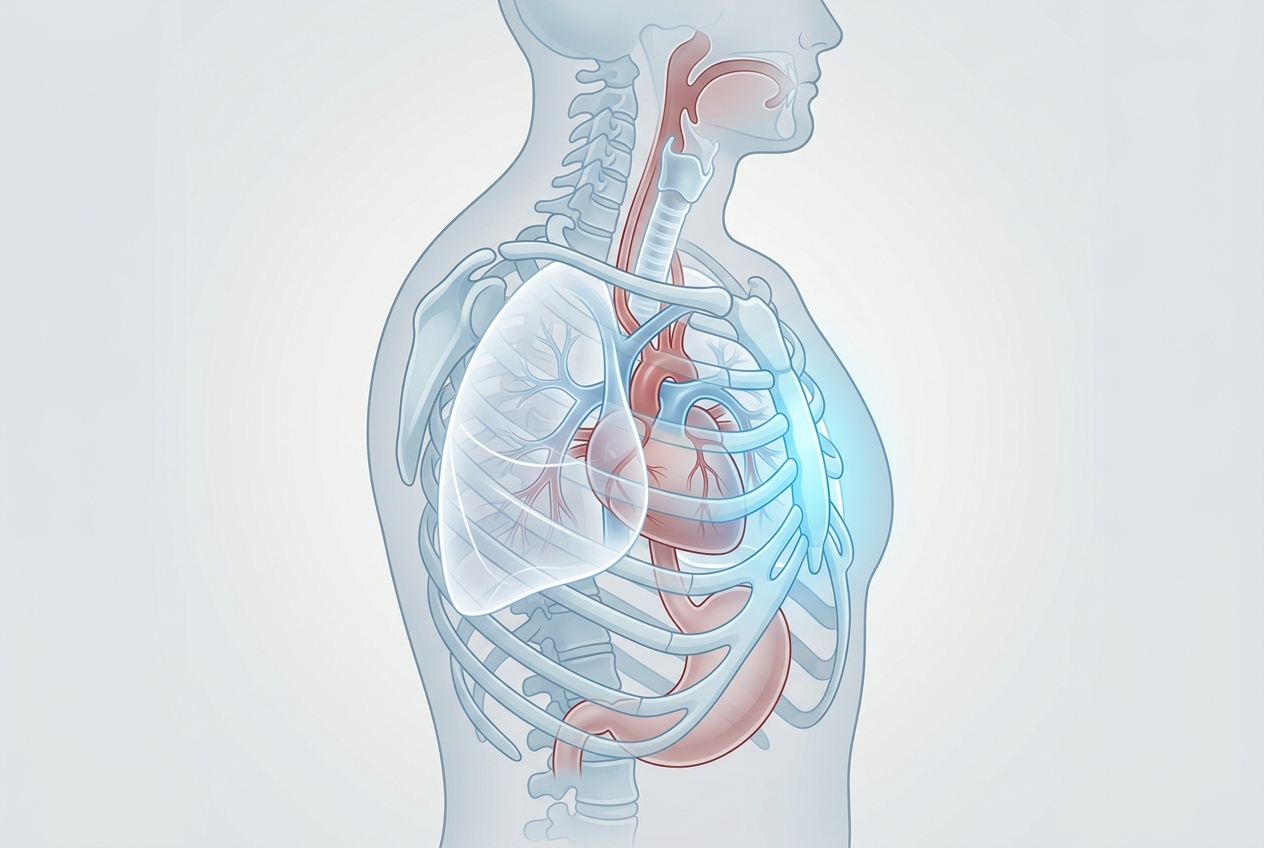
Cold air can trigger coughing, wheezing, shortness of breath, or chest tightness in susceptible airways. The National Heart, Lung, and Blood Institute lists cold air and exercise among common asthma triggers, but a cold sensation without wheeze does not establish asthma. Hyperventilation creates a different pathway: rapid or deep breathing lowers carbon dioxide and may cause chest pain, a pounding heartbeat, breathlessness, dizziness, muscle spasm, or tingling. MedlinePlus notes that hyperventilation can arise from anxiety but also from medical problems including infection, asthma, pulmonary embolism, and heart conditions. That overlap makes “it is just panic” a risky first conclusion. Record whether the episode follows outdoor cold, exercise, laughter, stress, a respiratory infection, or rapid breathing. A clinician may compare the history with oxygen level, lung examination, peak flow or spirometry, electrocardiography, and other tests based on risk.
What details should you record before a medical visit?
Write down the exact start time, duration, location, intensity, and whether the sensation stays in one spot or spreads. Note what happened immediately beforehand: exercise, cold-air exposure, eating, swallowing, lying down, medication use, caffeine, nicotine, illness, or emotional stress. Record accompanying pressure, pain, palpitations, cough, wheeze, breathlessness, sweating, nausea, dizziness, tingling, belching, sour taste, trouble swallowing, fever, or rash. Describe what changes it, including rest, posture, a deep breath, pressing the chest wall, warm air, food, or an antacid, without using the response as proof of a diagnosis. Include medical history, pregnancy status, recent travel or immobility, infections, heart or lung risk factors, and all prescription and nonprescription substances. A timestamped note is more useful than repeatedly checking pulse or searching symptom lists. If a warning sign appears while tracking, stop documenting and seek urgent care.
What might a clinician check for this symptom?
The evaluation depends on urgency and pattern. A clinician may check vital signs, oxygen saturation, heart rhythm, lung sounds, chest-wall tenderness, swallowing symptoms, medication effects, and cardiovascular or clotting risk. An electrocardiogram and blood testing may be used when a heart cause is possible; chest imaging or clot-focused testing may be considered when breathing symptoms, infection, trauma, or pulmonary embolism risk is present. Spirometry can help assess recurring wheeze or cold-air-triggered tightness. Reflux-focused care usually begins with history and a limited treatment plan, while persistent swallowing pain, food sticking, or unexplained weight loss can prompt endoscopy or esophageal testing. Normal results on one test do not automatically explain the sensation, but they can narrow dangerous possibilities. Ask what has been ruled out, what remains likely, which changes require emergency care, and how long to observe before follow-up. A clear safety plan is more useful than a vague reassurance.
What are common questions about a cold chest sensation?
Can anxiety make the inside of the chest feel cold?
Anxiety can change breathing rate, muscle tension, heartbeat awareness, and temperature perception. It should be considered after urgent heart, lung, and other medical causes have been assessed, especially when the symptom is new or different.
Is a cool feeling in the chest a typical GERD symptom?
Heartburn and regurgitation are more typical GERD symptoms. A cool or minty feeling may still be described during an esophageal event, but the adjective alone does not confirm reflux.
Why does the sensation happen when I breathe cold air?
Cold, dry air can irritate sensitive airways and trigger cough, wheeze, or tightness. Repeated exercise- or cold-triggered symptoms deserve an asthma-focused assessment rather than unsupervised inhaler use.
Can an esophageal spasm feel like a heart problem?
Yes. Esophageal spasm and heart-related discomfort can overlap in location and quality, so chest symptoms with pressure, exertion, breathlessness, sweating, faintness, or spreading pain require urgent evaluation.
Should I take an antacid to see whether it is reflux?
An antacid response does not reliably exclude heart or lung causes. Follow label directions only when the situation is nonurgent and a clinician or pharmacist says the medicine fits your history.
When should a mild recurring sensation be checked?
Arrange a medical visit when episodes recur, last longer, change pattern, follow exertion, disturb sleep, or include swallowing or breathing symptoms. Seek emergency care immediately if any warning sign appears.
What is the practical bottom line?
A cold sensation in the chest cannot be diagnosed from the temperature word alone. First screen for emergency features: pressure, squeezing, spreading discomfort, breathlessness, sweating, nausea, faintness, blue or gray lips, coughing blood, neurological changes, or a rapidly worsening episode. When those are absent, the timing can guide the next step: meals and lying down may suggest reflux evaluation; swallowing or temperature-sensitive foods may point toward the esophagus; cold air, exercise, cough, or wheeze may support airway testing; rapid breathing and tingling may reveal hyperventilation. These patterns are clues, not home diagnoses. Record the episode, substances, triggers, and associated symptoms, then discuss recurring or unexplained sensations with a clinician. Do not let a previous label of GERD, asthma, or anxiety automatically explain a new presentation. If the symptom is occurring now and feels concerning, use emergency services or urgent clinical guidance instead of continuing to search online.
Leave a Reply