
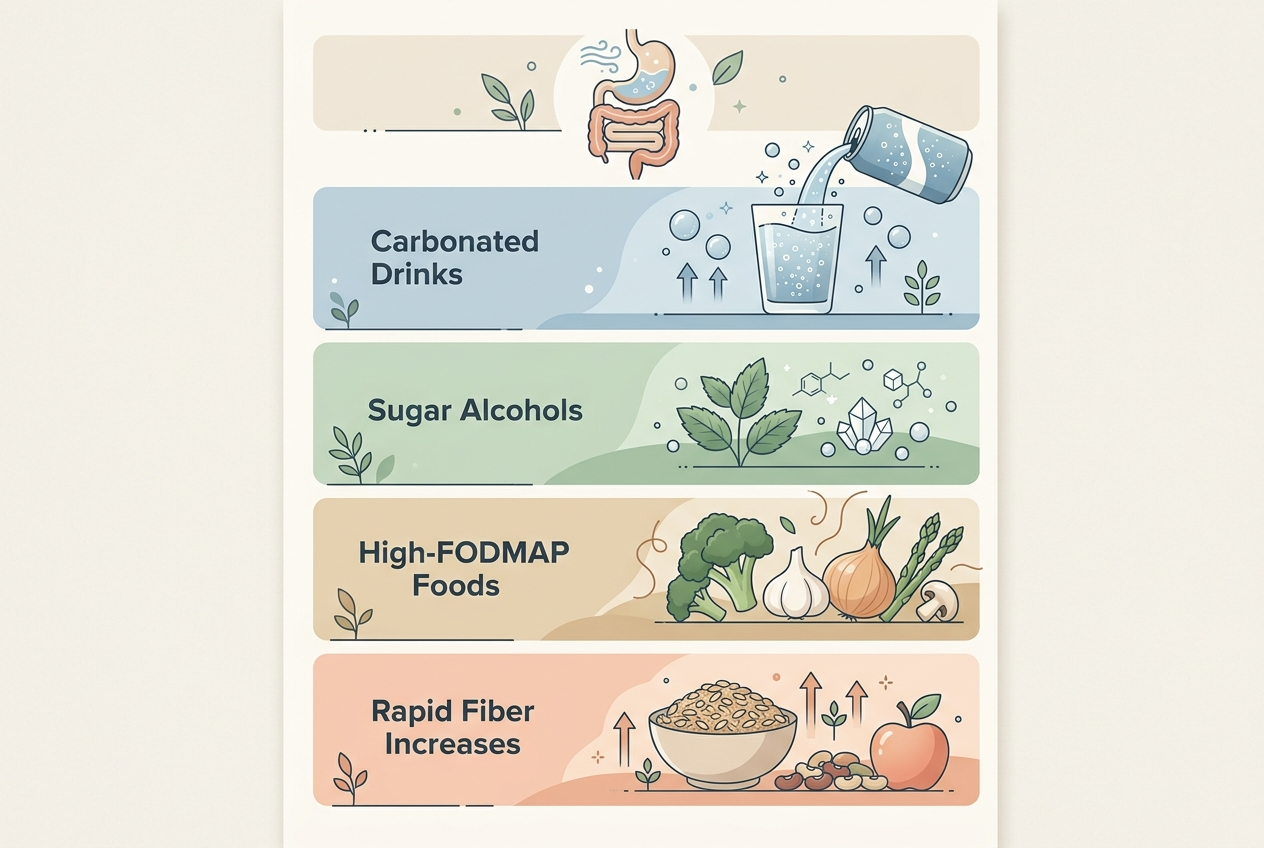
Bloating usually improves when the stomach receives smaller meals, slower eating, adequate hydration, and a short walk after eating. A practical first step is to identify triggers: carbonated drinks, sugar alcohols, large fatty meals, rapid fiber increases, constipation, and high-FODMAP foods. Persistent, painful, or worsening bloating belongs in a clinician conversation.
How did we evaluate what to do about bloating?
Editorial review prioritized human guidance from NIDDK, the NIH Office of Dietary Supplements, peer-reviewed gastroenterology reviews, and dietetics frameworks over animal data, anecdotal threads, case reports, and supplement marketing claims because adult digestive patterns differ from laboratory models. The criteria weighted five practical factors: timing after meals, bowel pattern changes, likely fermentable carbohydrate load, hydration and movement, recent medication changes, and red-flag symptoms that require professional evaluation. Stronger evidence included guideline-level statements and randomized human diet studies; directional evidence included strain-specific probiotic findings, small fiber trials, and individual food-trigger patterns that do not generalize to every person from one week to the next. This article excludes cure claims, disease-specific protocols, and commercial recommendations for general adult wellness questions because everyday digestive bloating has multiple causes and no single routine fits every digestive system, meal pattern, or self-tracking decision.
What is bloating and why does it happen?
Bloating is a sensation of abdominal fullness, pressure, or swelling; distention is visible abdominal enlargement. The National Institute of Diabetes and Digestive and Kidney Diseases states that digestive gas symptoms include belching, bloating, distention, and flatulence, and that some symptoms are normal during or after meals (NIDDK). Swallowed air, gut bacterial fermentation, slow transit, constipation, and visceral sensitivity all contribute to the bloated feeling. High-FODMAP carbohydrates feed colonic bacteria; Monash University explains that FODMAP fermentation produces gas and draws water into the intestine (Monash FODMAP). The practical implication is simple: bloating is not always “too much food.” Food volume sets the stage, but fermentation and transit shape the duration. Bloating reflects a mismatch between meal size, carbohydrate fermentation, gut motility, and individual sensitivity.
What should you do first when bloating starts?
The first response should reduce mechanical pressure and improve digestive movement. Smaller portions give the stomach less volume to stretch. Slower eating at the table reduces swallowed air. Water supports normal stool consistency, and a 10- to 20-minute walk after a meal encourages gentle motility without forcing intense exercise. A simple symptom log should record meal timing, carbonated drinks, chewing gum, sugar alcohols, fiber amount, bowel movements, menstrual timing, sleep, caffeine, alcohol, and stress. The goal is pattern recognition, not food fear. If bloating appears after one large meal, the best next step is a lighter, slower next meal. If bloating appears daily, the next step is to check constipation, high-FODMAP stacking, lactose exposure, and rapid fiber changes. A clinician should guide the process when symptoms are severe, persistent, or paired with warning signs.
Which foods and eating patterns commonly drive bloating?
Several food patterns increase gas, water retention in the intestine, or swallowed air. Carbonated drinks deliver gas directly into the stomach. Sugar alcohols such as sorbitol, mannitol, xylitol, and erythritol can pull water into the bowel and ferment in the colon. FODMAP groups include lactose, excess fructose, fructans, galacto-oligosaccharides, and polyols; common sources include milk, apples, onions, garlic, wheat, beans, and some protein bars. Large fatty meals can slow stomach emptying, which prolongs fullness. A sudden jump from low fiber to high fiber can overwhelm gut adaptation, even when the food itself is nutritious. Serving size matters as much as the ingredient. The evidence caveat matters: FODMAP sensitivity is individual, and restriction works best as a short structured experiment, not a permanent “avoid everything” list. Reintroduction identifies personal thresholds more accurately than blanket elimination.
When can fiber, probiotics, or enzymes fit into a bloating plan?
Fiber, probiotics, and digestive enzymes fit best after the basics are checked: meal pace, constipation, hydration, carbonated drinks, and trigger stacking. Soluble fiber can support stool regularity, but a fast increase can worsen gas; gradual titration is the safer strategy. Probiotics are strain-specific, not category-wide. The NIH Office of Dietary Supplements defines probiotics as live microorganisms that provide benefits when consumed in adequate amounts and notes that effects depend on strain, dose, and condition (NIH ODS). Lactase enzymes support lactose digestion when lactose is the clear trigger, and alpha-galactosidase supports digestion of some bean and vegetable carbohydrates. Start low and reassess after one consistent week. The sourcing caveat is important: guideline-level evidence supports some diet approaches more strongly than broad supplement claims, and individual response determines whether a digestive aid belongs in a routine.
What do people often get wrong about bloating?
The first mistake is assuming bloating always means weight gain. Bloating describes pressure, gas, fluid shifts, or stool burden; body fat changes require a different timeline. The second mistake is cutting out every “healthy” food at once. Beans, onions, apples, dairy, wheat, and cruciferous vegetables can trigger symptoms in some contexts, but those foods also provide nutrients, fiber, and food variety. The third mistake is adding multiple interventions simultaneously. If a person starts fiber powder, fermented foods, magnesium, probiotics, and a new high-protein bar in the same week, the cause of improvement or discomfort becomes impossible to identify. The fourth mistake is ignoring constipation. Stool retention can increase gas trapping and abdominal pressure. Clear sequencing protects the signal and reduces unnecessary restriction. A one-change-at-a-time approach gives the digestive system clearer feedback and gives the person better data.
When should bloating be discussed with a clinician?
Bloating deserves professional evaluation when it is persistent, progressively worsening, painful, or disruptive to daily life. NIDDK advises talking with a doctor when gas symptoms occur often, bother a person, or affect daily activities (NIDDK). Urgent conversation is especially important when bloating appears with unintentional weight loss, blood in stool, fever, repeated vomiting, trouble swallowing, anemia, new severe constipation, persistent diarrhea, or a firm enlarging abdomen. A clinician can assess medication effects, pregnancy, lactose maldigestion, celiac disease, inflammatory conditions, pelvic conditions, and bowel motility changes without relying on guesswork. Age, symptom duration, and family history also change the risk picture. The practical rule is conservative: occasional meal-related bloating can be tracked at home, but new, severe, or unexplained bloating should not be managed only with internet advice.
For a detailed comparison of specific products and strains, see Best Fiber Supplement for Bloating and Digestion: What to Look For.
For a detailed comparison of specific products and strains, see 5 Small Habits That Can Help Reduce Bloating: What to Test First.
What questions do people ask about bloating?
What relieves bloating quickly?
A short walk, upright posture, water, and a lighter next meal reduce pressure for many routine meal-related episodes. Carbonated drinks, chewing gum, and large high-fat meals should be paused when the abdomen already feels stretched.
Does drinking more water help bloating?
Water supports normal stool consistency and can help when constipation contributes to bloating. Water does not erase fermentation gas instantly, so hydration works best alongside movement, slower eating, and adequate fiber pacing.
Can probiotics help with bloating?
Probiotics can help some people, but effects are strain-specific and not guaranteed. NIH ODS states that probiotic benefits depend on adequate amounts and the specific microorganism, so a generic “more probiotics” plan is less precise than a tracked trial.
Should fiber be reduced when bloated?
Fiber should not automatically be removed. A rapid fiber increase can cause gas, but gradual soluble fiber intake can support regularity when constipation is part of the pattern.
Are high-FODMAP foods bad for digestion?
High-FODMAP foods are not inherently bad. Monash University describes FODMAPs as short-chain carbohydrates that can ferment and draw water into the intestine, so personal threshold testing is more useful than permanent avoidance.
How long should normal bloating last?
Meal-related bloating often settles as food moves through the digestive tract. Bloating that persists for days, worsens, or appears with warning signs belongs in a clinician conversation rather than a trial-and-error routine.
Can stress make bloating worse?
Stress can change eating speed, breathing patterns, gut sensitivity, and bowel rhythm. A calm meal pace, consistent sleep, and light movement support the gut-brain routine without implying that symptoms are “just stress.” The pattern still deserves attention when it persists.
Leave a Reply