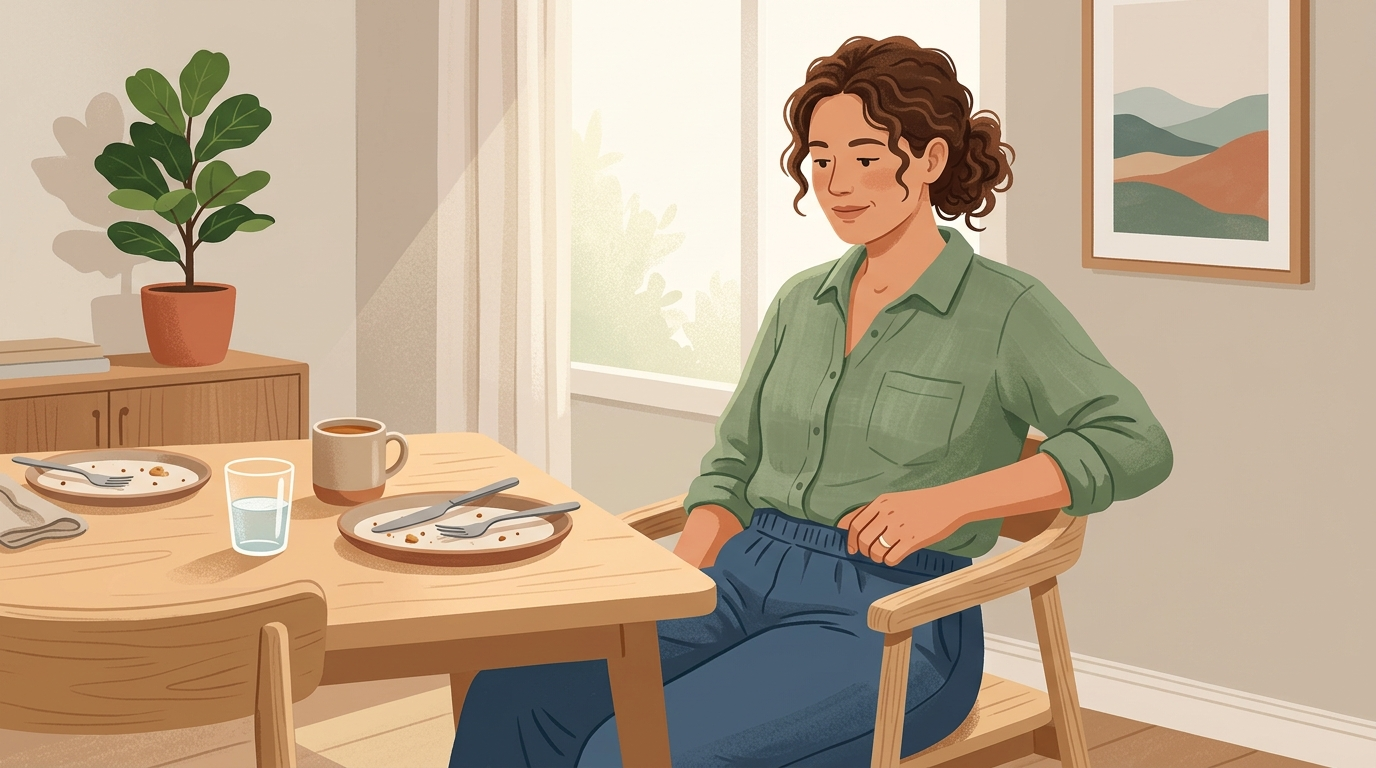
Tight waistbands can make bloating and stomach discomfort feel worse because abdominal pressure changes how gas, stool, and sensitive gut nerves feel. Clothing does not create digestive disease by itself, but compression can amplify normal distension, constipation, reflux pressure, or IBS-type sensitivity. Looser fits and symptom tracking usually clarify the pattern.
How did we evaluate pants-related bloating?
We evaluated this question as a mechanical-pressure problem first, not as a supplement-shopping problem. We prioritized medical references on abdominal bloating, intestinal gas, constipation, reflux, and visceral hypersensitivity from NIDDK, Mayo Clinic, and peer-reviewed gastroenterology sources. We excluded anecdote-only explanations that blame toxins, posture alone, or a single food without a repeatable pattern. The evidence is indirect because few clinical trials study waistband pressure specifically, so this article connects established digestive physiology to the common experience of tight clothing making symptoms feel louder. We also separated low-risk self-observation from medical triage, because pressure sensitivity can be harmless while persistent pain can deserve evaluation. Clothing is treated as one modifiable input, not as a complete explanation for every abdominal symptom. This keeps the advice useful for everyday pattern-finding without turning clothing into a diagnosis today.
Can tight pants actually make bloating feel worse?
Tight pants can make bloating feel worse by increasing external pressure against an already distended abdomen. Gas, stool volume, swallowed air, and normal intestinal movement can all expand the belly during the day. The NIDDK explains that gas and bloating commonly relate to swallowed air, digestion, constipation, and food fermentation, so pressure from denim, shapewear, belts, or high-waisted leggings can make ordinary distension feel sharper. Clothing pressure does not prove a dangerous cause. It simply reduces the abdomen’s ability to expand comfortably. People with IBS-type sensitivity may notice this more because visceral nerves can react strongly to normal stretch. The useful test is repeatability: if the same meal feels better in loose pants than in compressed clothing, pressure is probably part of the symptom stack. That pattern gives you a practical experiment without turning one uncomfortable outfit into a diagnosis.
Why can waistband pressure trigger stomach pain?
Waistband pressure can trigger stomach pain when compression pushes against the abdominal wall, stomach, and intestines while digestive contents are moving. The abdomen normally expands after meals because the stomach receives food, the colon stores gas, and the small intestine moves fluid. A rigid waistband turns that expansion into pressure. The Mayo Clinic notes that bloating can come from gas, constipation, food intolerance, and digestive disorders, but clothing can change how those causes feel. High-waisted garments may also press near the lower ribs and upper stomach, which can make reflux-prone pressure feel more noticeable after large meals. The pattern matters more than one episode. Pain that appears only during compression and eases after loosening clothing points toward mechanical sensitivity. Pain with fever, vomiting, blood, fainting, or unexplained weight loss needs medical attention. Upper-abdominal pressure after meals can also overlap with reflux-like fullness, so timing and location should be logged together.
What patterns suggest clothing pressure is the main issue?
A clothing-pressure pattern usually has three features: timing, location, and relief. Timing means symptoms appear after sitting, eating, commuting, exercising, or wearing the same tight garment for several hours. Location means pressure feels strongest where the waistband, belt, button, or shapewear edge contacts the abdomen. Relief means symptoms improve when the garment is loosened, replaced with a soft waistband, or removed. This pattern is different from random bloating that appears regardless of clothing. It is also different from persistent abdominal pain that wakes someone from sleep or continues after pressure is gone. A simple seven-day log can separate clothing pressure from food triggers. Record garment type, meal size, sitting time, bowel movement pattern, gas, and symptom intensity. If loose clothing repeatedly reduces symptoms, compression is a modifiable trigger. If the same symptoms appear in loose clothing, during sleep, or before meals, the clothing theory becomes weaker and another digestive pattern deserves attention.
What should you try before blaming one food?
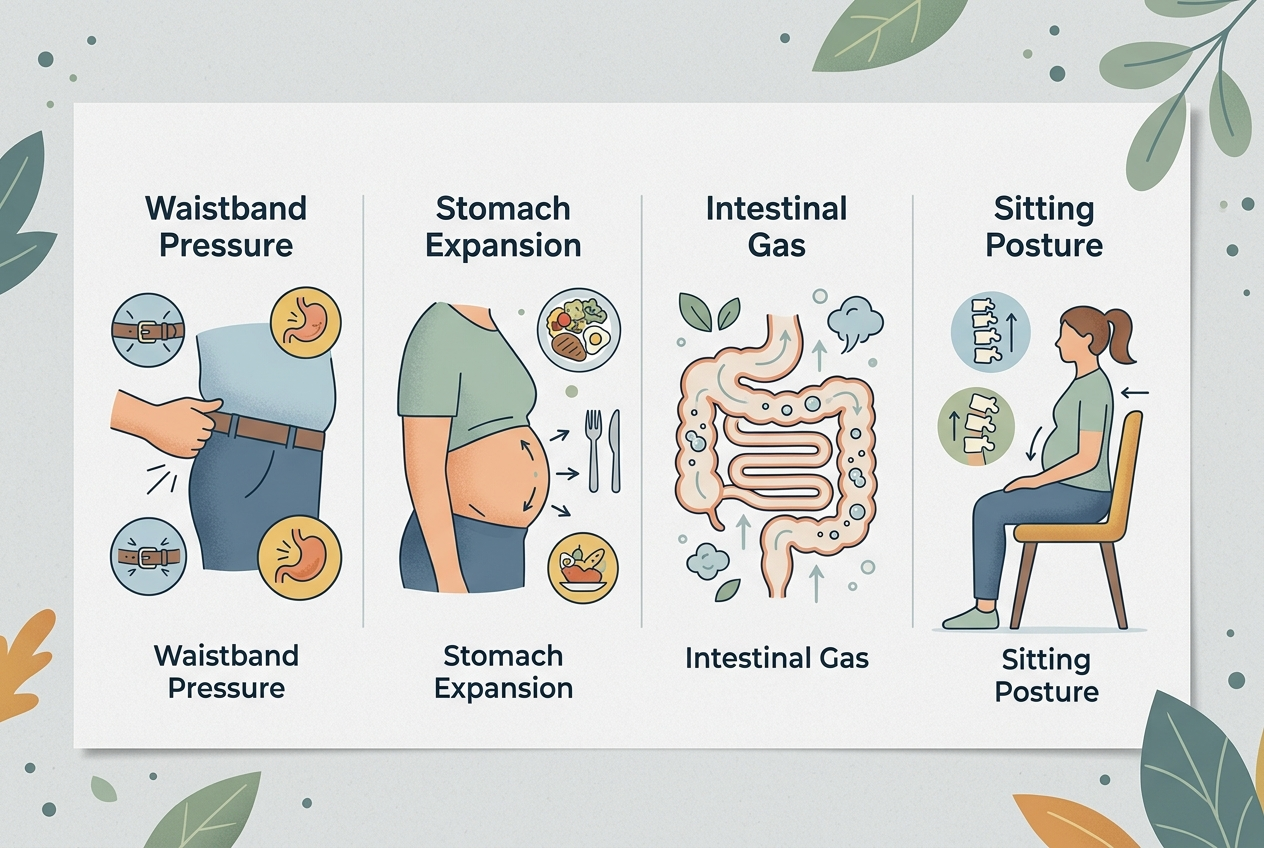
Try changing one variable at a time before blaming gluten, dairy, coffee, or a broad food group. First, wear a soft waistband for three comparable meals and note whether pressure, belching, gas, or pain changes. Second, reduce meal size slightly when wearing structured clothing, because stomach expansion plus compression often feels worse than either factor alone. Third, avoid stacking triggers: tight pants, carbonated drinks, fast eating, and prolonged sitting can create the same bloated result. The NIDDK constipation guide notes that stool retention can contribute to abdominal discomfort and bloating, so bowel regularity belongs in the log too. If symptoms improve with looser clothing, the answer is not dramatic. The body simply needed more room while digestion was happening. This experiment also protects you from unnecessary restriction, because food elimination is easier to start than to interpret once multiple foods disappear.
When should bloating from clothing be checked by a clinician?
Bloating that only happens with tight clothing and improves quickly after loosening the waistband is usually a pattern to monitor, not a diagnosis. Medical evaluation becomes important when symptoms are severe, new, persistent, or paired with red flags. Red flags include vomiting, black or bloody stool, fever, fainting, difficulty swallowing, unexplained weight loss, persistent diarrhea, progressive constipation, or pain that localizes sharply to one side. The American College of Gastroenterology describes alarm features as reasons to seek professional evaluation rather than self-manage symptoms. Pregnancy, recent abdominal surgery, inflammatory bowel disease, celiac disease, endometriosis, and gallbladder history also change the risk calculation. Clothing pressure can coexist with medical issues. The practical rule is simple: if removing pressure does not reliably resolve the problem, do not let the clothing explanation become a blind spot. A clinician can connect symptom timing with history, medications, and exam findings more safely than a waistband test can.
What questions do people ask about pants and bloating?
Can high-waisted leggings cause bloating?
High-waisted leggings do not create gas, but they can make existing gas or meal-related expansion feel more intense. Compression near the upper abdomen can also make post-meal fullness feel more noticeable.
Why do jeans hurt my stomach when I sit?
Sitting folds the abdomen and concentrates waistband pressure in one line. If the stomach or colon is already distended, that line can irritate sensitive abdominal nerves.
Does shapewear make reflux feel worse?
Shapewear can increase pressure around the stomach after meals. People who already notice reflux-like pressure may feel worse when compression and large meals overlap.
Should I avoid tight clothes if I have IBS?
Loose or flexible waistbands may help people with IBS-type sensitivity tolerate normal gas and stool movement more comfortably. Clothing changes do not replace medical care, but they can reduce a repeatable mechanical trigger.
Is bloating from pants the same as weight gain?
No. Bloating changes during the day, while body-fat change does not appear and disappear within hours. A waistband that feels fine in the morning and painful after lunch usually points toward distension or pressure sensitivity.
What is the fastest way to test the clothing link?
Wear a loose waistband for two similar meals and compare symptoms with your usual jeans, belt, or leggings. Keep food, meal size, and sitting time as similar as possible.
Can posture make tight-waist bloating worse?
Yes. Slouched sitting compresses the abdomen more than standing or relaxed upright sitting. Posture is not the whole cause, but it can intensify pressure from structured waistbands.
For a detailed comparison of specific products and strains, see Constipation and Bloating Daily? Match the Right Support to the Pattern.
For a detailed comparison of specific products and strains, see Upper Middle Stomach Pain and Bloating: Options to Compare Before Guessing.
Image prompts
- Hero image: Neutral educational photo of a person seated at a table loosening a tight waistband after a meal, soft natural light, no brand logos, no medical setting. Alt text: Person loosening a tight waistband while seated after eating.
- Inline image: Simple flat-lay diagram showing waistband pressure, stomach expansion, intestinal gas, and sitting posture as separate factors. Alt text: Diagram of how waistband pressure can make bloating feel worse.
Leave a Reply