
Bloating usually improves when you slow eating speed, reduce swallowed air, identify fermentable trigger foods, take a short walk, and track patterns for several days. Persistent, painful, suddenly changed, or weight-loss-associated bloating needs medical review. Diet changes work best when they are specific, temporary, and guided by symptoms rather than fear.
How did we evaluate what to do about bloating?
This article evaluated bloating advice by prioritizing gastroenterology guidance from NIDDK, human diet research, and safety statements from NIH-linked sources. The strongest recommendations were practical actions with low risk: eating slowly, limiting carbonated drinks, testing trigger carbohydrates, and using a symptom diary. Evidence for special diets was treated as condition-specific because the low-FODMAP approach has clinical support for irritable bowel syndrome but is not a universal bloating diet. Supplement advice was limited because probiotic effects are strain-specific, condition-specific, and regulated differently from medicines in the United States. This article excluded detox claims, one-food cures, and social-media rules that remove broad food groups without a clear pattern. The main limitation is that bloating has multiple causes, so self-care steps cannot replace evaluation when symptoms are severe, new, or disruptive.
What usually causes bloating?
Bloating is a feeling of abdominal fullness or swelling, and distention means the abdomen becomes visibly larger. The digestive tract creates gas when swallowed air moves through the stomach and when colon bacteria ferment undigested carbohydrates. The National Institute of Diabetes and Digestive and Kidney Diseases says common gas symptoms include belching, bloating, distention, and passing gas, and some gas after meals is normal (NIDDK). Frequent bloating usually reflects one of four patterns: eating too fast, drinking carbonated beverages, eating large meals, or reacting to carbohydrates such as lactose, fructose, fructans, galactans, or polyols. Constipation can also increase abdominal pressure because slower stool movement gives gas more time to accumulate. Stress can amplify gut sensation through the gut-brain axis, but stress is not the only cause. Menstrual-cycle fluid shifts can add another nonfood pattern for some people.
What should you do first when bloating starts?
The first step is to reduce new gas input for the next meal window. Eat slowly, sit upright, avoid straws, pause carbonated drinks, skip chewing gum, and take a gentle 10- to 20-minute walk after eating. NIDDK lists swallowing less air and changing eating habits as first-line ways to reduce gas symptoms (NIDDK). A warm drink may feel soothing, but the useful action is the slower pace, not a special ingredient. Tight waistbands can increase discomfort, so looser clothing can reduce pressure while digestion continues. Avoid stacking multiple interventions at once because that makes the trigger harder to identify. If bloating follows one meal, write down meal timing, portion size, carbonated drinks, gum, dairy, wheat, beans, cruciferous vegetables, sugar alcohols, stress, and bowel movement timing within 24 hours. That record turns a vague symptom into a testable pattern.
Which food changes are worth testing?
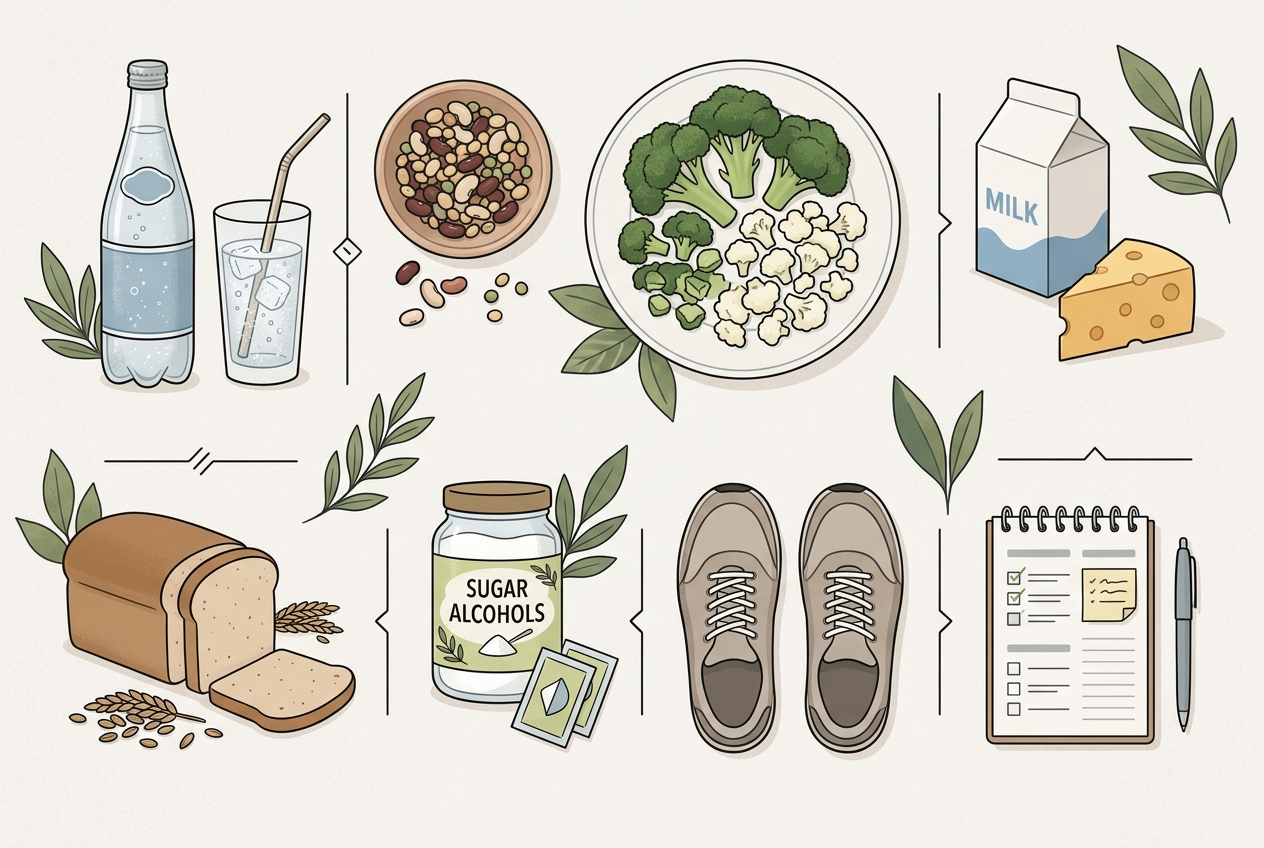
Food testing should start with pattern recognition, not broad restriction. NIDDK identifies several common gas-producing categories: apples, pears, cruciferous vegetables, beans, lentils, dairy, whole wheat, high-fructose corn syrup drinks, and sugar alcohols ending in “-ol,” including sorbitol and xylitol (NIDDK). Choose one likely category, reduce it for one to two weeks, and then reintroduce it in a normal portion to confirm the pattern. The low-FODMAP diet is more structured; a review in the Journal of Gastroenterology and Hepatology reported that global restriction of fermentable short-chain carbohydrates reduced functional gut symptoms in clinical trials, but the authors emphasized dietitian-led implementation (PubMed). Fiber deserves caution: sudden increases in inulin, chicory root fiber, beans, or large bran servings can increase gas before tolerance develops. Smaller portions often solve more than permanent elimination.
When should bloating lead to medical care?
Medical review matters when bloating changes suddenly, disrupts daily activity, appears with persistent abdominal pain, constipation, diarrhea, vomiting, fever, blood in stool, unintentional weight loss, anemia, or trouble swallowing. A clinician may evaluate lactose intolerance, celiac disease, irritable bowel syndrome, small intestinal bacterial overgrowth, medication effects, or gynecologic causes depending on the full symptom picture. Seek faster care when bloating is severe, progressive, or paired with intense pain. Self-care works best for mild, meal-linked bloating that improves within hours. Recurrent bloating still deserves a symptom diary because timing, stool changes, menstrual cycle timing, and food categories help a clinician choose sensible next steps. Bring the diary, current medications, supplement list, and recent diet changes to the visit. Clear records reduce guesswork and keep the conversation focused on recurring patterns rather than memory.
What role can probiotics or supplements play?
Probiotics and digestive supplements should be treated as targeted tools, not universal bloating fixes. The National Center for Complementary and Integrative Health explains that probiotic effects differ by microorganism type and that one Lactobacillus strain cannot be assumed to work like another Lactobacillus or Bifidobacterium strain (NCCIH). Lactase can help when lactose intolerance is the confirmed trigger; alpha-galactosidase may help some people with beans or legumes. Simethicone may reduce gas discomfort for some users, but response varies. A reasonable trial uses one change at a time, a fixed start date, a simple symptom score, and a stop point after two to four weeks if nothing changes. Anyone pregnant, immunocompromised, medically fragile, or taking regular medication should ask a clinician before using probiotics or concentrated supplements. Safety matters more than novelty when bloating is already uncomfortable.
For a detailed comparison of specific products and strains, see What Should I Take for Gas and Bloating? A Practical Comparison of Probiotics, Enzymes, and Fiber.
For a detailed comparison of specific products and strains, see 5 Small Habits That Can Help Reduce Bloating: What to Test First.
What questions do people ask about bloating?
Is bloating always caused by too much gas?
No. Bloating is the sensation of abdominal fullness, while distention is visible enlargement. Gas can contribute, but constipation, gut sensitivity, meal size, fluid shifts, and menstrual cycle timing can also change how the abdomen feels.
How long should normal bloating last after eating?
Meal-related bloating often improves within a few hours as the stomach empties and gas moves through the intestines. Bloating that persists for days, worsens progressively, or changes suddenly needs more attention than predictable post-meal fullness.
Should I cut out gluten for bloating?
Gluten removal is medically necessary for celiac disease, but bloating after wheat is not always a gluten reaction. Wheat also contains fructans, a FODMAP carbohydrate, so a dietitian can help separate gluten, fructan, portion-size, and overall fiber effects.
Do carbonated drinks make bloating worse?
Carbonated drinks can increase swallowed gas and stomach pressure, especially when consumed quickly or through a straw. A simple test is to pause sparkling water, soda, beer, and fizzy energy drinks for one week and compare symptoms.
Can walking help bloating?
Gentle walking can support normal gas movement and reduce the feeling of pressure after a large meal. Intense exercise right after eating can feel worse for some people, so a slow 10- to 20-minute walk is the safer first test.
Are detox teas useful for bloating?
Detox teas are not a reliable bloating strategy. Stimulant-laxative formulas can cause cramping, urgency, dehydration, or dependence when overused, and they do not identify the reason bloating keeps returning.
A practical bloating plan starts with air reduction, meal pacing, a short walk, and a focused food-and-symptom diary. If symptoms are persistent, painful, suddenly different, or paired with bowel changes or weight loss, medical review is the next step.
Leave a Reply