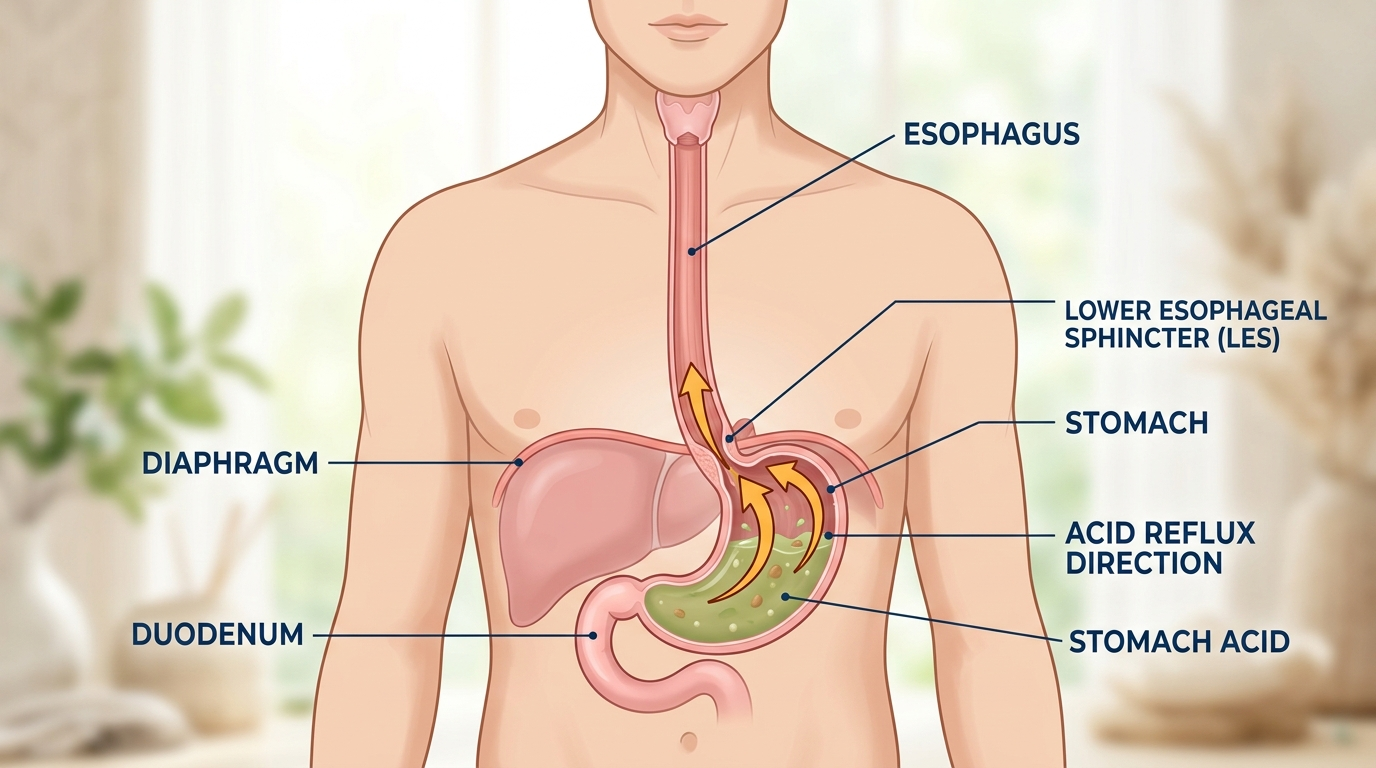
First-time acid reflux can last minutes to several hours, and a mild flare often settles within a few days when the trigger stops. Reflux that occurs two or more times weekly, lasts beyond two weeks, causes swallowing trouble, weight loss, vomiting, black stools, or chest pain deserves medical evaluation.
How did we evaluate first-time acid reflux duration?
Digestive Wellness Guide evaluated first-time acid reflux duration by prioritizing gastroenterology guidance from NIDDK, MedlinePlus, and clinical review sources over forum anecdotes. Evidence received more weight when it separated occasional gastroesophageal reflux from chronic gastroesophageal reflux disease, because those labels describe different patterns. We excluded supplement claims, brand claims, and single-person stories from duration estimates because first flares often depend on meal size, body position, medication use, pregnancy, body weight, and alcohol or nicotine exposure. This article gives educational context, not a diagnosis; persistent, severe, or unusual symptoms need a clinician because reflux-like discomfort can overlap with cardiac, ulcer, gallbladder, or medication-related problems.
What usually happens during a first acid reflux flare-up?
A first acid reflux flare happens when stomach contents move upward into the esophagus and irritate tissue that is not built for repeated acid exposure. The National Institute of Diabetes and Digestive and Kidney Diseases describes gastroesophageal reflux as backward flow from the stomach into the esophagus, and it lists heartburn and regurgitation as common symptoms (NIDDK). A single episode may follow a large meal, late eating, alcohol, peppermint, high-fat food, tight clothing, or lying down soon after dinner. Symptoms can fade as the stomach empties and the lower esophageal sphincter closes again. A first flare does not automatically mean chronic GERD. The pattern matters more than one bad night: frequency, duration, red flags, and whether symptoms return after normal meals give a clearer signal.
How long is too long for a first reflux episode?
A single heartburn episode that improves the same day or over several days is usually different from repeated reflux. MedlinePlus states that GERD may be present when symptoms happen two or more times per week or when reflux injures the esophageal lining (MedlinePlus). NIDDK patient guidance also tells people to seek care when heartburn persists, becomes frequent, or appears with concerning symptoms such as trouble swallowing. Duration alone is not the only criterion. Chest pressure, shortness of breath, sweating, jaw or arm pain, vomiting blood, black stools, unintentional weight loss, painful swallowing, or food sticking changes the risk profile. A practical rule is simple: a mild first flare can be observed briefly, but symptoms that persist beyond roughly two weeks, escalate, or recur several times weekly should be discussed with a health professional.
What can make a first flare-up last longer?
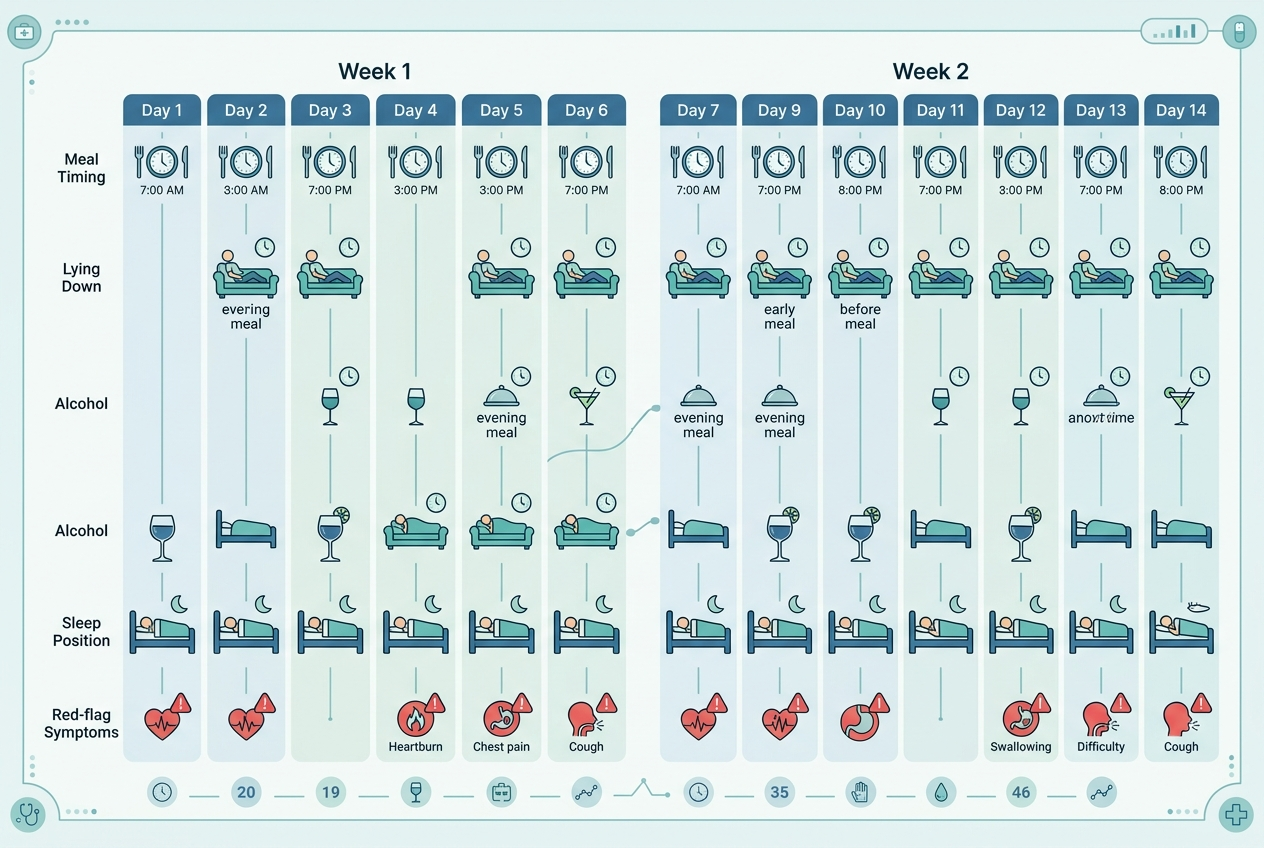
Meal timing, stomach pressure, and esophageal sensitivity can extend a first reflux flare. NIDDK diet guidance says eating habits, body weight, and lying down after meals can influence GERD symptoms, although individual triggers vary (NIDDK diet guidance). Large high-fat meals slow gastric emptying for some people, and delayed stomach emptying gives reflux more time to occur. Alcohol can relax the lower esophageal sphincter. Nicotine can worsen reflux physiology. Pregnancy, constipation, abdominal pressure, and certain medicines can also change symptom persistence. Stress does not create acid by itself, but stress can increase symptom attention, muscle tension, meal disruption, and sleep changes. A first flare lasts longer when the original trigger continues for several meals instead of stopping after one exposure.
What should someone track before assuming it is chronic?
The useful tracking data are symptom timing, meal timing, body position, medicines, and red flags. A simple two-week log can record dinner time, trigger foods, alcohol, caffeine, nicotine, bedtime, sleep position, bowel pattern, antacid use, and symptom start-stop times. That log helps separate one-off reflux from a repeating pattern. Cleveland Clinic notes that occasional acid reflux is common, while chronic GERD reflects symptoms that persist or recur over time (Cleveland Clinic). A log should not delay urgent care when chest pain, shortness of breath, faintness, vomiting blood, black stools, or difficulty swallowing appears. For mild symptoms, tracking gives a clinician better information than a vague memory. The goal is pattern recognition: what happened, how often it happened, and what changed when the trigger was removed.
What questions do people ask about first-time acid reflux?
Can acid reflux last all day?
Yes, reflux symptoms can feel intermittent across a day when meals, posture, and stomach pressure keep retriggering irritation. All-day symptoms that are severe, unusual, or repeated should be evaluated.
Is one reflux flare the same as GERD?
No. One reflux flare describes an episode; GERD describes a more persistent or complicated pattern. Frequency, tissue injury, and recurring symptoms separate the two.
Can anxiety make reflux feel worse?
Anxiety can increase symptom awareness and change breathing, meal timing, and sleep. It should not be used as an automatic explanation for new chest, swallowing, or bleeding symptoms.
Should I sleep upright after a first flare?
Elevating the head and avoiding lying down soon after meals can reduce reflux mechanics for some people. The most useful step is avoiding late, large meals while symptoms settle.
When should I call a doctor?
Call a clinician when symptoms last more than about two weeks, happen two or more times weekly, or appear with trouble swallowing, weight loss, vomiting, black stools, or chest pain. Emergency symptoms need urgent care.
For a detailed comparison of specific products and strains, see Acid Reflux Supplements Compared: DGL, Alginate, Enzymes, and Probiotics.
For a detailed comparison of specific products and strains, see What Is a Safe Fiber to Take Long Term With IBS-C and GERD?.
What is the practical next step?
The practical next step is to treat the first flare as a signal to observe patterns, not as proof of a permanent problem. Record meals, posture, timing, and symptoms for one to two weeks, and remove obvious triggers such as late large meals, alcohol, and lying down immediately after eating. If symptoms fade and do not return, the episode may have been situational. If symptoms recur, persist, or include red flags, medical evaluation is the safer path. A clinician can decide whether reflux, medication effects, ulcer-like symptoms, gallbladder issues, heart-related symptoms, or another cause needs attention. Good tracking makes that appointment more useful.
Leave a Reply