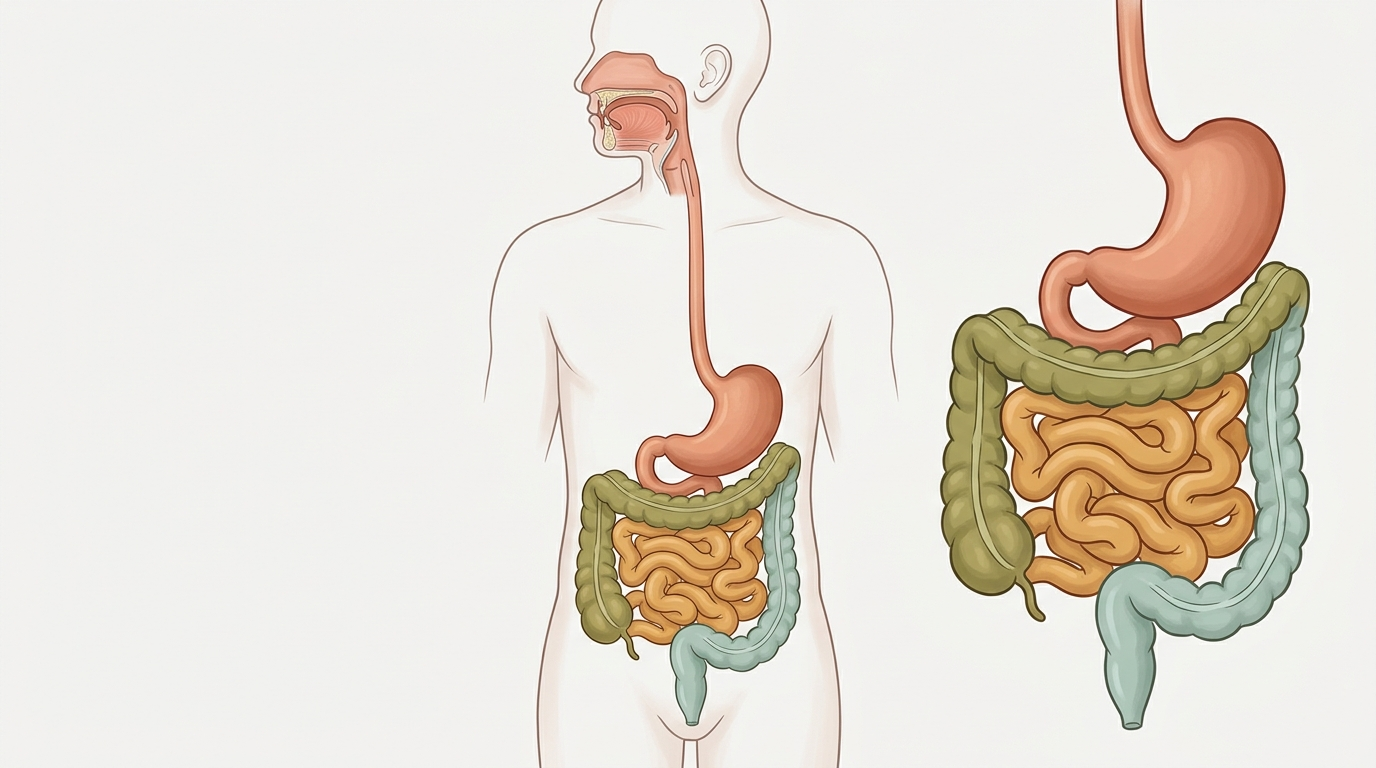
Digestion works as a coordinated sequence: the mouth breaks food apart, the stomach mixes it with acid, the small intestine absorbs most nutrients, and the colon handles water, fiber fermentation, and stool formation. Timing varies by meal size, fat, protein, fiber, hormones, nerves, gut bacteria, and individual motility patterns.
How did we evaluate how digestion works?
We evaluated digestion through anatomy, physiology, motility, absorption, and microbiome roles rather than through one fixed “digestion time” rule. Government medical references received priority because NIDDK explains digestive organs and common gas patterns in patient-facing language. Peer-reviewed physiology concepts shaped the sequence, but we avoided claims that require testing, diagnosis, or individualized treatment. This article explains normal digestive coordination; persistent pain, vomiting, bleeding, unintended weight loss, or major bowel changes deserve clinician evaluation.
What happens first when food enters the digestive system?
Digestion starts before food reaches the stomach. Chewing increases surface area, saliva moistens food, and salivary amylase begins starch breakdown in the mouth. The esophagus moves swallowed food by peristalsis, which means coordinated muscle contractions push the bolus toward the stomach. The lower esophageal sphincter opens briefly, then closes to reduce backward movement of stomach contents. According to NIDDK, digestion uses organs, nerves, hormones, bacteria, and blood flow to turn food and liquid into usable nutrients (NIDDK). This process does not run like a simple timer. A high-fat meal, large meal, alcohol, stress, and some medications can slow gastric emptying, while liquids usually move faster. The practical takeaway is simple: the digestive tract processes mixed meals dynamically, not in separate isolated batches.
How does the stomach decide when food moves forward?
The stomach stores food, churns it with acid and pepsin, and releases partially digested chyme through the pyloric sphincter in controlled pulses. Gastric emptying depends on meal volume, particle size, fat content, calorie load, and feedback from the small intestine. The duodenum slows stomach release when chyme is too acidic, too fatty, or too concentrated because pancreatic enzymes and bile need time to work. Hormones such as cholecystokinin, secretin, and gastrin help coordinate that traffic. A snack eaten after lunch does not “restart” digestion from zero; it adds new material to an active system. The stomach can hold, mix, and release at the same time. That is why fullness, belching, or bloating can change over several hours after one meal. The stomach functions like a regulated mixing chamber, not a waiting room with one departure schedule.
Where are nutrients actually absorbed?
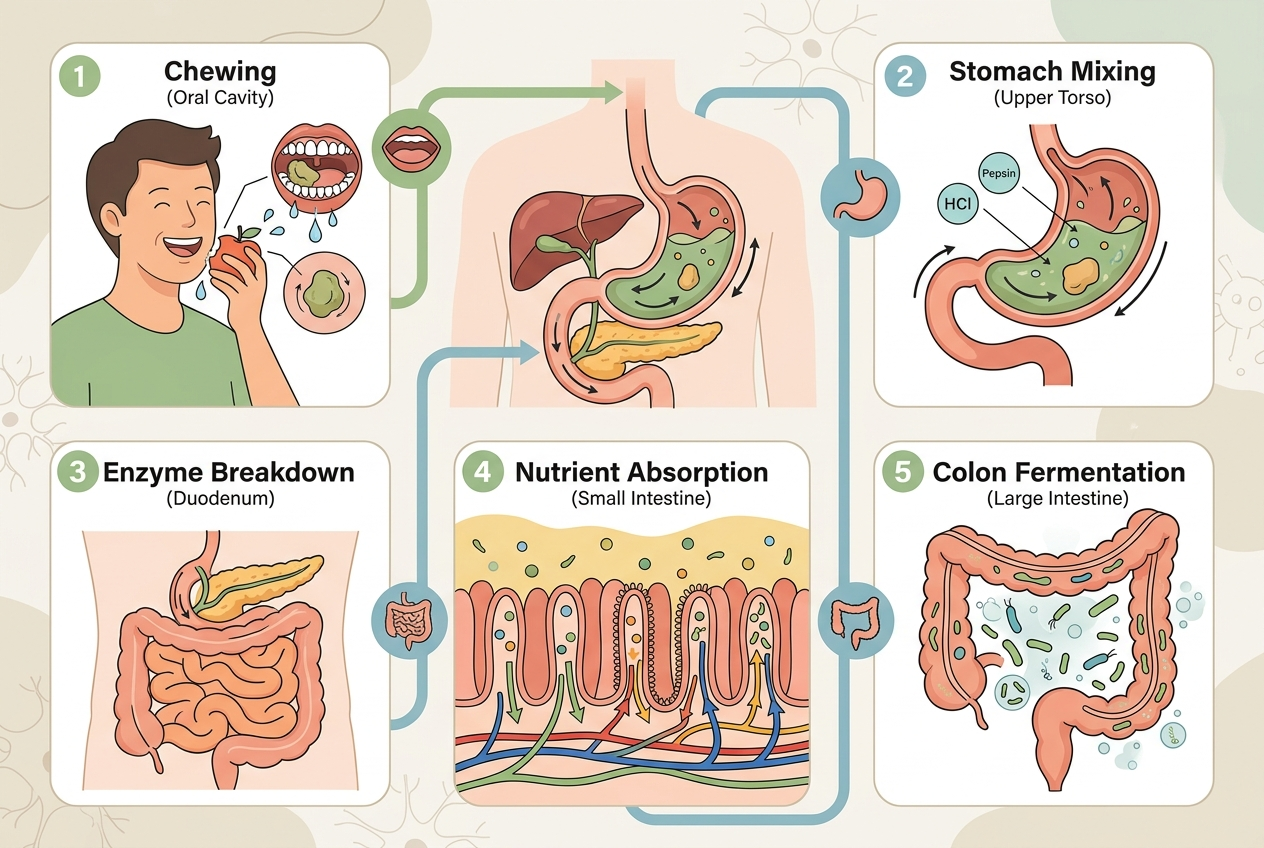
The small intestine handles most nutrient absorption. The pancreas releases enzymes that help break down carbohydrates, proteins, and fats, while bile from the liver and gallbladder helps emulsify fat. The intestinal lining uses villi and microvilli to increase surface area, so amino acids, sugars, fatty acids, vitamins, minerals, and electrolytes can move into blood or lymph. NIDDK describes digestion as the process that makes nutrients available for energy, growth, and cell repair (NIDDK). Fiber behaves differently because human enzymes do not digest many fiber types fully. Soluble fiber can hold water and later become fermentation substrate for colon bacteria. Insoluble fiber can increase stool bulk and support transit regularity. Nutrient absorption is therefore mostly a small-intestine job, while fiber effects are shared between the small intestine, colon, and microbiome.
What role do gut bacteria and gas play?
Gut bacteria mainly act in the colon, where they ferment undigested carbohydrates, resistant starches, and some fibers. Fermentation can produce short-chain fatty acids, carbon dioxide, hydrogen, methane, and other compounds. Gas is not automatically a sign that digestion is broken. NIDDK reports that gas normally leaves through belching or flatulence and that bloating is a common fullness or swelling sensation (NIDDK gas guide). The important distinction is pattern. Occasional gas after beans, onions, wheat, dairy, sugar alcohols, or large fiber increases is expected for many people. Severe pain, vomiting, blood, fever, unintended weight loss, or persistent diarrhea changes the risk profile. Bacteria help finish parts of digestion that human enzymes cannot complete, but bacterial fermentation can also create symptoms when substrate load, sensitivity, or motility changes.
For a detailed comparison of specific products and strains, see Do Digestive Enzymes Actually Work for Bloating? What Consistent Results Depend On.
For a detailed comparison of specific products and strains, see Digestive Enzymes Saved My Life? What Actually Determines Whether They Work.
What questions do people ask about digestion?
How long does digestion take? A mixed meal can leave the stomach over several hours, while full gastrointestinal transit can take much longer. Timing varies by meal composition, hydration, motility, and individual physiology.
Does drinking water dilute stomach acid? Normal water intake does not “turn off” digestion. The stomach regulates acidity continuously through acid secretion, buffering, and emptying.
Does food digest in the order you ate it? Not exactly. The stomach mixes food, then releases chyme in regulated pulses based on texture, calories, fat, and small-intestine feedback.
Why do high-fiber foods cause gas? Some fibers reach the colon, where bacteria ferment them. Fermentation can produce gas and short-chain fatty acids.
Is bloating always poor digestion? No. Bloating can reflect gas, fluid shifts, stool burden, sensitivity, meal size, or motility changes.
When should digestive symptoms be checked? Symptoms with blood, fever, vomiting, unintended weight loss, severe pain, or persistent bowel changes deserve medical evaluation.
Digestion is a coordinated system, not a single stomach timer. The useful model is mouth preparation, stomach mixing, small-intestine absorption, colon water handling, and microbiome fermentation.
Leave a Reply