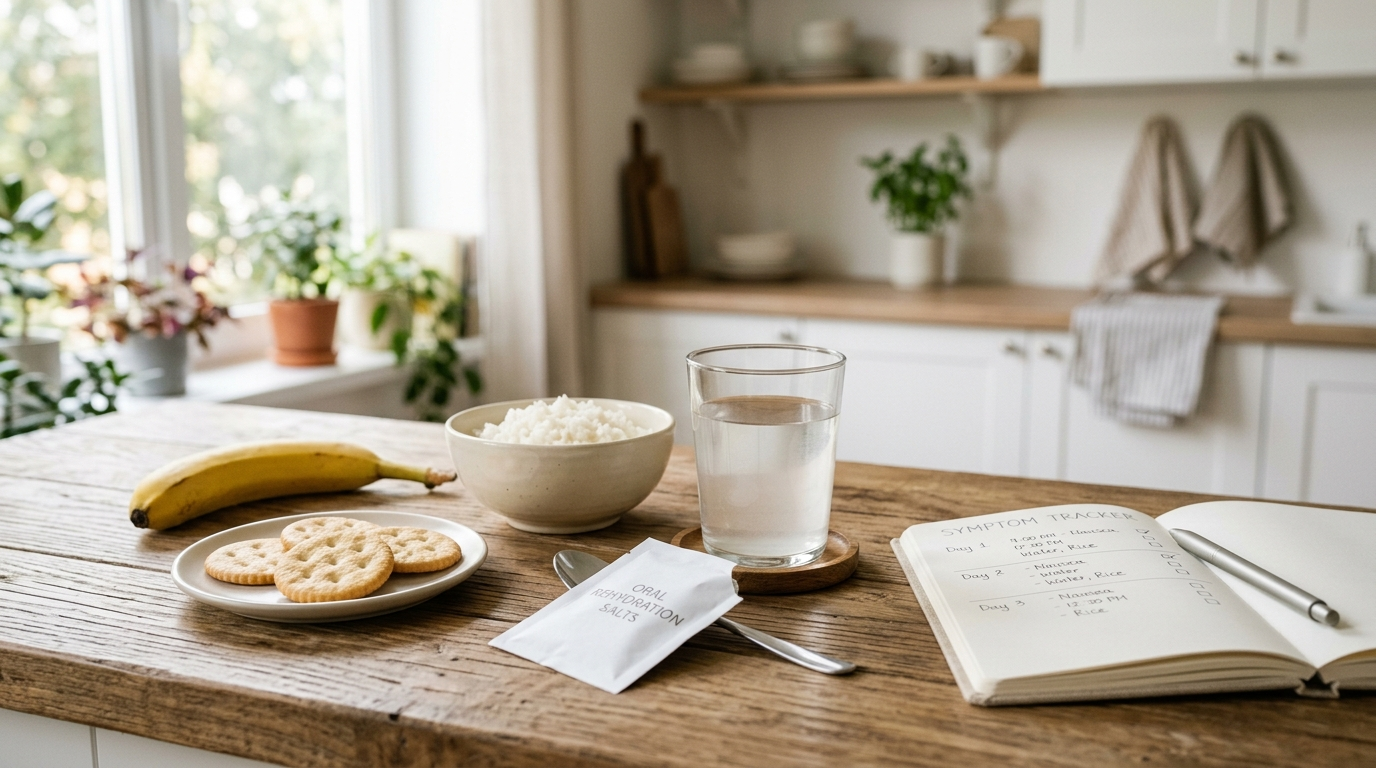
To settle an upset stomach, start with small sips of fluid, pause heavy meals, choose bland foods when appetite returns, and watch for warning signs. Most short-lived nausea, indigestion, or stomach upset improves with hydration, rest, and trigger avoidance, but severe pain, dehydration, blood, chest pain, or persistent vomiting needs medical care.
How we evaluated ways to settle an upset stomach?
We evaluated upset-stomach strategies by separating short-term self-care from symptoms that need urgent medical attention. Government and academic medical sources carried more weight than wellness anecdotes, especially for vomiting, diarrhea, dehydration, indigestion, and red-flag symptoms. We prioritized actions with a clear mechanism: oral rehydration for fluid loss, smaller meals for gastric workload, bland foods for short-term tolerance, and trigger tracking for recurrent patterns. This article does not diagnose the cause of stomach upset because nausea, indigestion, infection, medication side effects, pregnancy, reflux, gallbladder problems, and cardiac symptoms can overlap.
What should you do first when your stomach is upset?
Start with hydration because fluid loss and low intake can make stomach upset feel worse. Take small sips of water, oral rehydration solution, diluted broth, or ice chips instead of forcing a large glass at once. The CDC’s gastroenteritis guidance says many vomiting patients can be rehydrated with oral fluids when small amounts are given frequently, then increased gradually. Pause alcohol, greasy foods, large meals, and heavy caffeine while nausea or indigestion is active. Rest upright if reflux-like burning is present, and avoid lying flat immediately after eating. If appetite returns, try a small portion of toast, crackers, rice, banana, applesauce, potatoes, soup, or another simple food that is easy to tolerate. The goal is not a perfect diet; the goal is to keep fluids down, reduce gastric workload, and observe whether symptoms are improving.
Which fluids help most with nausea, vomiting, or diarrhea?
Oral rehydration solution is the most targeted fluid when vomiting or diarrhea causes meaningful fluid loss because it combines water, sodium, and glucose in a ratio that supports intestinal absorption. A 2022 review in the Journal of Global Health Reports describes oral rehydration therapy as a first-line measure for fluid loss from diarrhea and vomiting. Water can help mild thirst, but water alone does not replace sodium after repeated vomiting or watery stool. Broth adds sodium, ice chips slow intake, and diluted electrolyte drinks may be easier to tolerate than sweet beverages. Very sugary drinks, alcohol, and large amounts of caffeine can worsen diarrhea or nausea in some people. Adults with mild symptoms can usually start with frequent small sips, while children, older adults, pregnant people, and people with chronic illness need earlier medical guidance because dehydration risk rises faster.
What foods are easiest after an upset stomach?
The easiest foods after an upset stomach are small, low-fat, low-spice, low-fiber meals that do not demand much gastric processing. Crackers, toast, rice, bananas, applesauce, potatoes, noodles, soup, and plain oatmeal are common short-term choices because they are simple and predictable. Protein can return gradually through eggs, tofu, chicken, fish, or yogurt if those foods are normally tolerated. Mayo Clinic describes indigestion as belly discomfort that can include fullness during a meal, fullness after a meal, or burning in the upper abdomen, so portion size matters as much as food type. Large fatty meals, fried foods, spicy sauces, carbonated drinks, and alcohol can increase stomach workload or reflux sensations. A useful pattern is fluids first, then a small bland serving, then a normal meal only after symptoms clearly improve.
What should you avoid while your stomach is settling?
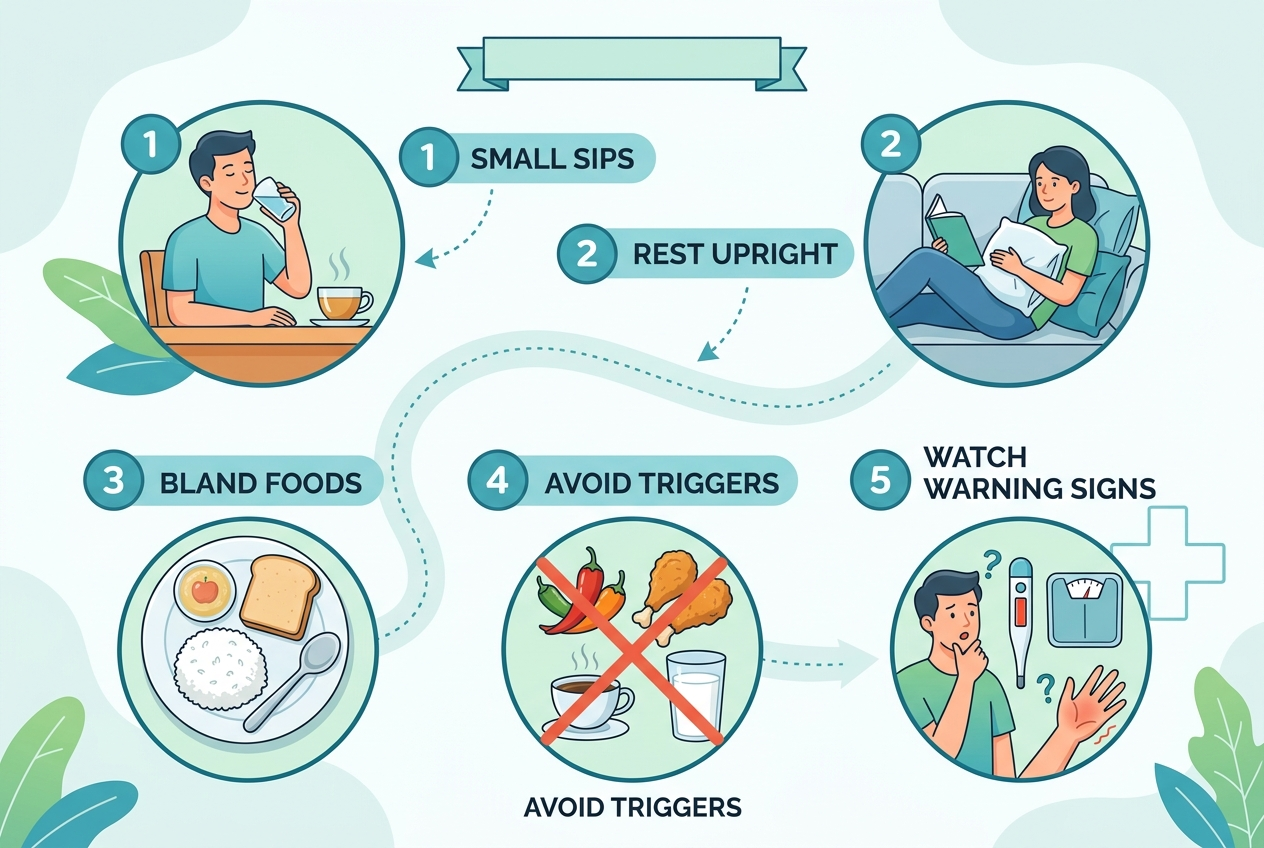
Avoid forcing food, chugging fluids, lying flat after eating, drinking alcohol, and using repeated over-the-counter medicines without reading the label. Ibuprofen, naproxen, aspirin, iron, magnesium, antibiotics, and some diabetes medicines can irritate the stomach or cause nausea in some people, so medication timing and clinician instructions matter. Avoid dairy temporarily if vomiting or diarrhea is active, because transient lactose sensitivity can happen after some gastrointestinal infections. Avoid high-fat meals because fat slows gastric emptying and can intensify fullness or nausea. Avoid assuming every stomach symptom is “just indigestion.” Chest pressure, jaw or arm pain, shortness of breath, fainting, severe one-sided abdominal pain, blood in vomit, black stool, or a rigid abdomen should be treated as urgent. Short-term restraint is not about fear; it is about reducing variables while the body declares whether the episode is improving.
When should an upset stomach get medical attention?
An upset stomach needs medical attention when symptoms are severe, persistent, or paired with red flags. Mayo Clinic’s functional dyspepsia guidance lists urgent warning signs such as bloody vomit, dark tarry stools, shortness of breath, jaw, neck, or arm pain, and unexplained weight loss. Seek prompt help for signs of dehydration: very little urination, dizziness, confusion, rapid heartbeat, dry mouth, sunken eyes, or inability to keep fluids down. Persistent vomiting beyond a day, diarrhea lasting several days, fever, severe abdominal pain, pregnancy, older age, immune suppression, or recent travel with worsening symptoms should lower the threshold for care. Children need faster evaluation because dehydration can develop quickly. A simple rule works: self-care is reasonable when symptoms are mild and improving; medical help is smarter when symptoms are intense, unusual, or not moving in the right direction.
How can you prevent the same stomach upset from repeating?
Preventing repeat stomach upset starts with a short pattern log. Record meal timing, portion size, alcohol, caffeine, spicy foods, fatty foods, dairy, supplements, medications, stress, sleep, bowel changes, and symptom timing for one to two weeks. Recurrent indigestion often comes from a pattern rather than one “bad” food, and the pattern may involve eating speed, late meals, carbonated drinks, medication timing, or portion size. For infection-like episodes, prevention focuses on handwashing, food temperature, safe leftovers, and avoiding shared utensils when vomiting or diarrhea is present. CDC notes that norovirus is a contagious virus that causes vomiting and diarrhea, which makes hygiene and surface cleaning important after a stomach bug. If the log shows repeated symptoms after the same food or medicine, bring that pattern to a clinician instead of stacking random remedies.
For a detailed comparison of specific products and strains, see Probiotic Upset Stomach: Should You Stop, Pause, or Switch?.
FAQ?
Is ginger good for an upset stomach?
Ginger may help some nausea patterns, especially mild nausea, but it is not a cure-all. Use food-level amounts first, and be cautious with concentrated supplements if you take blood thinners, are pregnant, or have gallbladder concerns.
Should you eat or fast with an upset stomach?
Short pauses from solid food can help during active nausea or vomiting. Once fluids stay down and appetite returns, small bland meals are usually better than prolonged fasting for most mild episodes.
Is soda good for settling the stomach?
Soda is not the best first choice because carbonation and sugar can worsen bloating, reflux, or diarrhea in some people. Small sips of water, oral rehydration solution, broth, or ice chips are usually more reliable.
Can stress cause an upset stomach?
Stress can affect nausea, appetite, bowel patterns, and indigestion sensations through the gut-brain axis. Stress should not be used to dismiss severe pain, dehydration, blood, fever, or symptoms that keep returning.
How long should a mild upset stomach last?
A mild food-related or indigestion-like upset stomach often improves within hours to a day. Symptoms that worsen, persist, or recur regularly deserve medical review because the cause may not be simple indigestion.
What is the safest first step for children?
For children, the safest first step is usually small, frequent sips of an oral rehydration solution while watching urine output, alertness, and tears. Call a pediatric clinician early for infants, repeated vomiting, bloody stool, fever, or dehydration signs.
When is it not just an upset stomach?
It is not just an upset stomach when chest pain, shortness of breath, fainting, severe localized pain, blood, black stool, stiff abdomen, confusion, or dehydration signs appear. Those symptoms need urgent medical guidance.
What is the practical takeaway?
Most mild stomach upset responds to small sips, rest, bland foods, and avoiding obvious triggers. The important skill is knowing when simple self-care is enough and when the symptom pattern is too severe, unusual, or persistent to manage at home.
Leave a Reply