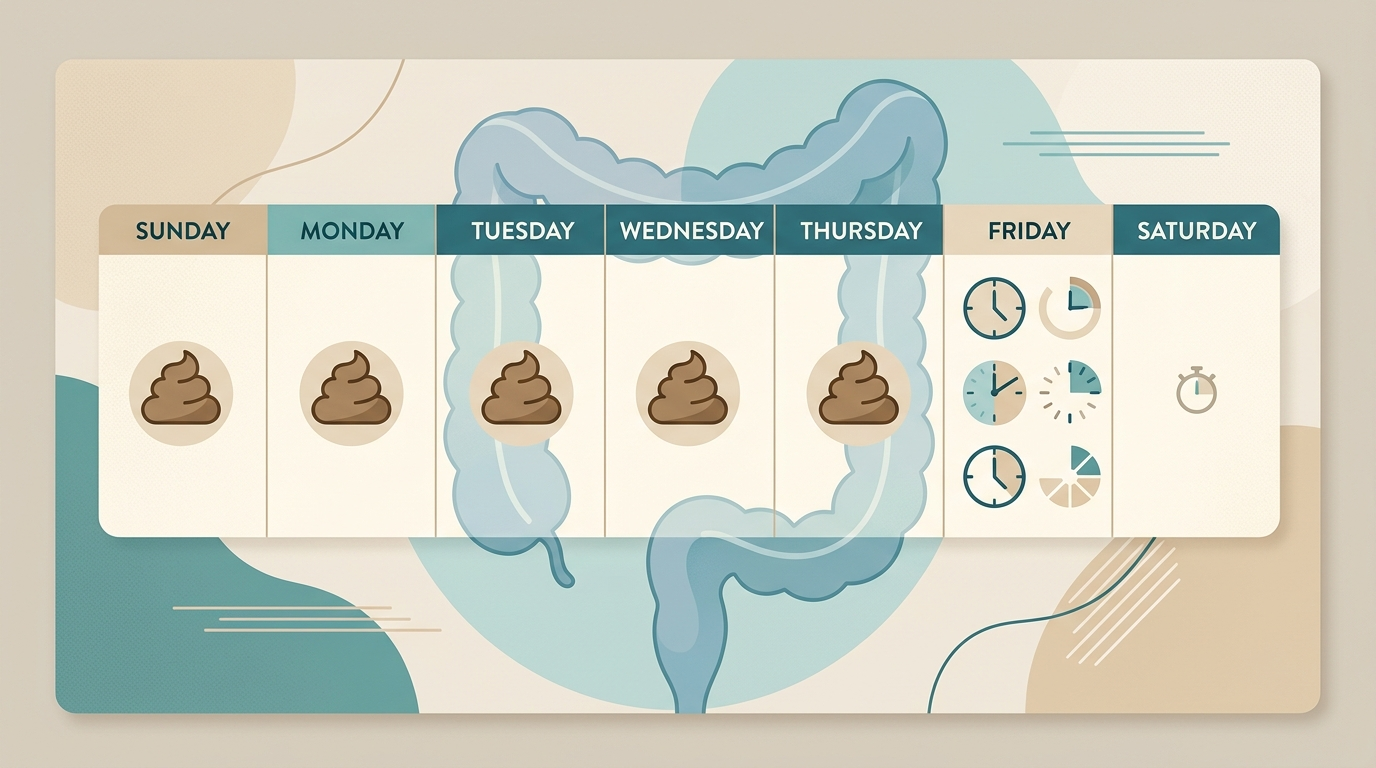
Constipation followed by hours of repeated bowel movements can happen when retained stool begins moving in stages, a meal triggers the gastrocolic reflex, or the pelvic floor does not empty the rectum efficiently. The pattern can also reflect medicines, laxative timing, or an underlying bowel disorder, so persistent cycles deserve clinical review.
How did we evaluate constipation followed by repeated bowel movements?
We evaluated the pattern as a sequence rather than assuming that constipation and frequent stools are opposites. We prioritized National Institute of Diabetes and Digestive and Kidney Diseases guidance, American Gastroenterological Association and American College of Gastroenterology recommendations, and PubMed-indexed research on defecatory disorders. We separated stool frequency from stool form, completeness, urgency, pain, and laxative exposure because one day can contain several small bowel movements without complete rectal emptying. We excluded forum diagnoses, cleanse claims, and rules that label every alternating pattern as irritable bowel syndrome. We also distinguished chronic idiopathic constipation from IBS with constipation, pelvic-floor dyssynergia, medication effects, and possible impaction because those problems can look similar while requiring different evaluation. The main limitation is that a symptom description cannot show colon transit, rectal emptying, inflammation, obstruction, or medication effects. A clinician may need an examination, laboratory review, colon testing, or anorectal testing when the pattern persists.
Why can constipation turn into a day of repeated bowel movements?
The colon can move retained stool in segments rather than emptying everything at once. A strong gastrocolic reflex after breakfast or another meal can push material forward, producing several bowel movements over a few hours. Each movement may be small, mixed in texture, or followed by a feeling that stool remains. NIDDK defines constipation by more than frequency: hard stools, painful passage, and incomplete evacuation also count. That explains why a person can pass stool repeatedly and still have a constipation pattern. Pelvic-floor muscles can add another bottleneck when they tighten or fail to relax during pushing. Stimulant laxatives, osmotic laxatives, magnesium products, large fiber changes, caffeine, or a high-volume meal can then create a burst of activity behind that bottleneck. The sequence does not identify one cause by itself. Timing, stool form, medication exposure, pain, and the sense of complete emptying provide the clues needed for a safer evaluation.
Which conditions can create this constipation cycle?
Several mechanisms can produce the same outward pattern. Slow-transit constipation can retain stool for days before a stronger motility event moves part of it. IBS with constipation or a mixed bowel pattern can combine abdominal pain with changing stool frequency and form. A defecatory disorder can leave stool in the rectum because the abdominal and pelvic-floor muscles do not coordinate. A PubMed review of dyssynergic defecation reports that evacuation disorders occur in roughly one-third of people referred with chronic constipation, but symptoms alone cannot confirm the diagnosis. Medicines and supplements can contribute; NIDDK lists opioids, iron, calcium-containing antacids, anticholinergic medicines, some antidepressants, and several other categories. Fecal impaction can occasionally allow liquid stool to pass around retained stool, although loose stool after constipation does not automatically mean impaction. Structural blockage, thyroid problems, celiac disease, diabetes, pregnancy, travel, dehydration, and routine changes belong in the broader differential when the pattern is new or persistent.
How can you tell incomplete emptying from ordinary frequent stools?
Incomplete emptying usually produces repeated trips with small output, straining, a blocked sensation, or the feeling that more stool remains. Ordinary frequent stools are more likely to feel complete even when they occur several times after meals. Stool form adds useful context: hard separate pieces or a lumpy log point toward retained, dry stool, while watery output can reflect rapid transit, a laxative effect, infection, or liquid moving around retained stool. Neither appearance makes a diagnosis. Pelvic-floor dyssynergia becomes more plausible when soft stool is still difficult to pass, digital maneuvers are needed, or prolonged straining occurs despite adequate stool softness. A prospective diary and examination help a clinician decide whether anorectal manometry and a balloon-expulsion test are appropriate. A diagnostic review emphasizes that history, stool diaries, digital rectal examination, and physiology testing work together. One unusual day may follow diet or routine changes; a recurring pattern needs more than a stool-frequency count.
What should you track before a medical appointment?
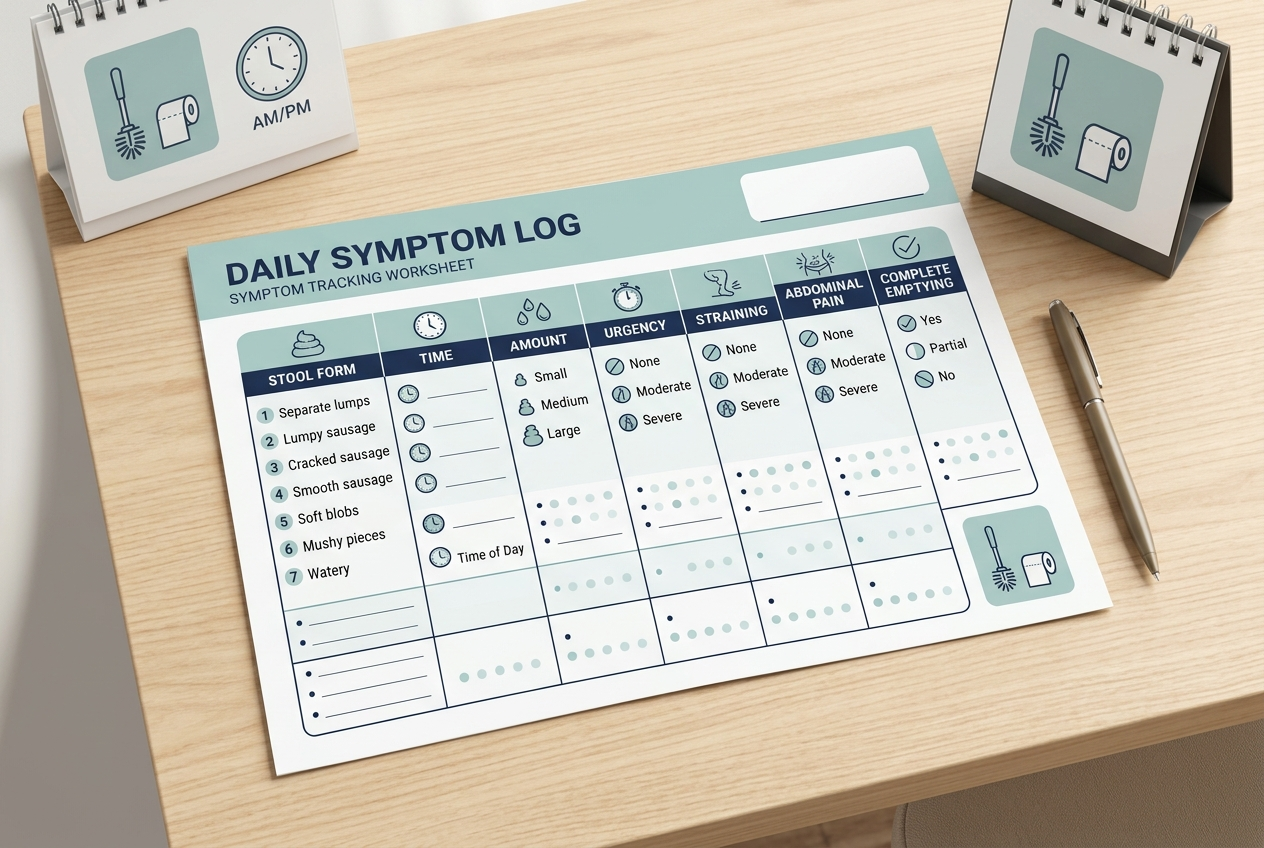
Track seven to fourteen days of bowel timing, Bristol Stool Form Scale type, approximate amount, urgency, straining, pain, and whether each movement felt complete. Record meals, fluid intake, caffeine, alcohol, menstrual timing when relevant, sleep, travel, and activity because these variables can change the gastrocolic reflex and stool consistency. List every prescription, over-the-counter medicine, antacid, laxative, fiber powder, magnesium product, iron supplement, and herbal product with its dose and timing. Note whether repeated stools follow breakfast, a specific laxative, a large fiber serving, or several constipated days. Photographing a medication label is more useful than writing “a supplement.” Also record blood, black stool, fever, vomiting, inability to pass gas, nighttime awakening, and unintentional weight loss. Bring the diary to a primary-care or gastroenterology visit. The goal is not to self-diagnose IBS, pelvic-floor dysfunction, or impaction; the goal is to show a reproducible sequence that a clinician can compare with an examination and appropriate testing.
Which self-care steps are reasonable while you track the pattern?
Use steady changes rather than alternating between aggressive laxatives and no routine. Regular meals, adequate fluids, daily movement, and a consistent bathroom opportunity can make the sequence easier to interpret. NIDDK constipation guidance suggests trying to sit for a bowel movement 15–45 minutes after breakfast, responding promptly to the urge, relaxing the pelvic floor, and using a footstool for positioning. Increase dietary fiber gradually because a sudden jump can increase gas, urgency, or cramping. Do not stop a prescription medicine or repeatedly combine laxative classes without professional guidance. The 2023 AGA–ACG guideline gives polyethylene glycol stronger evidence for chronic idiopathic constipation than most nonprescription options, while fiber receives a conditional recommendation and works best when low intake is part of the problem. Those recommendations address diagnosed chronic idiopathic constipation; they do not establish the cause of alternating or clustered bowel movements.
When does constipation with repeated stools need urgent care?
Seek urgent medical care when constipation occurs with constant or severe abdominal pain, inability to pass gas, repeated vomiting, fever, fainting, marked abdominal swelling, rectal bleeding, or black stool. These findings can signal obstruction, bleeding, inflammation, severe impaction, or another problem that cannot be evaluated through a bowel diary. NIDDK also advises prompt medical review for unintentional weight loss and persistent constipation that does not improve with self-care. New bowel changes deserve a lower threshold for evaluation when they begin after a new medicine, occur during pregnancy, follow abdominal surgery, or accompany a family history of colorectal cancer. Watery leakage after several days without a normal bowel movement can reflect overflow around retained stool, but only an examination can distinguish that pattern from infection or rapid transit. Do not keep adding fiber or laxatives when severe pain, vomiting, or inability to pass gas is present. The immediate question is safety, not how to force another bowel movement.
What questions do people ask about the constipation-to-frequent-stool cycle?
This pattern raises questions because frequency alone gives an incomplete picture. Clinicians evaluate stool form, pain, straining, urgency, complete emptying, medicines, diet, and duration together. Several bowel movements in one morning can still fit constipation when each movement is small, hard, difficult, or incomplete. Loose stool can appear after a laxative, a strong meal-triggered reflex, infection, or liquid passage around retained stool. Abdominal pain that relates to bowel movements may raise the possibility of IBS, but symptoms require proper assessment and should not be reduced to an internet label. Pelvic-floor dysfunction can also mimic “stubborn constipation” even when stool is soft, which is why more fiber does not solve every case. A diary makes these distinctions visible without pretending to confirm a diagnosis. The questions below provide practical boundaries, not personalized treatment. Persistent cycles, nighttime symptoms, bleeding, weight loss, severe pain, or major medication changes belong with a qualified clinician.
Can you still be constipated if you poop several times in one day?
Yes. Hard stool, straining, and incomplete evacuation can indicate constipation even when several small bowel movements occur during the same day.
Does loose stool after constipation mean overflow diarrhea?
It can, but infection, food, medicines, and laxatives can also produce loose stool. Overflow around retained stool requires clinical assessment rather than visual guessing.
Can the gastrocolic reflex cause repeated morning bowel movements?
Yes. Eating, especially breakfast, can stimulate colon movement and produce clustered bowel movements, particularly after stool accumulated during slower days.
Should you add more fiber immediately?
Not automatically. Gradual fiber increases can help low-fiber constipation, but sudden large increases may worsen gas or urgency and will not correct every evacuation disorder.
What tests check whether the pelvic floor is involved?
Clinicians may use a digital rectal examination, anorectal manometry, and a balloon-expulsion test. Defecography or colon-transit testing may follow when the first evaluation is inconclusive.
When should you contact a gastroenterologist?
Arrange evaluation when the cycle persists, repeatedly interrupts daily life, requires frequent laxatives, or includes pain or incomplete emptying. Seek urgent care for bleeding, vomiting, severe pain, fever, or inability to pass gas.
What is the bottom line on constipation followed by frequent bowel movements?
Constipation followed by hours of repeated bowel movements usually means the sequence needs closer description, not that the two symptoms cancel each other out. Retained stool, meal-triggered colon movement, medication or laxative timing, IBS patterns, and pelvic-floor coordination problems can each produce clustered trips. Count stool form, output, straining, urgency, pain, and complete emptying alongside frequency. Use a short diary, keep meals and self-care changes steady, and review every medicine and supplement with a clinician. Gradual fiber, adequate fluids, movement, and a consistent post-breakfast bathroom opportunity may support regularity when no warning signs are present, but they are not substitutes for evaluation. Persistent cycles may require an examination, medication review, colon-transit assessment, anorectal manometry, or balloon-expulsion testing. Severe pain, vomiting, bleeding, black stool, fever, abdominal swelling, inability to pass gas, fainting, or unintentional weight loss should move the question out of home tracking and into urgent medical care.
Image notes:
- Hero image: neutral educational illustration of a calendar showing several constipated days followed by one day with clustered bowel-movement markers, no products or brands.
- Inline image: symptom-tracking page comparing stool form, timing, amount, urgency, straining, and complete emptying.
Leave a Reply