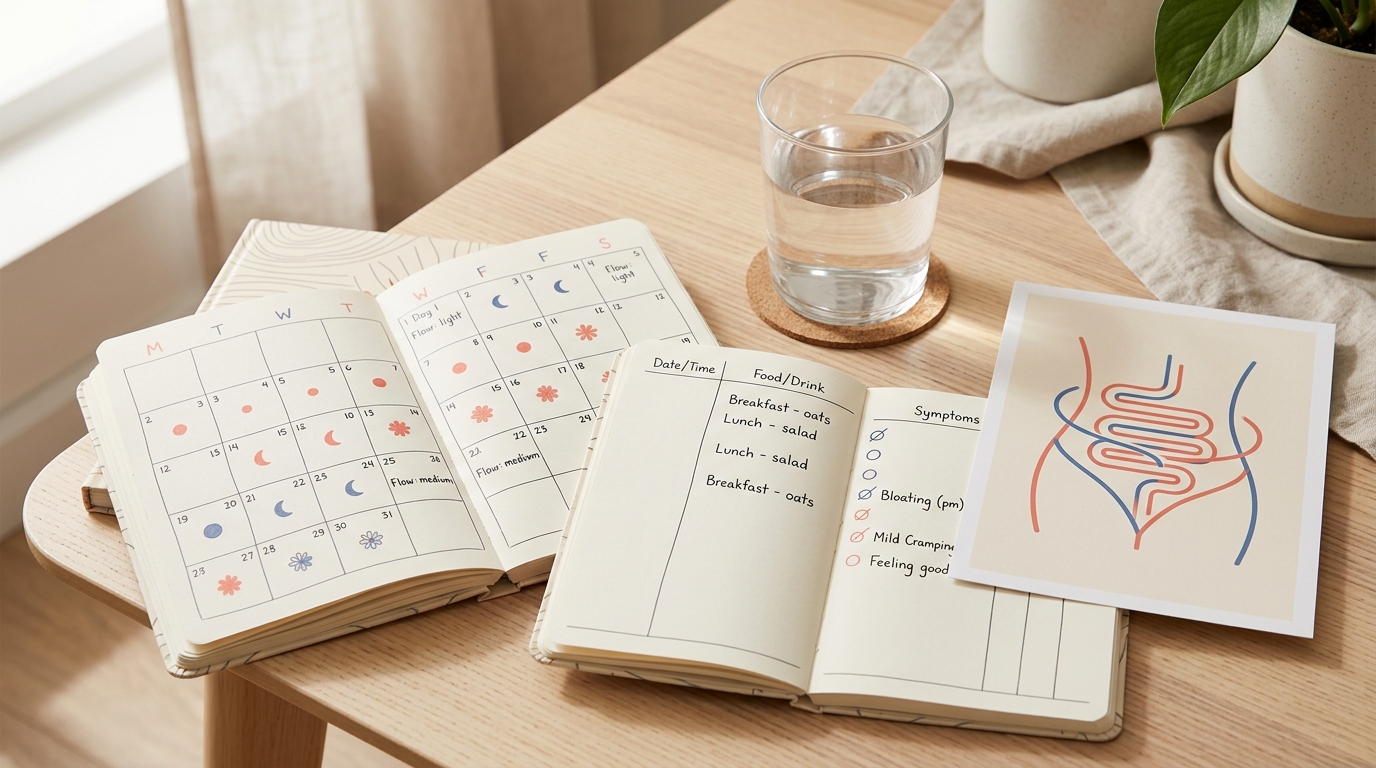
Digestive symptoms can change across the menstrual cycle. Bloating, abdominal pain, loose stools, urgency, or constipation may intensify before or during a period, especially in people with irritable bowel syndrome. Hormone shifts, prostaglandins, pain sensitivity, medicines, food intake, and stress can overlap, so a cycle-and-symptom diary is more useful than one isolated bad day.
How did we evaluate cycle-related digestive symptoms?
We prioritized prospective symptom diaries, systematic reviews, PubMed-indexed human studies, and guidance from the National Institute of Diabetes and Digestive and Kidney Diseases. We separated observations in otherwise healthy adults from findings in people with irritable bowel syndrome because baseline symptom severity changes the meaning of a cycle effect. We also distinguished association from mechanism: a symptom can recur during menstruation even when research has not proved that one hormone caused it. Retrospective surveys can overrepresent memorable bad days, while small physiology studies may not reflect ordinary routines. We excluded supplement testimonials, hormone “balancing” claims, and single-food explanations that did not track cycle phase. The evidence supports a real pattern for some people, especially around menstruation, but it does not predict the same bowel change in every cycle. A diary across two or three cycles provides more useful personal evidence than population averages alone.
Which digestive symptoms can change during the menstrual cycle?
Bloating, abdominal pain, stool looseness, urgency, constipation, nausea, and bowel frequency can vary before or during menstruation. A survey of 156 healthy premenopausal adults found that 73% reported at least one primary gastrointestinal symptom either in the five days before menstruation or during it. The BMC Women’s Health study found that abdominal pain was the most frequently reported symptom, while diarrhea affected roughly one quarter of participants. That cross-sectional survey identifies common timing, not a universal hormone response. People with irritable bowel syndrome may experience a stronger version of the same pattern. NIDDK states that women with IBS often report more symptoms during their periods, including changes in bowel movements and pain. One person may notice looser stools at the start of bleeding, while another notices constipation or bloating earlier. The important signal is recurrence at a similar cycle phase, not whether the pattern matches someone else’s exact symptom list.
Why can periods affect bowel habits and bloating?
Menstrual-cycle biology can influence gut movement, fluid handling, and pain perception through several overlapping pathways. Estrogen and progesterone fluctuate across the follicular, ovulatory, luteal, and menstrual phases, while prostaglandins rise around menstruation and help the uterus contract. Prostaglandins can also affect intestinal smooth muscle, which offers a plausible explanation for looser stools or urgency during bleeding. Hormone levels alone do not explain every case. A systematic review and meta-analysis found that symptoms were often more frequent or severe during menses, but study methods, cycle verification, and symptom measurement varied. Diet changes, sleep disruption, stress, reduced activity, iron supplements, magnesium products, and nonsteroidal anti-inflammatory drugs can shift bowel patterns during the same week. A cycle association therefore does not prove a single cause. The most accurate interpretation is layered: biological phase can change susceptibility, while food, medicines, and daily context influence which symptom appears.
How can you tell whether the pattern is really cycle-related?
Track cycle day and digestive variables together for at least two or three complete cycles. Record the first day of bleeding as cycle day one, then note stool form using the Bristol Stool Form Scale, bowel frequency, urgency, pain, bloating, nausea, and any nighttime symptoms. Add only variables that can change interpretation: meals, alcohol, caffeine, sleep, stress, exercise, pain medicines, iron, magnesium, and hormonal contraception. Use the same 0-to-10 symptom scale each day instead of writing only when symptoms become severe. A recurring increase during the late luteal phase or first menstrual days supports a time-linked pattern, while random timing points elsewhere. The diary cannot diagnose irritable bowel syndrome, endometriosis, inflammatory bowel disease, or a food intolerance. It can show a clinician whether symptoms predictably precede bleeding, persist throughout the month, or changed after a medicine or contraceptive. That distinction makes the next conversation more specific and reduces guesswork.
What can you change safely while tracking the pattern?
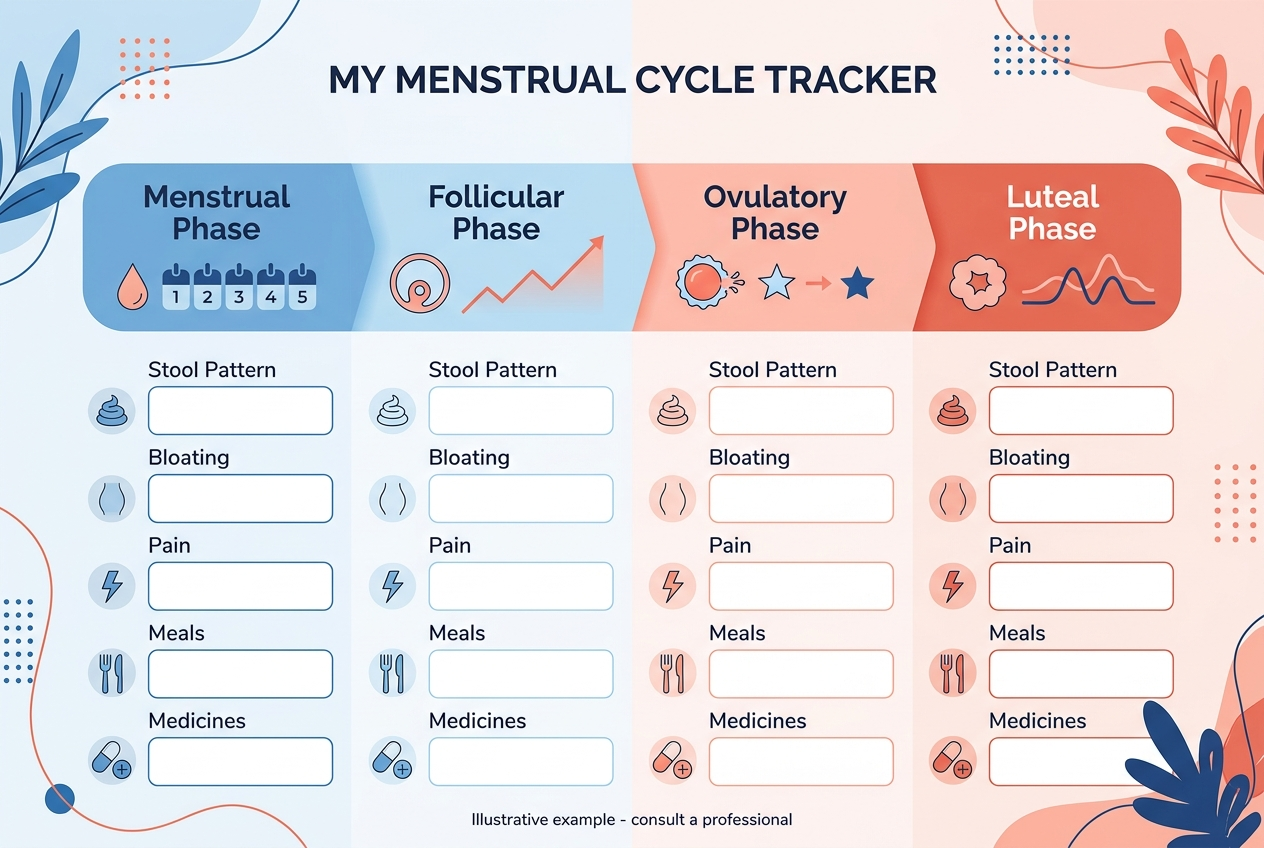
Keep the experiment simple enough to identify cause and effect. Regular meals, adequate fluid, consistent sleep, and moderate movement provide a stable baseline without claiming to correct hormones. Change one dietary variable at a time rather than removing gluten, dairy, fermentable carbohydrates, and fiber simultaneously. Sudden fiber increases can worsen gas, while large magnesium doses can loosen stool, so record dose and timing for both. Follow medication labels and ask a clinician before changing prescribed treatment or hormonal contraception. Heat, relaxation practice, and gentle activity may improve comfort for some people, but they do not explain persistent bleeding, severe pain, or major bowel changes. Best for identifying timing: a daily two-minute diary. Best for avoiding false conclusions: repeat the observation across several cycles. Best for a targeted appointment: bring the diary, medication list, and cycle dates. A manageable routine creates information; a restrictive reset can introduce more variables than it removes.
When does a changing cycle pattern need medical assessment?
New, severe, or progressively worsening symptoms deserve assessment even when they occur near menstruation. Seek prompt care for black or bloody stool, persistent vomiting, fainting, fever, severe or localized abdominal pain, dehydration, waking repeatedly with diarrhea, or an inability to pass stool or gas. Schedule a clinician visit for unexplained weight loss, anemia, a major change in bowel habits, very heavy menstrual bleeding, pain during sex, difficulty becoming pregnant, or symptoms that regularly disrupt work, sleep, or eating. Cycle timing can overlap with irritable bowel syndrome, endometriosis, pelvic-floor disorders, thyroid problems, medication effects, and other conditions; a calendar cannot distinguish them by itself. The NIDDK IBS overview explains that diagnosis depends on a symptom pattern and clinical review, not one test or one period. A stable, mild, recurring pattern may support planned follow-up. Alarm features, rapid change, or substantial impairment should not wait for another tracking cycle.
What questions do people ask about digestive symptoms and periods?
Cycle-related digestive questions often collapse timing, diagnosis, and treatment into one issue. The evidence supports a broad association between menstruation and changes in bowel symptoms, but it does not establish one normal pattern or one universal remedy. Healthy adults can notice abdominal pain, diarrhea, constipation, nausea, or bloating, and people with irritable bowel syndrome may experience greater severity. A symptom diary helps separate late-luteal, menstrual, and all-month patterns while preserving context about food, medicines, sleep, and stress. Hormonal contraception, perimenopause, pregnancy, and gynecologic conditions can change the pattern and require individualized interpretation. Cycle timing provides useful context, but it cannot identify a diagnosis or select a treatment by itself. The answers below describe common evidence boundaries, not a diagnosis. A recurring mild change can be documented and discussed at routine care; severe pain, bleeding, dehydration, nighttime symptoms, or progressive change requires earlier assessment.
Is diarrhea during a period common?
Diarrhea or looser stool is commonly reported around menstruation, and prostaglandin activity provides a plausible mechanism. Common does not mean harmless in every case; dehydration, blood, fever, severe pain, or persistent diarrhea requires assessment.
Can a period cause constipation instead?
Some people report constipation or slower transit before bleeding, particularly during the luteal phase. Research is inconsistent across populations, so a repeated personal diary pattern matters more than assigning one expected stool change to everyone.
Does menstrual bloating always come from the intestines?
No. Fluid shifts, uterine changes, stool retention, fermentation, meal patterns, and pain sensitivity can all contribute to a feeling of bloating. A larger abdomen alone cannot identify which mechanism is responsible.
Can IBS symptoms worsen during menstruation?
Yes, NIDDK and systematic reviews report that people with IBS often experience greater symptoms during their periods. Menstrual worsening does not prove that every symptom comes from IBS or rule out a gynecologic issue.
Does perimenopause change digestive symptoms?
Perimenopause can alter cycle length, bleeding, sleep, and hormone patterns, which may coincide with digestive changes. Research directly comparing bowel symptoms before and after menopause remains limited, so new or substantial changes deserve clinical review.
How many cycles should you track?
Two or three complete cycles usually reveal whether timing repeats, provided the diary is completed daily. Seek care sooner if symptoms are severe, progressive, bloody, dehydrating, or accompanied by unexplained weight loss or anemia.
For a detailed comparison of specific products and strains, see Why Digestive Relief Feels Temporary and What to Compare Next.
What is the bottom line on cycle-related digestive changes?
Digestive symptoms can predictably change before or during a period, and the association is stronger for some people with irritable bowel syndrome. Bloating, pain, diarrhea, urgency, constipation, and nausea can reflect hormone fluctuations, prostaglandins, pain sensitivity, medicines, diet, sleep, and stress acting together. No single symptom proves that the menstrual cycle is the only cause. Record cycle day, stool form, pain, bloating, meals, medicines, and warning signs for two or three cycles, then compare the same phases rather than comparing isolated days. Keep food and supplement changes limited so the record remains interpretable. A stable diary can support a focused routine appointment and help distinguish menstrual timing from an all-month bowel pattern. Seek earlier care for bleeding, severe pain, fever, dehydration, nighttime diarrhea, unexplained weight loss, anemia, or a rapid change. Repetition is useful evidence; alarm features still outrank the calendar.
Image notes:
- Hero image: neutral menstrual calendar beside a simple digestive symptom diary, water glass, and abstract abdominal illustration.
- Inline image: educational timeline comparing follicular, ovulatory, luteal, and menstrual phases with spaces for bowel-pattern notes.
Leave a Reply