
Do not start a gluten-free diet before celiac testing unless the clinician managing the evaluation tells you to. Celiac blood tests and intestinal biopsy are most accurate while gluten remains in the diet. Feeling worse after bread is useful evidence, but it cannot distinguish celiac disease, wheat allergy, fructan sensitivity, or another digestive pattern by itself.
How did we evaluate symptoms that appear after bread or noodles?
We prioritized celiac-disease diagnostic guidance, then examined controlled research that separated gluten from other wheat components. Clinical guidelines received more weight than symptom elimination stories because improvement after avoiding bread does not identify the responsible molecule or condition. The 2023 American College of Gastroenterology guideline defines celiac disease as an immune-mediated response to gluten and emphasizes celiac-specific antibodies and, for most patients, intestinal biopsy in diagnosis (ACG guideline). We excluded advice to diagnose celiac disease through a home food challenge or to begin a lifelong gluten-free diet before testing. We also separated celiac disease, wheat allergy, and non-celiac gluten or wheat sensitivity because their evaluations and risks differ. This article cannot determine why one meal caused pain. It explains how to preserve accurate testing, document the pattern, and avoid changing so many foods at once that the result becomes impossible to interpret.
Why can stopping gluten before testing create a problem?
Celiac blood tests look for antibodies produced during an immune response to gluten, and intestinal biopsy looks for characteristic small-bowel injury. Removing gluten can allow antibody levels and intestinal findings to decline, creating a false-negative or inconclusive result. NIDDK states that patients must be eating a gluten-containing diet for accurate diagnostic results and identifies tissue transglutaminase IgA as the preferred serologic test for most people (NIDDK). This does not mean someone with severe symptoms should force a specific amount of gluten without guidance. It means the sequence matters: contact a qualified clinician, explain the current diet and symptoms, and arrange testing before making a major elimination when possible. Someone already gluten-free may need a clinician-directed gluten challenge, but the dose and duration depend on age, symptoms, prior testing, and medical context. A self-designed one-day “full gluten” challenge cannot confirm or exclude celiac disease.
What can symptoms after wheat actually mean?
Pain, gas, diarrhea, bloating, fatigue, or nausea after bread can fit several pathways. Celiac disease is an immune-mediated condition triggered by gluten in wheat, barley, and rye. Wheat allergy is an allergic condition that can involve hives, swelling, breathing symptoms, vomiting, or other reactions. Non-celiac gluten or wheat sensitivity describes symptoms after celiac disease and wheat allergy have been excluded, but it has no single diagnostic biomarker. Wheat also contains fructans, fermentable carbohydrates that can trigger symptoms in some people with a sensitive gut. In a randomized crossover trial of 59 people who reported non-celiac gluten sensitivity, fructans produced higher overall symptom scores than gluten, while gluten did not differ from placebo (Gastroenterology trial). That study does not prove fructans explain every reaction. Bread type, portion, fat, sauces, meal timing, expectations, and the rest of the day’s diet can all change the observed pattern.
Which tests help distinguish celiac disease from other causes?
Clinicians usually begin celiac evaluation with blood tests while the patient is eating gluten. Tissue transglutaminase IgA is commonly paired with total IgA so IgA deficiency does not hide the signal; additional serology may be appropriate in selected cases. Many adults and children with positive or strongly suspicious results proceed to upper endoscopy with small-intestinal biopsies, although pediatric pathways can differ. Genetic HLA-DQ2 and HLA-DQ8 testing can help rule out celiac disease when both are absent, but a positive gene result does not establish the diagnosis because these genes are common. Wheat allergy evaluation follows an allergy pathway rather than a celiac pathway and may involve history, skin testing, specific IgE, or supervised challenge. Non-celiac gluten or wheat sensitivity is considered only after celiac disease and wheat allergy are excluded. The useful order is formal testing first, carefully structured dietary interpretation second. Mail-order food IgG panels do not substitute for validated celiac serology, allergy evaluation, or biopsy.
How can you document the pattern without ruining the evaluation?
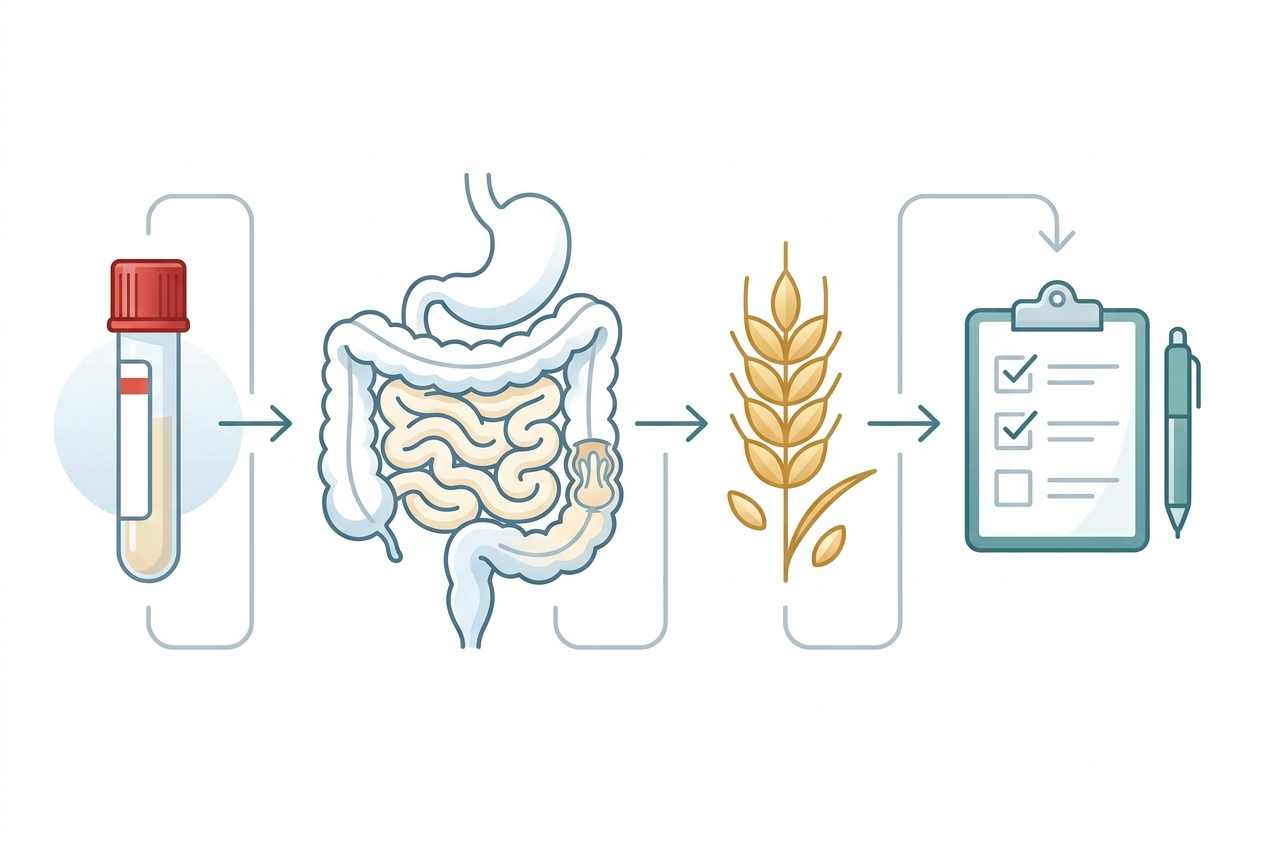
Keep the current diet stable enough for the clinician to understand it, unless eating the suspected food creates an immediate allergy concern or the clinician advises otherwise. Record the food, brand or recipe, portion, meal time, symptom start, symptom type, intensity, duration, stool form, and other ingredients in the meal. Bread with garlic sauce, noodles with onion, and pastry with milk and high fat contain more variables than gluten alone. Track medicines, menstrual cycle, illness, sleep, stress, alcohol, and exercise because they can alter digestion. Do not perform an unsupervised high-dose challenge after hives, mouth swelling, wheezing, faintness, or repeated vomiting. Bring the diary to the appointment and ask which celiac serology, total IgA measurement, allergy assessment, or referral fits the history. A stable three-to-seven-day record can reveal timing and co-ingredients, but it cannot diagnose celiac disease. The goal is to preserve useful clues while keeping formal testing interpretable.
Which warning signs deserve faster medical attention?
Seek urgent care for trouble breathing, throat or tongue swelling, fainting, rapidly spreading hives, or repeated vomiting after wheat because those features can signal a serious allergic reaction. Prompt medical assessment also matters for blood in stool, black stool, persistent vomiting, severe or worsening abdominal pain, dehydration, unexplained weight loss, fever, or inability to eat. Celiac disease can present beyond the digestive tract, including iron-deficiency anemia, bone problems, skin findings, fatigue, and nutrient deficiencies; the ACG guideline describes it as a multisystem disorder rather than only a bowel condition. Children with poor growth or delayed development require pediatric assessment. Chronic diarrhea, persistent bloating, and recurrent pain deserve evaluation even without emergency signs. A food diary can support the visit, but it should not delay care. If symptoms are intense enough that continuing gluten feels unsafe or impossible, contact the clinician before testing rather than improvising a challenge. Accurate diagnosis matters, but immediate safety takes priority over preserving any test.
What questions should you ask before going gluten-free?
Ask whether celiac serology and total IgA should be completed first, whether current gluten intake is adequate for testing, and whether an allergy history changes the plan. Tell the clinician exactly how long you have reduced or avoided gluten because that timing affects interpretation. Ask what a negative test would mean and whether endoscopy, genetic testing, allergy evaluation, or dietitian support is appropriate. Clarify which symptoms require urgent action. Then ask how to test other wheat variables after celiac disease and wheat allergy are addressed. A structured low-FODMAP process, for example, evaluates multiple fermentable carbohydrate categories and should not be confused with a celiac treatment diet. Do not assume sourdough, ancient grains, or a small serving is safe for diagnosed celiac disease; those are separate questions. The most efficient plan preserves diagnostic accuracy first, then narrows the dietary mechanism with one controlled change at a time and qualified guidance.
Can one bad day after eating bread prove celiac disease?
No. A single reaction identifies timing, not mechanism, because gluten, wheat proteins, fructans, portion size, sauces, fat, and expectation can all affect symptoms.
Can a celiac blood test work after going gluten-free?
Sensitivity can fall after gluten removal because antibody levels may decline. Tell the clinician how long gluten has been restricted before any blood draw.
Is rice safe during celiac testing?
Plain rice is naturally gluten-free, but eating rice does not replace the gluten exposure required for accurate celiac testing. Cross-contact and sauces also matter for people with diagnosed celiac disease.
Does feeling better on low carb prove gluten sensitivity?
No. A low-carbohydrate diet changes wheat, fructans, fiber, portion size, meal composition, and many other variables simultaneously, so improvement cannot identify gluten by itself.
Should you try sourdough before celiac testing?
Do not use sourdough tolerance as a diagnostic test. Fermentation can change fructan content, but ordinary wheat sourdough still contains gluten and is not safe treatment for diagnosed celiac disease.
What if you already stopped gluten?
Do not restart a large amount on your own. Contact a gastroenterology or primary-care clinician to discuss prior intake, available tests, and whether a supervised gluten challenge is appropriate.
What is the bottom line on gluten symptoms and celiac testing?
Symptoms after bread deserve investigation, but they do not name the cause. Celiac disease, wheat allergy, fructan sensitivity, meal composition, and other digestive conditions can overlap. Preserve the clearest diagnostic path by arranging celiac testing before starting a gluten-free diet whenever practical and safe. Blood tests and biopsy depend on gluten exposure, while a self-directed elimination can make later results harder to interpret. Record portions, timing, co-ingredients, stool pattern, medicines, and associated symptoms without staging an extreme challenge. Immediate hives, swelling, wheezing, faintness, or repeated vomiting belongs in an allergy and emergency pathway, not a digestive experiment. After celiac disease and wheat allergy are addressed, a qualified clinician or dietitian can help evaluate fructans and other food variables systematically. The best next step is not “eat all the gluten” or “ban gluten forever.” It is accurate testing followed by a narrow, evidence-based plan.
Leave a Reply