
Plain water does not create stomach acid, but a large or rapid drink can distend the stomach, increase belching, and briefly make reflux easier in a susceptible person. Timing, swallowed air, posture, temperature sensitivity, and an already-full stomach can change symptoms. Repeated pain with water deserves evaluation rather than dehydration or increasingly restrictive drinking.
How did we evaluate whether water can trigger a reflux flare?
We evaluated the question by separating water chemistry from drinking mechanics, reflux physiology, symptom perception, and warning signs. Government guidance and human studies received more weight than anecdotes about alkaline water, ice water, or “diluting” stomach acid. We prioritized evidence on gastric distension, transient lower esophageal sphincter relaxations, water-load testing, and established gastroesophageal reflux disease symptoms. We excluded claims that a particular water pH cures reflux or that everyone should avoid drinking with meals. The evidence is stronger for volume and stomach stretch as possible triggers than for a universal effect of temperature or mineral content. The main limitation is that a symptom after swallowing water does not prove reflux. Esophageal sensitivity, swallowing disorders, functional dyspepsia, aerophagia, medication effects, and chest conditions can feel similar. A short symptom experiment can clarify timing, but persistent or severe symptoms require professional assessment rather than self-diagnosis.
Can plain water actually cause acid reflux?
Water does not add acid to the stomach, so it is more accurate to say that drinking can provoke a reflux episode than that water “causes acid.” The National Institute of Diabetes and Digestive and Kidney Diseases explains that reflux occurs when stomach contents move into the esophagus because the lower esophageal sphincter is weak or relaxes when it should not. A rapid drink adds volume and can stretch the upper stomach. A peer-reviewed review of reflux physiology reports that gastric distension activates stretch pathways involved in transient lower esophageal sphincter relaxations, the mechanism behind many reflux episodes. Swallowed air can add pressure and belching. The trigger is therefore usually the drinking pattern and the person’s reflux susceptibility, not toxicity or acidity in plain water. Small, comfortable sips often behave differently from quickly finishing a large bottle on top of a meal.
Why do volume, timing, and posture change the response?
Volume changes stomach stretch, timing changes how full the stomach already is, and posture changes the pressure relationship between the stomach and esophagus. Drinking 500 mL quickly after a large meal creates a different mechanical event from sipping 100 mL while upright between meals. Lying down or bending soon after eating can make regurgitation easier for someone with reflux susceptibility. Carbonated water adds gas, which can increase belching and should not be treated as equivalent to still water. Straws, gulping, talking while drinking, and drinking during breathlessness can increase swallowed air. A small human water-load study found that people with reflux-related symptoms reached uncomfortable fullness at lower water volumes than healthy controls, but the study did not prove that water causes GERD. It suggests altered sensitivity or gastric function in some patients. Temperature may affect comfort for an individual, yet evidence does not support a universal rule that cold or warm water prevents reflux.
How can you test a water-related pattern without becoming dehydrated?
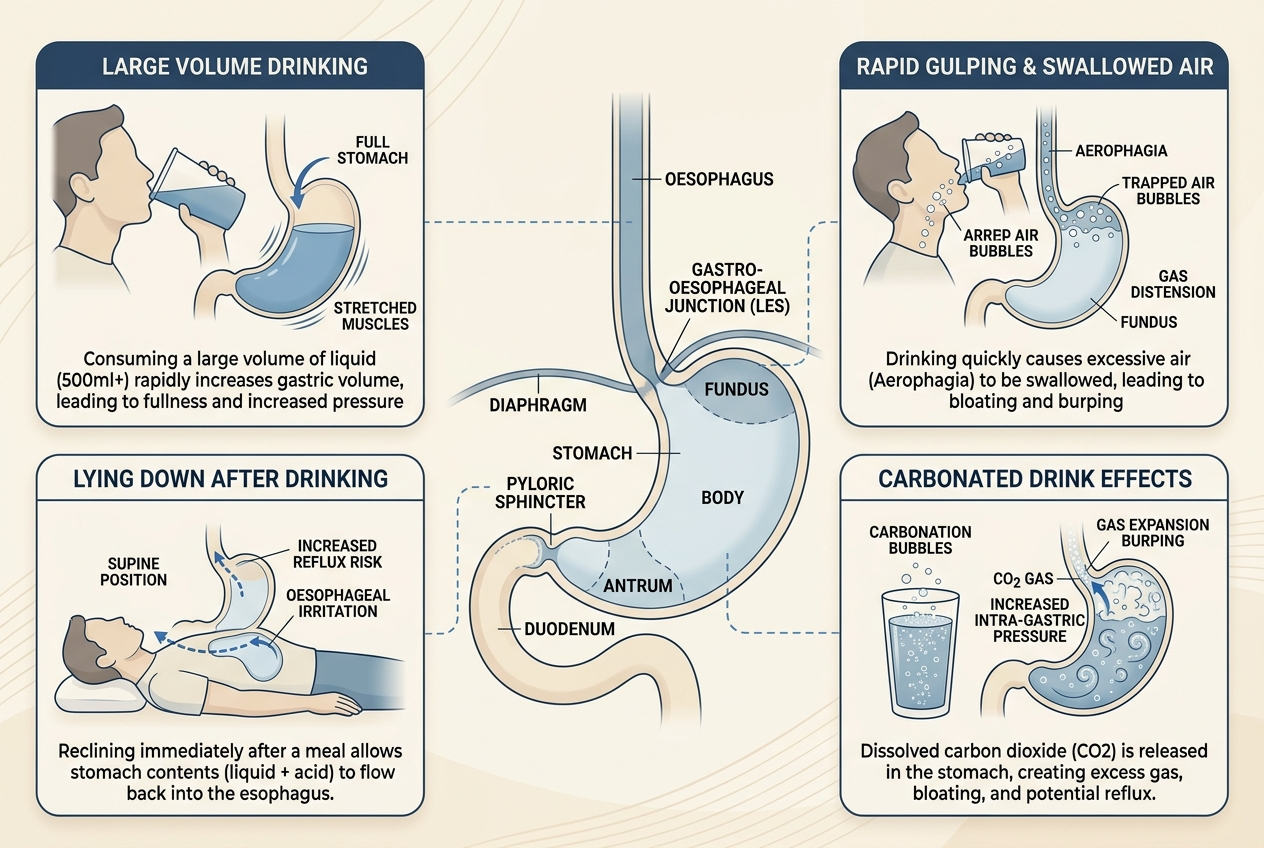
Keep total hydration steady while changing one drinking variable at a time. For three days, record approximate volume, speed, still versus carbonated water, meal timing, posture, belching, burning, regurgitation, nausea, and upper-abdominal fullness. Compare a smaller amount sipped over ten minutes with the same amount consumed rapidly; do not deliberately provoke severe symptoms. Test water between meals before changing the amount taken with food. Remain upright after meals, and separate the effect of water from coffee, alcohol, acidic flavor packets, electrolyte powders, or mint. The goal is to identify a repeatable relationship, not to prove a diagnosis. Do not sharply reduce fluid intake, especially during heat, exercise, vomiting, diarrhea, pregnancy, kidney-stone risk, or use of medicines that affect hydration. If even small sips repeatedly cause pain, sticking, coughing, choking, or regurgitation, stop the experiment and seek assessment. Those features point beyond a simple volume-triggered reflux explanation.
What can feel like water-triggered reflux but be something else?
Functional dyspepsia can produce upper-abdominal burning, early fullness, bloating, nausea, and belching without the same mechanism as acid reflux. The NIDDK indigestion guide describes functional dyspepsia as a disorder of gut-brain interaction and notes that heartburn and indigestion are separate conditions even when they overlap. Esophageal hypersensitivity can make normal swallowing or small reflux events feel intense. Aerophagia can turn rapid drinking into pressure and repetitive belching. Pain or difficulty when liquid passes can signal an esophageal motility or narrowing problem, while coughing or choking can suggest that swallowing coordination needs evaluation. Chest pain can also arise from heart, lung, muscle, or anxiety-related causes and should not automatically be labeled reflux. Flavor enhancers create another confounder: citrus acids, caffeine, sugar alcohols, and concentrated electrolyte ingredients change the exposure from plain water. The timing clue matters, but it does not identify the diagnosis by itself.
When should symptoms after drinking water be medically evaluated?
Arrange medical assessment when the pattern is frequent, worsening, wakes you at night, persists despite simple changes, or leads you to avoid enough fluid. The NIDDK lists chest pain, persistent vomiting, painful or difficult swallowing, gastrointestinal bleeding, loss of appetite, and unexplained weight loss among symptoms that require medical attention in people who suspect reflux. Seek urgent care for severe chest pressure, shortness of breath, fainting, sweating, pain spreading to the arm or jaw, vomiting blood, black stools, or an inability to swallow liquids. A clinician may first review medicines, meal timing, reflux treatment, and symptom history. Depending on the presentation, evaluation can include endoscopy, reflux monitoring, or esophageal motility testing. Repeated symptoms with every sip are not a reason to keep restricting water. They are a reason to distinguish reflux, hypersensitivity, dyspepsia, swallowing dysfunction, and non-digestive causes with appropriate testing.
What are the most common questions about water and reflux?
Is cold water worse for reflux?
Some people notice temperature-specific discomfort, but current evidence does not establish cold water as a universal reflux trigger. Test temperature separately from volume and speed before drawing a conclusion.
Is warm water better for acid reflux?
Warm water may feel more comfortable to some people, but it does not repair the lower esophageal sphincter or reliably prevent reflux. Comfortable temperature is a preference, not a proven treatment.
Should you avoid water with meals?
Not routinely. If large meal-time drinks reliably cause fullness or regurgitation, try smaller sips with food and drink more between meals while maintaining adequate total hydration.
Can carbonated water trigger reflux?
Carbonated water adds gas and can increase belching, so it may provoke symptoms in someone who tolerates still water. Compare still and carbonated water as separate exposures.
Does alkaline water cure reflux?
No high-quality evidence shows that alkaline water cures GERD. Product pH also does not address the mechanical reasons stomach contents move into the esophagus.
Can drinking too fast cause symptoms?
Yes. Rapid drinking increases stomach volume quickly and can increase swallowed air, fullness, and belching. Slower, smaller sips provide a reasonable low-risk comparison.
What if even tiny sips hurt?
Pain, sticking, coughing, choking, or regurgitation with small sips deserves medical assessment. Those symptoms can reflect swallowing or esophageal problems that a hydration experiment cannot diagnose.
Plain water is rarely the whole explanation for a reflux flare. Focus on volume, speed, meal timing, posture, carbonation, and swallowed air, keep hydration adequate, and obtain assessment when small sips hurt or the pattern is persistent.
Leave a Reply