
Acid reflux can improve on vacation even when the food seems “worse” because symptoms reflect more than ingredients. Meal timing, portion size, walking, sleep, posture, medication timing, and stress-related symptom sensitivity can all change during travel. One good week does not prove that stress—or any single food—caused the original symptoms.
How did we evaluate why reflux may improve on vacation?
We evaluated this pattern using gastroesophageal reflux physiology, guideline-supported lifestyle factors, and studies that separated measured reflux from symptom perception. National Institute of Diabetes and Digestive and Kidney Diseases guidance and the American College of Gastroenterology guideline received more weight than travel anecdotes or universal trigger-food lists. Human pH-monitoring research informed the sections on post-meal movement and psychological stress. We excluded claims that vacation “cures” reflux, that rich food protects the esophagus, or that symptoms are imaginary when testing is normal. The main limitation is that a vacation changes several variables simultaneously: meals, schedule, activity, sleep, alcohol, medication use, and attention to symptoms. A symptom-free trip therefore creates a useful clue, not a controlled experiment. We also distinguish gastroesophageal reflux events from heartburn perception because the two can move differently. New chest pain, swallowing trouble, bleeding, repeated vomiting, or unintended weight loss requires medical evaluation rather than lifestyle testing.
Can reflux really improve even when vacation food seems worse?
Yes, because the label “worse food” compresses many separate variables into one judgment. A restaurant meal may be richer than a home meal but smaller, earlier, slower, followed by upright activity, or eaten without late-night snacking. Reflux occurs when stomach contents move into the esophagus, often during transient relaxation of the lower esophageal sphincter. The NIDDK overview notes that heartburn and regurgitation are common symptoms, but symptom patterns vary and other conditions can produce similar sensations. Travel can also change constipation, abdominal pressure, sleep position, smoking, alcohol, caffeine, and medication timing. A quieter symptom week does not show that tomato, spice, fat, or another suspected food is harmless in every setting. It shows that the total exposure pattern changed. The most useful question is not “Was the food healthy?” but “What was different about portion, clock time, posture, movement, sleep, and symptom attention?”
Which vacation routine changes can affect reflux symptoms?
Meal timing is often the cleanest variable to examine. The NIDDK diet guidance states that eating at least three hours before lying down may improve nighttime symptoms. Vacation may unintentionally create earlier dinners, fewer desk snacks, longer meals, or less time bent over a laptop after eating. Walking can matter, but the evidence is nuanced. A small pH-monitoring study found that post-meal walking produced only a mild, short-lived reduction in acid exposure among people with reflux, while gum chewing had a clearer effect; that result does not make vigorous exercise after a large meal advisable. Sleep environment can change head elevation and left-side positioning. Clothing can change abdominal pressure. Medication adherence can improve or worsen depending on the itinerary. These factors can outweigh a simple “clean versus junk food” comparison because reflux depends on mechanics, timing, and exposure—not a moral score assigned to the menu.
Can lower stress reduce symptoms without reducing acid reflux?
Possibly. Stress can change attention, arousal, pain processing, muscle tension, sleep, eating pace, and the perceived intensity of an esophageal sensation. A controlled 24-hour pH-monitoring study exposed participants with heartburn and regurgitation to psychological stress. The stressor increased cortisol and anxiety but did not increase measured reflux episodes; participants nevertheless reported stronger symptom perception. That small study does not prove that every reflux flare is stress-driven, and it does not mean symptoms are invented. It shows that acid exposure and experienced discomfort can diverge. Vacation may reduce work cues, rushed meals, anticipatory worry, or constant monitoring of the chest and throat. It may also improve sleep, which changes how discomfort is processed the next day. Conversely, travel stress can worsen symptoms for other people. The correct inference is modest: reduced stress-related sensitivity is one plausible contributor when symptoms improve, but it should be tested alongside meal timing, posture, medication use, and other physical variables.
Why can’t one vacation reveal the exact reflux trigger?
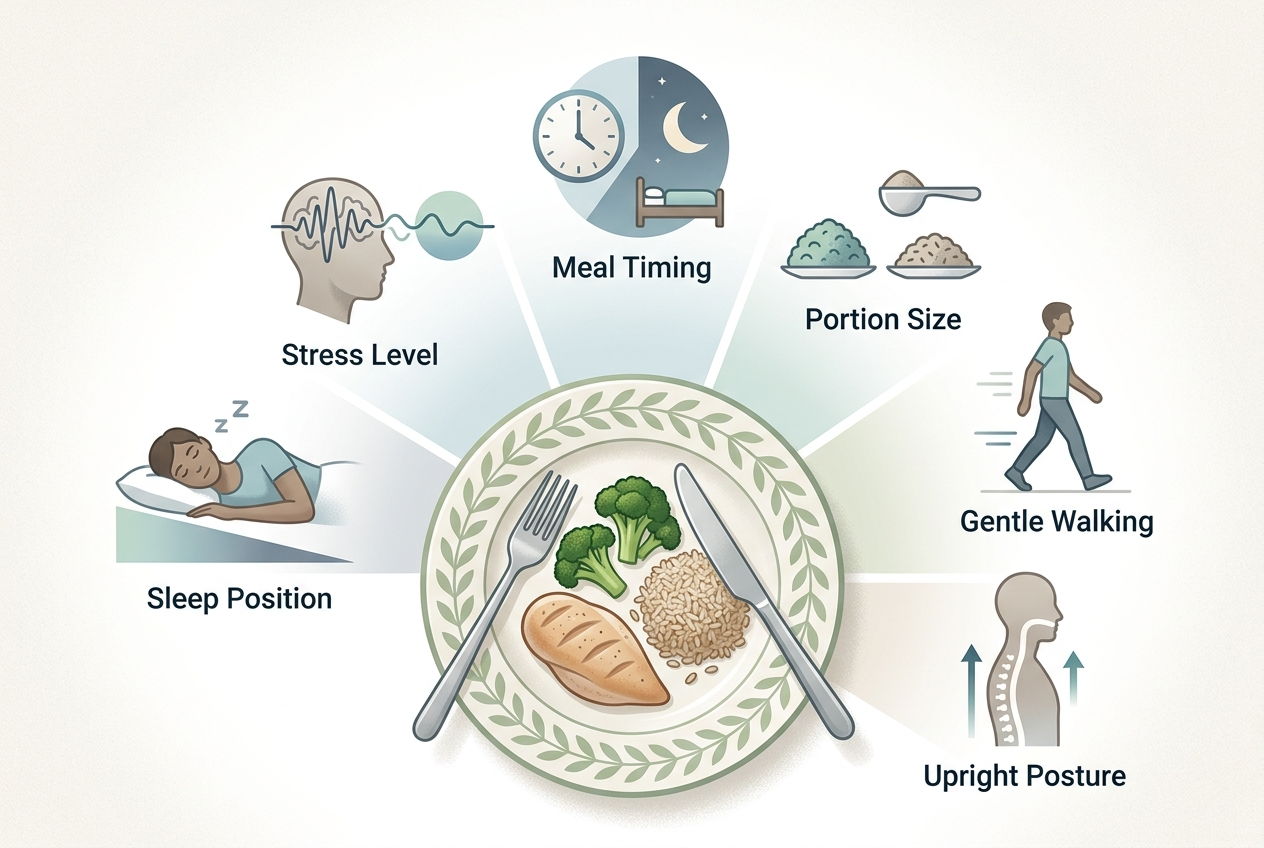
A trip is a bundle of simultaneous changes, so it cannot isolate cause and effect. You may eat more fat but less total food, drink more alcohol but stop coffee, sleep later but finish dinner earlier, walk farther but sit less, or take medication more consistently. Reflux also varies naturally from day to day. Symptom recall adds another problem: memorable restaurant meals receive more attention than ordinary changes in snacks, chewing speed, bed position, or dose timing. The American College of Gastroenterology guideline supports avoiding late meals and individualizing trigger avoidance; it does not require universal food eliminations. A symptom-free vacation therefore generates hypotheses rather than verdicts. Write down the differences before the routine fades from memory. Rank variables that can be reproduced safely at home, then test one at a time. Repeating the full vacation diet at home would change too many inputs and could miss the actual protective pattern.
How can you reproduce the useful parts of the trip at home?
Build a seven- to fourteen-day comparison using the ordinary home diet rather than recreating every restaurant meal. Record dinner time, bedtime, portion size, alcohol, caffeine, medication timing, post-meal posture, walking, sleep position, and symptoms on a consistent zero-to-ten scale. Start with one low-risk variable, such as finishing the last substantial meal at least three hours before lying down. Keep prescribed medication unchanged unless the prescriber advises otherwise. If the trip involved gentle walking, test a comfortable stroll rather than strenuous exercise immediately after eating; studies of post-meal activity are small and do not justify a universal exercise prescription. If stress seemed different, reproduce a concrete behavior—an unrushed meal, a screen-free wind-down, or scheduled relaxation—instead of concluding that symptoms are “just anxiety.” Repeat the same variable across several comparable days. A pattern that appears twice is more informative than one exceptional meal. Bring the log to a clinician if symptoms persist, return frequently, or require ongoing over-the-counter medication.
What questions come up when reflux improves away from home?
Does this mean a trigger-food list was wrong?
Not necessarily. A food may matter only with a large portion, late timing, alcohol, or lying down.
Can walking after dinner prevent reflux?
Gentle walking may help briefly, but research is small and mixed. Vigorous activity after a large meal can behave differently.
Does improvement prove stress caused the symptoms?
No. Lower stress can reduce sensitivity, but timing, sleep, posture, movement, and medication use may also have changed.
Should I stop my reflux medicine to test the theory?
No. Continue prescribed medication and ask the prescriber before changing its dose, schedule, or duration.
Can restaurant food be easier to tolerate than home food?
Yes, if the meal is earlier, smaller, slower, or followed by upright time. Richness alone does not determine reflux exposure.
When should improved symptoms still be discussed with a doctor?
Discuss recurring symptoms, swallowing problems, vomiting, bleeding, unexplained weight loss, or chest pain. Chest pain can require urgent assessment.
What is the bottom line about vacation and reflux?
Improvement on vacation is real information, but it does not identify one cause. The trip may have changed dinner-to-bedtime spacing, portion size, posture, walking, sleep position, medication timing, stress-related sensitivity, or several factors together. Food labels such as “good” and “bad” are less useful than measurable details. Write down the travel routine, choose one safe variable, and reproduce it while keeping the rest of the home routine stable. The strongest first experiment is often earlier meal timing because federal guidance and the ACG guideline both support leaving several hours between eating and lying down for nighttime symptoms. A symptom log can then show whether the effect repeats. Do not use one symptom-free week to stop prescribed medication, ignore recurrent symptoms, or dismiss alarm signs. If symptoms remain frequent despite appropriate use of medication and lifestyle measures, a clinician can decide whether endoscopy, ambulatory reflux monitoring, or another evaluation is appropriate. Vacation offers a clue; repeated observation provides the evidence.
Leave a Reply